Meaning at a glance
Documented historical evidence for a single, consistent symbolic meaning of pink jewelry is limited; museum scholarship (notably on Islamic jewelry) shows pink shades used for decoration and status, while modern meanings are fluid, personal, and shaped by fashion and gemstone technology. Gemological research emphasizes hue, tone, saturation, origin, and treatment as the material facts that determine how pink gemstones look and are valued rather than universal emotional effects.
Quick answer
Pink jewelry meaning is not a single, fixed thing: historical evidence supports decorative and status uses of pink shades in certain contexts, while today pink gemstones and motifs carry varied, personal and fashion-driven associations. Gemologists point to hue, tone, saturation, transparency, and treatment as the objective factors that determine the appearance and value of pink stones rather than any universal promise of emotional change.
What the historical evidence shows — be precise about sources
Surviving museum collections and catalogues provide most of the reliable historical evidence about color in jewelry. For example, The Metropolitan Museum of Art's work on Islamic jewelry documents how color, materials, and techniques such as enamel were used for ornament and status in Islamic-period objects. That scholarship shows the presence of pink or rose shades as part of decorative palettes, but it frames them as material and aesthetic choices within particular social contexts rather than as universally fixed symbolic messages.
More broadly, modern gemological research from the Gemological Institute of America (GIA) focuses on the physical causes of color in gemstones, how those colors are evaluated, and how treatments or origin affect appearance. The GIA's guidance on colored gemstone value factors explains that hue, tone, saturation and uniformity are the primary determinants of value and appearance, and its colored stone research provides methods for identifying origin and treatment that matter to collectors and scholars. These are technical facts about materials and trade; they are not statements about a single symbolic meaning that applies across cultures and eras.
Historical meanings versus modern personal interpretations
When a museum catalogue describes a jewel as having a pink enamel or a rose-hued stone, that is a documented, material observation tied to a specific object, maker, and period. The Metropolitan Museum of Art's scholarship attributes those colors to particular decorative programs in specific cultures and periods. Such documented meanings are concrete: they describe use and technique in identifiable contexts.
By contrast, many contemporary meanings of pink jewelry are modern, personal, or commercial. In the late 20th and 21st centuries designers, marketers, and wearers have associated pink with ideas such as romance, softness, or playful style in some markets, but these associations are cultural and changeable. They reflect fashion cycles, advertising, and individual choice rather than the kind of provenance-based evidence used by museums and gemological laboratories.
It is important to keep these categories separate. Historical scholarship records how objects were made and used in particular places and times. Modern interpretations reflect current aesthetics, identity, and personal symbolism. Neither category proves that pink color reliably predicts personality traits or produces particular emotional effects in everyone who wears it.
Which pink gemstones and materials appear in jewelry, and how they matter
A range of minerals and materials produce pink colors in jewelry; gemologists evaluate them using the same basic criteria. The GIA explains that value and appearance hinge on hue, tone, saturation and uniformity, so a 'pink' sapphire or a pink tourmaline is assessed by those attributes rather than by the popular label alone. The GIA's colored-stone research also matters because it documents how treatments and origin can change a stone’s color and durability, which in turn affects how it will be used in jewelry.
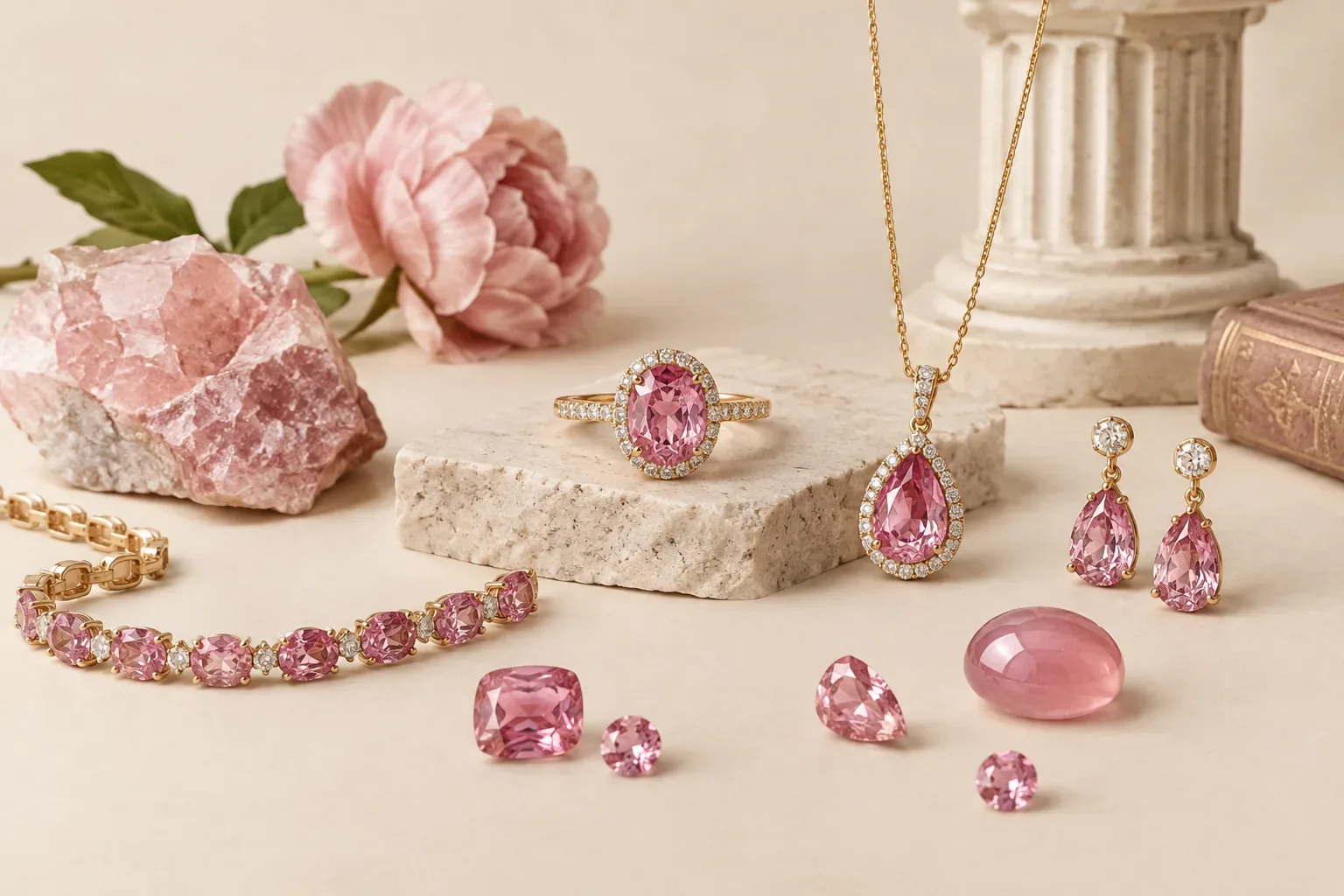
Common pink gem materials you will encounter include pink sapphire (a variety of corundum), pink tourmaline, morganite (a pink beryl), rose quartz, and pink spinel. Each behaves differently: some are hard and durable enough for everyday rings, others are softer and better suited to pendants or earrings. Cut and setting choices follow the gem’s physical properties; for example, harder stones tolerate more exposed settings and everyday wear while softer stones are often bezel-set or used in pieces less exposed to knocks.
Pink can also be achieved by colored glass, enamel, or dyed materials. The Metropolitan Museum of Art’s work on Islamic jewelry reminds readers that enamel and inlaid materials have a long place in decorative traditions. Because these techniques produce stable color differently from natural gem material, they carry different implications for value and care.
How the motif and color appear in jewelry design
Designers use pink in many ways: as a single dramatic stone, as a field of small pink melee accenting a center gem, as colored enamel within metalwork, or as a motif (for example, floral and heart shapes) in which color supports the shape. Technical choices such as cut, facet pattern, and clarity enhancement affect how pink reads in different lighting and settings. The GIA’s guidance on color evaluation helps explain why two stones described as 'pink' may look quite different depending on tone and saturation.
In historical pieces, color often functioned within a broader decorative program. The Metropolitan Museum of Art notes that jewelers combined materials, colors and metalwork to achieve specific aesthetic and social effects in Islamic-period objects. In contemporary design, pink is often chosen for its visual contrast with metals, for seasonal fashion trends, or to convey a personal message selected by the wearer or giver.
Practical and respectful selection and gifting guidance
When choosing or gifting pink jewelry, begin with practical questions about wear and care. Consider the stone’s hardness and typical use: rings and bracelets face more wear than necklaces and earrings. Ask the seller for written information about whether a stone is natural, lab-grown, treated, or assembled, because GIA research makes clear that origin and treatment affect appearance, durability, and value.
Be respectful of the recipient’s cultural context and personal taste. Pink may carry different connotations in different communities or family histories; when in doubt, favor neutral language like 'soft rose color' or ask directly about preferences. For milestone gifts, focus on the qualities the recipient values—durability, ethical sourcing, or a particular designer—rather than assuming a fixed symbolic meaning.
Check documentation for value and care. The GIA’s guidance on value factors explains why clarity, color uniformity, and cut matter for price and long-term satisfaction. For stones susceptible to fracture or fading, select protective settings or save them for less exposed pieces. If budget or ethics are a concern, consider lab-grown options or careful alternatives: the site’s article on natural, lab-grown and imitation birthstones can help you compare choices, and our piece on morganite offers a deep dive into one popular pink gem.
Care, disclosure, and appraisal basics
Ask for full disclosure about treatments and origin at the point of sale; the GIA offers tools and research used by the trade to identify treatments that alter a stone’s color. Proper disclosure matters for insurance, resale, and care instructions. Maintain jewelry according to the manufacturer’s or jeweler’s recommendations and look for reputable appraisals if the piece is a financial or heirloom investment.
If you are uncertain about a piece’s material or value, consult a qualified gemologist or a trusted jeweler who can reference GIA methods for identification. Documentation, a clear return policy, and transparent treatment disclosure are the best safeguards when buying pink jewelry.
Final perspective
Pink jewelry meaning is best understood as a layered topic: specific historical objects can be interpreted through museum scholarship and technical study, while contemporary meanings are personal and variable. The material facts documented by institutions like The Metropolitan Museum of Art and technical guidance from the Gemological Institute of America provide the evidence base for understanding how pink appears in jewelry and how it should be evaluated and cared for. Beyond those facts, the meanings people attach to pink are flexible and deserve to be treated as individual choices rather than universal truths.
Frequently asked questions
Does pink jewelry always symbolize love or romance?
No. While some modern contexts associate pink with romance, that association is cultural and not universal. Historical evidence tends to show pink as an aesthetic choice in specific objects and periods rather than a single symbolic meaning.
Are pink gemstones less durable than other colors?
Durability depends on the mineral, not the color label. Some pink gems like sapphire (corundum) are very hard and durable, while others such as rose quartz are softer. Ask about the specific material and its hardness and suitability for the intended piece.
How can I tell if a pink stone has been treated or enhanced?
Request written disclosure from the seller and, when in doubt, seek an independent gemological report. The Gemological Institute of America (GIA) publishes research and methods for identifying treatments and origin for colored stones.
Is it appropriate to gift pink jewelry across cultures?
Sensitivity is important. Pink may have different connotations in different places and communities, so consider the recipient’s cultural background and personal preferences or ask them about their taste.
Which pink stones are best for everyday wear?
Choose harder stones for everyday pieces. Corundum (sapphire), spinel, and some tourmalines are more suitable for daily wear, while softer materials may be better for earrings or occasional-wear pendants.
Where can I learn more about pink gemstones and their value?
Refer to gemological resources such as the GIA’s guidance on colored gemstone value factors and colored-stone research, and consult museum catalogues for historical context when examining antique or culturally significant pieces.
Sources and further reading
- Colored Gemstone Value Factors — Gemological Institute of America
- GIA Colored Stone Research — Gemological Institute of America
- Islamic Jewelry in The Metropolitan Museum of Art — The Metropolitan Museum of Art