Meaning at a glance
Layering necklaces can fit a minimalist wardrobe when you prioritize clear proportions, restrained motifs, and reliable construction; this article explains the documented history and changing contexts of necklace layering, separates historic meanings from modern personal interpretations, describes how motifs and gemstones appear in layered styles, and gives practical selection and gifting guidance including length choices, balance, and tangle prevention.
Why layering works for minimalist wardrobes
Minimalist wardrobes aim for versatility, restraint, and a clear silhouette. Layered necklaces can add subtle interest without contradicting minimalism when they read as a single, composed element rather than a clutter of competing details. Fewer, carefully chosen layers maintain the clean lines of a plain top or dress while supplying texture and personalisation.
Treat layering like tailoring: a composed stack becomes an intentional accent rather than an accessory collection. Limit contrast in metal tone, keep pendant sizes proportional to your neckline, and stagger lengths so each piece reads individually and as part of a unified whole.
Documented historical evidence and cultural contexts
Neck ornament and the practice of wearing multiple chains have a long material history; museums and collections show that people in many cultures layered neck pieces for aesthetic, social and symbolic reasons. The Victoria and Albert Museum traces jewellery across a wide range of periods and places and emphasizes how meanings and uses change with fashion and social context rather than remaining fixed. The museum’s surveys show layering and multi-element necklaces appearing in ancient, classical, medieval, and later European fashions as part of evolving taste, wealth display, and technological change.
Precise meanings attached to layered necklaces in any culture or period vary. The presence of multiple chains or pendants in the historical record does not translate to a single, universal meaning. Rather, museum documentation highlights changing contexts: chains might signal social rank in one period, function as amulets in another, or simply follow decorative fashion in yet another. The Victoria and Albert Museum’s work is particularly useful for understanding those shifts because it situates objects in their social and technical contexts.
Separating documented history from modern interpretation
It is important to distinguish what object-based scholarship and museum interpretation document from how people use or explain jewellery today. Recorded evidence—such as how a piece was made, where it was found, or how it was worn—supports particular historical readings. Institutions like the Victoria and Albert Museum document shifting social meanings and technological developments but do not claim that a single symbolism is universal.
Modern interpretations, including the use of layering as an expression of identity, memory, or spirituality, are legitimate personal meanings but are not always direct continuations of past uses. For example, wearing several delicate chains together as a contemporary minimalist statement is a present-day styling choice that may borrow visual language from older practices but should not be presented as a historically continuous tradition without specific evidence.
How motifs and gemstones appear in layered necklaces
In jewellery, motifs and gemstones function visually and symbolically. Motifs—such as geometric bars, small lockets, or coin pendants—are often repeated or varied across layers to create coherence. Gemstones provide points of colour or sparkle and can be used sparingly to keep a minimalist look. The Victoria and Albert Museum’s resources on gemstones outline how different stones have been used and perceived historically, which helps when selecting materials with an intentional feel.
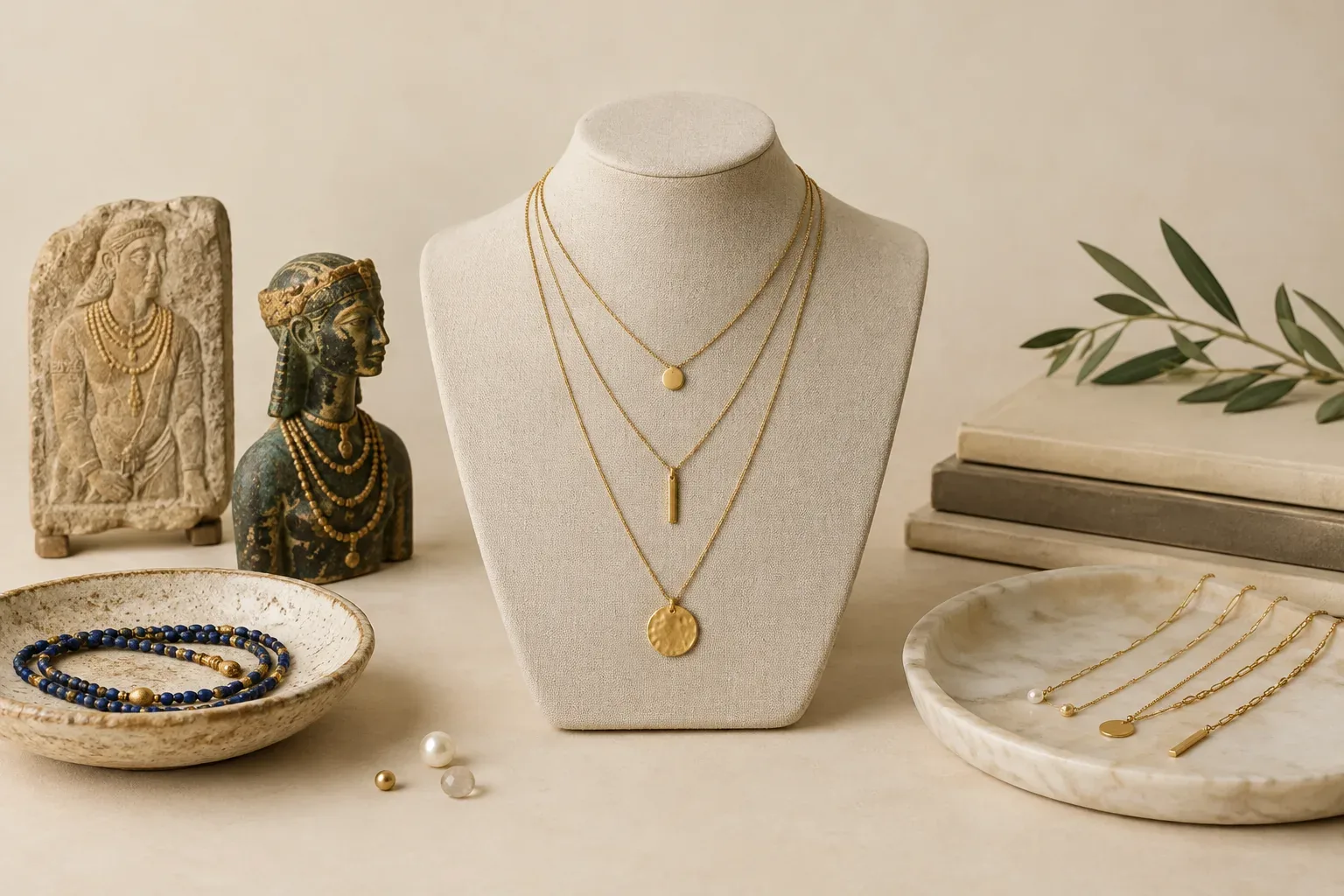
Practically, minimalist layering typically uses one dominant motif or a consistent motif family across pieces. A common approach is to combine a plain chain, a small pendant on a middle chain, and a slightly longer chain with a single bezel-set gemstone or a tiny charm. Choosing low-profile settings—flush bezels, small cabochons, or single tiny faceted stones—keeps the stack subtle and prevents any one element from overwhelming the rest.
Practical guidance: lengths, balance, and avoiding tangles
Length planning is the clearest way to get clean separation between layers. A typical minimal stack starts with a short chain worn near the throat, followed by a mid-length chain and one longer chain that falls lower on the chest. Commonly used reference lengths are chokers and short necklaces around 14–16 inches, princess lengths near 16–18 inches, matinee around 20–24 inches, and opera lengths from 28 inches and up; choose increments that leave visible space between pendants so each element is legible.
Balance is both visual and tactile. Visually, vary thickness and ornament so that heavier pieces are shorter or anchored, preventing the eye from being pulled to one single heavy item. Tactile balance means choosing chains that move smoothly against one another; hollow, very light chains can tangle with fine, high-friction chains, while flat or box chains often glide more easily.
To reduce tangling, start by fastening each necklace while it sits in place, or assemble your stack and clasp them in the order you plan to wear them. Consider using a small, discreet necklace spacer or a layered necklace design with multiple fixed lengths on a single clasp; if you prefer separate pieces, anchor the shortest chain at the top and choose one piece with an integrated stopper bead or wider links to reduce slippage. Knots are also more likely when chains differ significantly in thickness and texture, so keep variations deliberate rather than extreme.
Materials, treatments, and transparency when buying
Decide whether you want solid precious metals for longevity or plated/treated metals for cost-effectiveness. For gemstone choices, refer to authoritative manuals on identification and context: the Victoria and Albert Museum’s guide to gemstones provides historical perspectives and characteristics that help you choose appropriate stones for a minimalist aesthetic. When buying gemstones, consumers should also check for treatments, imitations, and disclosure practices. The U.S. Federal Trade Commission provides clear guidance that sellers must disclose treatments and whether a stone is a lab-created or imitation material, which is important information for care and value expectations.
Ask sellers about the metal's purity, the stone’s treatment, and repair policies. For minimalist wardrobes, invest in at least one well-made piece—often in solid metal—that will withstand daily wear and maintain the simplicity you want over time.
Respectful selection and gifting guidance
When you select or gift layered necklaces, consider personal taste, lifestyle, and any cultural or religious associations tied to specific motifs. A symbol that is meaningful in one tradition may be sacred or sensitive in another. Do research if a motif looks like a religious or culturally specific emblem before including it in a gift; the internal guidance on researching symbols can help ensure respectful choices.
For gifting, choose neutral, high-quality basics if you are unsure of the recipient’s preferences: a plain fine chain, a small bezel-set gemstone pendant, or a simple bar pendant are versatile. If the recipient prefers minimalism, be conservative with size and sentiment: small, personal touches tend to be more appreciated than overtly symbolic or large pendants. Include care instructions and, when relevant, information on gemstone treatments or metal content to support long-term enjoyment.
Care and maintenance
Routine care preserves both the look and the function of layered necklaces. Smooth chains and secure clasps reduce the risk of tangling and breakage; store layers flat or hung separately when not in use. For gemstone-set pieces consult seller guidance on cleaning—harsh chemicals can damage some stones and finishes. If a seller has disclosed a gemstone treatment, follow recommended cleaning approaches to avoid degrading that treatment.
For long-term value, plan periodic inspections of clasps and settings, especially for pieces worn daily. Investing in a modest professional cleaning and check service yearly can prevent issues before they lead to permanent damage.
Final note on meaning and modern practice
Layering for minimalist wardrobes is primarily a stylistic strategy today: a way to create richness from restraint. While layered necklaces echo historical practices documented by museums like the Victoria and Albert Museum, contemporary wearers often attach personal meanings that are distinct from past contexts. Respect those histories, choose materials and motifs mindfully, and let your stack be an intentional element of your overall wardrobe rather than an accidental accumulation.
Frequently asked questions
What necklace lengths should I choose for a minimalist layered look?
Aim for clear separation between pieces by choosing short, medium, and long lengths. A common approach is a collar or short chain near the throat, a mid-length chain that sits at the collarbone, and a longer chain that falls lower on the chest. Keep spacing proportional to your neckline so each piece is visible and complements the outfit.
How many necklaces are too many for a minimalist profile?
Two to four necklaces is usually enough to create interest without clutter. The key is restraint: limit variation in metal and motif, and ensure each piece contributes to a unified visual effect rather than competing for attention.
How can I prevent layered necklaces from tangling?
Fasten pieces in place while they sit, use a necklace spacer or a multi-strand single-clasp design, choose chains with complementary textures, and store necklaces flat or hung separately. Heavier or wider chains placed shorter in the stack can also reduce slippage and tangles.
Are there ethical or disclosure questions I should ask when buying gemstones for layered necklaces?
Yes. Ask whether stones are natural, lab-created, or imitations and whether they have been treated. The Federal Trade Commission advises sellers must disclose such treatments and origin. This information affects care, value, and ethical considerations.
How do I choose a respectful motif or symbol for a gift?
Research the motif’s cultural or religious associations before gifting. If you are unsure, select neutral, simple designs like bars, small bezels, or plain chains. Use resources on symbol research and consider asking the recipient about their preferences if appropriate.
Sources and further reading
- Bedazzled: A History of Jewellery — Victoria and Albert Museum
- An A-Z of Gemstones — Victoria and Albert Museum
- Buying Gemstones, Diamonds, and Pearls — Federal Trade Commission