Meaning at a glance
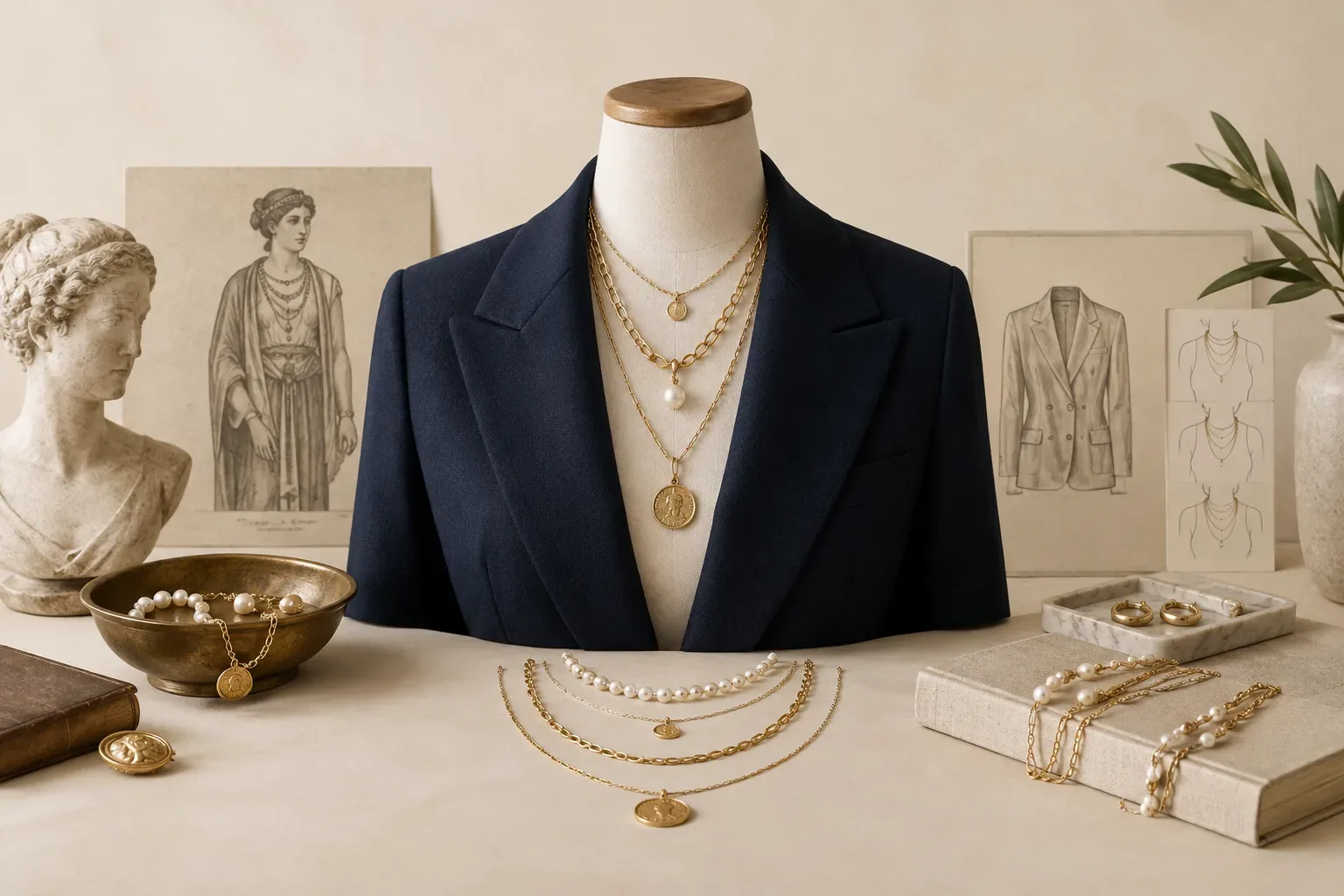
Layer necklaces for blazers by using a clear anchor piece and two to three different lengths spaced by about 2–4 inches, balance chain weights and pendant sizes to avoid tangles, and choose motifs or gemstones with attention to documented histories and the recipient's cultural context.
Short answer
Layering necklaces with a blazer works best when you start with a clear anchor piece and add one or two shorter or longer chains spaced by roughly 2–4 inches, balancing chain weight and pendant size to reduce tangling. Choose materials and motifs with awareness of their documented histories and different cultural meanings rather than assuming a single universal symbolism.
Why necklace layering and blazers pair well
A blazer creates a structured frame around the neck and chest, giving layers of necklaces somewhere defined to sit. The lapel, collarline, and button stance of the blazer determine whether a choker, a collar-to-collarbone piece, or a longer pendant will be visible and harmonious. Layering can emphasize a blazer's lines, add focal points to a plain suit, or soften a rigid silhouette, but success depends on proportion, weight, and how each necklace interacts with the garment's neckline.
Historical evidence and changing contexts
Museums such as the Victoria and Albert Museum document that jewelry use and the social meaning of wearing multiple pieces have varied by period and culture. The V&A's materials on jewellery history explain that in many eras people wore multiple necklaces or chains as indicators of status, wealth, or affiliation, and that the forms and techniques of chains and settings have evolved over centuries. The V&A's A–Z of Gemstones provides background on how specific stones were worked and prized in different historical contexts, which informs why certain gems remain popular in layered modern designs.
Those documented histories show change rather than a single origin for layering. Wearing multiple chains has precedents from ancient to premodern societies where layered metalwork and pendants served distinct social, decorative, and practical purposes. Contemporary layering is therefore a stylistic descendant of many practices rather than a revival of one specific ritual or symbolic practice. When you choose jewellery for a blazer, it is useful to remember that the visual language of stacked necklaces is historically plural and context-dependent.
Documented historical meanings versus modern personal interpretations
Documented historical meanings come from material culture studies and museum research that relate specific objects to social roles, funerary practice, or status markers in a defined time and place. For example, curatorial work at museums like the Victoria and Albert Museum connects particular types of brooches, lockets, and gemstone uses with identifiable periods and functions. Those are documented associations tied to defined cultures or eras.
Modern personal interpretations are what wearers or designers now attribute to a piece. A pendant that once indicated allegiance or status in a particular society can become a fashionable charm or a personal talisman in the present day. It is important not to conflate the two: a motif's documented historical meaning does not automatically transfer to every contemporary use, and many current sayings about symbolism are recent overlay rather than traditional fact.
How motifs, gemstones, and traditions appear in layered blazer jewellery
Motifs and traditions appear in layered jewellery either as focal pendants or as repeated small elements across several chains. Lockets, simple geometric or bar pendants, engraved discs, and charms are all common focal points that sit well over a blazer's lapel or in its open V. Gemstones appear as solitary centerpieces, bezel-set accents, or as stringed beads on a longer chain; the V&A's A–Z of Gemstones describes the historical working and contexts of many stones that are now used in contemporary layering styles.
Techniques such as mixed-metal stacking, graduated chain thickness, and combining cultured pearls with delicate chains are contemporary ways to reference older forms. For example, a single pearl pendant paired with a fine chain and a longer chain with a small gemstone pendant echoes both the historical prominence of pearls and modern minimalist layering. Designers often borrow shapes and finishes used historically, but the combination and placement determine how the motif reads when worn with a blazer.
Practical layering: lengths, balance, and avoiding tangles
Start with an anchor piece. The anchor is the necklace you want to draw the eye to—often a pendant worn at the mid-chest. Once you have that, add a shorter and/or longer chain. Standard length categories that work well with blazers are choker (14–16 inches) or collar, princess (about 18 inches) for the collarbone, matinee (about 20–24 inches) for the upper chest, and opera (about 28–36 inches) for a longer drop. Position layers so they do not sit directly on top of one another; aim for spacing around 2–4 inches between the visual centers of successive pieces depending on your torso and the blazer cut.
Balance chain weights and textures. Pair one heavier chain with one or two lighter chains to avoid knots and to create visual contrast. Avoid putting a heavy pendant on an ultra-fine chain where the pendant can slide and twist; either upgrade the chain or choose a lighter pendant. Mixing chain styles—for example, a cable chain with a flat snake or herringbone—adds visual interest but can catch; smooth chains slide past each other more easily than highly textured chains.
Minimize tangling with clasp choices and layering order. Put the heaviest or focal necklace on last so it sits on top of others, and consider clasping the shortest necklace at the front temporarily when arranging layers so you can see the final look before fastening. There are simple anti-tangle solutions such as multi-strand connectors, small silicone beads at junctions, or using slightly different chain gauges for each layer so the links do not interlock. When possible, let the longest strand hang free beneath the others rather than tucking it under a blazer's fabric.
Materials, authenticity, and buying tips
Choose materials appropriate to daily wear and the wearer's lifestyle. Solid gold and platinum are durable and prone to less tarnish than some plated metals, but fine chains in any metal require care. When buying gemstones or pearls, consult published guidance about treatments and disclosure. The U.S. Federal Trade Commission recommends asking sellers to disclose known treatments, enhancements, and whether a stone is natural, synthetic, or simulated. That information helps buyers select pieces that retain their appearance and value under everyday conditions.
If you are building a layered set, consider investing in one higher-quality anchor piece and complementing it with less expensive accent chains. This approach reduces cost while keeping a durable focal point. If mixing metals, ensure compatibility by checking for coatings or platings that may wear differently. For heirloom or antique pieces, museum resources such as the Victoria and Albert Museum provide context on construction and historical techniques that can inform restoration and care decisions.
Respectful selection and gifting guidance
When selecting or giving jewelry that uses specific cultural, religious, or historically charged motifs, research the item's provenance and meaning rather than assuming it is purely decorative. Museum sources and dedicated research can clarify whether a motif had a ritual or community-specific role. If the motif carries a contemporary religious or cultural significance for a recipient, choose with sensitivity and, if appropriate, discuss the meaning with them before gifting.
Gifts that incorporate personal symbolism are often best when tailored to the recipient's tastes and background. If you are unsure, select neutral design elements such as simple geometric pendants, high-quality chains, or widely accepted gems like cultured pearls rather than motifs with potentially loaded historical or cultural connotations. Use resources such as our guide on how to research jewelry symbols and the V&A's reference materials to make an informed decision. Finally, include care and authenticity information with the gift, especially if gemstones have known treatments disclosed according to consumer protection guidelines.
Final styling tips
Let the blazer's neckline determine your core choices, and always test layered combinations with the actual garment before committing. Simple edits—removing one chain, switching a pendant for a bar, or unclasping a short necklace and letting it fall—often resolve balance issues. Respect both documented histories and contemporary personal meanings by choosing pieces that feel appropriate to the wearer and the context in which they will be worn.
Frequently asked questions
What necklace lengths work best with most blazers?
A choker or collar (14–16 inches) sits high and is visible with open collars, a princess length (about 18 inches) lands at the collarbone and pairs well with many lapels, a matinee (about 20–24 inches) drops to the upper chest and generally shows over a blazer, and an opera length (about 28–36 inches) provides a longer vertical line. Choose combinations that keep visual centers separated by about 2–4 inches.
How can I prevent layered necklaces from tangling under a blazer?
Use an anchor piece as the last necklace fastened, vary chain gauges so links do not interlock, consider multi-strand connectors or small silicone beads at junctions, and avoid pairing several ultra-fine chains with the same texture. Fastening the shortest necklace at the front while arranging layers helps you see the final layout before securing everything.
Are certain gemstones better for layering with blazers?
Durable, low-profile stones such as small faceted gems, bezel-set stones, and cultured pearls work well because they sit flat and resist rubbing. If choosing softer or porous stones, pick settings that protect the gem. Ask sellers about treatments and durability; the FTC recommends disclosure of known enhancements so buyers can make informed care decisions.
Should I consider cultural meanings when gifting a motif or symbol?
Yes. Research whether a motif has a documented cultural or religious meaning before gifting it. Museum resources and focused research can help clarify provenance. When in doubt, select neutral designs or discuss the symbolism with the recipient to ensure the gift is respectful and appropriate.
How many necklaces are too many to wear with a blazer?
Two to three layered pieces is a reliable rule of thumb for most blazers; more than three can work for some looks but increases the risk of tangling and visual clutter. Prioritize a clear anchor and balance shorter and longer pieces rather than crowding many similar-length chains.
How do I verify gemstone authenticity before buying?
Request written disclosure about treatments, enhancements, and whether a stone is natural, synthetic, or simulated, as recommended by consumer protection guidance. Obtain receipts and any lab reports when available, and buy from reputable sellers who will explain materials and care.
Sources and further reading
- Bedazzled: A History of Jewellery — Victoria and Albert Museum
- An A-Z of Gemstones — Victoria and Albert Museum
- Buying Gemstones, Diamonds, and Pearls — Federal Trade Commission