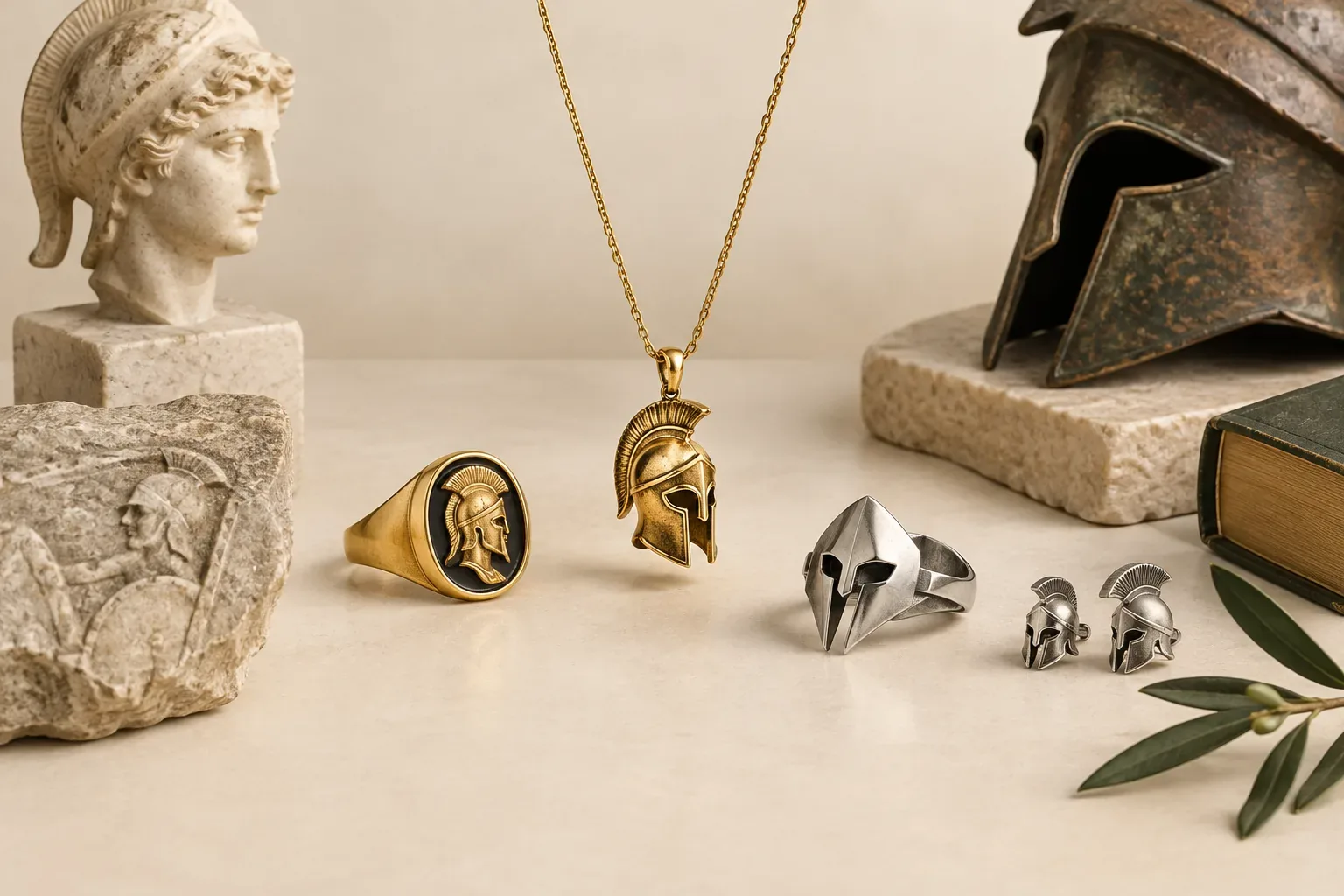
Meaning at a glance
Helmet jewelry meaning combines documented historical uses—identity, rank, and protection in specific contexts documented by museum scholarship—with a wide range of modern personal and professional interpretations; choose and gift these pieces with attention to provenance, cultural context, and material disclosures.
Documented history and precise cultural evidence
Museum surveys and curatorial research show that motifs derived from arms and armor—including helmets—appear in jewelry across different periods because the objects they reference were socially meaningful in those contexts. The Victoria and Albert Museum frames jewelry history as changing social context: accessory shapes and motifs often signaled rank, affiliation, or aspiration rather than single, universal beliefs (Victoria and Albert Museum).
In many European medieval and later contexts, helmet forms are recorded in heraldic art and regalia, where helmets on crests or pendants identified lineage, rank, or martial status (Victoria and Albert Museum). In civic and guild contexts, miniature representations of tools, arms, or badges—sometimes including helmets—were used to mark membership or professional identity (Victoria and Albert Museum).
Museum collections also show that motifs inspired by military equipment can be decorative, symbolic, or commemorative. The V&A places such motif use within shifting fashions and social meanings over time rather than assigning a single symbolic text to every object (Victoria and Albert Museum).
Separate traditions associate protective amulets with headgear in particular belief systems at specific times and places, but these associations must be read against the available documentary and material record. The V&A’s comprehensive history emphasizes that meanings change with context, patronage, and display (Victoria and Albert Museum).
Documented historical meanings versus modern interpretations
Documented historical meanings are those that can be directly tied to documentary or object evidence: helmet imagery attached to coats of arms as an identifier of rank, or miniature helmet badges used by specific guilds or regiments to indicate membership. These documented uses are matters of social function—identification, status display, commemoration—observed by museum scholarship (Victoria and Albert Museum).
Modern personal interpretations—what wearers today often mean when they choose helmet-themed jewelry—include private ideas of courage, protection, professional pride, or family military heritage. These modern meanings are valid as personal symbolism but are not the same as historically documented cultural or religious meanings unless specific continuity can be shown. The V&A cautions that jewelry meanings shift with fashion and social context, so present-day symbolic readings may reflect contemporary values more than past ones (Victoria and Albert Museum).
Be cautious about asserting universal spiritual or protective powers for the helmet motif. Museum-based history grounds meaning in the object’s use, patronage, and display; contemporary symbolic use is often individual, commemorative, or tied to modern professions such as firefighters or military veterans.
How helmet motifs, gemstones, and traditions appear in jewelry
Helmet imagery in jewelry appears in a range of forms: as engraved or cast miniatures used as pendants or charms, as elements in signet rings or heraldic brooches, and as stylized motifs incorporated into contemporary pendants or earrings. Historical pieces in museum collections often show careful craftsmanship and contextual decoration that connects the motif to a larger heraldic or commemorative program (Victoria and Albert Museum).
Gemstones may be used with helmet motifs in two main ways: as decorative accents that follow the fashion of the period (for example, coloured stones set around a motif) or as symbolic stones chosen for their contemporary associations. The Victoria and Albert Museum’s overview of gemstones describes how different gems were historically prized and used in jewellery, and how gem choice is as much about availability and fashion as it is about symbolic meaning (Victoria and Albert Museum).
In modern production, makers combine metals and stones to signal specific ideas. A polished steel or silver helmet pendant emphasizes utilitarian strength; gold, enamel, or inset gems can indicate honor, ceremony, or luxury. Professionally themed pieces—such as firefighter helmet necklaces—use a recognizable silhouette to mark professional identity or to commemorate service, and are marketed and worn as tokens of pride or gratitude.
Practical and respectful selection or gifting guidance
Context matters. If you are buying helmet jewelry to honour a person’s profession or family history, ask about their preference for obvious professional emblems versus subtler, more personal designs. Profession-specific pieces are appropriate gifts for graduates, retirees, or veterans when they reflect the recipient’s identity or achievements.
Respect cultural and ceremonial contexts. Avoid assuming that a helmet motif carries sacred meaning across cultures. If a piece reproduces a culturally specific or ceremonial item, check whether wearing or gifting such an object could be culturally sensitive. When in doubt, ask the intended recipient or consult a knowledgeable contact from the relevant community.
Verify materials and workmanship. The Federal Trade Commission provides guidance for buyers on disclosure of treatments, imitations, and gemstone origin; ask sellers about metal hallmarks, gemstone treatments, and return policies so you can give a piece with full information (Federal Trade Commission).
Consider inscription or personalization. A small engraving—dates, initials, or a short message—can shift emphasis from a general motif to a personally meaningful token. For profession-themed pieces, personalization can mark a specific event, class year, or service milestone.
Choose quality appropriate to the occasion. For ceremonial gifting—promotions, academy graduations, or retirements—opt for durable materials and clear hallmarks. For casual or symbolic gifts, plated or fashion jewelry may be acceptable, but disclose material differences so the recipient understands care requirements and longevity.
Care, materials, and gemstone notes
Different metals and surface finishes require different care. Sterling silver and base-metal fashion jewelry can tarnish or wear, while gold alloys and high-karat pieces need cautious daily wear if set with fragile stones. Enamel and applied decoration can chip if bumped or dropped.
Ask about gemstone treatment and verification. Modern gemology and the gem market make it normal for stones to be heat-treated or lab-enhanced; the FTC’s consumer guidance recommends that sellers disclose treatments and imitations so buyers understand value and care needs (Federal Trade Commission). When buying a piece with a valuable gem, request documentation or certification if authenticity matters to you.
If you intend the piece as a commemorative heirloom, prioritize durable settings and secure mountings. For wearable profession-themed jewelry that will be daily-worn, consider simple, robust silhouettes in solid metal rather than fragile filigree or glued-in stones.
Frequently asked questions
Does a helmet motif always mean protection or bravery?
No. In historical contexts documented by museum research, helmet imagery most often served functional social purposes such as identifying rank, lineage, or membership rather than a universal metaphysical claim. Modern wearers may use the motif to symbolize protection or courage, but that is a contemporary personal interpretation unless specific cultural continuity is documented (Victoria and Albert Museum).
Is it appropriate to gift a profession-themed helmet pendant, such as for firefighters?
Yes, when it reflects the recipient’s identity and you have attention to context. Profession-themed pieces are commonly given for graduations, retirements, or to honor service. Personalization, clear material disclosure, and sensitivity to how the recipient prefers to be represented will make the gift more meaningful.
How can I verify the gemstones or metals used in a helmet-themed piece?
Ask the seller for disclosure about metal content and gemstone treatments. The Federal Trade Commission recommends buyers request information on treatments, imitations, and return policies so you understand the piece’s value and care requirements (Federal Trade Commission). For high-value items, request documentation or lab certification.
Could wearing a helmet motif be culturally insensitive?
Potentially. If a piece reproduces a culturally specific ceremonial or sacred object, wearing it without permission or context can be insensitive. When a motif is clearly tied to a living cultural or religious tradition, consult community sources or the intended recipient before gifting or wearing it publicly.
How should I care for helmet jewelry with enamel or inset stones?
Treat enamel and inset stones gently: avoid knocks, refrain from wearing the piece during heavy physical activity, and store it separately to prevent abrasion. Follow any seller instructions and consider periodic professional checks for settings if the piece is worn often.
Can helmet motifs be used in heirloom or engagement jewelry?
They can, if the motif has personal or family significance. For high-value or heirloom pieces, prioritize durable settings, clear documentation of materials, and a design that the recipient will find meaningful across time rather than merely fashionable.
Sources and further reading
- Bedazzled: A History of Jewellery — Victoria and Albert Museum
- An A-Z of Gemstones — Victoria and Albert Museum
- Buying Gemstones, Diamonds, and Pearls — Federal Trade Commission