Meaning at a glance
This article explains the historical context of gilding and plated metals, separates documented historical meanings from later interpretations, describes how vermeil and gemstones commonly appear in jewellery, lists warning signs that a piece needs repair or re-plating, and gives practical guidance for selection, gifting, routine maintenance, and when to consult a professional.
Documented history and changing contexts
The technique of applying precious metal to a less expensive base has a long material history across many cultures. The Victoria and Albert Museum presents a broad history of jewellery-making techniques and social change, noting that jewellers have used gilding, plating and other surface treatments in different periods to achieve the look of solid precious metal without the cost or weight of it.
Across cultures and periods, surface enrichment appears for both practical and aesthetic reasons. The V&A's surveys of jewellery collections and exhibitions show examples where gilded surfaces appeared in ancient and medieval work as a means of ornament and as a signifier of status when resources or techniques limited the use of solid gold. In later centuries, industrial techniques made gilding and plating more widely available and socially mobile, changing how jewellery signalled taste and identity.
Separating documented meanings from modern interpretations
Historical records and museum documentation describe techniques, materials and the social uses of jewellery; they do not provide a single, universal symbolic meaning for plated items. The Victoria and Albert Museum provides careful provenance and contextualisation for objects, showing how meanings shifted with technology, class, fashion and trade. Where a gilded surface signified wealth in one context, it could be a pragmatic decorative choice in another.
Modern popular interpretations sometimes read contemporary values — such as thrift, imitation, or sustainability — back onto historical pieces. Those modern readings can be meaningful to wearers today but should be distinguished from the documented social or ritual uses described in museum records. Treat symbolic claims about vermeil as contemporary personal or cultural interpretations unless a specific historical source records that meaning.
How vermeil, motifs and gemstones appear in jewellery
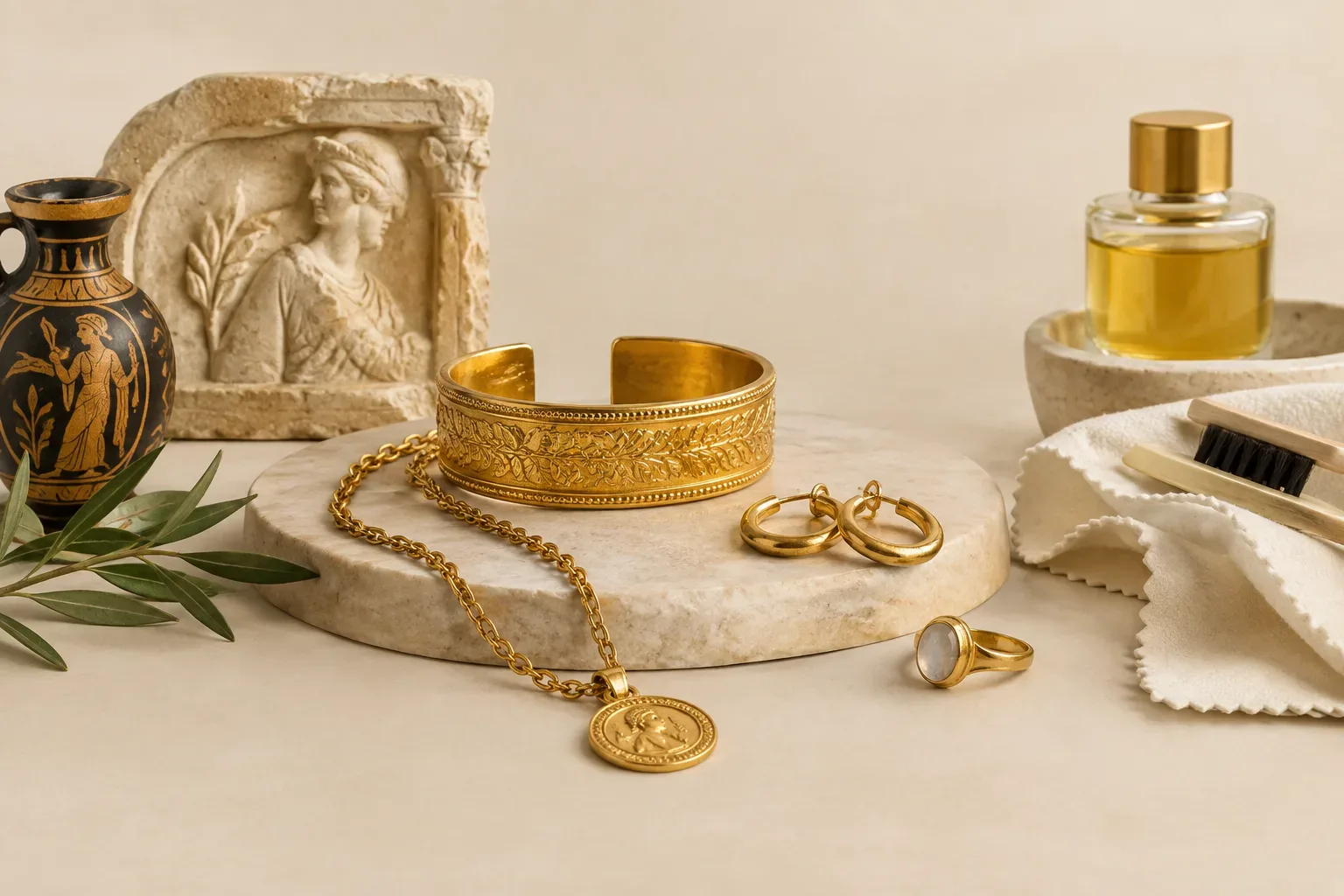
Gold vermeil is a modern technique in which a gold layer is applied to a silver base to achieve the appearance of gold while using less precious metal. In practice, jewellers use vermeil to render popular motifs — such as lockets, floral forms, chains and small amulets — in a warm gold hue while retaining the feel and workability of silver for fine detail.
Gemstones and gem-like materials commonly appear set into vermeil pieces using traditional settings such as prongs, bezels or glued inlays. The Victoria and Albert Museum's overview of gemstones helps identify how different stones have been paired historically with metalwork: hard, faceted gems often occupy secure prong settings, softer stones may be protected by bezels, and costume or simulated gems are frequently used where appearance rather than permanence is the priority.
Where motifs carry cultural or religious meaning, those meanings usually derive from the motif itself — for example, hearts, crosses, or protective amulets — rather than from the choice of vermeil as a technique. The technique affects durability and care needs, but documented cultural meaning should be traced to the motif and its provenance as recorded by museum and historical sources.
Common warning signs that repair or maintenance is needed
Visible thinning, patchy wear, flaking or darkening at edges where the gold layer has worn away are the most direct signs that a vermeil piece needs attention. When the underlying silver is exposed it can tarnish, darken the design, or react with skin oils, which accelerates wear and alters appearance.
Functional issues such as weakened or misshapen clasps, bent or cracked settings, loose gemstones, or rough edges where plating has worn away are also warning signs. Discomfort for the wearer, such as itching or greenish discoloration on the skin, can indicate metal exposure or reaction, and should prompt inspection.
Minor surface dirt and oils can typically be removed at home with gentle, non-abrasive cleaning, but if the gold layer is breaking up, or stones are loose, a professional assessment is the safest next step.
Basic at-home care (do this first)
Store vermeil pieces separately in a soft pouch or lined box to avoid friction that wears the gold layer. Avoid storing vermeil in humid places; a cool, dry environment slows tarnish of the silver beneath the gold.
Clean gently with a soft cloth and mild, pH-neutral soap diluted in water when needed. Do not use abrasive cloths, brushes, or strong chemical cleaners, as they can remove or damage the gold surface. Remove vermeil jewellery before swimming, bathing, applying lotions or perfumes, or doing household chores that involve harsh chemicals.
Regular gentle cleaning and careful storage will extend the time between professional maintenance, but they will not permanently restore or reapply worn plating once the gold layer has thinned through.
When to seek professional repair or re-plating
Seek a professional jeweller when the gold layer is flaking, large areas of silver are exposed, stones are loose, or structural repairs such as soldering a broken jump ring or replacing a clasp are required. A qualified jeweller can assess whether the piece should be re-plated, have settings tightened, or require restoration of delicate details.
Ask the jeweller about specific treatments they will use and whether these will change the feel, weight, or appearance of the piece. The Victoria and Albert Museum documents historic restorations of museum objects to show that interventions can alter an object's look; modern repairers can often restore function and appearance but may adjust patina and surface finish.
Questions to ask a repairer and consumer-protection considerations
Before authorising work, ask the repairer about their experience with vermeil and plated silver, what preparatory steps they will take, whether stones will be removed and reset, and what guarantees apply. Also ask how the piece will be finished and whether the new plating will match the original colour and sheen.
The Federal Trade Commission advises consumers to ask sellers and repairers about metal content, treatments, and any relevant disclosures. If you are purchasing vermeil or having it repaired, request clear information about materials used and any warranty or return options.
Practical and respectful selection and gifting guidance
When choosing vermeil as a gift, consider the recipient's lifestyle and how often they will wear the piece. For everyday wearers who contact water, lotions, or abrasive surfaces frequently, choose designs with protective settings or consider more durable solid metals instead. For occasional wearers or those who enjoy changing jewellery, vermeil can offer attractive appearance at a lower cost.
Be transparent if you are gifting vermeil: explain the technique and basic care so the recipient knows what to expect. If the motif carries cultural or sentimental meaning, check provenance and be respectful of any religious or cultural rules associated with wearing that symbol. The Victoria and Albert Museum encourages researching a motif’s history and respectful use; for more on choosing meaningful pieces, see our related gift guide.
When buying from a retailer, prefer sellers who disclose materials and treatments clearly and can answer questions about plating thickness and aftercare. The Federal Trade Commission’s consumer guidance recommends seeking full disclosure of treatments and material content before purchase.
Summary
Gold vermeil offers the visual warmth of gold with the workability and lower material cost of silver, but it requires attentive care. Historical documentation, as presented by the Victoria and Albert Museum, shows that surface treatments have long been used to achieve desired appearances; modern consumer protection guidance from the Federal Trade Commission supports clear disclosure of treatments and materials.
Maintain vermeil with gentle cleaning and careful storage, watch for visible wear and functional damage, and consult a professional jeweller for re-plating, secure setting work, or structural repairs. When choosing or gifting vermeil, prioritise transparency about materials and realistic expectations about durability so the piece can be enjoyed as intended.
Frequently asked questions
How can I tell if my vermeil needs re-plating?
Look for patchy wear where the gold layer has thinned or flaked, darkened or tarnished areas where the underlying silver is exposed, discomfort or greenish discoloration on the skin, or loose stones and faulty clasps. These signs suggest professional care or re-plating may be needed.
Can I clean vermeil at home safely?
Yes. Clean vermeil gently with a soft cloth and mild, pH-neutral soap diluted in water. Avoid abrasive materials, ultrasonic cleaners, and strong chemical cleaners. Dry thoroughly and store in a soft pouch to minimise friction.
Is re-plating a vermeil piece always possible and worth it?
Re-plating is often possible, but whether it is worth doing depends on the sentimental or monetary value of the piece, the cost of the repair, and the current condition of settings and stones. Ask a reputable jeweller for an assessment and an estimate before proceeding.
What should I ask a seller when buying vermeil jewellery?
Ask the seller to disclose the metal content of the base and the gold layer, describe care recommendations, explain any guarantees or return policies, and confirm whether stones are natural or simulated. The Federal Trade Commission recommends obtaining clear information about treatments and materials before purchase.
Will professional restoration change the look of an historic or sentimental piece?
Restoration can restore function and appearance but may alter surface finish, patina or minute details. For historically important items, conservators balance preservation with repair; for personal pieces, discuss desired finish and any concerns with the jeweller beforehand.
Sources and further reading
- Bedazzled: A History of Jewellery — Victoria and Albert Museum
- An A-Z of Gemstones — Victoria and Albert Museum
- Buying Gemstones, Diamonds, and Pearls — Federal Trade Commission