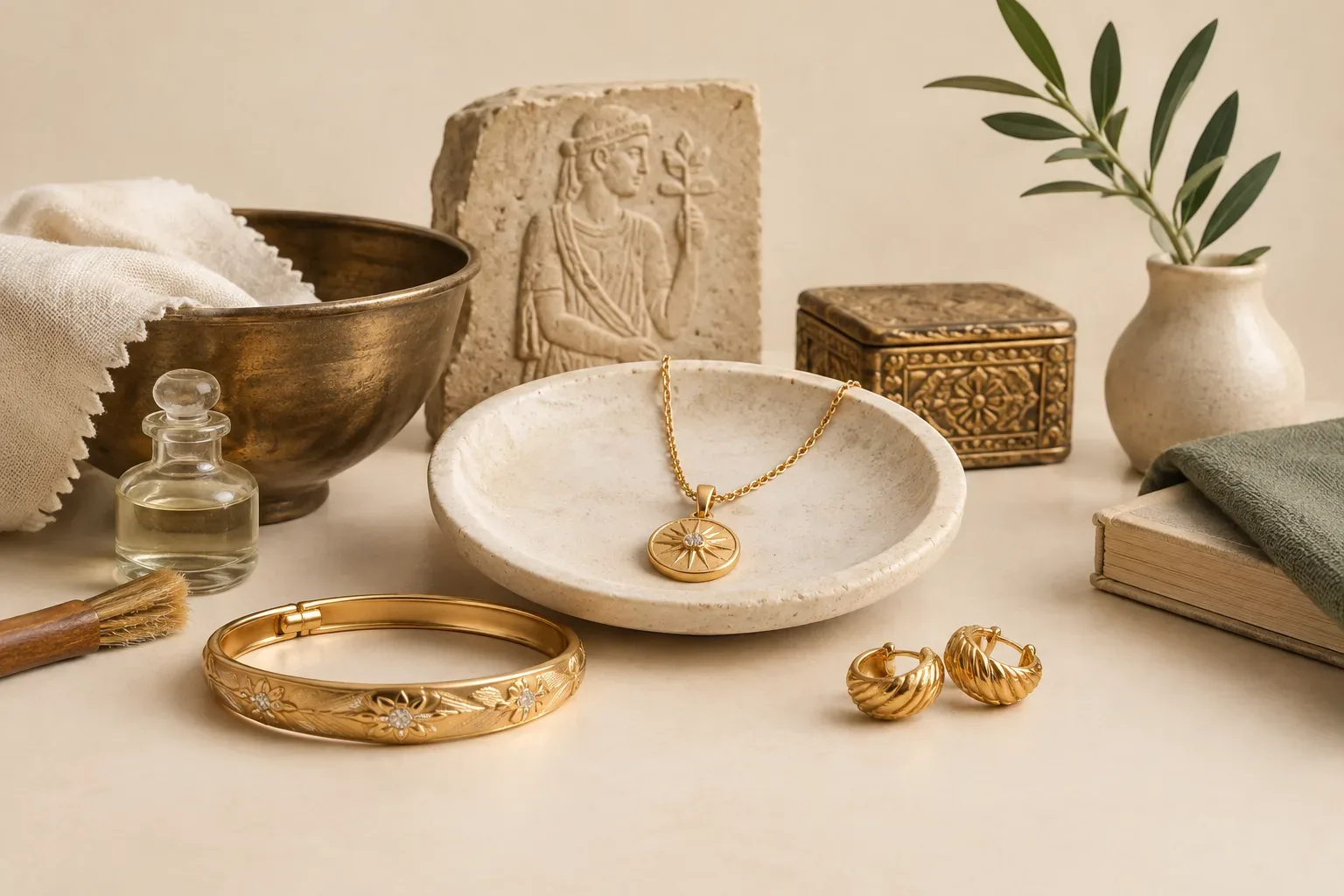
Meaning at a glance
Clean gold-filled jewelry gently with mild soap, warm water and a soft cloth; avoid abrasives, chlorine and prolonged exposure to chemicals; store pieces separately in soft pouches or lined boxes and look for clear material disclosure when buying. This guidance reflects modern best practice and is presented alongside the documented history of changing jewelry contexts so readers can separate historical treatments and meanings from present-day care routines.
What the historical record shows about jewelry care and context
Jewellery has been worn and cared for in vastly different ways across cultures and periods. The Victoria and Albert Museum’s work on jewellery history shows that the social meaning of jewellery — who wore it, why, and how it was stored or displayed — has changed repeatedly, from ancient personal amulets and public status markers to later sentimental and fashion uses. The V&A frames those changes as shifts in social context rather than a single, continuous tradition of care.
Those historical patterns matter because they remind us that methods and priorities for cleaning and storage have not been constant. In museum collections, conservators use controlled, specialist techniques to preserve fragile historic objects; those techniques and the reasons for them were shaped by the materials and manufacturing methods of each era. Modern commercial techniques and materials such as rolled gold, gold-plating and gold-filled construction belong to industrial and consumer contexts that developed much later than many historical jewellery traditions, and modern care guidance reflects those contemporary materials.
Documented meanings versus modern personal interpretations
When researchers describe the meanings attached to jewellery in a particular culture or period, those are documented social facts: who wore a piece, what symbolism it carried, or how it fit into rituals or status systems. The V&A emphasizes that these meanings shift with fashion, economy and belief systems. Those documented meanings are distinct from the private or contemporary meanings an individual might attach to a piece today — for example, treating a mass-produced gold-filled locket as a family heirloom.
Modern personal interpretations — calling a cheaply made piece a ‘‘token of protection’’ or assigning it long-standing sacred power — are legitimate emotional responses but are not the same as historical, documented cultural uses. It is useful to keep that distinction when you assess value, provenance, and care: an item’s emotional significance to its wearer does not change how sensitive its materials are to cleaning methods.
How gold-filled technique and gemstone traditions appear in jewellery
The term ‘‘gold-filled’’ describes a modern commercial construction where a thicker layer of gold is bonded to a base metal to give the appearance and greater durability of solid gold at lower cost. This manufacturing approach often appears in everyday fashion jewellery and in pieces intended for frequent wear, because it resists wearing through more effectively than thin plating.
Gemstone appearance and traditional uses continue alongside these metal techniques. The Victoria and Albert Museum’s A–Z of Gemstones explains how particular stones have long histories of use, and how those stones’ physical properties influence care. Porous or included gems and many historical treatments require gentler handling than a tough metal surface. In practice, gold-filled jewellery with inset stones combines the practical durability of a thicker gold layer with the specific cleaning considerations of the stone it contains.
Safe cleaning methods: conservative, effective steps
Start with the gentlest approach: wipe the metal with a soft, dry, lint-free cloth after each wear to remove oils and sweat. For light cleaning, use a bowl of warm water with a drop of mild dish soap; agitate the water with your hand, gently swish the jewellery, and use a soft-bristled brush only where there is visible dirt — taking care around setting edges and delicate stones. Rinse briefly in clean water and dry completely with a soft cloth before storing.
Conservative cleaning protects the gold layer and any stones. Avoid soaking pieces with porous or treated gemstones; instead, clean around the setting and consult a jeweler if a stone needs deeper attention. If a manufacturer supplies specific instructions, follow them. When in doubt, err on the side of gentler care rather than stronger chemical treatment.
Common mistakes that shorten life or damage finish
Do not use abrasive polishes, household cleaners, or whitening pastes on gold-filled surfaces. Abrasives can remove the gold layer and expose the base metal beneath. Avoid exposing pieces to chlorine, bleach, or strong acids — for example, swimming pools and hot tubs can accelerate wear and discoloration.
Do not store gold-filled jewellery loosely with metal hardware or in direct contact with other jewellery that can scratch it. Also avoid leaving pieces in direct sunlight for very long periods or in environments with extreme heat and humidity, as those conditions can speed chemical reactions that harm both metal and set stones.
Storage: how to prevent abrasion, tarnish, and moisture damage
Store gold-filled pieces separately in soft fabric pouches or in a jewelry box with lined compartments to prevent scratches. For travel, keep items in individual pouches so chains do not tangle and clasps do not abrade surfaces. If you live in a humid climate, consider storing jewellery in a cool, dry drawer with a small silica gel packet to reduce moisture; do not rely on airtight plastic for long-term storage of pieces that include organic materials or porous gems.
Label storage clearly when you have a mix of techniques (for example, solid gold, gold-filled and gold-plated) so you can apply the correct cleaning and understand likely longevity. Clear labeling and disclosure from sellers help you make informed choices at purchase; the Federal Trade Commission recommends transparent information about material treatments and imitations, and consumers should ask sellers about construction and care recommendations.
Selecting and gifting gold-filled jewellery: respectful practical guidance
When choosing gold-filled jewellery as a gift, consider the recipient’s lifestyle, skin sensitivities and how they are likely to wear the piece. Gold-filled is a practical choice for everyday wearable pieces because it offers durability at lower cost than solid gold, but it is not identical to solid gold in longevity or possible reactions for very sensitive skin.
Ask the seller for clear material disclosure and any care instructions; that information is part of ethical retail practice and helps the recipient care for the piece. If the gift incorporates gemstones, look up the stone in a reliable reference such as the V&A’s A–Z of Gemstones to understand whether the stone needs special handling. Present the gift with a small note about recommended care and storage so the piece can be enjoyed and preserved.
When to consult a professional
If a piece has significant sentimental or monetary value, heavy soiling, or a loose setting, consult a reputable jeweler or conservator. Museum conservators use controlled materials and techniques tailored to historic pieces, but a professional jeweler can advise on repair, re-buffing, or safe cleaning for modern gold-filled work.
If you’re unsure whether a piece is gold-filled, plated or solid, ask the seller for documentation or a clear description; the FTC recommends transparency about treatments and imitations, and accurate information will guide appropriate care and storage choices.
Final practical checklist
Wipe with a soft cloth after wear. Clean occasionally with mild soap and warm water; rinse and dry thoroughly. Store pieces separately in soft pouches or lined compartments. Avoid abrasives, chlorine and prolonged chemical exposure. Seek clear material disclosure when buying and follow any manufacturer instructions. When in doubt about a stone or heavy tarnish, consult a professional.
Frequently asked questions
Can I clean gold-filled jewelry with a jewelry polishing cloth?
Yes — a soft, non-abrasive jewelry polishing cloth is safe for routine wiping of gold-filled surfaces. Use gentle strokes and avoid abrasive pads or cloths intended for heavy tarnish removal, which can wear the gold layer.
Is gold-filled the same as solid gold or gold-plated?
Gold-filled is not the same as solid gold, and it differs from thin gold plating. It has a thicker bonded layer of gold than typical plating and is intended for greater durability, but it is not identical to solid gold in long-term behavior. Ask sellers for clear material disclosure before purchase.
Can I use ultrasonic cleaners on gold-filled pieces?
Avoid ultrasonic cleaners for pieces with glued settings, porous stones, or delicate treatments. Ultrasonics can dislodge stones or exacerbate weaknesses in the bonded layer. When in doubt, consult a jeweler and follow any manufacturer guidance.
How should I store gold-filled jewelry to avoid damage?
Store items separately in soft pouches or in a lined jewelry box to prevent abrasion and tangling. In humid climates, place a small silica gel packet nearby to limit moisture. Label storage so you can apply appropriate cleaning routines for different materials.
What should I ask the seller when buying gold-filled jewelry as a gift?
Ask for clear material disclosure, written care instructions if available, and information about any gemstones included. Transparent information helps you choose a piece suited to the recipient’s lifestyle and ensures you can give appropriate care guidance with the gift.
Sources and further reading
- Bedazzled: A History of Jewellery — Victoria and Albert Museum
- An A-Z of Gemstones — Victoria and Albert Museum
- Buying Gemstones, Diamonds, and Pearls — Federal Trade Commission