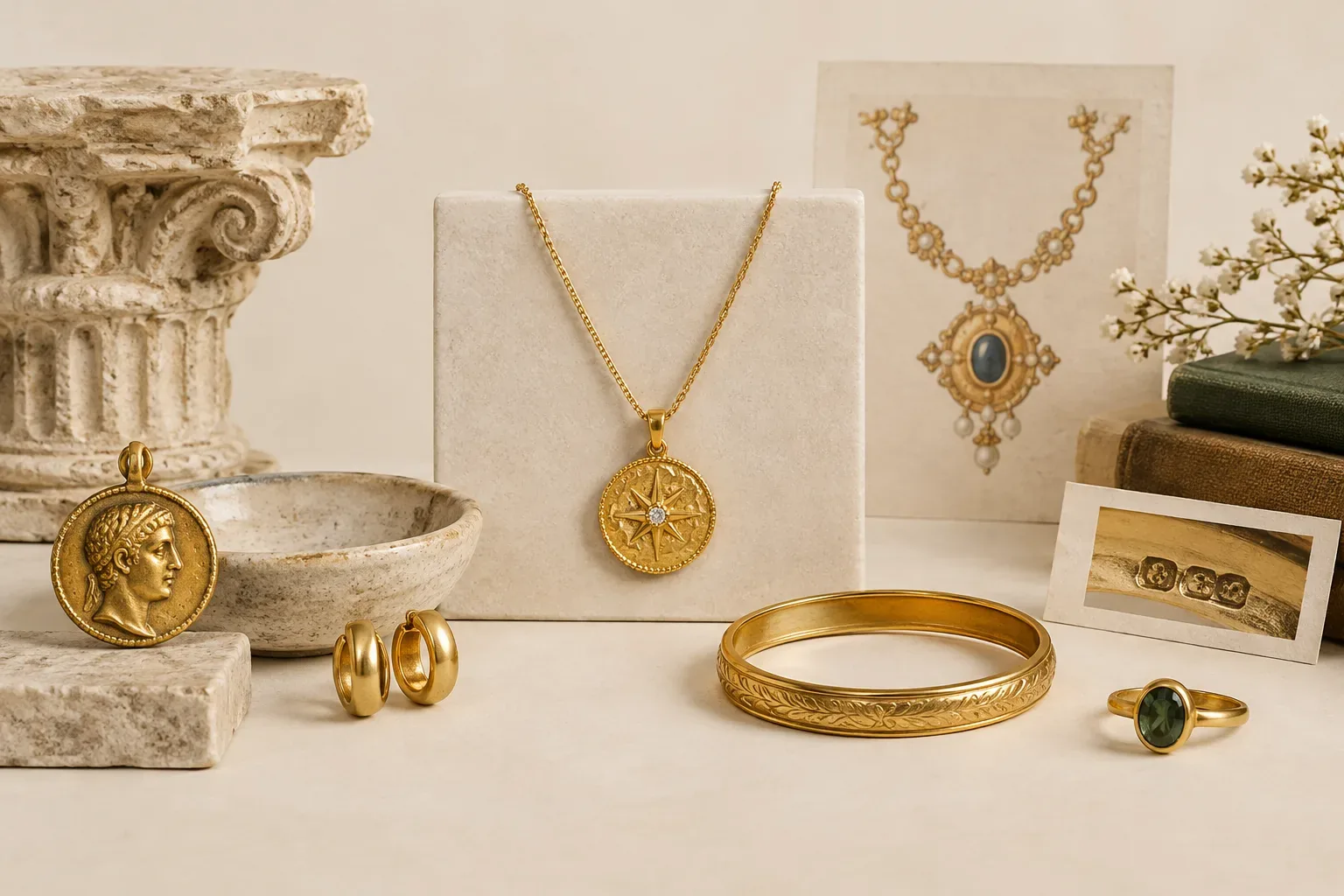
Meaning at a glance
Gold vermeil is sterling silver coated with a layer of gold; understanding its composition, how sellers must disclose treatments, and how hallmarks and historical contexts differ helps you choose and gift vermeil responsibly.
What gold vermeil actually is — composition and basics
In modern trade, vermeil refers to items made from a base of precious silver, most commonly sterling silver, that are coated with a layer of gold. The silver provides the structure and value beneath the gold surface while the gold gives the color and surface finish buyers expect from gold jewelry.
Manufacturers may use different thicknesses and gold purities for the plated layer and different finishing methods for adhesion and durability. Those technical details affect durability and appearance, so they matter when comparing pieces even though the visible look can be similar across different quality levels.
Hallmarks, stamps, and how they vary
Hallmarking systems and the meaning of stamps vary by country. A piece marked '925' refers to sterling silver in many systems and indicates the silver content of the base metal. Other marks indicate gold content or maker's marks. Because vermeil is a composite product (silver base plus gold coating), shops sometimes mark both the silver content and the gold karat used for the plating.
You should not rely on a single mark alone. Read seller descriptions and ask questions when marks are unclear. Museums and national collections document a wide range of historical marking practices and advise that what a mark means can depend on place and period, so modern hallmark interpretation also depends on local law and custom (Victoria and Albert Museum).
Disclosure: what sellers should tell you and why it matters
Legal and consumer-protection guidance in countries such as the United States requires honest, clear disclosure of material treatments, plating, and imitations. The Federal Trade Commission advises sellers to disclose if an item is plated, finished, or treated and to avoid misleading terms that imply a piece is solid gold when it is not (Federal Trade Commission).
Practically, that means product descriptions should say 'vermeil,' 'gold-plated over sterling silver,' the karat of the gold used for plating, and any notable treatments. Clear disclosure protects buyers from misunderstanding the product’s intrinsic value and from surprises related to durability, allergies, or care needs.
Documented historical evidence and contexts
Museum research shows that the use of precious metal surfaces over less costly cores is an old and recurring technique in jewelry and decorative arts. The Victoria and Albert Museum places plated and composite metalwork in long timelines of changing social meaning for jewelry and notes that whether a piece was valued for its material or its social signal changed over time (Victoria and Albert Museum, Bedazzled: A History of Jewellery).
Different periods and cultures emphasized jewelry for different reasons. For example, museums document that in many historical European contexts, including the nineteenth-century Victorian era, jewelry served as personal display, memory-keeping, and social signaling; gemstones and metal finishes were chosen to suit those purposes. The exact use and social meaning of plated or composite items depended on context, economy, and fashion rather than being universally identical (Victoria and Albert Museum).
Separating documented historical meanings from modern personal interpretations
When a museum or historical source attributes a particular meaning to a type of jewelry, that claim is rooted in documented use or contemporary writing of the period. For example, historical collections and scholarship describe when jewelry served as mourning wear, tokens of courtship, or status symbols. These are documented contexts rather than universal symbolic rules (Victoria and Albert Museum).
Modern wearers and designers often layer new meanings onto older forms. A vermeil locket made today may be chosen for ethical, budgetary, or aesthetic reasons and may acquire personal meanings tied to an individual's life. Those contemporary personal interpretations are valid for the wearer but should be kept distinct from what historical sources actually document about practice or symbolism.
How motifs, gemstones, and traditions appear in vermeil jewelry
Vermeil is widely used to create pieces that echo established jewelry motifs—lockets, signet rings, religious pendants, floral designs, and geometric patterns—because the gold surface gives the appearance of solid gold at a lower material cost. Museums show many continuities in motif use over time: the same shapes and symbolic forms reappear with changing materials and finishes (Victoria and Albert Museum).
Gemstones are set in vermeil in the same ways they are set in other metals, whether bezel, prong, or pavé settings. The Victoria and Albert Museum’s work on gemstones explains that gemstone choice historically combined aesthetics, durability, and cultural meaning, and those considerations apply today when gems are paired with vermeil metal (Victoria and Albert Museum, An A-Z of Gemstones). Modern makers may choose vermeil to present colored gemstones in a warmer gold tone without the cost of solid gold settings.
Practical selection and respectful gifting guidance
When choosing or gifting vermeil, start by verifying composition and disclosure. Look for clear statements that the base is sterling silver, the plating is gold, and the karat or color of the gold finish is specified. If hallmarks are present, ask the seller to explain them for your jurisdiction. If legal protection is a concern, request written disclosure or certification and keep purchase records.
Consider the recipient’s skin sensitivities, lifestyle, and personal values. Vermeil can be a thoughtful, durable choice for someone who wants a gold look without the price of solid gold, but it will not age or wear exactly like solid gold. If the recipient values heirloom longevity, a solid precious-metal piece may be more appropriate; if they value ethical sourcing or cost-effectiveness, vermeil can be a respectful alternative. For sentimental gifts such as lockets or heirloom-style jewelry, present the piece with context—what the metal means today for you and why you chose it—so the recipient understands both material and intention.
Care, durability, and practical expectations
Vermeil will show wear differently than solid gold. Its gold layer can be polished and worn away by abrasive chemicals and rough handling, so routine precautions—avoiding chlorine, perfumes, and vigorous abrasion—help preserve the finish. Ask the seller for care instructions specific to their pieces and follow them to extend the life of the plating.
For high-contact items like rings and bracelets, expect more frequent maintenance than for low-contact items such as pendants. When longevity is a priority, consider pieces with thicker plating and high-quality finishes, and ask the maker about re-plating options if the finish eventually thins.
Final practical checklist before buying vermeil
Confirm that the product description or seller identifies the base metal as silver and states that the surface is gold plated. Ask for the karat of the gold finish and any warranty or re-plating policy. Inspect or request close photos of hallmarks and ask for an explanation of marks that are unfamiliar. For important purchases, buy from sellers who provide clear written disclosure and visible care instructions.
Treat museum and consumer-protection resources as complementary: museums help you understand historical uses and motifs (Victoria and Albert Museum), and consumer-protection agencies explain rights and disclosure expectations for treated metals and plated goods (Federal Trade Commission). Together they help you make informed, respectful choices.
Frequently asked questions
Is vermeil the same as gold-plated jewelry?
Vermeil is a form of gold-plated jewelry specifically made over a precious silver base—typically sterling silver—whereas 'gold-plated' can refer to plating over any base metal. Sellers should disclose whether a piece is vermeil or a different type of plating.
How can I tell if a piece is vermeil?
Look for clear labeling in the product description stating that the base is silver and the item is gold plated, examine hallmarks for silver marks such as '925', and ask the seller for documentation of composition and any plating details. If marks are unclear, request clarification before buying.
Do sellers have to disclose that jewelry is plated or treated?
Yes. Consumer-protection guidance requires sellers to disclose material treatments and plating and to avoid wording that would mislead buyers into thinking a plated piece is solid gold. For guidance on disclosure, consult consumer protection authorities such as the Federal Trade Commission.
Will vermeil cause skin reactions?
Vermeil’s base is silver, so people with sensitivities to nickel or other base metals may find vermeil comfortable if the alloy in the silver does not contain their allergen. Always check the alloy content with the seller if you have known metal sensitivities.
How long does vermeil last and can it be re-plated?
Vermeil wear depends on plating thickness, finish quality, and how the piece is worn and cared for. Many vermeil pieces can be re-plated by a jeweler, so ask the seller about re-plating options and recommended care to extend the piece’s life.
Is vermeil considered appropriate for sentimental or heirloom gifts?
Vermeil can be a meaningful and attractive choice for sentimental gifts, especially when you explain why you selected it. If the recipient expects a lifelong heirloom that requires minimal maintenance, consider whether a solid precious metal might better meet that expectation.
Sources and further reading
- Bedazzled: A History of Jewellery — Victoria and Albert Museum
- An A-Z of Gemstones — Victoria and Albert Museum
- Buying Gemstones, Diamonds, and Pearls — Federal Trade Commission