Meaning at a glance
This engagement ring buying guide explains the documented history and changing contexts of engagement rings, distinguishes historical and cultural evidence from modern personal meanings, describes how motifs and gemstones appear in rings, and gives practical, respectful guidance for choosing and gifting a ring today.
Direct answer — the short thesis
An engagement ring buying guide should combine documented history, transparent information about materials and treatments, and practical selection steps so the buyer can choose a ring that fits legal and consumer protections, the recipient’s preferences, and the couple’s cultural or personal values. Explain the historical origins and changing social contexts, separate documented evidence from later popular meanings, check material disclosures, and select respectfully.
What the historical record shows (and where that evidence comes from)
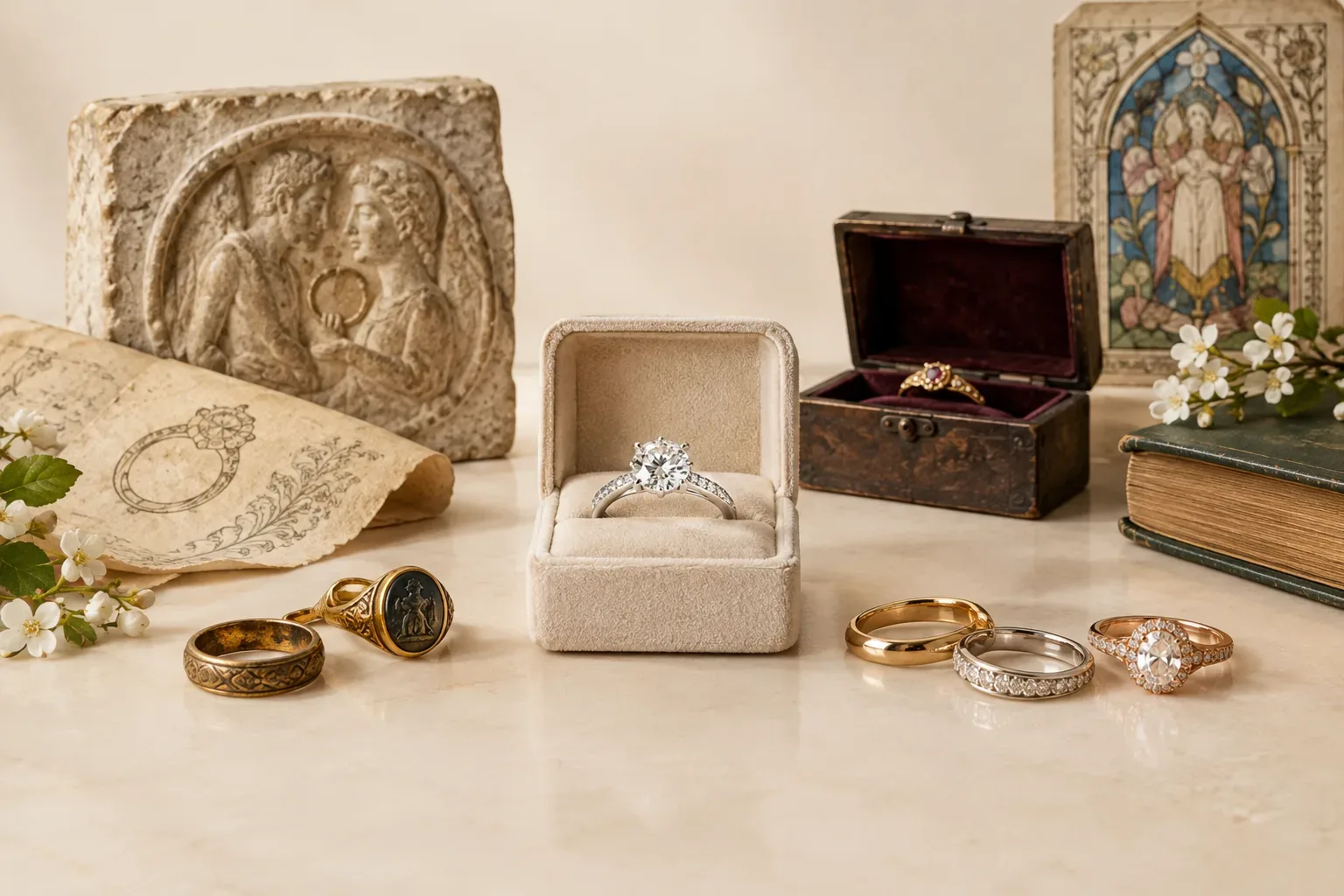
The long history of jewelry and of rings as social tokens is well documented by museum collections and scholarship. The Victoria and Albert Museum describes how jewelry forms, meanings, and functions change across time and place, and how rings frequently served as markers of status, identity, and exchange in a variety of historical contexts. Use the V&A’s material to understand that the idea of a ring as a formal promise or token developed unevenly in different societies rather than appearing as a single universal practice.
Because the V&A draws on objects from many periods, its accounts emphasize variation: some cultures used metal bands as symbols connected to law, religion, or kinship while in other places jewelry functioned more as personal ornament or dowry. The museum's historical perspective cautions against assuming that the modern Western practice of presenting a diamond engagement ring represents a single ancient lineage; instead, it reflects particular social and commercial developments over time.
Separating documented historical meanings from modern personal interpretations
Documented historical meanings come from surviving objects, inventories, wills, religious texts, and museum research. The V&A’s work shows that similar forms can have different meanings in different places and that meanings also shift within a culture across centuries. For example, a ring found in a funerary context may have served as a sign of identity or protection for the wearer in that historical moment rather than carrying the same romantic connotations a modern giver might intend.
Modern personal interpretations are just that: contemporary meanings people assign today. A wearer may choose a particular gemstone because of a family story, a birth month, or a personal aesthetic. Those meanings are valid for the giver and recipient, but they are not the same as the documented ritual or legal functions recorded in historic sources. Treat museum-based histories and present-day sentimental attributions as distinct layers of meaning.
How motifs, gemstones, and traditions show up in engagement rings
Engagement rings use a small set of visual strategies repeatedly: a central gemstone set alone (solitaire), a cluster or halo of stones, side stones in a band, engraved motifs, and symbolic forms such as knots, hearts, or braided bands. Those motifs can be adapted from historic designs or invented anew, and the same visual motif may carry different meanings in different cultural contexts.
Gemstone choice is both material and symbolic. The Victoria and Albert Museum’s A–Z of Gemstones explains how specific stones have distinct physical properties, historical associations, and working techniques. Diamonds, sapphires, emeralds, and rubies are durable and take high polish, which helps explain their frequent use in rings, while softer stones require protective settings. The physical qualities of a gem—hardness, cleavage, and color—affect how it is set and worn, and those practical concerns are part of how a motif appears and survives as jewelry.
Metals and settings also shape the motif. Platinum and certain gold alloys are chosen for strength and to secure faceted stones; bezel settings protect soft gems, while prong settings maximize light for faceted stones. Engraving, filigree, and milgrain are ornamental techniques with deep historical roots that are frequently adapted into contemporary engagement rings.
Quality, material, and price questions — what to check and why
Start by clarifying priorities: durability, meaning, style, and budget. Durability matters especially for daily-worn rings. The V&A’s resources on gemstones help explain why harder stones are usually recommended for rings that will be worn constantly. Ask whether the gem is suitable for everyday wear and whether the chosen setting protects it.
Ask the seller for written disclosures about treatments and imitations. The Federal Trade Commission’s guidance to consumers on buying gemstones, diamonds, and pearls stresses that dealers should disclose man-made stones, treatments (such as heating or filling), and any imitations. These treatments can affect value and care needs, so get clear, written information before purchase.
Request objective verification for high-value stones. Certificates from recognized gemological laboratories and independent appraisals are useful tools, but examine their scope: a certificate may describe a stone’s characteristics without assigning market value. For treated stones, the certificate should indicate the treatment. Keep written invoices and disclosure statements for insurance and resale.
Practical and respectful selection and gifting guidance
Respect personal and cultural preferences. If you are unsure about religious or cultural expectations, ask gently or consult a trusted family member. The V&A’s work reminds buyers that jewelry practices have diverse cultural meanings; a respectful approach acknowledges that modern customs are not universal. When gift-giving might have legal or religious implications, check with knowledgeable members of the relevant community before proceeding.
Fit practical needs to symbolic goals. If the recipient values a particular tradition or motif, prioritize that over market trends. For day-to-day comfort, ensure the ring’s weight, width, and profile suit the wearer’s lifestyle. If allergies are a concern, choose hypoallergenic metals and confirm metal content with the seller.
Budget thoughtfully and openly. Decide in advance what you can realistically afford and be transparent with your partner if you prefer a joint decision. A meaningful ring need not be the most expensive one available; clarity about finances and shared values reduces pressure and supports long-term satisfaction.
Plan for documentation and care. Ask the jeweler for care instructions specific to the materials and any treatments. Obtain a written warranty or service agreement when possible, and consider appraisal and insurance options once the purchase is complete.
Care, alteration, and future decisions
Know how the chosen materials age and what services they require. Softer gemstones and certain treatments can need more frequent inspection and occasional re-setting or polishing. The V&A’s materials guidance explains how different stones and metals respond to wear and conservation practices.
Keep an eye on resizing and family heirlooms. Rings can often be resized, but complex settings and certain metals make alterations more difficult. If you plan to pass the ring on in the future, consider how typical wear and common resizing practices might affect the design and structural integrity.
Final considerations
An engagement ring buying guide is most useful when it blends historical awareness, accurate material information, and practical consumer safeguards. Use museum resources like the Victoria and Albert Museum to ground your understanding of the ring’s cultural and design history, and follow the Federal Trade Commission’s consumer guidance on disclosure and authentication to protect your purchase.
Ultimately, the most durable guidance is pragmatic: know what you want the ring to mean, learn the facts about the materials and any treatments, get written disclosures and documentation, and choose respectfully with the recipient’s preferences in mind.
Frequently asked questions
How much should I spend on an engagement ring?
There is no universal rule. Set a budget that reflects your financial situation and the couple’s priorities. Consider durability, desired materials, and whether you prefer to prioritize meaning over market value. Be transparent with your partner if you plan to decide together.
How can I tell if a gemstone has been treated or is an imitation?
Ask for written disclosures and any laboratory certificates. The Federal Trade Commission advises buyers to require disclosure of treatments (such as heating or filling) and of synthetic or imitation stones. If in doubt, seek an independent appraisal or a certificate from a recognized gemological laboratory.
What gemstones are best for everyday wear?
Harder stones are better suited to daily wear because they resist scratching and damage. The Victoria and Albert Museum’s A–Z of Gemstones explains the physical properties that influence durability. If you choose a softer stone, select protective settings and plan for more frequent inspections.
Do I need a certificate for a diamond or gemstone?
A certificate can document a stone’s characteristics and whether it has been treated, which helps with insurance and resale. Certificates describe attributes but are not a universal guarantee of market value, so keep receipts and disclosures together with any laboratory reports.
Should I insure an engagement ring?
Consider insurance, especially for rings with significant value. Insurance and appraisals protect against loss, theft, or damage. Ask your insurer what documentation they require and keep all purchase records and any certificates.
How do I choose a ring respectfully across cultures?
Recognize that different cultures and communities have distinct practices and meanings for rings. If you are unsure about expectations or religious norms, ask a culturally knowledgeable person or consult community resources before making decisions.
Can an engagement ring be resized later?
Many rings can be resized, but complex settings, certain metals, and stones set across the band can limit options. Discuss resizing with the jeweler before purchase if you anticipate size changes.
Sources and further reading
- Bedazzled: A History of Jewellery — Victoria and Albert Museum
- An A-Z of Gemstones — Victoria and Albert Museum
- Buying Gemstones, Diamonds, and Pearls — Federal Trade Commission