Meaning at a glance
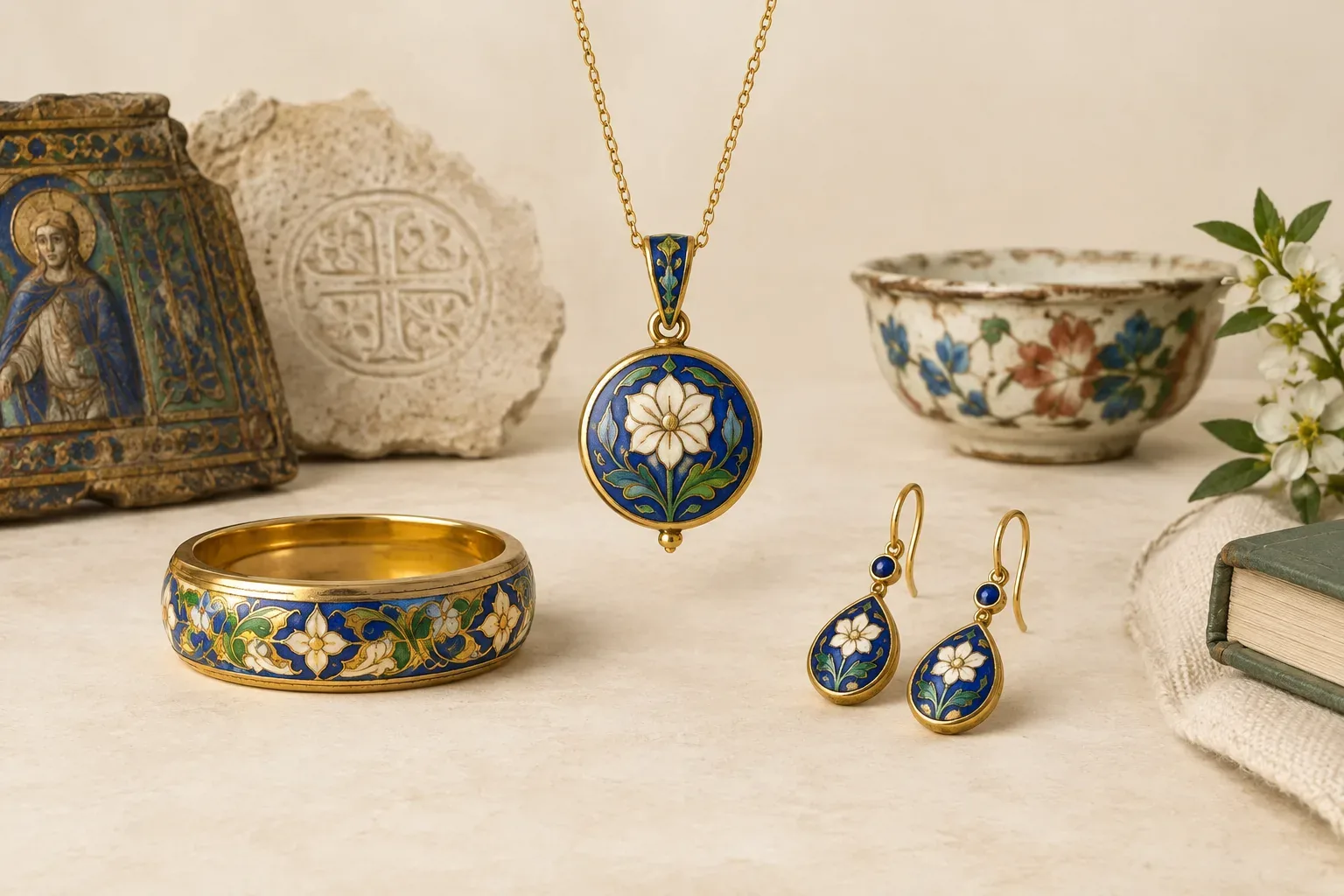
Enamel jewelry explained: this article reviews the documented history and changing contexts of enamel in jewelry, distinguishes historically recorded meanings from later personal or popular interpretations, and gives practical advice on composition, hallmarks, disclosure expectations, and respectful selection or gifting of enamel pieces for modern wearers.
Quick answer
Enamel jewelry explained in one sentence: enamel is a glassy coating fused to metal that has been used for religious, decorative, and personal jewelry across many cultures; museums such as the Victoria and Albert Museum document its long use and changing social contexts, while consumer guidance such as the U.S. Federal Trade Commission sets expectations for disclosure of treatments and imitations when buying enamel jewellery with gemstones or simulated materials.
What enamel is and how it is composed
In museum and curatorial descriptions, enamel is generally described as a vitreous (glassy) material applied to metal and made permanent by firing. This fusion of glass to metal creates a durable, colored surface used for both small ornament and large decorative objects, and is the basic composition discussed in museum literature on jewellery history.
When you see enamel on a piece of jewellery, you are looking at a durable colored surface adhered to a metal base. Because enamel itself is not a gemstone, discussions about gemstone identity, treatments, and imitations that apply to rings, brooches, and pendants with set stones are handled under broader gemstone disclosure guidelines from consumer authorities.
Hallmarks, maker's marks, and disclosure expectations
Hallmarks and maker's marks identify metal content and origin; they do not describe the presence or quality of enamel. Museums and auction records routinely use metal hallmarks to date and attribute pieces, and reputable sellers will show both metal marks and condition details for enamel work.
In many jurisdictions sellers are expected to disclose material treatments and imitations of gemstones and pearls. The U.S. Federal Trade Commission’s guidance on buying gemstones, diamonds, and pearls explains that disclosures should include any enhancement, treatment, or simulation relevant to value and care. When enamel jewellery also contains gemstones, expect sellers to disclose whether those stones are natural, treated, synthetic, or simulated, and whether surface finishes affect durability or cleaning.
Historical evidence and cultural periods (what the record actually shows)
The use of enamel is well documented by museum collections and scholarship. The Victoria and Albert Museum, for example, treats enamel as a persistent and adaptable decorative technique found in multiple cultures and periods and records its changing social uses. The V&A’s collections and interpretive materials identify enamel on Byzantine religious objects, where coloured enamel decorated metalwork used in liturgical contexts, as well as on medieval and Renaissance reliquaries and decorative objects where enamel provided pictorial or ornamental surfaces.
Moving forward in time, museum exhibits and catalogues document enamel’s prominence in later European jewellery traditions. The V&A describes enamel as a feature of Georgian and Victorian jewellery, where it could serve sentimental or commemorative functions, and as a prominent decorative element in Art Nouveau pieces that emphasized flowing line and colour. Curatorial records show enamel used both in elite court jewellery and in more widely worn personal items, with technique and subject matter changing according to fashion and social meaning.
Documented historical meanings versus modern personal interpretations
Where the historical record exists, museums attribute meanings cautiously and specifically to context. For example, V&A interpretation connects certain Victorian enamelled lockets and bands with sentimental and mourning practices of that era because of contemporary sources and surviving documentation. These documented meanings rest on period evidence and the objects’ recorded uses.
Modern wearers and sellers sometimes attribute broader symbolic meanings to enamel motifs—for instance, claiming that a particular colour or miniature portrait carries an unbroken tradition of meaning from the past. Those contemporary personal or commercial interpretations are valid as individual choices but should not be presented as universal or historically continuous unless supported by period evidence. The difference matters: documented meanings are what contemporaries and curators can verify; modern meanings are personal, cultural, or fashionable overlays that help people today connect with objects.
How motifs, gemstones, and traditions appear in enamel jewellery
Enamel can carry pictorial scenes, abstracts, floral patterns, initials, and symbolic motifs rendered directly on the metal surface. Museum collections show enamel used for portraits on miniature lockets, for symbolic imagery on mourning jewellery, and for decorative patterning in fashionable brooches and pendants. The motif’s significance depends on the original social context; for instance, a painted portrait set in enamel on a locket is documented as a personal keepsake in the 18th and 19th centuries in many European collections, according to the V&A.
Gemstones often accompany enamel, set into the same mount or used as accents. When gemstones are present, their identity and any enhancing treatments affect both value and care. Consumer guidance from the Federal Trade Commission makes clear that sellers should disclose whether stones are natural, treated, lab-created, or simulated. For buyers and givers, understanding whether a stone is a natural gem, a treated gem, or a simulant is essential to set accurate expectations for longevity, care, and resale value.
Practical advice for selecting and gifting enamel jewellery
Start with condition and documentation. Enamel can chip or crack if banged or dropped; reputable sellers and institutional catalogues note restoration, losses, or replacement enamel. If you are buying a vintage or antique piece, ask for clear photographs of the enamel surface from different angles and for any provenance or conservation history that exists.
Ask specific questions about hallmarks and stones. Request magnified images of metal hallmarks and any maker’s marks so you can research attribution, and ask whether any gemstones are natural, treated, synthetic, or simulated. For guidance on material disclosure, consult consumer resources such as the Federal Trade Commission’s advice for buyers of gemstones, diamonds, and pearls; sellers bound by those guidelines should provide clear information about treatments and imitations.
Match the piece to the recipient’s lifestyle. For everyday wearers who work with their hands, choose pieces with protected settings and robust enamelling, or select contemporary enamel on durable mounts. For a sentimental gift tied to a historical motif, check references or museum sources so you can explain the documented history without overstating universal meaning. If you are commissioning new enamel work, discuss colourfastness and services for future conservation so the recipient can enjoy the piece long term.
Respect cultural context. When a motif or style derives from a particular culture or religious tradition documented in museum literature, present it with factual context rather than ascribed universal symbolism. If you are uncertain about the cultural significance of a motif, consider consulting reliable museum sources or the guidance in related research articles before purchasing or gifting.
Frequently asked questions
How can I tell if an enamel jewellery piece is original or restored?
Ask the seller or conservator for detailed photographs and any conservation records. Look for differences in surface gloss, tiny cracks or lines around joins, and congruence of colour across fields; reputable sellers and museums document restoration and provenance in their listings. If the piece is offered with a professional condition report, that report should note restoration or replacement enamel.
Do hallmarks tell me about the enamel itself?
No. Hallmarks typically indicate metal type, purity, and sometimes maker or date; they do not describe the presence, quality, or restoration history of enamel. For enamel condition and history, request condition notes and close-up images from the seller or consult museum catalogue entries for comparable objects.
What should sellers disclose about gemstones set into enamel jewellery?
Consumer guidance such as the Federal Trade Commission’s advice on buying gemstones expects sellers to disclose whether stones are natural, treated, lab-created, or simulated, and to describe any treatments affecting appearance or durability. Ask for a written description and, if important to you, documentation such as certificates or lab reports.
Is enamel safe for everyday wear?
Enamel is durable but can chip or crack if struck hard. For everyday wear, choose designs where enamel is protected within the mount or select contemporary work engineered for daily use. If buying antique or vintage pieces, take condition into account and follow any conservator recommendations for care.
Can colours in enamel fade over time?
Enamel is a glassy surface and does not fade like organic dyes, but it can be affected by abrasion, chemical exposure, or repeated wear that alters surface condition. When colour stability matters, ask the maker or seller about materials and any specialist care instructions.
How should I gift an enamel piece respectfully when it uses motifs from another culture?
Research the motif’s documented context using reliable sources such as museum descriptions. If a motif has significant cultural or religious meaning, present the gift with factual context and consider the recipient’s background. Avoid implying universal symbolism and be open about whether a motif is a modern reinterpretation or a documented historical symbol.
Sources and further reading
- Bedazzled: A History of Jewellery — Victoria and Albert Museum
- An A-Z of Gemstones — Victoria and Albert Museum
- Buying Gemstones, Diamonds, and Pearls — Federal Trade Commission