Meaning at a glance
Enamel jewelry has a long, well-documented place in many cultures; its meanings have shifted over time and often require cultural context, while buyers should focus on technique, materials, condition, and disclosure when choosing or gifting enamel pieces.
Documented history: cultures and periods
Museum research and collections show that enamel techniques and enamelled objects appear in many periods and places, and that technique, function and social meaning shift by context. The Victoria and Albert Museum describes jewellery history as a field in which materials and decoration evolve with fashion, technology and social uses, and their collections illustrate how enamel is one among many decorative techniques that travelled and changed role over time.
European medieval and Renaissance goldsmiths used various forms of enamel on reliquary and devotional objects as well as on secular jewellery; enamel panels and inlays are well represented in museum collections. In later periods, such as the 18th and 19th centuries, enamelling techniques like painted enamel and guilloché appeared widely in personal jewellery and ornamental objects, often as a display of technical skill and as a luxury surface on watch cases, lockets, and brooches. The V&A’s work on jewellery history highlights these changing social contexts and technical developments rather than attributing a single, continuous symbolic meaning to enamel across centuries.
Enamel techniques were also used outside Europe. Museum narratives document enamel and related vitreous decoration in a variety of regional craft traditions, where enamelling processes and aesthetic priorities differed. These documented occurrences in museum collections demonstrate that enamel is a technical family—fused glass on metal—used for decorative, symbolic, and functional reasons in different cultures, rather than a single motif with a single, universal meaning.
Documented historical meanings versus modern interpretations
When museums discuss historical jewellery, they emphasize social context, function, and display more than universal symbolism. For example, enamelled devotional objects in a church collection may have been intended for religious use; a similar enamelled brooch worn by a courtier might signal fashion, rank or technical patronage. The Victoria and Albert Museum frames these meanings as historically situated rather than universal.
Modern commercial or personal interpretations often attach broad symbolic meanings to enamel motifs—hearts for love, flowers for renewal, animals for character traits. Those modern meanings are valid as personal or contemporary design narratives, but they are not the same as documented cultural practices unless supported by historical evidence from the relevant culture and period. Separate the provenance and documented context of an antique piece from a contemporary brand’s marketing language when assessing claimed historical meaning.
How motifs, gemstones, and traditions appear in enamel jewellery
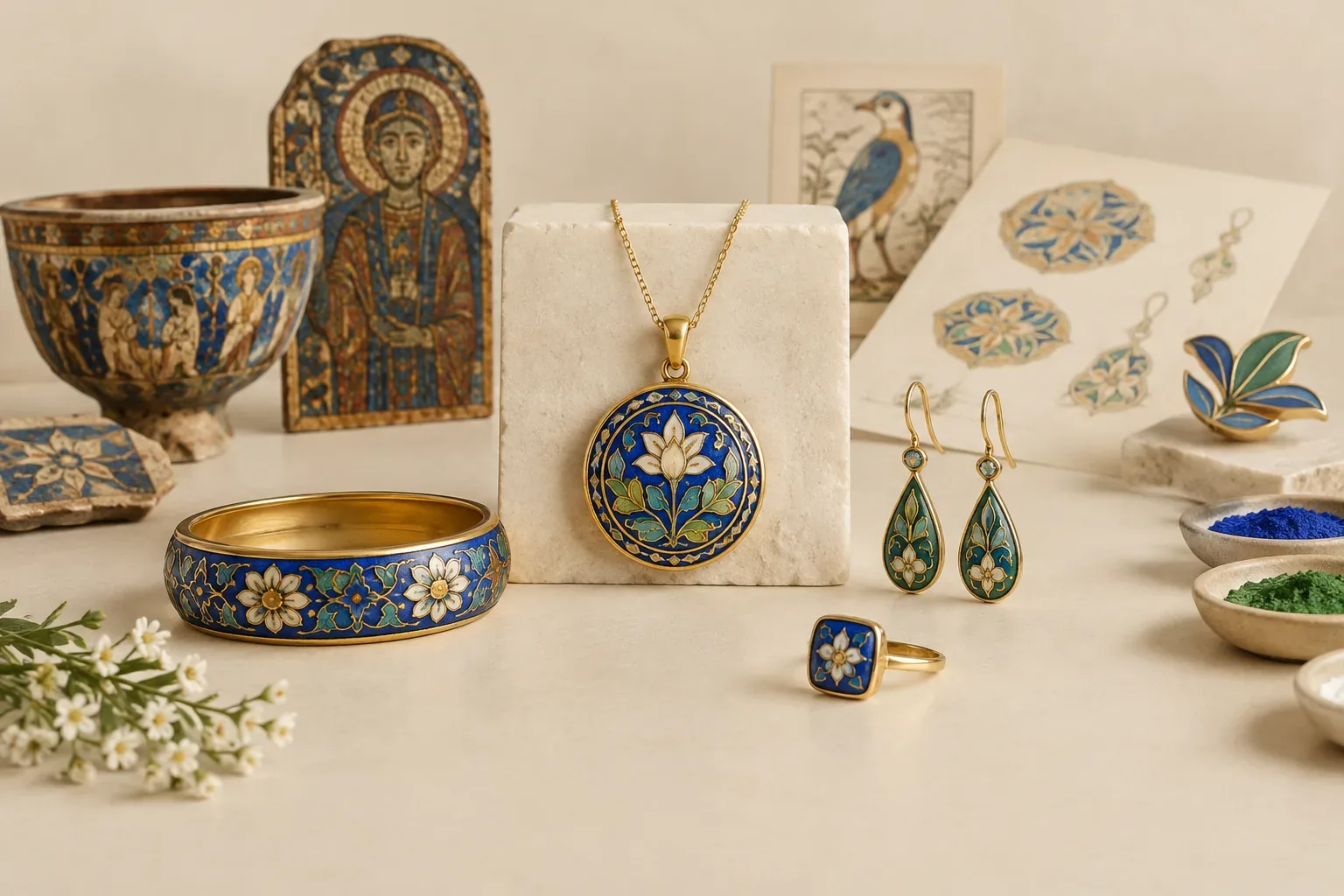
Enamel is a surface technique that allows colour, fine detail, and pictorial imagery that metalwork alone cannot produce. Common motifs in both historic and modern enamel include florals, portraits, religious scenes, initials, and geometric or abstract patterns. Guilloché enamel combines engine-turned patterns on metal with translucent enamel to create depth, while painted enamel permits detailed figuration. Cloisonné defines shapes with wire partitions and fills them with enamel paste, and champlevé removes metal to form recesses that are filled with enamel.
Gemstones and enamel frequently appear together. Enamel may surround or highlight gemstones, serve as a colourful backdrop, or be integrated into a setting where gems are set on top of enamelled surfaces. Museum resources on gemstones note that gem identification, setting style, and how stones interact with surrounding materials are key to assessing object function and value. In enamel pieces, attention to how stones are mounted, whether they were added later, and whether the enamel was fired around the setting are important technical cues to authenticity and craftsmanship.
Assessing enamel quality and price
Quality in enamel jewellery depends on materials, technique, execution, and condition. High-quality enamel shows smooth, well-fired surfaces without obvious cracking or loss, precise lines in cloisonné or painted work, and consistency in colour and translucence where intended. Exposed edges, joins, and the transitions to metal should be neat; poor finishing, uneven firing, and visible modern repairs can reduce both beauty and value.
Price factors include the complexity of technique (hand-painted enamels and guilloché are typically pricier), the preciousness and weight of the metal (gold settings add value), presence and quality of gemstones, historical provenance (museum‑documented or well-attributed pieces often command higher prices), and condition. For antique or vintage enamel, restoration history and loss can dramatically affect price and should be visible in condition reports.
Practical buying, authentication, and disclosure guidance
Ask sellers about technique, condition, and provenance. Reputable dealers and auction houses should describe the enamelling method, any repairs, and whether gemstones are natural, treated, or synthetic. Under U.S. consumer-protection guidance, sellers are expected to disclose treatments, imitations, and any relevant enhancements to gemstones and materials; the Federal Trade Commission provides general advice on expecting disclosure for gemstones, diamonds and pearls and similar principles apply when assessing enamel pieces for treated or imitation components.
Request clear photographs—front, back, edges—and, for high‑value items, a written condition report or third‑party appraisal. For antiques, provenance documentation or cataloguing references enhance confidence. For contemporary pieces, inquire whether enamels are vitreous (fired glass) or an enamel-like resin, because materials and longevity differ; reputable makers should be willing to describe their materials and processes.
When authenticity matters, consider professional evaluation. A qualified gemmologist or conservator can assess gemstone identification and whether enamels have been repaired, re-fired, or restored. For heavy wear or missing enamel, restoration may be possible but can change a piece’s aesthetic and market value; ask for conservator reports and ideally supporting before-and-after documentation.
Selection, wearing, and gifting guidance
Choose enamel jewellery according to intended use. For daily wear, favour durable techniques and protective settings—cabochon gemstones set above enamel are often more robust than delicate painted enamel panels that project from the mounting. For occasional or formal wear, highly detailed painted enamel or enamelled portrait lockets make striking statements and reference historical traditions of sentiment and portraiture as documented in museum collections.
Respect cultural contexts when gifting pieces with specific historical or religious imagery. If you are selecting a historic motif from a particular culture, learn the documented provenance and avoid assuming contemporary commercial meanings apply. If a piece has overt religious imagery, consider the recipient’s beliefs and comfort. For personal symbolic gifting, explain whether the symbol is a contemporary interpretation or a historically grounded motif, and include any provenance details if purchasing antique jewellery.
Set expectations around care. Enamel is susceptible to hard knocks, extreme temperature changes, and abrasive cleaners. Gently store enamel pieces separately to avoid scratches, avoid exposing them to solvents, and have a trusted jeweller or conservator advise on cleaning or conserving delicate antique enamels.
Summary: buying smart with respect for history and craftsmanship
Enamel is a versatile, historic technique used across cultures for decorative and functional reasons. Historical meanings depend on context and are best understood through documented provenance and museum research rather than broad generalizations. When buying or gifting, prioritize transparent disclosure about materials and treatments, assess technical execution and condition, and match the piece to the recipient’s taste and intended use. Asking informed questions and, when necessary, seeking professional evaluation will protect both the buyer and the cultural integrity of the objects involved.
Frequently asked questions
How can I tell if enamel on a piece is original or a later repair?
Ask the seller for a condition report and close-up photographs of the enamel edges and reverse. Original enamel will typically have consistent firing characteristics across panels and neat transitions to the metal; repaired or overpainted areas may show different texture, colour saturation, or visible joins. For high-value items, a conservator’s assessment can confirm whether an enamel has been re-fired, filled or repainted.
Does the presence of gemstones make enamel jewellery more valuable?
Gemstones can add value, but overall worth depends on the gemstone quality, how it is integrated, the metal used, the enamel technique, and the piece’s condition and provenance. Consult reputable gemstone guides and request disclosure about treatments or imitations when assessing combined enamel-and-gemstone pieces.
What should I ask a seller before buying vintage or antique enamel jewellery?
Request full provenance or history if available, a detailed description of the enamelling technique, condition and any conservation work, clear photographs, and disclosure about gemstone treatments or replacements. If the item is described as antique and carries a significant price, consider asking for independent verification or a catalogue reference.
Are there standard hallmarks or marks that indicate enamel quality?
Hallmarks usually refer to metal purity and maker marks rather than enamel quality. To judge enamel quality, examine technique, firing condition, and surface finish. For materials and treatment disclosures related to gemstones and metals, follow consumer-protection guidance and ask the seller for specifics.
Is enamel jewellery good for everyday wear?
Some enamel pieces are durable enough for regular wear, especially those where the enamel is protected by the setting and where the technique is robust. Painted enamels and very delicate enamel panels are better reserved for occasional wear to reduce the risk of impact damage or abrasion.
How should I care for enamel jewellery?
Store enamel pieces separately to avoid scratching, keep them away from sudden temperature changes and harsh chemicals, and clean gently with a soft cloth. For antique pieces, consult a conservator before attempting any cleaning or repair because improper treatment can damage the enamel irreversibly.
Sources and further reading
- Bedazzled: A History of Jewellery — Victoria and Albert Museum
- An A-Z of Gemstones — Victoria and Albert Museum
- Buying Gemstones, Diamonds, and Pearls — Federal Trade Commission