Meaning at a glance
This guide explains the documented history and changing contexts of Edwardian jewelry, separates historical meanings from modern personal interpretations, describes typical motifs and gemstones, and gives practical, respectful advice for selecting or gifting revival pieces.
What historians record about Edwardian jewelry
When curators and historians at the Victoria and Albert Museum summarize the period we call "Edwardian," they emphasise certain stylistic shifts in jewellery: delicate, lacy metalwork, an increased use of platinum and fine filigree settings, and a preference for combinations of diamonds with pearls and colored gemstones. The V&A places these design characteristics in the broader sweep of jewellery history and notes how social tastes and technological changes shaped them rather than attributing single, fixed meanings to every motif.
That same scholarship shows continuity and overlap with earlier and later styles. For example, bow, garland, and naturalistic motifs appeared in late-Victorian work and continued into Edwardian pieces, while technical advances in metalworking and stone-setting allowed more openwork designs. When you read historical descriptions at a museum such as the V&A, treat them as documentation of style, materials, and social context rather than a catalogue of unchanging symbolic claims.
Exactly which cultures and periods we mean
In this article "Edwardian" refers specifically to the jewellery fashions associated with British society in the early years commonly identified with Edwardian tastes, as described by the Victoria and Albert Museum. That context is distinct from Victorian jewellery that immediately preceded it and from later revival movements in the 20th and 21st centuries.
Because the same motifs and gems appear across cultures, it is important to name sources when claiming historical meanings. The V&A provides documented evidence about how these styles appeared in British and European jewellery collections; other cultures and periods used similar imagery for different reasons, and those differences should be researched separately rather than assumed to be the same as Edwardian meanings.
Documented historical meanings versus modern interpretation
Museum documentation typically records usage and context rather than a single symbolic meaning. For example, the V&A records the popularity of bows and garlands in high-society jewellery as a fashionable motif, often related to dress and aesthetics of the time. That documentation does not mean every bow in that era had the same emotional or social meaning for every wearer.
Modern wearers and sellers often assign personal or marketable meanings—such as "romance" for a bow or "purity" for pearls—that are contemporary interpretations rather than universally documented historical facts. When you encounter claims about a motif's "traditional" symbolism, check whether the claim cites museum research or originates in modern marketing and personal narratives.
How Edwardian motifs, gemstones, and traditions appear in jewellery
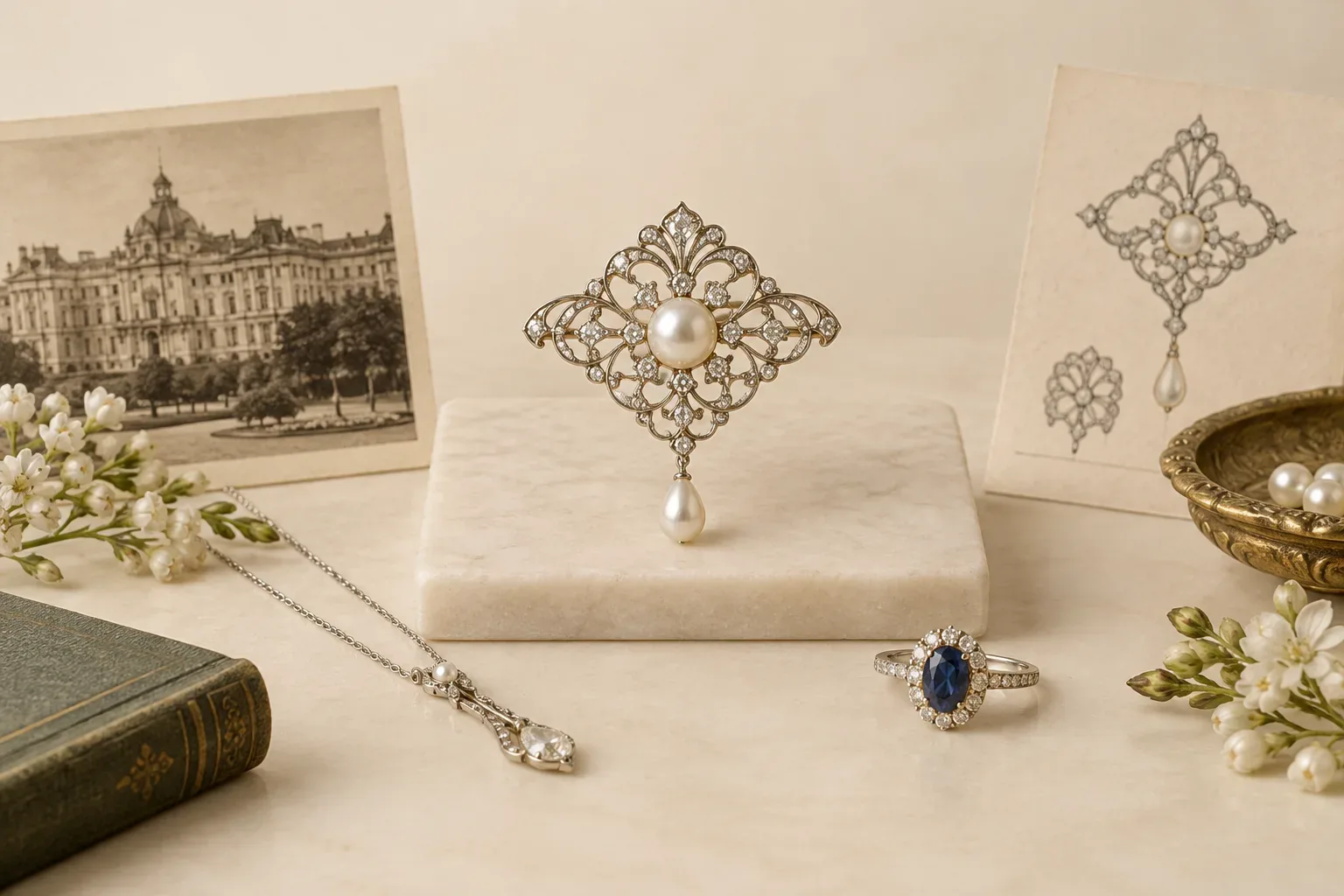
Motifs: Openwork lace-like metal settings, tiny garlands, bows, and naturalistic sprays are common motifs identified in museum collections as characteristic of the Edwardian aesthetic. These motifs are usually integrated into brooches, pendant lockets, hair ornaments, and delicate collars rather than the heavier statement pieces of some earlier periods.
Gemstones and materials: The Victoria and Albert Museum's resources on gemstones note that diamonds and pearls were frequently paired in fine jewellery collections of the time, and colored gemstones appear in both accent and focal roles. Platinum and high-karat gold were used for their ability to be worked into fine, filigree-like designs. When evaluating a piece, look for consistent workmanship where small stones are pavé-set or bead-set in openwork metal, and for the characteristic lightness of Edwardian compositions.
Traditions: Personal jewellery practices of the period included the use of lockets and sentimental objects, and museums document examples where portrait miniatures or hair were set within jewellery as keepsakes. However, while museums can show that these practices happened, they do not assert that any single piece carried a fixed, universal meaning for its wearer.
Practical guidance for buying Edwardian and Edwardian-revival jewelry
Know what you are buying: Distinguish original Edwardian-period pieces from later revival work. Museum documentation is useful for recognising typical design and construction, but provenance and condition determine value and authenticity. Ask for documentation or a reliable appraisal when a seller claims a piece is an original period object.
Material disclosure and treatments: The Federal Trade Commission provides consumer guidance that sellers should disclose treatments, imitations, and the material composition of gemstones and metals. For revival pieces, insist on clear information about whether gems are natural, treated, lab-grown, or simulated, and whether the metal is platinum, gold, gold-plated, or a white metal alloy.
Assess workmanship and comfort: Edwardian-style pieces are often delicate. Check clasps, pin hinges, and stone settings for stability. For wearable pieces like necklaces and tiaras, verify comfort and fit; an exact replica of a museum piece may require modification to be practical for modern wear.
Consider context and respect: If a design references sentimental traditions such as lockets or hair mementos, be mindful when gifting these items. Present them with an explanation of their historical context rather than implying a single, fixed symbolic meaning. If a piece reproduces an object with personal or memorial associations, ask recipients whether they are comfortable receiving such symbolism.
Budget and priorities: Decide whether you value historical authenticity, material quality, or aesthetic reproduction. An affordable revival in sterling silver with lab-grown diamonds can capture the look without the market price of a period piece; conversely, original Edwardian pieces in platinum with natural diamonds command higher prices and require conservational care.
Sourcing and trust: Buy from reputable dealers who provide condition reports and clear disclosure. If you are purchasing online, request detailed photographs of settings, hallmarks, and any repairs. When in doubt about a claim of historical provenance, consult a qualified appraiser or a museum reference.
How to gift Edwardian-style jewelry respectfully
Be explicit about what you are giving. If the piece is a modern reproduction, label it as such and describe materials and any cultural or sentimental references. If the item is an original period piece, include provenance and condition notes so the recipient understands its place in history and any practical care needs.
Avoid presuming universal symbolism. Offer the recipient information about historical associations from museum sources if they are interested, and invite them to make their own personal meaning. Framing the gift as a conversation piece—both for its design history and its personal wearability—respects both the object's past and the recipient's agency.
Care instructions: For pearls, fine diamonds, and delicate filigree, provide or recommend conservational care. Sensitive stones and settings can require professional cleaning and careful storage, particularly for original pieces. This practical guidance is part of responsible gifting.
Red flags and smart checks when buying
Unclear material descriptions, absent hallmarks, and poor photographs are reasons to pause. The FTC notes consumers should expect truthful disclosures about treatments and identities of gemstones and metals. If a seller refuses to confirm whether gems are treated or lab-grown, seek another source or request a gemological report.
Overly sweeping symbolic claims should also be treated cautiously. If a listing makes decisive historical claims without sourcing museum references or provenance, the claim may be marketing rather than documented history. Use museum documentation such as that available from the V&A to verify style and context before accepting symbolic narratives as fact.
When to consult a specialist
Consider a qualified appraiser when authenticity, insurance valuations, or conservation needs are at stake. Museums like the V&A provide useful contextual research, but appraisers and conservators provide condition reports and technical assessments useful for purchase decisions.
If you plan to alter a period piece for wearability, consult a conservator first. Proper conservation protects historical integrity, while careless alterations can reduce a piece's cultural and monetary value.
Final note on meaning and modern use
Edwardian jewellery offers a rich set of design cues for modern makers and buyers, but documented museum research shows those cues are best understood as part of a historical visual language rather than fixed, universal symbolism. Use the V&A's scholarship to ground your understanding of style and materials, apply FTC guidance on material disclosure, and choose and gift pieces with clear provenance, respectful context, and honest descriptions.
Frequently asked questions
How can I tell if a piece is genuine Edwardian?
Look for documentary provenance and period-appropriate construction such as delicate openwork, platinum or high-karat gold settings, and period hallmarks. Museum references like the Victoria and Albert Museum help identify stylistic features, but an accredited appraiser or condition report is necessary to confirm authenticity.
Are pearls and diamonds always symbolic of purity in Edwardian jewellery?
No. The Victoria and Albert Museum documents that pearls and diamonds were popular materials in the period, but museums record use and style rather than a single symbolic meaning. Contemporary attributions of "purity" are modern interpretations, not universal historical facts.
What should sellers disclose about gemstones and treatments?
The Federal Trade Commission advises that sellers disclose treatments, imitations, and whether gems are natural, lab-grown, or simulants. Ask for written confirmation and, for higher-value pieces, a gemological report.
Is it acceptable to gift a reproduction Edwardian piece as a sentimental object?
Yes, provided you label it clearly as a modern reproduction and explain any historical references. Respectfully framing the piece and avoiding assumptions about universal symbolism lets the recipient form their own meaning.
Should I modify an original Edwardian piece to make it more wearable?
Consult a conservator or qualified jewellery restorer first. Alterations can affect a piece’s historical integrity and value; professional advice can balance wearability with conservation.
Sources and further reading
- Bedazzled: A History of Jewellery — Victoria and Albert Museum
- An A-Z of Gemstones — Victoria and Albert Museum
- Buying Gemstones, Diamonds, and Pearls — Federal Trade Commission