Meaning at a glance
East‑west setting engagement ring durability depends on stone shape and durability, the chosen mounting (bezel, prong, halo, low profile), and the wearer’s activity level. Properly designed east‑west rings can withstand daily wear, but certain combinations — high prongs with fragile stones or very high profiles — increase snagging and repair likelihood. Buyers should verify written disclosures about the gemstone, ask a qualified jeweler to inspect setting security, and consider lower‑profile or bezel styles for active wearers.
What ‘east‑west’ orientation means in practice
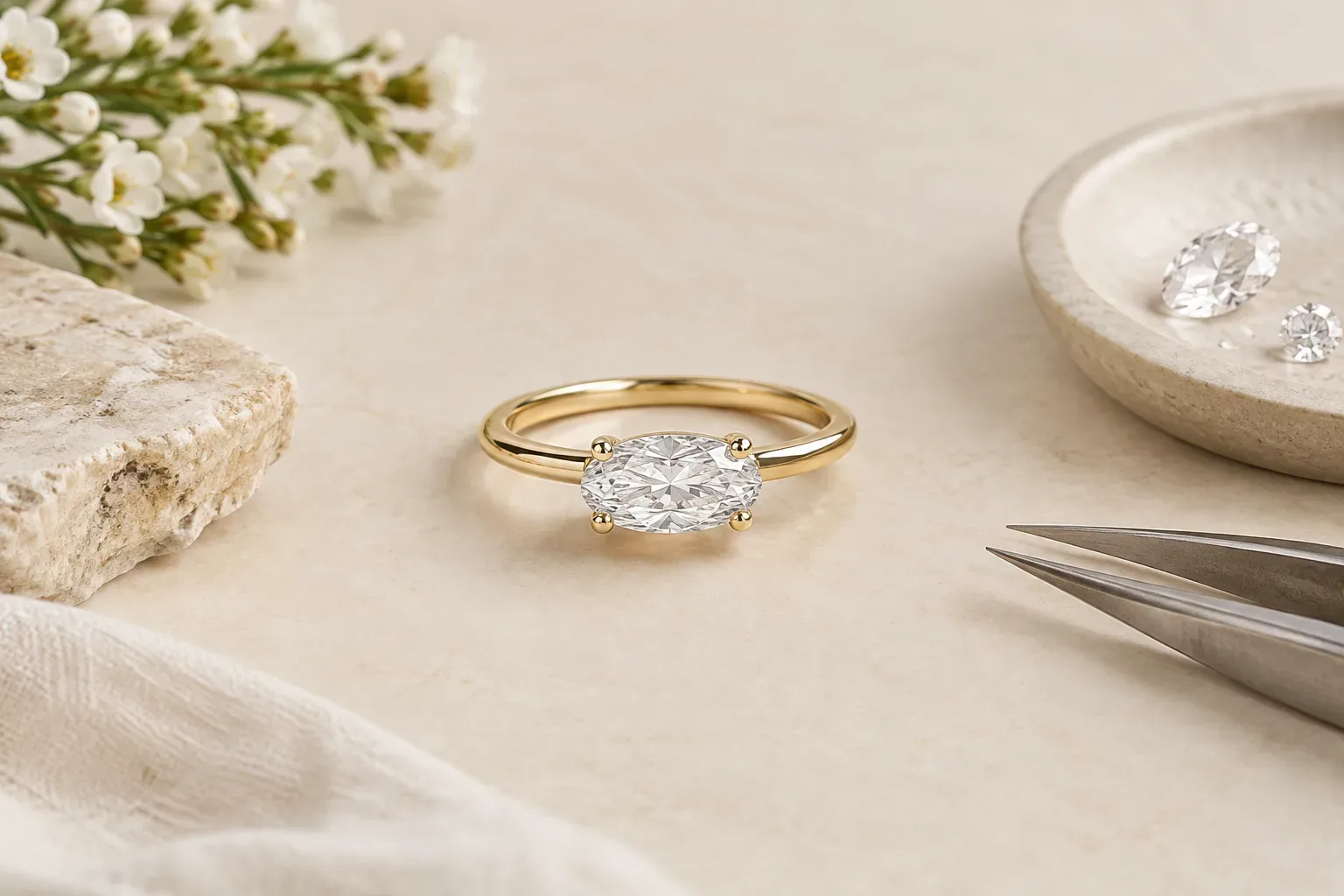
An east‑west setting simply places the longest axis of an elongated or asymmetrical gemstone — commonly oval, marquise, or emerald cuts — perpendicular to the finger rather than parallel. The same stone and the same setting style can be made east‑west or north‑south; the change is one of orientation, not a different technique.
Historical evidence and cultural origins
There is little peer‑reviewed historical evidence tying east‑west orientation to a specific premodern culture or ritual practice. The available industry evidence shows east‑west is primarily a contemporary stylistic choice rather than an ancient, documented tradition. Market trend reporting from Imaginaire Digital identifies strong consumer interest in oval engagement rings and modern orientations in the 2020s, which helps explain the rise of east‑west styles in recent collections. Jewelers Mutual’s 2026 trends reporting likewise places east‑west and other nontraditional orientations within a wider modern movement toward fluid forms, gender‑neutral styling and versatility.
Documented meanings versus modern personal interpretation
Documented historical meanings for east‑west orientation are effectively absent in the trade literature; it is not possible to attribute a widely recorded symbolic meaning to a particular historical culture based on the approved sources. By contrast, modern wearers and designers assign personal or contemporary meanings to the orientation — for example, a desire to look unconventional, to emphasize an elongated stone’s profile, or to echo current fashion trends. Those personal interpretations are valid as private symbolism but should be distinguished from documented cultural or historical meanings.
How the motif and stone choices appear in jewelry and how that affects durability
East‑west settings are most commonly used with elongated stones such as ovals, marquises, and emerald cuts, and with certain fancy shapes. The orientation changes how the ring sits and how the stone’s edges are exposed. A horizontal emerald cut mounted high with narrow prongs will project forward across the knuckle, increasing the chance of catching on fabric or objects. The same stone set in a bezel or low halo will be more protected and present a lower snagging profile.
Gemstone durability is determined by three basic factors: hardness (resistance to scratching), toughness (resistance to chipping), and chemical stability. The Gemological Institute of America explains that treatments and the physical properties of a gem both affect its durability and care needs. Because east‑west styles often highlight elongated facets and corners, stones with brittle cleavage or low toughness need stronger protection than very hard but brittle gems.
Daily wear and snagging: practical trade‑offs
Daily‑wear performance depends on the combination of the wearer’s lifestyle and the ring design. A low‑profile bezel set east‑west oval will usually resist snagging and protect the gem’s girdle and corners, making it very suitable for someone who uses their hands a lot. By contrast, a cathedral or high‑set east‑west ring with four thin prongs leaves edges exposed and will snag more easily.
Design choices that reduce snagging also tend to change the visual effect. Protective options such as bezels reduce the visibility of the stone’s sides and can slightly alter light performance compared with open prongs. Buyers must weigh the desire for optical brilliance against practical protection.
Repair risk and common repair issues
Common repair needs for any engagement ring include re‑tipping prongs, resetting stones that have shifted, repairing dents or bends in the shank, and replacing damaged bezels. East‑west rings with thin prongs on elongated stones can be more likely to need prong re‑tipping or a stone re‑seat if knocked. Bezel‑set east‑west rings are less likely to require frequent prong repairs but, if the bezel is damaged, the repair can require more metalwork and local reshaping.
Because repair outcomes depend on the metal, the setting construction, and the stone itself, the only reliable, technical verification of structural risk comes from a qualified bench jeweler or a gemological laboratory inspection. The Gemological Institute of America notes that treatments and material properties affect both detectability and durability, and the Federal Trade Commission advises consumers to seek written disclosures about treatments, origin, and whether a gem is natural or created.
What you can and cannot verify without a qualified jeweler or laboratory
You can verify basic things before purchase: ask for written seller disclosures about whether the stone is natural, lab‑grown, treated, or an imitation, and request documentation such as independent reports when available. The FTC requires clear distinctions so consumers can make informed choices. You can inspect the setting visually for obvious loose prongs, see whether a stone sits low or high, and assess profile in photos or in person.
You cannot reliably determine internal treatments, subtle fracture features affecting toughness, or whether a mounting has microscopic faults without trained equipment. For those technical questions, only a qualified jeweler’s bench inspection or a gemological laboratory report will provide dependable answers, especially for higher‑value stones.
Safe care guidance to minimize snagging and repairs
For day‑to‑day care, avoid wearing an east‑west engagement ring during heavy manual work, contact sports, or while using harsh chemicals. Clean gently with a soft brush and mild solution recommended for the particular gem type, and have prongs and the mounting checked by a jeweler at least once a year or sooner if you notice movement or catching. Jewelers Mutual’s industry guidance on modern jewelry use and craftsmanship underscores the benefits of regular maintenance and using an insurer or warranty for peace of mind.
If your chosen stone has known treatments or is sensitive to heat or chemicals, follow the care instructions associated with those treatments. The GIA highlights that treatments and stability determine special care; always check vendor disclosures and documented care recommendations before exposing a gem to ultrasonic cleaners, steam, or acids.
Selection and gifting guidance
Match the ring design to the recipient’s lifestyle and priorities. If the wearer leads an active life or prefers low maintenance, prioritize protective settings such as bezels or low halos and choose stones with higher toughness. If optical performance and maximum sparkle are primary, discuss trade‑offs—open prong settings present the gem beautifully but need more care.
Ask about seller disclosures and documentation. Request written statements about whether the gemstone is natural or lab grown, any treatments, and whether an independent report is available. The Federal Trade Commission advises that these distinctions be made in writing. When gifting, be respectful: an east‑west ring is a contemporary aesthetic rather than a traditional symbolic orientation, so consider how the recipient responds to modern or vintage cues rather than assuming a cultural meaning.
When to consult specialists
If you notice looseness, visible chips, or an apparent change in how the ring rides on the finger, stop wearing it and consult a qualified jeweler for a bench inspection. For questions about the stone’s treatments or for a conclusive durability assessment, ask for a gemological laboratory report from an independent lab. These specialists can advise whether a re‑setting, reinforcement, or a design change would better suit daily wear.
Final recommendation
East‑west setting engagement ring durability is not an all‑or‑nothing property. Evaluate the ring as a combination of stone, mounting, metal construction, and the wearer’s routine. Prefer lower‑profile, protective settings for high‑use wearers; ask for written disclosures and independent reports for valuable stones; and arrange regular professional checks. These evidence‑based steps will let you enjoy the east‑west look while managing snagging and repair risk.
Frequently asked questions
Is an east‑west engagement ring more likely to snag than a traditional orientation?
It depends on the setting profile and mounting. High‑set east‑west rings with thin prongs are more likely to catch than low‑profile bezels or halos. Orientation alone doesn’t determine snag risk; the combination of stone shape, setting style, and how the wearer uses their hands matters most.
Can an east‑west ring be safe for daily wear?
Yes. When built with protective settings (bezel, low halo) and robust construction, east‑west rings can be suitable for daily wear. For active lifestyles, prioritize protective mounts and regular professional inspections.
What repairs are east‑west rings most likely to need?
Common repairs include prong re‑tipping, resetting shifted stones, shank resizing or straightening, and repairing damaged bezels. Rings that leave corners exposed or sit high on the finger are more prone to impact damage and may require repair more often.
What should I ask the seller before buying an east‑west engagement ring?
Request written disclosures on whether the stone is natural, lab‑created, or treated, ask for any independent reports, inspect photos and the ring’s profile, and ask whether the jeweler offers a workmanship warranty and recommended maintenance schedule. The FTC emphasizes clear written distinctions for these matters.
Can I tell if a gemstone has been treated or if it’s lab‑grown just by looking?
No. Visual inspection alone is often insufficient to determine treatments or origin. For conclusive answers, request documentation or a laboratory report; the GIA notes that detectability and disclosure of treatments are specialized tasks.
How often should I have an east‑west engagement ring checked?
Have a professional check the setting at least once a year, or sooner if you notice catching, movement, or visible damage. Regular checks reduce the risk of losing a stone and identify early repair needs.
Sources and further reading
- Imaginaire Digital — Imaginaire Digital
- Jewelers Mutual — Jewelers Mutual
- Gemological Institute of America — Gemological Institute of America
- Federal Trade Commission — Federal Trade Commission