Meaning at a glance
This ear cuff buying guide explains the documented history and changing contexts of cuff-style earrings, separates cultural and religious evidence from later popular interpretations, and gives practical guidance for choosing, wearing, and gifting ear cuffs today.
Quick answer
In short: treat an ear cuff purchase as you would any piece of jewelry—ask what it is made of, how it is constructed, whether any gems are treated or simulated, and how the design relates to cultural meaning. The guidance below explains the documented history and changing contexts of cuff-style earrings (drawing on museum research) and practical buying checks (drawing on consumer disclosure guidance).
What the historical record shows
Museum scholarship shows that cuff-style and non‑pierced ear ornaments are part of a long, changing history of jewellery rather than a single invention or universal symbol. The Victoria and Albert Museum describes how jewellery objects and motifs reappear in different forms through ancient Egypt, the classical Mediterranean (Greece and Rome), medieval and early modern Europe, and later nineteenth‑century fashions, with each period using materials and techniques that suited its social and technological context. These changes in form and material underline that an object’s meaning and social role depended on time and place, not on an inherent, permanent symbolism.
Documented historical meanings versus modern interpretations
Documented meanings in the museum record tend to be concrete and tied to social roles. The V&A notes jewellery was used to mark status, to secure or signal religious or magical protection, and to record sentimental relationships or mourning. Those functions were based on documented contexts—who commissioned the piece, the inscriptions or iconography it carried, and the social setting in which it was worn.
Modern interpretations, by contrast, are largely personal or fashion-driven. Contemporary wearers and designers frequently repurpose historical forms—coils, serpent wraps, leaf motifs, or single‑stone accents—as aesthetic or identity statements. Such modern meanings are valid for the individual but are not the same as the documented uses recorded by curators and historians; they should be presented as contemporary layers of meaning rather than claims about a single, historical function.
How motifs and gemstones show up in cuff-style earrings
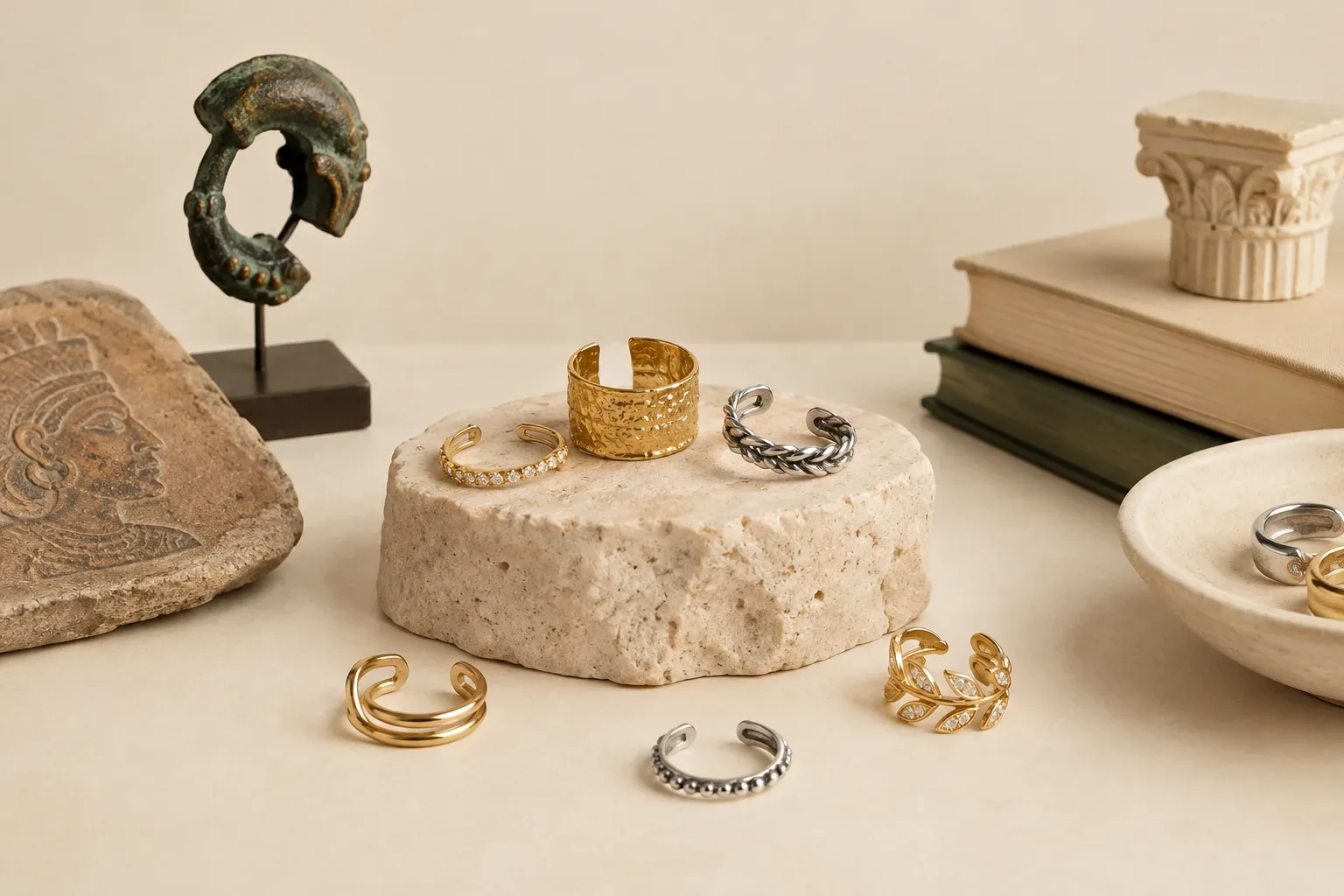
Motifs: Curators at the Victoria and Albert Museum point out that certain motifs—coils, spirals, serpents, foliage, and geometric bands—recur in jewellery across multiple periods. In cuff-style earrings these motifs are translated into wraps, partial hoops, or climbers that follow the curve of the ear. The same visual language can be made in different materials and scales: a delicate gold coil, a wide sculpted cuff, or a modern, minimalist clip.
Gemstones: For gemstone choices, the V&A’s guides to gems emphasize that particular stones carried different values and associations in different times. Pearls and diamonds have long been prized for status and display in many collections, while coloured gems were selected for colour and rarity as taste and trade networks evolved. In contemporary ear cuffs you’ll find single accent stones, pavé rows, or mixed gem insets; those treatments change the look and the price, and they may also carry echoes of earlier meanings even when used simply for decoration.
Materials, construction and what to ask a seller
Start by asking plainly what metal and what construction you are buying. Is the piece solid gold or silver, gold‑filled, vermeil, or plated base metal? Is it cast as a single piece or assembled from joined parts? Solid precious metals and careful fabrication usually cost more and wear differently than plated or thinly coated items.
For gemstones and simulants, the Federal Trade Commission advises buyers to expect truthful disclosure about treatments, synthetics, and imitations. Ask whether any stones are lab‑created, heat‑treated, fracture‑filled, or simulated. The presence of treatments or simulants is a legitimate price and care factor, and U.S. consumer guidance calls for sellers to be clear about these facts.
Also ask about fit and finish: how tight the cuff is, whether there are rough edges that could irritate the ear, and whether the seller recommends bending the cuff to adjust the fit. Because construction affects comfort and longevity, a clear answer about how the cuff is formed and finished is often more useful than marketing labels.
Price questions: what influences cost and value
Price reflects several combined factors: the intrinsic value of metal and gems, the complexity and quality of fabrication, brand and designer mark‑up, and any historical or artisan provenance. Museum collections and exhibitions trace how changes in technique and taste have raised or lowered the cost of similar forms over time: a finely worked historic cuff required extensive hand labour, while a modern plated piece may be produced more cheaply.
Because gem treatments and synthetic alternatives affect market value, remember the FTC guidance: disclosure matters. A lab‑created diamond or a simulated opal will be priced differently from natural, untreated stones. Similarly, a cuff that is hand‑fabricated in a precious alloy will usually command a higher price than a mass‑produced plated item, even if their visual designs are close.
How to choose, wear, and care for an ear cuff
Choose by comfort first. Have a sale or a physical try‑on policy wherever possible. A cuff that pinches or slides out of position will not be worn, no matter how attractive its design. For non‑pierced cuffs, ask how much pressure the cuff applies and whether it is adjustable without breaking the finish.
Layering and balance matter. If you plan to wear an ear cuff with other earrings, think about scale and visual weight so the look feels cohesive. For single‑ear statements, let the cuff define the ear’s silhouette rather than competing with multiple loud elements.
Care depends on materials. Precious metals and hard gemstones are generally low‑maintenance, while plated finishes and softer stones need gentler handling and more frequent inspection. If an item is described as plated or coated, assume the surface will wear over time and treat the piece accordingly.
Gifting guidance and cultural respect
When you give an ear cuff as a gift, consider both the recipient’s style and any cultural or religious meanings attached to specific motifs. Museum research shows that many motifs historically had social or sacred meanings in their original contexts, and borrowing or repurposing such symbols can be sensitive. If a motif is described by a seller as coming from a particular cultural or religious tradition, ask for context and provenance before presenting it as a gift.
Respect the recipient’s relation to symbolism. Some people appreciate a historically inspired motif as a fashion choice; others may attach personal or familial meanings to similar forms. If you are unsure, choose a design that emphasizes craftsmanship and wearability, or pair the piece with a note that explains why you chose it personally rather than claiming a historical or cultural statement on their behalf.
Final checklist before you buy
Before you purchase: confirm metal type and whether it is solid or plated; ask how any stones were sourced or treated and watch for clear disclosure; try for fit or check the return policy; and consider the maker’s repair or resizing options. Use museum resources to understand historical provenance when a seller claims a design is 'inspired by' a particular era, and consult consumer guidance when gemstones or treatments are discussed.
Frequently asked questions
Are ear cuffs appropriate for pierced and non‑pierced ears?
Yes. Many ear cuffs are designed to clip onto the helix or outer ear and require no piercing, while some are intended to be worn in combination with pierced earrings. Check the seller’s description and try for fit where possible: the right cuff should feel secure without pinching.
How do I know whether a gemstone in an ear cuff is natural or treated?
Ask the seller directly and expect clear disclosure. The Federal Trade Commission advises that material facts—such as whether a gem is synthetic, simulated, or has been treated—should be disclosed so you can judge value and care requirements.
What metals should I prefer if I have sensitive skin?
Many people with sensitivities choose items marked as solid precious metals (gold, silver, or platinum) or pieces labelled hypoallergenic, but responses to metals vary. If you are concerned, request specific metal content from the seller and test a cuff briefly for comfort before committing.
How much should an ear cuff cost?
Price varies with metal and gem content, craftsmanship, and brand. Solid precious metals and authentic gemstones generally raise price, while plated or mass‑produced pieces are less costly. Treat manufacturer claims about origin or inspiration as part of the purchasing story, and expect transparent disclosure about materials and treatments.
Can I sleep in an ear cuff?
It’s usually best to remove delicate or plated cuffs before sleep to avoid bending, surface wear, or catching on bedding. If the cuff is robust and made of solid metal, some people do sleep in them, but that increases risk of irritation or accidental damage.
How can I clean and maintain an ear cuff?
Cleaning depends on material. Precious metals and hard stones tolerate mild soap and a soft brush; plated finishes and delicate settings need gentler care. When in doubt, ask the seller or a professional jeweller for cleaning and repair recommendations to avoid damaging thin coatings or delicate joins.
Is it respectful to buy a cuff with a culturally significant motif?
Consider provenance and context. Museum research shows many motifs had specific meanings in their original cultures, so if a seller links a design to a tradition, ask for context and consider how the recipient might feel about wearing a culturally specific symbol before gifting it.
Sources and further reading
- Bedazzled: A History of Jewellery — Victoria and Albert Museum
- An A-Z of Gemstones — Victoria and Albert Museum
- Buying Gemstones, Diamonds, and Pearls — Federal Trade Commission