Meaning at a glance
Copper and copper-alloy jewellery have long been used in many cultures; museum records show changing social and material contexts rather than a single historical meaning, and modern owners should treat copper as a soft, reactive metal that develops surface change with wear — care, appropriate selection, and transparent seller disclosure will preserve looks and function.
What museums record: the historical record and precise contexts
The Victoria and Albert Museum's historical surveys of jewellery make two points that are central to understanding copper in historical contexts. First, metal choices for personal ornament have varied with technology, economy and fashion; base metals, including copper and copper alloys, appear throughout prehistory and into later periods as practical and decorative materials. The V&A's overview of jewellery history describes development from prehistoric metalwork through the Bronze Age, classical antiquity, medieval and early modern practices, to 19th- and 20th-century costume jewellery, showing that copper and copper-alloy objects feature at many points because of availability and workability, not because of a single symbolic meaning.
Identified cultures and periods where copper appears in collections
Museum collections and exhibitions summarized by the Victoria and Albert Museum include prehistoric and Bronze Age objects where copper-derived alloys were foundational to metalworking technologies, items from classical Mediterranean and Near Eastern contexts where metalwork included both precious and base metals, and later European jewellery and costume pieces where brass and other copper alloys provided affordable ornamentation. The V&A's historical narrative separates these periods and contexts in its survey of how jewellery's materials and meanings shift over time.
Documented historical meanings versus later or modern interpretations
Where the museum record documents social context, it does not support a universal, age-long symbolic meaning for copper as 'durability' or any single attribute across cultures. The V&A records changing social functions for jewellery — status, identification, adornment, memory — which depend on time and place. By contrast, modern attributions that cast copper as inherently protective, healing, or symbolically durable are usually contemporary personal or commercial interpretations, not consistent conclusions drawn from the historical museum record. Treat historical claims about symbolism cautiously and distinguish what is documented in collections from later popular beliefs.
How the material and motif appear in jewellery
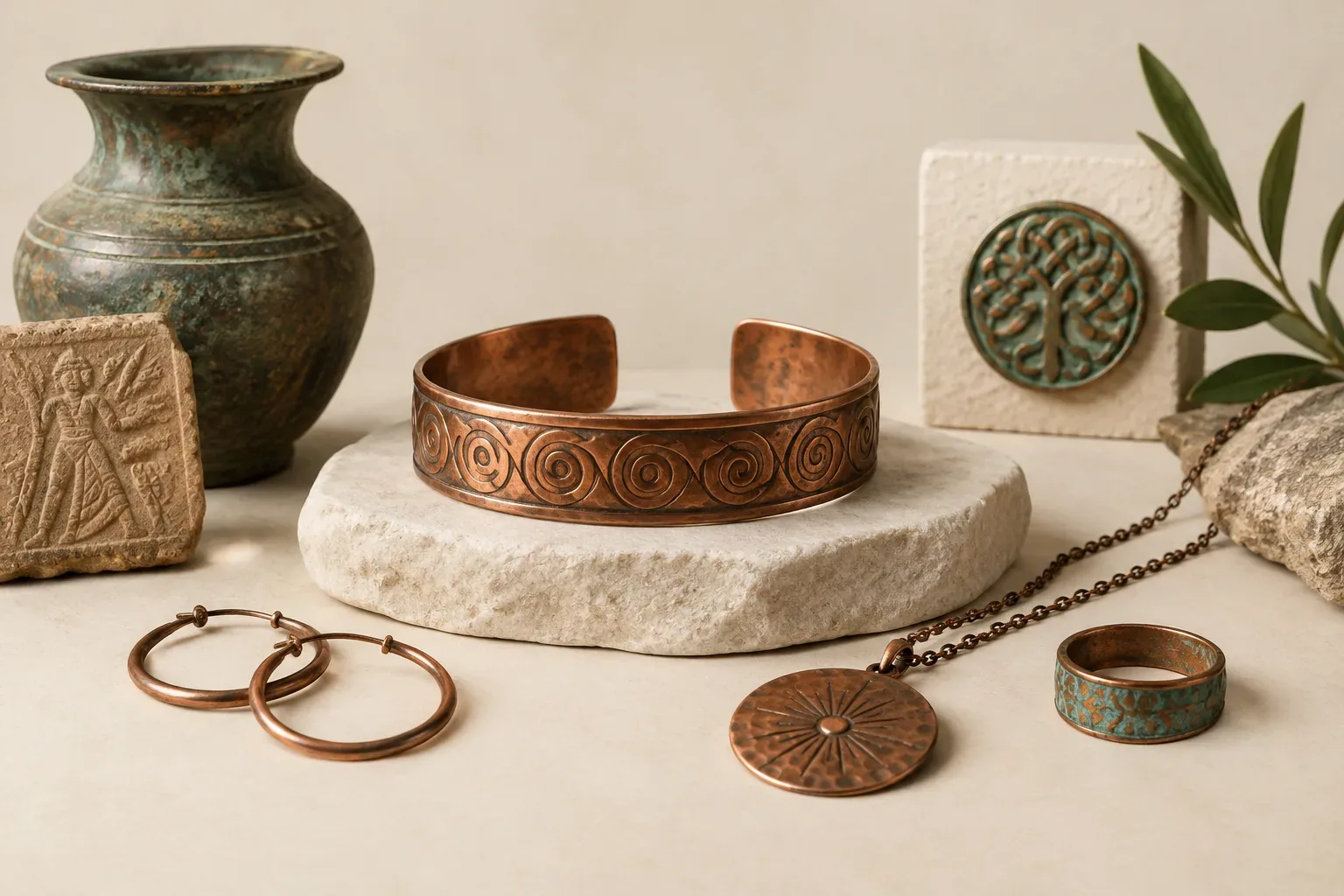
In museum collections and contemporary practice, copper appears in several forms: as relatively pure copper sheet and wire used for decorative motifs, as alloys such as bronze and brass that combine copper with other metals, and as a base metal beneath surface treatments in costume pieces. The same visual qualities that attracted historic makers — warm red-orange colour and ease of forming — make copper useful for engraved, repoussé, and cast elements as well as for simple, modern designs. Where motifs emphasize longevity or ruggedness today, that is usually a designer or wearer choice rather than a direct inheritance from a single documented cultural meaning.
Tarnish, wear, and what to expect
Copper-based pieces change with exposure and contact; museums preserve many examples that document this change across centuries and styles. Collections show surface colour shifts and variations that reflect long-term handling, environmental exposure, and the historic use of alloys and finishes. Because copper has been used both as an exposed decorative metal and as a substrate for plating or gilding, the visible behaviour of a piece in daily wear depends on its construction and any protective treatments applied by the maker.
Practical care and conservative cleaning recommendations
Care choices depend on whether you value the surface change as patina or prefer a polished look. For routine maintenance, treat copper jewellery gently: remove pieces before heavy work, avoid prolonged contact with cosmetics or strong chemicals, and store items dry and separated to reduce surface abrasion. When cleaning, use soft cloths and mild, nonabrasive soaps and rinse thoroughly; harsh abrasives or unknown chemical cleaners can remove surface treatments and accelerate wear. If a piece is plated or finished, ask the seller about the finish before attempting cleaning so you do not remove a deliberate layer.
Disclosure, treatments, and what to ask when buying
Modern buying standards emphasise disclosure about materials and treatments. The U.S. Federal Trade Commission advises consumers to ask sellers whether a piece is plated, treated, or assembled from different materials and to expect truthful descriptions of any treatments or imitations. Before you buy, ask the seller for details on the metal composition, any plating or sealants, recommended cleaning methods, and return or repair policies. That information lets you match your care routine and expectations to the object's construction and to any warranties or guarantees the maker provides.
Selection and gifting guidance: respectful and practical choices
When selecting or gifting copper jewellery, think first about the intended wear and the recipient's preferences. If the recipient values an unchanging polished look, choose pieces with protective plating or a documented finish and confirm the seller's guidance on cleaning. If they appreciate natural ageing and patina, select well-made copper or bronze pieces with solid construction and minimal plating so the metal's surface evolution remains visible. Respect cultural provenance: if a design or motif is drawn from a particular culture, prefer makers who credit that source and, where appropriate, support artisans from the related community. Finally, include care instructions with the gift and any details about material composition and treatment to help the recipient make informed choices about wear and maintenance.
When to consult a professional conservator or jeweller
For antique or museum-quality pieces, or for items with unknown finishes, consult a professional conservator or a trusted jeweller before attempting cleaning or repair. Museums such as the Victoria and Albert Museum maintain conservation standards because historic surfaces and authentic patinas can have research and cultural value; a professional can advise on preserving that value while making the piece wearable.
Final note on meaning and ownership
Copper jewellery carries different things for different people: technological history, design choices, and modern personal meanings. Use the museum record to ground historical claims, treat modern symbolism as personal or commercial interpretation unless documentation says otherwise, and make selection and care choices that respect both the object's material nature and the recipient's values.
Frequently asked questions
Does copper jewellery tarnish?
Yes; copper-based jewellery commonly shows surface change over time. Museums record examples of long-term surface change in copper and copper-alloy pieces. Whether you call that change tarnish or patina depends on whether you want the surface to evolve or prefer to keep it polished.
How can I tell if a copper piece is plated or solid?
Ask the seller for the metal composition and any treatment information. The Federal Trade Commission advises that sellers should disclose plating or treatments. If you cannot get clear information, a trusted jeweller can inspect the piece and advise whether it is plated, assembled from different metals, or solid copper or alloy.
Is copper jewellery safe for sensitive skin?
Skin reactions to metals vary between individuals. If the recipient has known metal sensitivities, check with the seller about alloys and plating, and consider pieces with documented finishes or alternative metals. When in doubt, test wearing the piece briefly or consult a dermatologist for medical advice.
What is the gentlest way to clean copper jewellery?
For routine cleaning, use a soft cloth and mild, nonabrasive soap with gentle rinsing and thorough drying. Avoid unknown or harsh chemical cleaners and strong abrasives, especially on pieces that may be plated or have delicate finishes. For valuable or historic items, consult a professional conservator.
Should I buy copper jewellery as a gift if I want it to last?
Yes, if you match the piece to the recipient's preferences and lifestyle. Choose well-made items, confirm the construction and finish with the seller, and include care instructions. If an unchanging polished look is essential, prefer plated or finished pieces with documented care guidance; if the recipient likes natural ageing, choose solid copper or alloys with minimal plating.
Sources and further reading
- Bedazzled: A History of Jewellery — Victoria and Albert Museum
- An A-Z of Gemstones — Victoria and Albert Museum
- Buying Gemstones, Diamonds, and Pearls — Federal Trade Commission