Meaning at a glance
Explain the documented history and changing contexts of the cherry blossom motif, separate cultural or religious evidence from later popular interpretations, and give practical guidance for choosing and wearing the motif in modern jewelry.
Quick answer
Cherry blossom jewelry meaning rests on two separate kinds of statements: documented history about how natural motifs circulate through jewelry and fashion, and cultural or personal meanings attached to the cherry blossom (sakura) over time. Museums that collect and interpret jewelry show that botanical motifs gain, lose, and change symbolic weight as styles and social contexts change, and many of the meanings people now associate with cherry blossoms are cultural traditions or modern personal interpretations rather than fixed historical facts.
What the historical record actually shows
When we ask for documented history about motifs such as the cherry blossom, the safest, evidence-based claim is that jewelry practice has long borrowed imagery from nature and that such motifs change meaning as fashions and social uses evolve. The Victoria and Albert Museum (V&A) frames this point clearly in its overview of jewelry history: ornament styles and their social meanings shift with technological innovation, patronage, and changing customs. That museum-level perspective is the appropriate documented foundation for discussing a botanical motif in jewelry.
Separating cultural tradition from documentary proof
Specific cultural associations of the cherry blossom—particularly those well known in Japan, where the sakura is central to seasonal aesthetics—are best described as cultural traditions rather than singular documentary claims about jewelry objects unless a particular object or archive is cited. In other words, it is accurate to say that cherry blossoms have long been meaningful in certain cultures and that jewelers and designers have drawn on those meanings; it is different to assert a single, universal historical origin or religious doctrine embodied in every cherry-blossom piece.
For readers wanting museum-backed documentation of how motifs travel into jewelry forms, consult institutional histories and catalogues. The V&A's materials on jewellery history explain how motifs from nature are adapted into metalwork, enamel, gem carving, and settings across periods, and how those adaptations reflect changing social contexts. Use cultural descriptions (for example, seasonal association, aesthetics of transience, or local meanings) as context for modern interpretations rather than as universal, documented facts about every piece.
Traditional and modern symbolic meanings—kept distinct
Traditional meanings attributed to the cherry blossom in particular cultures vary by place and period. In some East Asian cultural contexts the blossom has been associated with spring, renewal, and an awareness of fleeting beauty; these are best described as cultural-symbolic associations passed through literature, visual arts, and seasonal practice rather than as single, museum-documented facts about jewelry.
Modern personal interpretations expand on or reinterpret these traditions. Contemporary wearers and designers often use the cherry blossom to signify renewal after loss, the beauty of the present moment, feminine grace, romantic sentiment, or environmental appreciation. These modern meanings are individual and contextual: they depend on the wearer’s intention, the designer’s brief, or marketing choices. Distinguishing the two is important: cultural tradition explains why a motif exists in a region’s visual vocabulary; modern interpretation explains why someone might choose to wear it today.
How the cherry blossom motif appears in jewelry
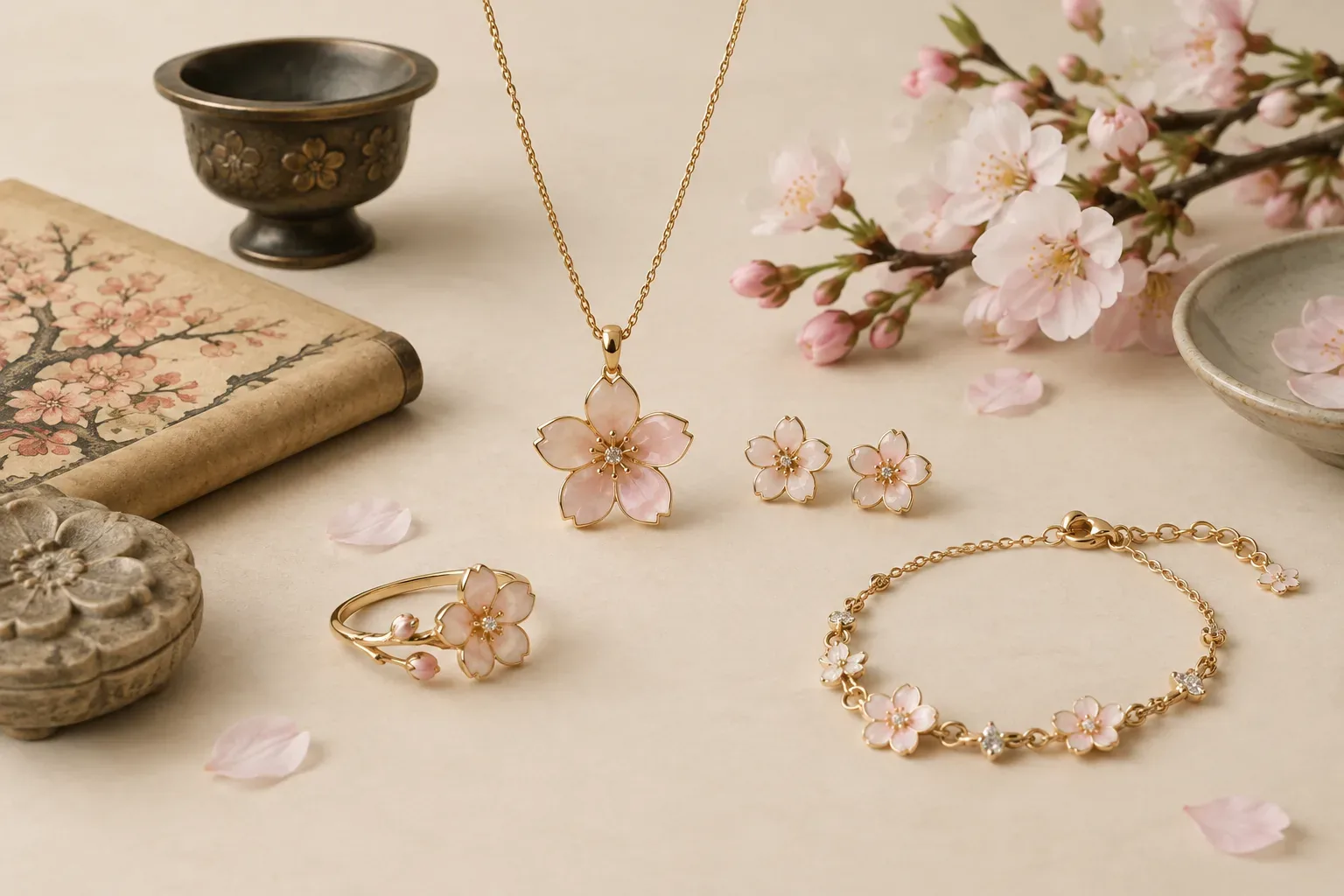
Across periods, botanical motifs—including stylized blossoms—are translated into jewelry through a limited set of techniques and materials. Museum accounts of jewellery history describe common techniques: metalwork engraving or chasing to depict petals and branches, enamel to add color and depth, gem carving where stones are shaped into floral forms, and applied elements such as small pearls or gem-set centers for the blossom’s pistil.
Contemporary makers also adapt the motif to current tastes: delicate pendants engraved or pierced in silver or gold, enamel-painted brooches, laser-cut silhouettes on flat metal, and mixed-media pieces that incorporate carved gemstones or mother-of-pearl to suggest petal texture. When gemstones are used, the V&A’s resources on gemstones are a useful reference for understanding traditional and modern choices and how particular stones have been valued and worked over time.
Materials, treatments, and what to check before buying
If a cherry blossom jewelry piece uses gemstones or treated materials, federal guidance on disclosure is important to follow. The U.S. Federal Trade Commission (FTC) requires sellers to disclose significant treatments, synthetics, and imitations for gemstones, diamonds, and pearls. Ask sellers whether stones are natural, lab-grown, treated (heat, fracture-filling, dye), or imitations, and request certification or written confirmation when a high-value stone is advertised as natural.
For metal and non-gem materials, look for maker marks, metal stamps (for example, 925 for sterling silver), and clear return or repair policies. Because botanical motifs are frequently rendered in small detail, inspect settings and attachment points to ensure the piece is durable for intended wear. Museum discussions of jewellery history emphasize that craftsmanship choices both shape meaning and determine how well a piece will age.
Practical and respectful selection or gifting guidance
Match the symbolism to the occasion and the recipient. If you select cherry blossom jewelry because you associate it with renewal or a time-limited milestone, explain your intentions in a short note so the recipient understands the sentiment. If the recipient connects the motif to a specific cultural tradition, be mindful and respectful: choose makers who acknowledge that tradition or who come from that cultural background when authenticity matters to the recipient.
Consider scale and daily use. A small pendant or stud is more suited to everyday wear and has lower risk of catching or damage. Larger brooches or chandelier earrings make a bolder statement and may be more appropriate as commemorative or special-occasion gifts. For heirloom or high-value purchases, ask for written documentation of materials and maker provenance and consider professional appraisal or insurance.
If you prefer ethically sourced materials, ask the seller for details about metal sourcing and gemstone origin, and request disclosure about any treatments or enhancements. When buying from online marketplaces, check return policies, customer reviews, and clear product photographs that show details of settings and finishes.
Styling and care tips
Cherry blossom motifs read as delicate and seasonal. For an understated look, wear a small blossom pendant or delicate chain alone; for a matched set, choose pieces with complementary metal tones and consistent design language. If the piece includes enamel or fragile stone carving, store it separately in a soft pouch to avoid abrasion.
Routine care follows conventional jewelry guidance: keep pieces dry when not designed for water exposure, clean gently with a soft cloth, and consult a professional for re-polishing or stone tightening. When buying gemstones or pearls, check for care recommendations specific to the material, drawing on gemstone references to understand their sensitivities and durability.
How to research the meaning of a specific piece
If you want to know whether a particular antique or designer cherry-blossom piece has a documented history or a specific provenance, consult museum catalogues, auction records, maker marks, or an independent appraiser. The Victoria and Albert Museum’s general histories of jewellery provide frameworks for how motifs migrate across styles; if a museum holds a comparable object, their catalogue can provide context for technique and provenance.
For contemporary pieces, contact the maker directly and ask about inspiration, cultural references, and the design brief. If cultural authenticity is central to your interest, prefer makers and retailers who disclose their sources and credit cultural influences transparently. Our guide on how to research jewelry symbols linked in the internal resources can help you structure those inquiries.
Frequently asked questions
Does a cherry blossom pendant always mean the same thing in every culture?
No. The symbolic meanings attached to cherry blossoms vary by culture and historical context. Some traditions associate the blossom with seasonal renewal or the beauty of transience; modern personal meanings can include new beginnings, memory, or aesthetic preference. Avoid assuming a single, universal meaning for every wearer or piece.
How can I verify whether gemstones in a cherry blossom piece are natural or treated?
Ask the seller for written disclosure and any certification. The U.S. Federal Trade Commission (FTC) requires sellers to disclose significant treatments, synthetics, and imitations for gemstones, diamonds, and pearls. For high-value items, request a laboratory report or an independent appraisal.
Is it respectful to gift cherry blossom jewelry to someone from a culture that uses sakura imagery?
Gifting cherry blossom jewelry can be respectful when you are mindful of the recipient’s cultural perspective and intentions. If cultural authenticity or provenance matters to the recipient, choose makers who acknowledge tradition and provide transparent sourcing. Include a note explaining your sentiment to avoid unintended assumptions.
What materials should I avoid if I want a durable cherry blossom piece for everyday wear?
Avoid fragile materials that chip or fracture easily in settings meant for daily wear, such as soft carved stones or delicate enamels without protective bezels. Prefer durable metals with secure settings, and inspect attachment points. For specifics about stone durability, consult gemstone references.
Where can I find documented historical examples of cherry blossom motifs in jewelry?
Look to museum collections and catalogues that document regional jewellery traditions. Institutions that collect jewellery and decorative arts provide context about how botanical motifs appear and change over time. Start with museum resources on jewellery history for framing questions about provenance and technique.
Sources and further reading
- Bedazzled: A History of Jewellery — Victoria and Albert Museum
- An A-Z of Gemstones — Victoria and Albert Museum
- Buying Gemstones, Diamonds, and Pearls — Federal Trade Commission