Meaning at a glance
Charm bracelets repair and maintenance requires recognising wear to links, clasps, and settings; using gentle home care for cleaning and storage; and seeking a qualified jeweller for soldering, stone resetting, or work on historic pieces—while respecting documented histories and modern meanings when choosing or gifting a bracelet.
Short answer
Inspect a charm bracelet regularly for worn chain links, loose jump rings, a failing clasp, loose stones, or damaged enamel. Minor cleaning and tightening can be done at home, but soldering, stone resetting, repair of antique pieces, and work on fragile materials should be done by a professional jeweller or conservator. When choosing or gifting a bracelet, separate documented historical meanings from modern personal interpretations and consider the recipient’s lifestyle and the care the piece will require.
Documented history and changing contexts
Charm bracelets have had different functions and meanings across cultures and periods. The Victoria and Albert Museum describes the long social history of personal jewellery and how objects that hang from bracelets have been used to display identity, status, memory, and fashion rather than a single universal symbolism. Museum collections demonstrate that small pendants, amulets, and charms appear in many historical contexts as markers of taste, commemoration, or protection.
In museum and curatorial records the term "charm" covers a diverse set of objects. In some periods charms served as protective amulets; in others they were strictly decorative or sentimental. The V&A's writing on jewellery emphasises changing social contexts—what a charm meant in one era or place may have been purely ornamental or entirely different in another. You should therefore treat historical associations as time- and culture-specific rather than universal.
Documented meanings versus modern personal interpretations
Because charm bracelets span many cultures and centuries, documented meanings are often precise to a place and period. For example, curators note that particular motifs in a given collection may have had specific associations in their original context, but those meanings are not automatically carried forward. Modern wearers commonly attach personal narratives to charms—marking births, travels, hobbies, or emotions—and these personal interpretations coexist alongside historical associations.
When caring for or gifting a charm bracelet, treat historical symbolism as a researched context rather than a default message. If a motif has a documented religious or cultural significance, acknowledge that provenance and, where appropriate, ask the recipient whether they welcome that meaning. Do not assume that a motif carries the same significance for everyone.
How motifs, gemstones, and traditions appear in charm bracelets
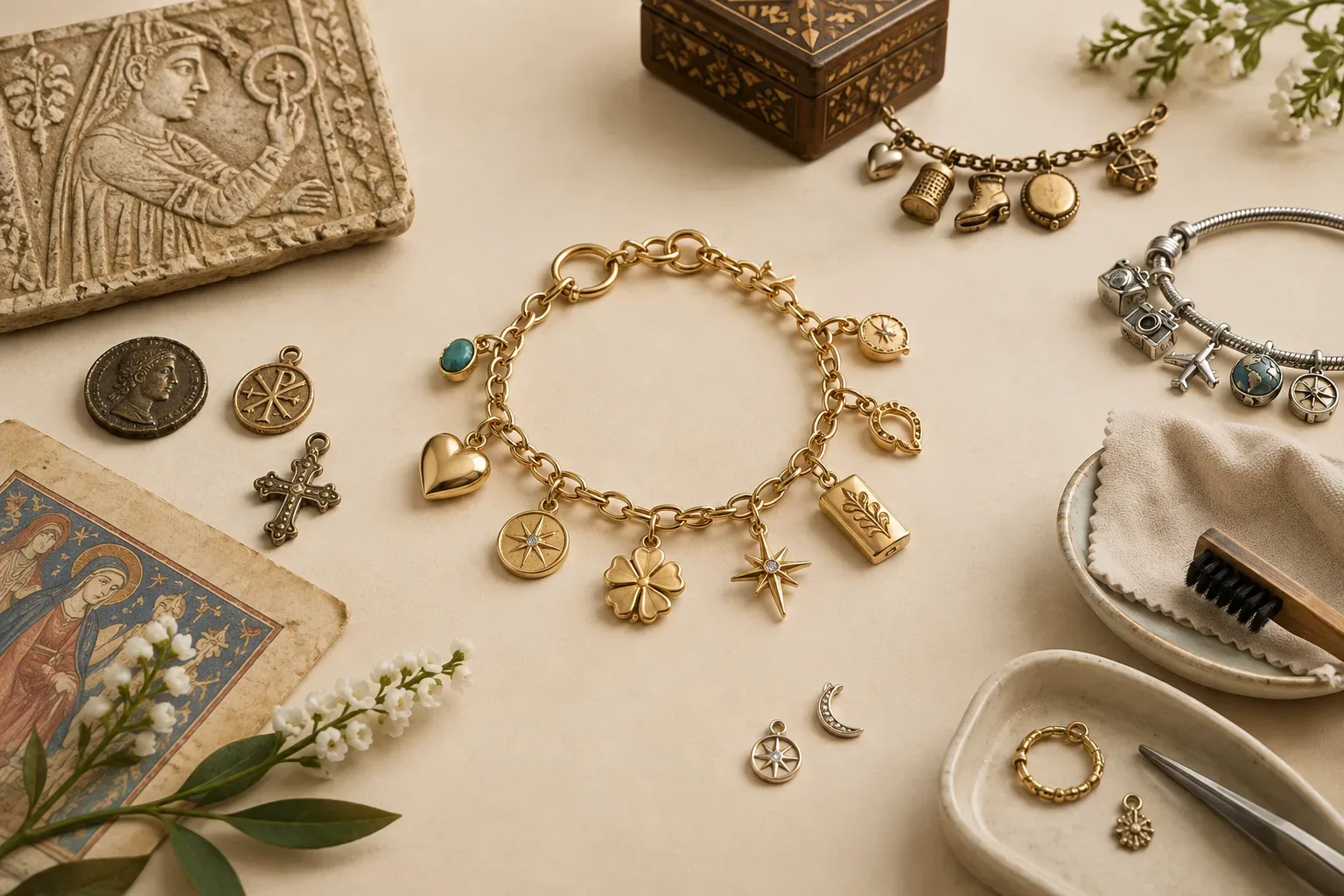
Charm bracelets combine metalwork, small figurative motifs, gemstones, enamel, and sometimes organic materials. Museum records and the V&A's A–Z of gemstones show that different materials have been preferred at different times for their colour, symbolism, or technical suitability. Gemstones appear as set stones in tiny pendants, as beads threaded on chains, or as insets in enamelled charms. Metalwork techniques include castings, stamped forms, and soldered jump rings linking individual elements to a chain.
The physical construction of charms influences how they should be maintained. Enamel can chip, thin metal stalks or jump rings can wear and break, and set stones can loosen. Organic or porous materials used historically—such as seed pearls, coral, or certain dyes—are more sensitive to moisture and chemicals than modern hard gemstones. Referencing the V&A's guidance on gemstones can help you identify materials and understand their historic uses and vulnerabilities.
Common warning signs that a charm bracelet needs repair
The most frequent problems are worn or thinned chain links, stretched or compromised jump rings, failing clasps, and loose or missing stones. Look for links that twist or elongate under gentle tension, jump rings that separate at the seam, clasps that do not fully close or spring, and charms that wobble on their fittings. Surface problems such as deep scratches, crushed links, or chipped enamel may indicate the need for professional attention.
Other warning signs include uneven colour or corrosion suggesting galvanic wear between mixed metals, suspicious cloudiness in gems that could indicate damage or poor past treatments, and a change in the bracelet's drape that shows links are no longer evenly supporting charms. If a bracelet has significant sentimental or monetary value, or if it is an antique, any of these signs should prompt consultation with a professional rather than DIY repairs.
What you can safely do at home
Regular light cleaning and careful storage are effective first steps. Wipe the bracelet with a soft cloth after wear to remove oils and salts from skin. For more thorough cleaning, use a mild soap and lukewarm water and a soft brush, rinse promptly, and dry thoroughly. Remove a charm bracelet before bathing, swimming, or doing household work with chemicals. Store it flat or in a soft pouch so charms cannot knock together and cause abrasion.
You can also use small hand tools to gently close slightly opened jump rings or to reattach a charm provided you have basic skills and the ring is not soldered or antique. Replacements for lost jump rings and simple clasps are available, but if the bracelet is gold-filled, hollow, or historically important, avoid forcing repairs or using invasive adhesives.
When to seek professional help
Ask a professional jeweller or a conservator to inspect the bracelet if it requires soldering, reshaping of structural links, resetting of stones, repair of crushed or broken links, restoration of fine enamelling, or work on historic materials. Jewellery that has been damaged in a way that compromises its structural integrity, such as a broken chain or a split headpin, needs professional metalwork to be made safe to wear again.
Consult a conservator for historically important pieces or when a bracelet contains fragile, rare, or organic materials. The V&A's approach to jewellery collections shows that museum professionals treat historic pieces with different methods than a contemporary repair shop would, prioritising reversibility and minimal intervention. If you intend to preserve historical value, explain this to the professional before repair begins.
Choosing a repair service and asking the right questions
Select a jeweller with experience in charm bracelets and with the materials present in your piece. Ask whether they will use soldering versus mechanical joining, whether replacement parts will match the original metal, and if they can provide references or examples of similar work. For gemstone issues, ask whether the stone will be removed for setting and whether the setting will be checked for stability after repair.
Follow the Federal Trade Commission’s guidance when buying or commissioning repairs: ask about material disclosures and any treatments or imitations. If a repair involves replacing a gem or metal, request documentation of the materials used and ask about warranties or guarantees on workmanship.
Practical and respectful selection or gifting guidance
When choosing a charm bracelet as a gift, consider the recipient’s daily activities and willingness to maintain jewellery. A heavy, densely charmed bracelet will require more frequent inspection than a delicate chain with a few pendants. Choose materials that match the recipient’s lifestyle—durable metals and hard stones for everyday wear, more delicate materials for occasional wear.
Be sensitive to motif provenance. If a charm has a documented cultural or religious meaning, research its origin and consider whether it is appropriate to gift in your particular context. Use reliable sources and, if necessary, consult the recipient about their preferences. For guidance on researching symbols and selecting meaningful pieces, see our related article on how to research jewelry symbols and our practical gift guide.
Everyday care checklist
Handle charms gently, remove the bracelet for activities that expose it to chemicals or heavy impact, and store pieces separately to prevent abrasion. Inspect jump rings, clasps, and settings periodically. For more delicate gemstones and organic materials, minimise exposure to moisture and extreme temperature changes. Keep a record of repairs and any appraisals or provenance information, especially for bracelets with sentimental or historic value.
Closing summary
Charm bracelets combine small moving parts, diverse materials, and often personal or historic meanings—so maintenance is both technical and sensitive to provenance. Use gentle home care and routine inspection to reduce risk, consult the V&A for historical context if provenance matters, follow FTC advice on material disclosures when buying or repairing components, and seek a professional when structural work, stone resetting, or conservation is required. When gifting, separate documented histories from modern personal meanings and choose a piece suited to the recipient’s lifestyle and care preferences.
Frequently asked questions
How often should I have my charm bracelet inspected?
Inspect visually every few months and after heavy wear. Have a jeweller examine the bracelet yearly or sooner if you notice loose charms, a failing clasp, or deformation of links.
Can I use an ultrasonic cleaner on my charm bracelet?
Avoid ultrasonic cleaners for bracelets with fragile settings, enamel, or porous organic materials. If you are unsure about the materials in your bracelet, use a soft cloth and mild soap instead and consult a professional for ultrasonic cleaning.
Is soldering always the best repair for a broken jump ring?
Soldering provides a strong, permanent repair for load-bearing links but may not be appropriate for historic pieces where minimal intervention is preferred. For modern pieces, a jeweller can advise on soldering versus replacing with a new, matched link.
How do I choose a repairer for an antique charm bracelet?
Look for a conservator or jeweller experienced with antiques who understands reversible treatments and can document work. Explain the bracelet’s provenance and your preservation goals before authorising repairs.
What should I ask about when buying a replacement gemstone or charm?
Ask the seller to disclose the material, any treatments or enhancements, and whether the stone is natural, treated, or synthetic. The Federal Trade Commission recommends clear disclosure of treatments and imitations.
Sources and further reading
- Bedazzled: A History of Jewellery — Victoria and Albert Museum
- An A-Z of Gemstones — Victoria and Albert Museum
- Buying Gemstones, Diamonds, and Pearls — Federal Trade Commission