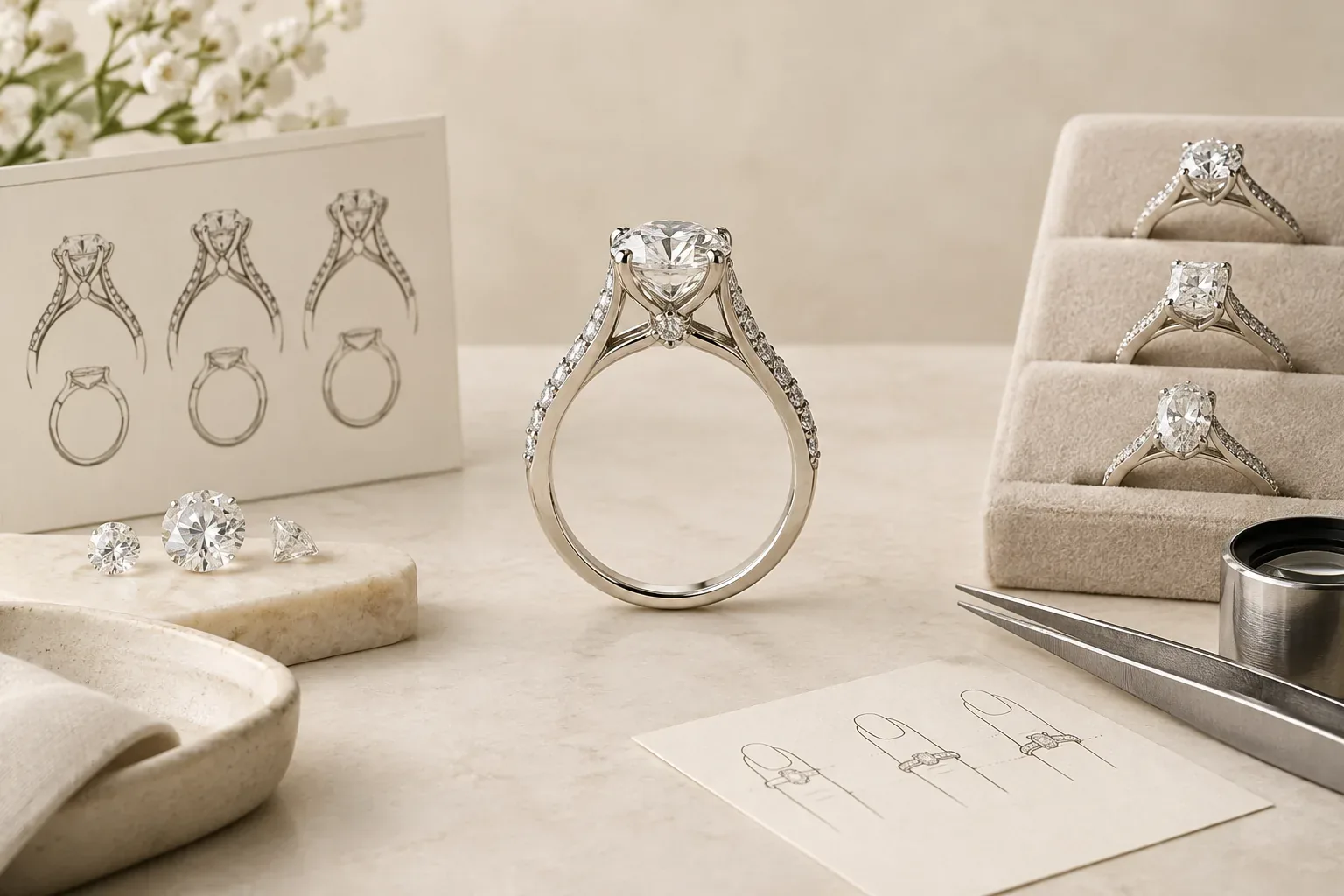
Meaning at a glance
A cathedral setting raises the center stone with arching shoulders; style it for balanced coverage by matching arch height and shank width to finger length and breadth, choosing trade-offs among security, stacking and comfort, and confirming material and treatment disclosures with a qualified jeweler or laboratory.
What we mean by 'cathedral setting' and how it appears in jewelry
In trade and design usage the phrase cathedral setting describes a ring profile where the shoulders rise up and sweep back in an arch to support the center stone, visually echoing the buttresses and arches of cathedral architecture. The motif appears across styles from delicate solitaire rings to heavily decorated designs with side stones or pavé shoulders, and it is primarily a construction and silhouette choice rather than a specific gemstone or motif with a single historical meaning.
In practice the cathedral motif is executed in many ways: the arch can be subtle and integrated into the shank, or it can form distinct, visible rails that elevate the center stone several millimeters above the finger. Designers combine cathedral arches with prongs, bezels, halos and side-stone arrangements to create different visual weights and finger coverage.
Historical evidence — what the trade records and trend reports say
Direct primary historical documentation that pins a date or single origin to the cathedral setting is limited in the publicly available trade literature. Contemporary trade and trend observers place the cathedral silhouette among classic construction choices that have been adapted and revived over time rather than being the product of a single historical moment.
Recent industry reporting emphasizes consumer interest in craftsmanship, fluid forms and revived classical details, which helps explain renewed interest in cathedral-style profiles. Jewelers Mutual notes 2026 trends centering on craftsmanship, versatility and fluid forms, which align with renewed popularity for architectural ring profiles such as cathedral settings. Imaginaire Digital's 2026 UK search data shows strong demand for engagement ring shapes and styles, indicating consumer search behavior that supports ongoing interest in traditional profiles adapted for modern tastes.
Historical meaning versus modern personal interpretation
There is no single documented symbolic meaning for cathedral settings across cultures in the authoritative trade sources used here. Where meanings are suggested, they are typically modern personal or marketing interpretations—for example, describing the arch as 'protective' or 'architectural'—not historical claims grounded in primary sources. Distinct cultural jewelry traditions have their own documented motifs and symbolic practices; the cathedral arch as a construction feature should not be treated as a universal cultural symbol.
Treat modern symbolic claims as personal or contextual statements rather than documented history. If symbolic meaning matters to you or the recipient, treat it as a personal statement to be communicated between giver and receiver rather than as an established cultural fact.
Finger coverage and proportion: practical styling guidance
Think of proportion visually: the center stone diameter (or length for elongated cuts) should sit comfortably within the visual span made by the arches and shoulder width. For slender fingers, a lower arch and a narrower shank maintain a delicate silhouette; for broader or shorter fingers, a more substantial arch and wider shank can prevent the stone from looking overwhelmed or too small.
Match arch height to lifestyle and stone size. Higher arches (a pronounced cathedral) make the center stone appear taller and more prominent and pair well with larger stones and elongated fingers. Lower arches keep the ring closer to the finger, making it less prone to catch on fabric and simpler to stack with a wedding band.
Adjust shank width and profile for balance. Narrow shanks (commonly used for a delicate look) emphasize the stone but can flex more under stress; wider shanks distribute visual weight and feel more secure on broader fingers. A tapered shank that widens toward the base improves comfort while preserving a refined look at the top.
Consider side stones and pavé: adding side stones or pavé to the shoulders increases visual coverage and brightness but raises questions about maintenance—pavé requires careful cleaning and occasional inspection to ensure no stones loosen. A plain metal arch offers easier maintenance and a streamlined look.
Design trade-offs and real-world considerations
Security versus profile: cathedral settings that heavily elevate a stone can offer excellent visibility and architectural drama, but higher profiles expose the stone and prongs to more impact. If the wearer has an active lifestyle, a lower cathedral or protective halo may be safer.
Stacking and wedding band pairing: a pronounced cathedral arch can make it difficult to pair flush wedding bands. If pairing is important, discuss complementary wedding band shapes with your jeweler—contoured bands, curved bands, or thin guard rings are common solutions.
Comfort and daily wear: higher arches can increase snag risk on clothing, hair or gloves. They also require more care during manual tasks. Balance the desired look with how often and in what situations the ring will be worn.
Care advice and limits on what you can verify
Care. Routine cleaning with warm water and mild soap, soft brushes, and periodic professional inspections are standard. Elevated profiles trap dirt differently than low-set rings, so more frequent cleaning may be needed for optimal sparkle.
Verification limits without experts. Important attributes—such as whether a gemstone has been treated, whether it is natural or lab-grown, and the precise grading of cut, clarity and color—require qualified disclosure from the seller and, for independent verification, a gemological laboratory report. The Gemological Institute of America (GIA) explains that treatments and their detectability affect durability and care needs, and that certified testing is the proper way to confirm such details. The Federal Trade Commission advises consumers to obtain clear written disclosures from sellers distinguishing natural, lab-created, treated and imitation materials and to request documentation when needed.
Practical checks you can make yourself include looking for metal hallmarks, assessing comfort and fit on the finger, inspecting visible prongs and solder joints for obvious defects, and asking for the seller’s written policies on returns, repairs and appraisal documentation. For any doubt about stone identity, treatments or value, obtain an independent appraisal or laboratory report before completing a purchase, especially for high-value stones.
Selection and gifting guidance — respectful and practical steps
Start with lifestyle and communication. Consider work, hobbies, and what the recipient wears daily. If the ring is a surprise, discreetly borrow a similar ring to measure size and profile or ask a close friend or family member for help with measurements and style cues.
Set priorities and trade-offs. Decide which aspects are non-negotiable: a low profile for daily practicality, a high cathedral for drama, or specific metal and gemstone preferences. Share those priorities with your jeweler so they can suggest proportion adjustments that respect both the desired look and durability.
Confirm materials and policies in writing. For any purchase, request written disclosure of metal type and fineness, gemstone identity (natural vs lab-created), and treatments. The Federal Trade Commission recommends written seller disclosures. For valuable gemstones, ask for a laboratory report and retain warranty and return documentation.
Protect the ring after purchase. Consider jewelry insurance or adding the piece to a homeowners or renters policy where appropriate. Jewelers Mutual’s trend guidance highlights the role of craftsmanship and care; they also provide insurance solutions tailored to jewelry owners and emphasize protecting well-crafted pieces.
Action steps and where to go next
If you are shopping: note finger width and length, decide on preferred arch height and shank width, request written disclosures about metal and gemstone treatments, and obtain a lab report or independent appraisal for significant purchases.
If you are gifting: prioritize clear communication about lifestyle and size, seek help for accurate measurements, select a design that balances drama and practicality, and buy from a seller who provides transparent documentation and reasonable return or resizing policies.
For more in-depth help on meaningful choices and research, see our Jewelry Guides and related articles on choosing symbolic jewelry and researching symbols.
Frequently asked questions
Will a cathedral setting make a small stone look larger?
Yes, a cathedral arch that elevates the stone and narrows the visual shank can increase perceived size, but the effect depends on the stone’s cut and proportions; larger effects are most noticeable with round and brilliant cuts.
Is a cathedral setting practical for everyday wear?
It can be practical if you choose a lower arch and sturdy prongs, but higher cathedral profiles are more prone to snagging and may require more frequent inspection and care.
Can a cathedral ring be paired with a wedding band?
Yes; however, pronounced cathedral arches often need contoured, curved, or specially fitted bands to sit flush. Discuss band options with your jeweler when ordering or buying.
How do I verify if the center stone has been treated or is lab-grown?
Request written disclosures and, for high-value stones, an independent laboratory report. The GIA outlines how treatments affect durability and detectability; the FTC recommends sellers provide clear written distinctions among natural, lab-created, treated and imitation materials.
What maintenance does a cathedral ring require?
Regular gentle cleaning, periodic professional inspections of prongs and settings, and careful handling to avoid knocks. Elevated profiles can trap dirt under the stone, so more frequent cleaning may be needed.
Sources and further reading
- Imaginaire Digital — Imaginaire Digital
- Jewelers Mutual — Jewelers Mutual
- Gemological Institute of America — Gemological Institute of America
- Federal Trade Commission — Federal Trade Commission