Meaning at a glance
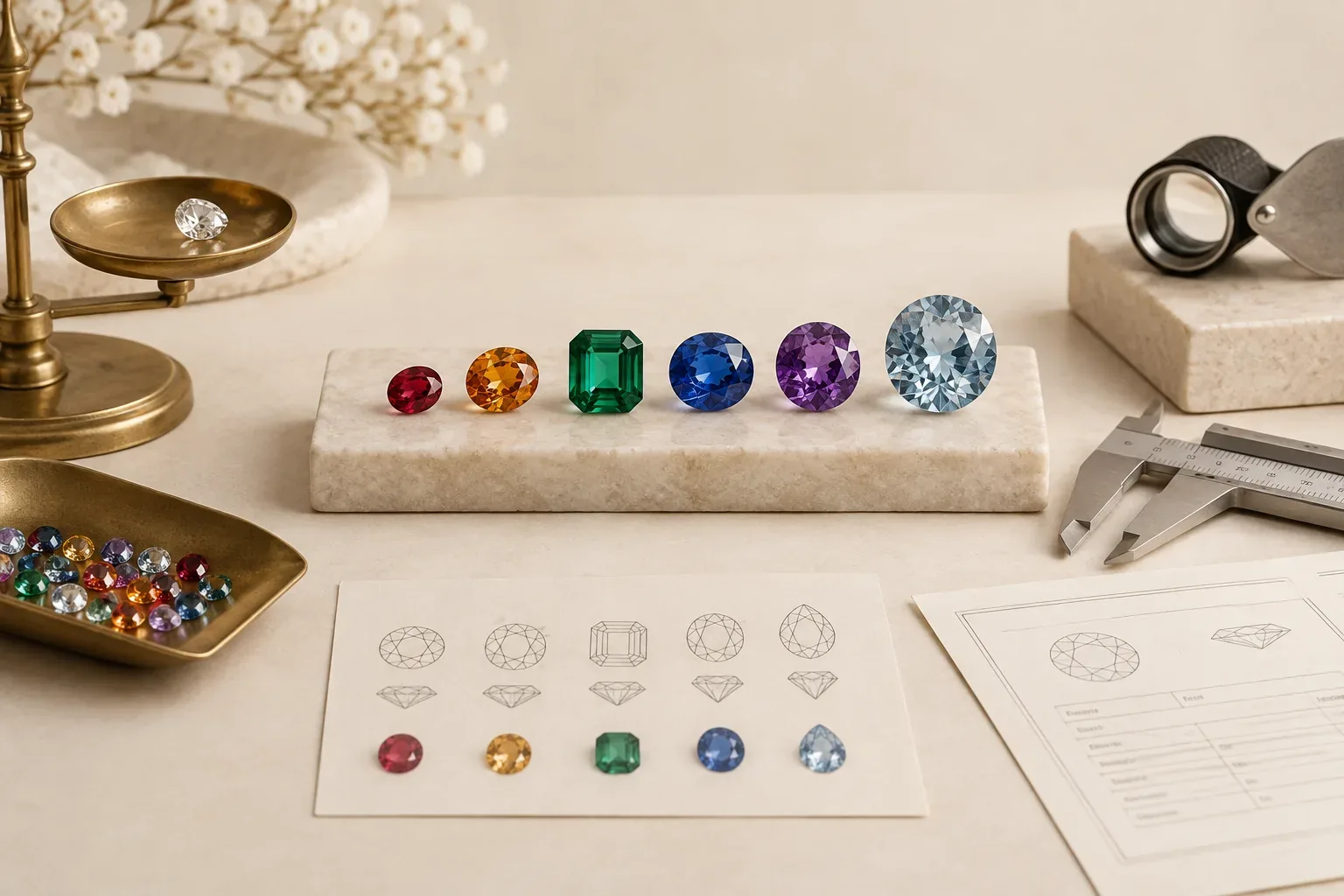
Carat measures weight, not visible size; a gem’s density and cut determine its face-up dimensions, so compare carat plus millimeter dimensions and any lab or treatment reports before buying.
Quick answer
Carat is a unit of weight, not a direct measure of visible size; two gems with the same carat weight can look very different because density (specific gravity) and the stone’s cut determine face-up dimensions. When buying or gifting a birthstone, compare the carat weight together with millimeter measurements, the cut description, and any lab or treatment documentation to know how large and how durable the finished piece will appear and wear.
Why carat is weight, not size
The term carat refers to a gem’s mass, historically standardized and today used across the trade to indicate weight. Because carat is mass, it does not directly tell you how big the stone will appear when set in jewelry.
Two gems of identical carat weight can differ in visible size because stones are made of different materials with different densities. A 1.0 carat sapphire (a relatively dense corundum) occupies less volume than a 1.0 carat opal or an emerald with similar weight, so it will usually measure fewer millimeters across.
Cut and proportions also change the face-up dimensions. A deep-cut stone concentrates weight below the table and can look smaller from above than a shallow-cut stone with the same carat weight, while brilliant and step cuts distribute mass differently and alter perceived size and sparkle.
For practical comparison, reputable sellers provide both carat weight and millimeter dimensions. Measuring both lets you compare how stones of different materials or cuts will actually look in a given setting.
What historical evidence says about birthstones and size
The Gemological Institute of America (GIA) documents that lists of birthstones and their associations have varied across cultures and periods and that the modern commercial lists used by many retailers are the result of evolving conventions rather than a single ancient standard. The GIA’s overview of birthstones highlights that what counts as a birthstone — and which properties are emphasized — depends on the historical source and the market that adopted it.
Because the evidence is cultural and accumulative, the GIA notes that different communities have emphasized different stones and symbolic associations over time. Therefore any single statement about a birthstone’s historical meaning should be linked to the specific culture or period being described rather than presented as universal.
Documented historical meanings versus modern personal interpretation
Documented historical meanings are those recorded by scholars, museums, or institutions such as the GIA and tied to a particular culture, era, or text. These documented meanings can include religious, medicinal, or ceremonial uses recorded in historical sources and later summarized by organizations like the GIA.
Modern personal interpretations are subjective choices people make today: using a birthstone to mark a birthday, to recall a family memory, or to follow fashion trends. These modern meanings are valid personally but are not the same as documented, culture-specific historical claims.
When discussing or gifting a birthstone, it is helpful to separate what is historically documented and attributable to a named culture or period from contemporary personal reasons for choosing a stone, and to make that distinction explicit when explaining your choice to the recipient.
How birthstones appear and function in jewelry
Birthstones are used in many jewelry motifs: single-stone solitaires, accented rings with side stones or halos, birthstone stacks for month-by-month rings, pendants, and personalized bracelets. Jewelers of America’s buying guides describe standard jewelry formats and the common ways stones are set to balance appearance and durability.
The visible impact of a birthstone depends on its cut and setting. A well-cut round or oval will maximize face-up area and brilliance, while step cuts emphasize color and clarity. A halo of smaller diamonds or gems can make a center birthstone appear larger without changing its carat weight.
Durability matters for how a birthstone performs in everyday jewelry. The Gemological Institute of America’s guidance on gemstone durability emphasizes that softer or more brittle gems need protective settings and careful design to reduce scratching, chipping, or breakage; this affects choices such as bezel settings, low profiles, or protective prongs for active wear.
Which measurements and paperwork buyers should compare
Ask for the carat weight and the stone’s millimeter dimensions, which together show how heavy the gem is and how large it will face-up. For shaped stones, request length, width, and depth measurements; the depth percentage helps explain why a stone of a given carat may look smaller or larger than expected.
Request a description of the cut and proportions or a cut grade if one is provided. Cut determines how weight is distributed and how the gem faces up in a setting.
Check for treatment disclosures and durability notes. The GIA’s introduction to gem treatments explains common treatments, their effect on appearance and stability, and the importance of detection and disclosure. The Federal Trade Commission’s buying guidance requires sellers to disclose whether gems are natural, lab-grown, treated, or imitations.
When a stone is valuable enough or when provenance matters, ask for a lab report or grading report from a recognized laboratory. The lab report should list weight, dimensions, species and variety, treatments, and other identifying information. Compare what the seller’s paperwork says to any independent report to be confident in the stone’s size and disclosures.
Practical selection and gifting guidance
Decide how the recipient will wear the piece and choose stones and settings suited to that lifestyle. For everyday rings, prioritize harder and tougher stones or protective settings, following the durability guidance in the GIA durability resource. For occasional wear pieces, you can opt for stones that require more care.
Use the carat and millimeter data together when budgeting and comparing offers. A larger millimeter dimension may be visually preferable to a slightly higher carat weight in a deeper cut, and a halo or setting can increase perceived size without raising stone weight significantly.
Ask the seller for written disclosure about treatments, whether the stone is natural or lab-grown, and any available lab reports. The FTC recommends written information to confirm verbal statements and to avoid misunderstandings at return time.
Confirm return, repair, and resizing policies before purchase. Jewelers of America’s buying guides encourage shoppers to know the vendor’s policies and warranty terms so a gift can be exchanged or adjusted if it does not fit or meet expectations.
When you give a birthstone as a symbolic gift, explain whether you are drawing on documented cultural meanings or offering a personal interpretation. That helps the recipient understand whether the gesture follows a historical tradition or reflects your personal sentiment.
Frequently asked questions
If two stones are the same carat, which will look larger?
The stone with lower density and the shallower cut will generally show a larger face-up area; compare millimeter dimensions and depth percentage as well as carat weight to judge apparent size.
What paperwork should I ask for when buying a birthstone piece?
Request written disclosure of whether the stone is natural, lab-grown, treated, or an imitation, the carat weight, millimeter measurements, any available lab report, and the seller’s return and warranty policy, as recommended by the FTC and industry guidance.
How does cut affect how big a stone looks?
Cut determines how a gem’s weight is distributed. A deep pavilion can reduce face-up size while a shallow cut increases it; different cut styles also emphasize color or brilliance, changing perceived size and presence.
Are larger stones always better for a birthstone gift?
Not necessarily; choose size based on the recipient’s style and lifestyle, the stone’s durability, and whether a setting like a halo could create the desired visual impact without increasing carat weight substantially.
Should I be worried about treatments?
Treatments are common and can improve appearance or durability, but they should be fully disclosed. Consult GIA’s guidance on treatments to understand effects on stability and value before purchase.
Sources and further reading
- Birthstones for Each Month — Gemological Institute of America
- Buying Gemstones, Diamonds, and Pearls — Federal Trade Commission
- Jewelry Buying Guides — Jewelers of America
- An Introduction to Gem Treatments — Gemological Institute of America
- Gemstone Durability: Design to Display — Gemological Institute of America