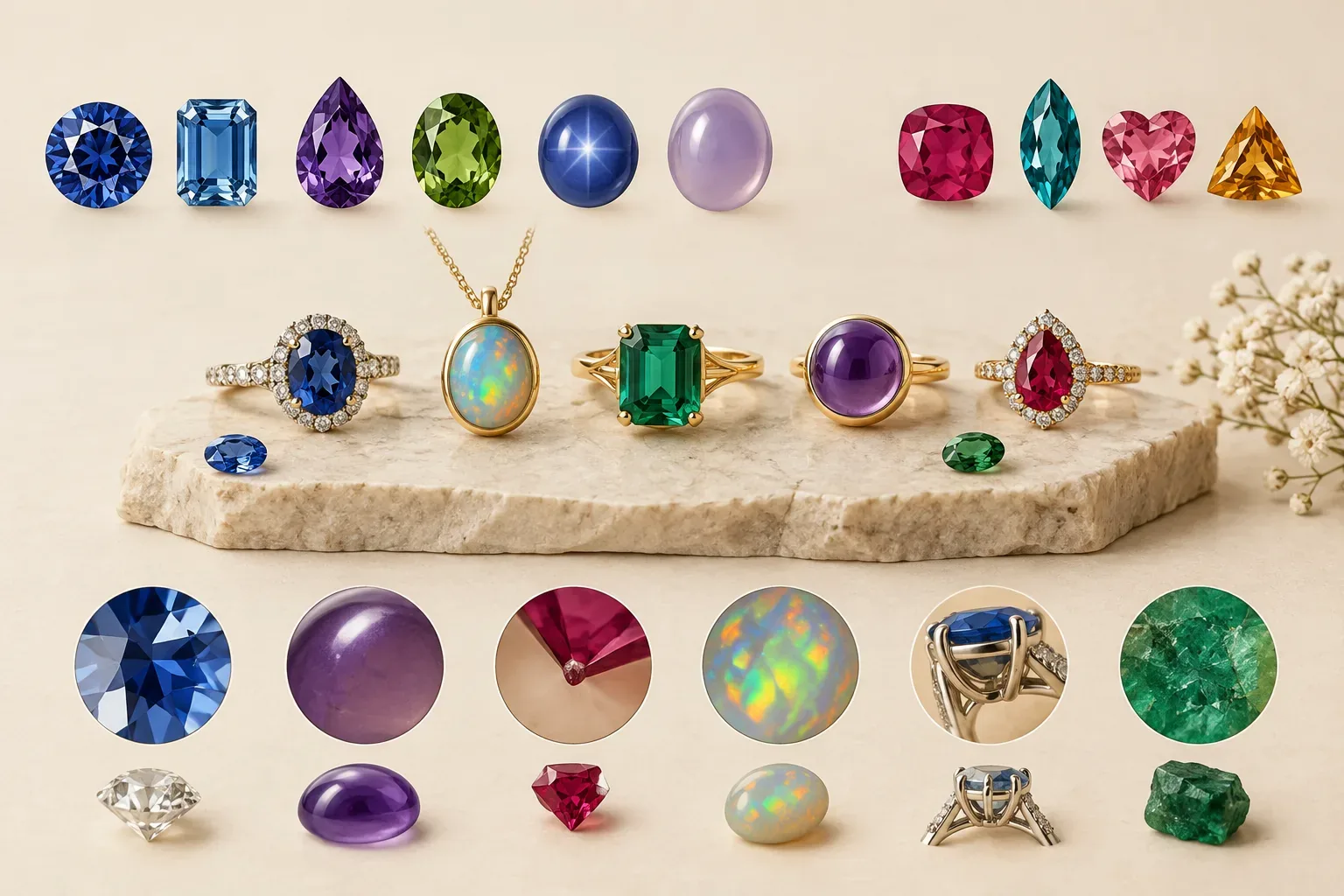
Meaning at a glance
Distinguish a gem’s cut quality from its outline shape; choose facet styles, cabochons, and settings that suit each birthstone’s hardness, cleavage, and optical properties to maximize beauty without sacrificing durability.
Cut quality versus outline shape
Outline shape is the two-dimensional silhouette of a gemstone: round, oval, cushion, princess (square), marquise, pear, emerald (rectangular step), and so on. Cut quality refers to how a stone’s facets are arranged, sized, and proportioned to return light to the viewer. Both matter for appearance, but they are not the same decision.
A well-cut round brilliant in a hard stone like sapphire or ruby will return maximum brilliance and hide small inclusions, while a step-cut emerald shape emphasizes color and transparency. For softer gems, the same outline can be cut as a cabochon or a low-profile step cut to reduce the risk of chipping. When choosing birthstone jewelry, treat shape and cut as complementary choices: choose a shape that flatters the design, then choose a cut style that matches the stone’s material properties and intended wear.
How facet style and cabochons change appearance and durability
Faceted cuts with many small facets (brilliant cuts, mixed cuts) are meant to maximize sparkle in transparent, hard stones. These cuts can improve perceived clarity and brilliance but may expose fragile edges or corners in stones with cleavage or low toughness. By contrast, step cuts (emerald, baguette) emphasize color and clarity rather than scintillation; they work well for stones prized for color but require good transparency to shine.
Cabochons are polished, non-faceted shapes with a smooth dome. They are often the best choice for stones with strong inclusions, chatoyancy (cat’s-eye effect), asterism (star effect), or color change, and for materials that are softer or brittle. Cabochons reduce the risk of surface chipping from blows, because there are no sharp facet junctions, but they do present a larger exposed surface that can be scratched if the material is soft.
Vulnerable corners, settings, and protective design
Some outline shapes have inherently vulnerable points: the corners of princess cuts and the tips of marquise and pear shapes are prone to chipping. Protective settings—such as bezel, V-prong, or partial bezel designs—shield these stress points. A bezel setting surrounds the girdle and can cradle a soft or brittle stone, while prongs concentrate protection at specific points and allow more light to reach the stone.
The Gemological Institute of America’s guidance on design and display emphasizes selecting setting styles that reflect how the jewelry will be worn and the stone’s susceptibility to impact and abrasion. For rings worn daily, choose protected settings for softer birthstones or those with cleavage; for occasional-wear pendants and earrings, more open settings are acceptable for most shapes.
Optical effects and how shape & cut reveal them
Some birthstones display optical phenomena that are either enhanced or diminished by cut choice. Star sapphires and rubies show asterism best as centered cabochons, because the smooth dome concentrates the aligned inclusions that produce the star. Chatoyant stones like tiger’s eye are also cabochon stones to show the moving band of light.
Color-change stones and pleochroic gems (which show different colors from different angles) may benefit from cuts that orient the stone to emphasize the desired face-up color. Facet angle and pavilion depth can shift how color is perceived, so a cutter will often orient the rough to prioritize color rather than size. When buying, ask whether a given cut was chosen to emphasize color, clarity, or optical phenomena.
Material properties that affect cut and shape choices
Three material properties should drive selection: hardness, cleavage/toughness, and transparency. Hardness (resistance to scratching) is often measured on the Mohs scale and helps determine how readily a stone will acquire surface scratches during everyday wear. Cleavage describes a crystal’s tendency to split along specific planes; stones with perfect cleavage require more protective designs. Toughness is resistance to breakage from impact and varies independently from hardness.
The Gemological Institute of America’s resources on treatments and durability explain that cutters and designers consider these properties when deciding whether to faceted-cut, cabochon, or leave irregular shapes. For example, opal and pearl are relatively soft and better suited to low-profile settings or bezel protection, while hard stones like garnet, spinel, ruby, and sapphire can support more exposed, facet-rich shapes.
Documented historical meanings and modern personal interpretations
The Gemological Institute of America documents how the idea of associating specific gems with months and identities evolved over many cultures and eras. GIA’s material notes the existence of historical lists and changing associations but does not treat a single list as universal. Those documented historical associations are cultural records and distinct from how people use birthstones today.
Modern personal interpretations—such as choosing a stone because a wearer feels it brings luck or because its color suits a wardrobe—are contemporary practices and personal meaning-making rather than documented historical facts. When writing about symbolism, separate what GIA or other sources document as historical practice from the personal or marketing meanings that have emerged in recent decades.
How birthstone motifs and traditions appear in jewelry
Birthstones appear in many formats: solitaire rings, multi-stone cluster pendants, charm bracelets, bezel-set cabochon lockets, and birth month collections that pair the stone with a metal or motif. Jewelers often choose settings and cuts to highlight the month’s featured qualities—color, phenomena, or cultural association—while adapting the design for daily wearability.
Retailers and designers follow industry buying and display practices that include selecting metal type and format to suit the gem. Jewelers of America’s buying guides recommend matching design format, metal, and setting to both the stone’s durability and the recipient’s lifestyle to ensure longevity and satisfaction.
Practical selection and gifting guidance
Decide how the piece will be used before choosing shape or cut. For an everyday ring, prioritize durability: select hard stones or protect softer ones with bezels and low profiles. For a pendant or brooch that sees occasional wear, you can favor more expressive shapes and open settings. Ask the seller how the stone was cut and why that style was chosen for the specific rough.
Check for treatments and request written disclosure for anything material to value or care instructions. The Federal Trade Commission advises buyers to seek clear disclosure on whether a gem is natural, lab-grown, treated, or an imitation. The Gemological Institute of America’s treatment guidance explains that some treatments affect color stability and durability, and those factors should influence cut, shape, and setting choices.
When gifting, consider the recipient’s daily activities and aesthetic: choose a low-profile, protected setting for someone active, or a showpiece cut and setting for someone who prefers special-occasion jewelry. Use trusted sellers and ask for return policies and care recommendations. Jewelers of America recommends matching seller practices—warranty, clear descriptions, and service—with your expectations for durability and aftercare.
Care, verification, and final checks
Before purchase, ask for details about the gem’s identity, treatments, and whether it is natural or lab-grown. The FTC’s guidance on buying gemstones stresses the importance of clear disclosure in writing. Also ask how the cutter oriented the rough and whether the setting was designed to protect vulnerable points.
After purchase, follow cleaning and care recommendations appropriate to the stone and setting. See our related articles for monthly care and for treatment disclosure guidance to keep a birthstone beautiful for years. If you plan resale or inheritance, keep documentation that describes cut, treatments, and any appraisals.
Frequently asked questions
Is the round shape always the most durable choice for a birthstone?
Not necessarily. A round outline eliminates vulnerable points but durability depends more on the gem’s material properties and the setting. Hard stones with good toughness can work well in many open settings; softer or brittle stones benefit from protective bezels or low profiles regardless of shape.
When should I choose a cabochon instead of a faceted cut?
Choose a cabochon for stones with strong optical effects like asterism or chatoyancy, for stones with abundant inclusions where transparency is low, or for softer materials that chip easily. Cabochons reduce the risk of facet-edge chipping but increase the exposed surface area that can be scratched.
Which shapes need the most protection from chipping?
Shapes with sharp points or corners—princess (square) corners, marquise tips, and pear tips—are more prone to chipping. Use V-prongs, partial bezels, or full bezels to protect these points, especially for daily-wear rings.
How do treatments affect my choice of cut or shape?
Some treatments can change a stone’s color stability or alter its toughness. Ask the seller for written disclosure of treatments and consult guidance from the Gemological Institute of America and the FTC, because treatment type may affect how the stone should be set and cared for.
Are lab-grown birthstones different in shape and cut options?
Lab-grown stones are available in the same shapes and cuts as natural stones. The same durability and setting principles apply: evaluate hardness, cleavage, and toughness rather than origin when choosing a cut and protective setting. Disclosure of origin is required by law and advised for buyer clarity.
What should I ask the jeweler before buying birthstone jewelry?
Ask for the stone’s identity, hardness and any cleavage, whether it has been treated or is lab-grown, why a particular cut was chosen, and what setting protects the stone. Request written disclosure for treatments or lab-grown origin and ask about return, warranty, and care recommendations.
Sources and further reading
- Birthstones for Each Month — Gemological Institute of America
- Buying Gemstones, Diamonds, and Pearls — Federal Trade Commission
- Jewelry Buying Guides — Jewelers of America
- An Introduction to Gem Treatments — Gemological Institute of America
- Gemstone Durability: Design to Display — Gemological Institute of America