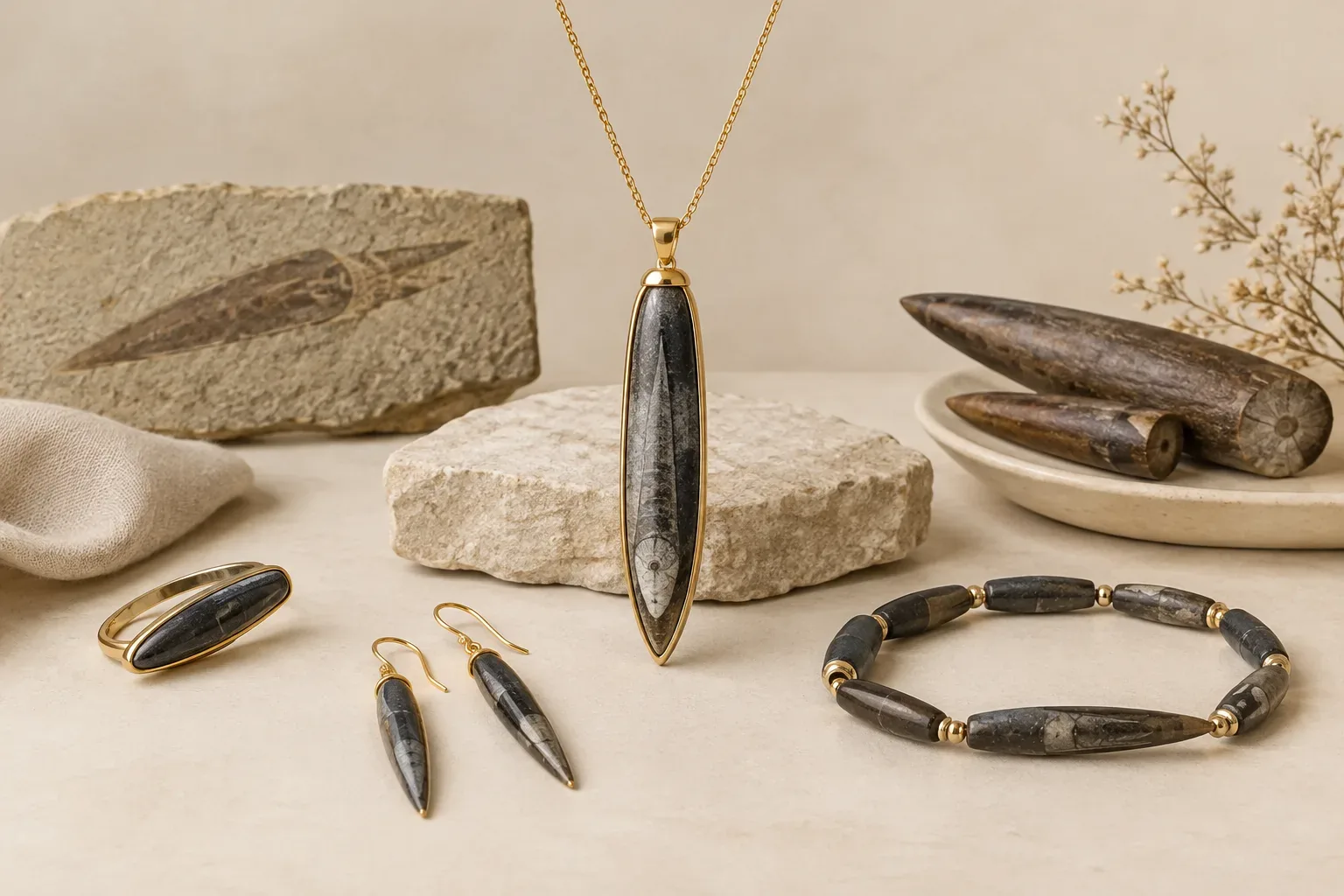
Meaning at a glance
Belemnite jewelry is primarily a modern use of fossil material; documented historical evidence for belemnite-specific symbolism is limited. This guide explains what is supported by museum and consumer-protection sources, how the motif appears in contemporary jewelry, how to check for treatments and imitations, and practical selection and care advice for buyers and gifters.
What the historical evidence shows (and what it doesn't)
When assessing the history of any jewelry motif, start with documented museum and academic sources rather than popular claims. The Victoria and Albert Museum frames jewelry history as a record of changing social contexts and materials, showing that people have long used unusual natural substances—including fossilized objects—in personal ornament. The V&A's overview of jewelry history and of gemstones stresses change over time in materials and meanings rather than a single, unbroken symbolic tradition.
However, there is limited museum-grade documentation that belemnites—the internal, bullet-shaped fossil remains of extinct cephalopods—had a widespread, named symbolic role in a particular culture or religion. In short: museum evidence supports the broader fact that fossils have been incorporated into personal ornament across periods, but it does not establish a universal or clearly traced historical meaning for belemnite-specific jewelry.
Separating documented historical meanings from modern personal interpretations
Documented historical meanings require primary or reputable secondary sources that directly link a material or motif to a culture, ritual, or commonly held belief. Museum surveys compiled by institutions such as the Victoria and Albert Museum document broad patterns—use of natural curiosities, memento traditions, and changing fashions—but they do not attribute, for example, a fixed religious meaning to belemnites across multiple cultures.
By contrast, many contemporary wearers and makers assign personal or symbolic meanings to belemnite jewelry today. These modern interpretations often emphasize themes such as a connection to deep time, a link to the sea or marine life, resilience, or scientific curiosity. Those are valid personal meanings for wearers, but they are not the same as documented historical symbolism. When you present a belemnite piece as a gift, be clear whether you are communicating an historically documented meaning or a personal one.
How the belemnite motif and fossil material appear in jewelry today
Modern belemnite jewelry typically uses the fossil rostrum as a visual element rather than a long-standing cultural emblem. Jewelers may polish a single belemnite to show its natural “bullet” shape and set it in a bezel or prong pendant, mount slices as inlaid cabochons, use small whole fossils as beads, or incorporate the silhouette as a cast metal motif. Designers sometimes pair belemnites with metals like silver or gold, or with other stones for contrast.
The motif can appear as a strict fossil specimen set intact, as a polished and stabilized piece, or as a stylized representation in metalwork. If you prefer a particular aesthetic, look at how the piece is finished—whether the fossil is left raw, polished, dyed, backed, or set behind glass—as each treatment affects appearance, fragility, and value.
Authenticity, treatments, and what to ask sellers
Belemnite material can be presented in several ways: untreated fossils, stabilized or reinforced specimens, dyed pieces, or imitations made from resin or cast materials that mimic fossil texture. The Federal Trade Commission's consumer guidance on buying gemstones, diamonds, and pearls emphasizes that sellers must disclose treatments, enhancements, and imitations. Ask for clear answers in writing about whether a belemnite is natural, stabilized, dyed, or a simulated material.
Request information about provenance and any laboratory or seller testing, and ask for magnified photos if you cannot inspect the piece in person. A reputable seller should describe visible treatments such as impregnation with resins, adhesives used to repair fractures, or surface coatings. If the seller cannot or will not provide disclosures, treat the purchase as higher risk or consider another vendor.
Assessing condition and value
Condition matters more for fossils than for many hard gemstones. Check for hairline fractures, previous repairs, or loose mounts. Ask how securely the fossil is set and whether any stabilizing material is visible along edges. Because belemnites are often valued for their natural appearance rather than a standardized grading system, the seller’s documentation, the aesthetic quality, and how the fossil has been treated will largely determine price.
If you are buying an antique or historic piece that incorporates a belemnite, request any available conservation history and provenance. Museums and reputable dealers can often provide context about age, previous restorations, and whether the piece was intended as a souvenir, fashion item, or something else.
Care and conservation of belemnite jewelry
Treat belemnite jewelry as you would other delicate or porous natural materials. Avoid prolonged exposure to household chemicals, sunscreen, or saltwater, and remove the piece for heavy physical activity to reduce the risk of knocks or abrasion. Store belemnite pieces separately to prevent scratches from harder gemstones or metal.
For cleaning, use a soft, dry cloth or a lightly damp cloth without detergents; do not assume that ultrasonic or steam cleaning is safe. When in doubt—especially for older or repaired items—consult a professional conservator or a reputable jewelry conservator before attempting any aggressive cleaning or repair. If a seller makes specific cleaning recommendations, ask for those in writing.
Selection and gifting guidance: practical and respectful choices
Be mindful that a belemnite-themed gift carries modern, personal symbolism more often than an established cultural message. If you intend to convey a particular meaning—whether scientific curiosity, a fondness for natural history, or a memorial sentiment—state that intention when you give the piece so the recipient understands the context.
For an everyday wearable, choose a setting that protects edges and secures the fossil. For collectors, prioritize provenance and minimal, documented treatment. If gifting to someone unfamiliar with fossils, include a brief note explaining what a belemnite is and any known provenance or treatment details provided by the seller. When selecting a retailer or artisan, prefer those who provide transparent descriptions, return policies, and written evidence of any treatments.
Final considerations
Use museum scholarship and consumer-protection guidance together: rely on the Victoria and Albert Museum for context about how natural materials have been used in jewelry over time, and follow the Federal Trade Commission’s advice on required disclosures and how to evaluate treatments and imitations. That combination will help you make informed decisions about authenticity, care, and the cultural framing of the piece.
Above all, be clear with yourself and the recipient about whether the meaning you ascribe to a belemnite piece is a documented historical claim or a personal, contemporary choice. Both are valid, but they are different kinds of meaning and deserve different types of explanation.
Frequently asked questions
What exactly is a belemnite and is it commonly used in jewelry historically?
A belemnite is a fossilized internal skeleton of an extinct marine cephalopod. Museum overviews show that fossils and unusual natural materials have occasionally been used in jewelry across periods, but there is limited museum-grade documentation that belemnites had a widespread, named symbolic role in a specific historical culture.
How can I tell if a belemnite in jewelry is real or a replica?
Ask the seller for written disclosure about whether the piece is natural, stabilized, dyed, or a simulated material. Request close-up photos, provenance, and any testing documentation. The Federal Trade Commission advises buyers to obtain clear information about treatments and imitations before purchasing.
Are belemnite fossils treated or stabilized for use in jewelry?
Sellers may stabilize fossils with resins or adhesives, polish them, or apply surface coatings. These are common treatments that affect appearance and durability; reputable dealers should disclose such treatments in writing.
How should I care for belemnite jewelry?
Protect the piece from harsh chemicals, impact, and prolonged moisture. Clean gently with a soft, dry cloth or a slightly damp cloth and avoid ultrasonic or steam cleaners unless a conservator advises they are safe for that item. Store separately to prevent scratches.
Is there a certification I should ask for when buying belemnite jewelry?
There is no single universal certification for fossil jewelry, but you can ask for written documentation of provenance, treatment disclosures, and any lab reports the seller can provide. If buying an antique piece, request conservation history and provenance details.
Can belemnite jewelry be resized or worn daily?
Whether a piece can be resized or worn daily depends on the setting and the fossil's condition. Fragile or heavily treated fossils may not withstand frequent wear or modification. Discuss durability and repair options with the seller or a qualified jeweler before purchase.
Sources and further reading
- Bedazzled: A History of Jewellery — Victoria and Albert Museum
- An A-Z of Gemstones — Victoria and Albert Museum
- Buying Gemstones, Diamonds, and Pearls — Federal Trade Commission