Meaning at a glance
Art Nouveau jewelry buying guide: rely on museum-backed history to recognize the movement's emphasis on natural forms, sinuous lines and new materials, separate those documented historical meanings from later and personal interpretations, verify materials and disclosures using consumer guidance, and choose revival pieces with provenance, maker information, and respectful context.
What Art Nouveau was — documented historical evidence
According to the Victoria and Albert Museum, Art Nouveau was a broad late-nineteenth- to early-twentieth-century stylistic movement that affected jewelry, decorative arts and architecture. The museum highlights how designers deliberately moved away from rigid historicist styles toward organic forms, asymmetry and ornamental line work, and how jewellery makers experimented with new materials and techniques as part of changing social tastes and technologies.
The V&A presents Art Nouveau as a range of regional expressions rather than a single uniform style. French, Belgian, British, and other European makers each developed their own approaches within the movement, and the period is best understood as a set of artistic priorities—natural motifs, emphasis on craftsmanship and an interest in integrating design with daily life—rather than a single set of symbols with fixed meanings.
Identifying cultural or period-specific features
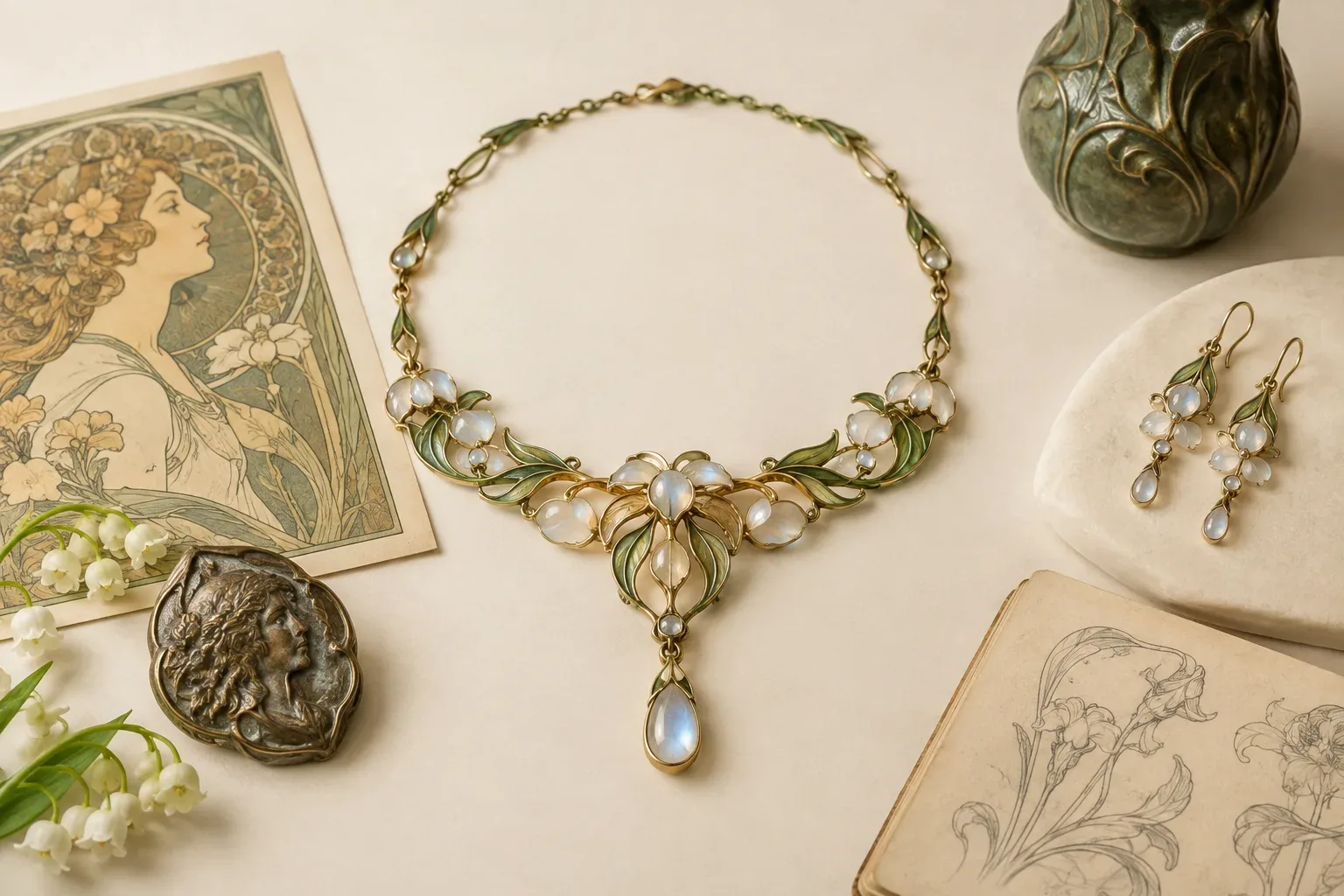
Museum documentation points to several observable features that characterize historic Art Nouveau pieces. Look for sinuous, 'whiplash' curves; motifs drawn from plants, flowers, and the female form; an interest in asymmetry; and a visible emphasis on surface decoration. These formal qualities help distinguish late-nineteenth- and early-twentieth-century work from later revival styles that borrow the look without the specific makers' techniques or materials.
Regional differences exist and are recorded by museums: for example, French artists often emphasized flowing line and allegorical female figures, while Glasgow and British makers included geometric and Celtic-inspired variants within the broader movement. Treat these as descriptive, historically grounded categories rather than universal meanings.
Documented historical meanings versus modern personal interpretations
Primary historical documentation and museum interpretation focus on style, craftsmanship and cultural context rather than on immutable symbolic content. The Victoria and Albert Museum's histories emphasize how changes in taste, technology and social context shaped what makers produced and wore. That means documented 'meanings' attached to Art Nouveau jewelry are principally about aesthetics, modernity and a reaction against previous academic styles, rather than absolute cultural or religious symbolism.
Modern wearers and makers often layer personal or contemporary meanings onto Art Nouveau motifs. For instance, a wearer today might read a floral motif as a sign of romantic feeling or environmental affinity; these are valid personal interpretations but they are not the same as documented historical intent. Be explicit when you present or gift a piece: separate what can be supported by museum-backed scholarship from your own contemporary or sentimental reading.
How motifs, gemstones and techniques appear in Art Nouveau jewelry
Museum collections and educational material show that Art Nouveau makers often paired organic motifs with a variety of materials. The Victoria and Albert Museum documents the movement’s use of motifs such as plants, insects, and the human figure, executed with softer outlines and flowing lines that wrap around the body. These motifs were expressed in brooches, pendants, rings and hair ornaments.
Gemstones and materials frequently used by period makers included pearls, opals and other stones that offered subtle color or iridescence. The Victoria and Albert Museum's guide to gemstones provides practical context for identifying stones historically used in decorative jewellery and explains how different gems were valued for color, rarity or optical effects rather than for any single fixed symbolism. Enamel, glass and mixed metals also appear widely in historical examples; the way a stone is set or combined with materials is often as informative as the stone itself.
Recognizing originals versus revival and reproduction pieces
Because Art Nouveau aesthetics have been widely revived, market offerings include original period pieces, later reproductions and modern interpretations. Museum-backed visual criteria—such as technical details of metalwork, patina, and the way enamel or stones are set—help identify period workmanship, but those judgments are material and documentary rather than mystical. Provenance, maker’s marks, documentation and condition reports are essential in distinguishing originals from later revivals.
The Federal Trade Commission advises buyers to ask about treatments, imitations and disclosures when purchasing gemstones, diamonds and pearls. Sellers should disclose whether a stone has been treated or whether a piece is a modern copy. Use these consumer-protection standards to guide questions of authenticity and to compare prices fairly between genuine period work and contemporary artisan pieces that merely reference the Art Nouveau style.
Practical steps for buying responsibly — condition, materials and disclosure
Start with clear questions for the seller: request provenance and condition reports; ask if gemstones have been treated, dyed or reconstituted; and seek photographs of any maker’s marks or hallmarks. The Federal Trade Commission's guidance on buying gemstones, diamonds and pearls stresses that sellers must disclose treatments and imitations, so make those disclosures a non-negotiable part of a purchase conversation.
If you are buying an original period piece, consider an independent appraisal or examination by a conservator to understand restorations, re-settings and structural stability. For revival or contemporary pieces that reference Art Nouveau, evaluate workmanship and the maker's stated influences rather than presuming historical authenticity. Pay attention to materials—period silver and low-karat gold may show different wear and require specific conservation compared with modern alloys and plated metals.
Selection and gifting guidance with respectful context
When selecting or gifting Art Nouveau or Art Nouveau–inspired jewelry, be explicit about which aspects of the piece you are emphasizing: its historical significance, its aesthetic appeal, or the personal meaning you attach. If the item is an original, offer the recipient documentation about provenance and conservation needs so they can appreciate and care for it responsibly. If it is a modern revival, mention the maker and the contemporary context so the piece is presented honestly.
Respect the movement's cultural origins by avoiding exaggerated claims of sacred or universal symbolism. Museums describe Art Nouveau primarily in terms of style and cultural change; follow that lead and share historically grounded information rather than inventing definitive symbolic meanings. When gifting, consider the recipient's aesthetic preferences and lifestyle—an original period brooch may require careful storage and occasional conservation, while a sturdy contemporary piece may be better for everyday wear.
Care, display and long-term stewardship
Historical pieces often need different care from modern costume jewelry. Consult a conservator or a reputable jeweller experienced with antique pieces before cleaning or restoring. The Victoria and Albert Museum's materials guidance and gemstone overviews can help you understand which stones and surfaces are vulnerable to heat, chemicals or abrasion, and whether professional intervention is warranted.
For revival pieces, follow the maker’s care recommendations and ask about warranty or repair services. Whether original or modern, store items away from direct light and extreme temperature changes, and request written care instructions when you buy, so that future owners retain the information needed to preserve the piece's condition and context.
Summing up: a responsible approach to Art Nouveau revival pieces
Use museum scholarship to ground your understanding of Art Nouveau as a stylistic and cultural movement, and use consumer-protection guidance to verify materials and disclosures. Distinguish documented historical context from contemporary or personal meanings, and be transparent about whether a piece is original, reproduced or newly made in the Art Nouveau idiom. Buy with provenance, ask about treatments, and gift or wear pieces with clear, respectful context so the work’s history and craftsmanship are honored.
Frequently asked questions
How can I tell if an Art Nouveau piece is original or a revival?
Ask for provenance, maker’s marks and condition reports; request close-up photos of hallmarks and settings; and if possible obtain an independent appraisal. Museum criteria such as metalwork techniques, patina and enamel treatment help specialists determine period authenticity, while the Federal Trade Commission recommends confirming any stone treatments or imitations through seller disclosure.
Which gemstones are commonly associated with historic Art Nouveau jewellery?
Museum guidance shows that period makers often used pearls, opals and stones with soft color or optical effects alongside enamel and glass. The Victoria and Albert Museum's gemstone overview explains how different gems were chosen for their visual properties rather than for universal symbolic meanings.
Should sellers have to disclose treatments or imitations?
Yes. The Federal Trade Commission advises that sellers disclose whether a gemstone has been treated, dyed, filled or otherwise altered, and whether a piece is a reproduction or modern copy. Make disclosure a condition of purchase and get it in writing when possible.
Is it respectful to gift Art Nouveau–style jewellery from another culture?
Gifting Art Nouveau–style jewellery is appropriate if you present the piece honestly and acknowledge its stylistic origins. The movement was primarily a European artistic trend documented by museums; avoid claiming universal sacred meanings and be mindful of any regional motifs that have specific cultural associations.
How should I care for an original Art Nouveau brooch or pendant?
Consult a conservator or an experienced jeweller before any cleaning or repair. Museum materials guidance can help you understand which gems and surfaces are fragile; when in doubt, avoid home chemical cleaning and request professional conservation advice.
Are revival pieces a good alternative to originals?
Yes. Well-made revival pieces offer the Art Nouveau aesthetic without the fragility, conservation needs or price of an original. Evaluate the maker’s craftsmanship and materials, and treat revival purchases honestly as contemporary interpretations rather than historic artifacts.
Sources and further reading
- Bedazzled: A History of Jewellery — Victoria and Albert Museum
- An A-Z of Gemstones — Victoria and Albert Museum
- Buying Gemstones, Diamonds, and Pearls — Federal Trade Commission