Meaning at a glance
Seashell jewelry meaning has evolved: museum and archaeological records show shells used as ornament, material and status markers in many periods, while contemporary uses layer personal, aesthetic, and commercial meanings; separate historical evidence (museum scholarship) from modern interpretations, and ask sellers about materials and treatments when buying.
Quick answer
Seashell jewelry meaning is not a single, universal symbol. The documented history shows shells functioned as material, ornament, and social signifiers across different times and places, while modern wear often reflects personal taste, fashion, or beach culture rather than a fixed cultural meaning. This article follows the thesis: explain the documented history and changing contexts of the seashell motif, separate cultural or religious evidence from later popular interpretations, and give practical guidance for choosing and wearing the motif in modern jewelry.
Historical evidence and cultural contexts
Museum scholarship and material-history surveys record that shells appear repeatedly in jewelry and personal adornment across many distinct periods and regions. Curators and historians at the Victoria and Albert Museum note that natural motifs—including shells—have been used in ornament since prehistoric times and have been reinterpreted in changing social contexts (Victoria and Albert Museum).
Archaeological and museum records show shells used as raw material, carved decorative elements, beads, and inlay in different contexts. These include coastal prehistoric assemblages where shells appear among personal ornaments, classical-period Mediterranean objects where natural motifs were incorporated in metalwork, medieval and early modern European pieces where shells could appear in devotional or pilgrimage-associated objects, and the Victorian period when natural-history interests led to new shell uses in sentimental and novelty jewelry. These broad period labels come from framed museum histories that track how materials and motifs shift in meaning over time (Victoria and Albert Museum).
Those documented contexts are distinct from later or popular accounts. Museum and curatorial sources focus on evidence in objects, provenance, and documented use rather than on a single symbolic message. When a specific culture assigned religious or economic roles to shells, that assignment is a matter for archaeologists and ethnographers and must be cited to the relevant cultural study; the V&A’s historical perspective emphasizes changing social context rather than a single shared meaning (Victoria and Albert Museum).
Documented historical meanings versus modern interpretations
Documented historical meanings are those established by surviving objects, archival records, and scholarly interpretation. In those records shells appear as worked materials, fashion statements, components of trade networks, and occasionally as markers in ritual contexts. Museums and archaeologists interpret those uses from the objects themselves and their find contexts; the Victoria and Albert Museum highlights how the same motif can mark different social messages in different times and places (Victoria and Albert Museum).
Modern interpretations often layer new or personal meanings onto the shell motif. Contemporary wearers and designers may associate shells with seaside leisure, summer fashion, femininity, fertility, or bohemian aesthetics. Those contemporary associations are widespread in popular culture and marketing, but they are not documented as universal historical meanings. Treat modern symbolic readings as contemporary, culturally specific, and personal rather than as evidence of a continuous, unchanged meaning across history.
Be explicit about the difference: if you treat a particular object as carrying a historical meaning, rely on documented provenance and museum or archaeological evidence; if you wear or gift seashell jewelry for an aesthetic or sentimental reason, make that intention clear rather than assuming a historical or religious significance.
How the seashell motif and related materials appear in jewelry
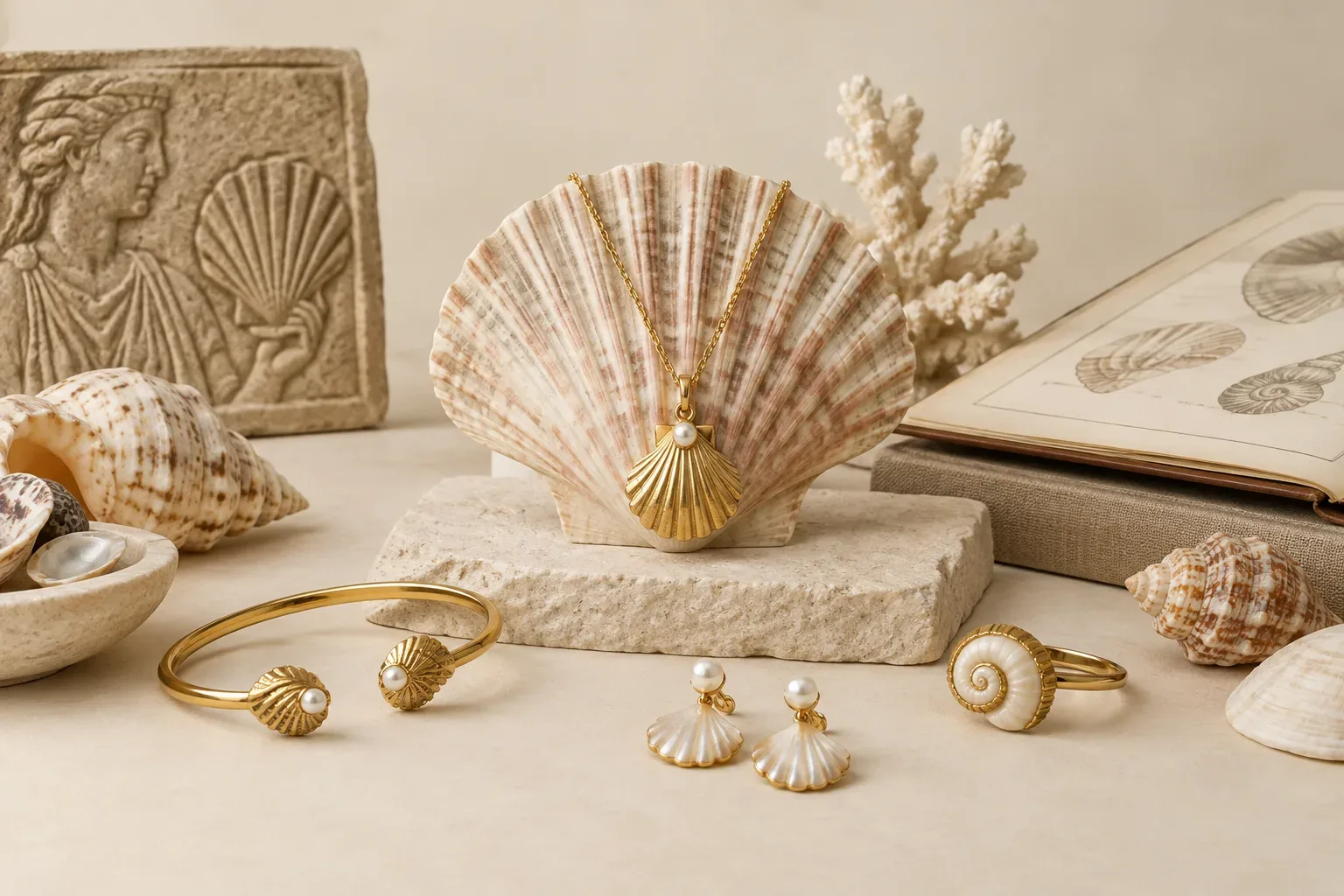
The seashell motif and shell-derived materials show up in jewelry in several technical and aesthetic ways. Whole shells are used as pendants and carved ornaments. Thin shell layers, often called mother-of-pearl, are used for inlay and backing in settings and cameos. Carved shell cameos use the layered color of a shell to create relief portraits and scenes. Beads made from small shells have been strung into necklaces and bracelets. Designers also render the silhouette of shells in metalwork, enamel, and cast forms that reference shell shapes without using actual shell.
Pearls, which are produced by mollusks, are a distinct category often discussed alongside shell jewelry because they share a marine origin and are used in many of the same types of pieces. Material and consumer-protection guidance for pearls and similar items follows the same principles as for other gemstones and organic materials: sellers should disclose treatments, imitations, and the nature of the material (Federal Trade Commission).
Because a single motif can be executed in different materials, pay attention to technique and material when assessing a piece. A metal shell-shaped locket communicates design choices and fashion references, while an authentic mother-of-pearl cameo shows a particular working tradition and material value. Museum histories make clear that these technical distinctions often influence how objects were used and valued in different periods (Victoria and Albert Museum).
Practical and respectful selection and gifting guidance
Decide what you mean by the gift. If you give seashell jewelry as a personal token—a reminder of shared travel, a summer memory, or a family association—say so. That clears up modern intent and avoids unintentionally imposing a historical or religious meaning that the wearer may not share. If you intend the piece to reference a specific cultural tradition, research its provenance and, where appropriate, consult with communities or scholars about respectful use.
Ask sellers for clear information about materials and treatments. The Federal Trade Commission advises consumers to ask about treatments, imitations, and the nature of organic materials such as pearls and shell-derived products; the same caution applies to shell items. Request written or verbal confirmation about whether a piece is natural shell, stabilized shell, dyed, or a synthetic imitation, and retain receipts and any disclosures.
Consider provenance and sustainability. If the sourcing of the shell material matters to you or the recipient, ask the maker or vendor how the shells were collected and whether any wildlife or habitat rules apply. For high-value items that reference shell-derived materials such as natural pearls or mother-of-pearl, request documentation and vendor guarantees when available. Be mindful that cultural sensitivity matters: pieces that draw on specific traditional designs may be subject to community expectations about use and display. When in doubt, prioritize transparent sourcing, clear intent, and direct communication with the recipient.
Care, authenticity checks, and consumer protections
Shell and shell-derived materials are organic and require different care from hard gemstones and metals. Avoid strong chemical cleaners and prolonged exposure to heat. Have valued items assessed by a qualified jeweler or conservator who understands organic materials when you need repair or appraisal. Museums conserve shell-based objects with specialized techniques because the material is thin, layered, and sensitive to environmental change (Victoria and Albert Museum).
To check authenticity or learn whether a piece is treated or imitated, ask the seller for documented disclosures and, if necessary, seek a professional appraisal. The Federal Trade Commission recommends that consumers ask specific questions about treatments and imitations when buying gemstones, diamonds, and pearls; the same standard helps for shell-based materials and related components (Federal Trade Commission).
Separate biological facts from symbolism. If you want biological information about mollusks, pearls, and marine life, consult a natural-science source rather than a symbolic or art-historical one. Agencies such as NOAA Fisheries provide reliable information about marine animals and their biology, which helps distinguish the organism from the cultural meanings people attach to shells (NOAA Fisheries).
Conclusion
Seashell jewelry meaning is best understood as layered: documented historical uses—recorded and interpreted by museums and archaeologists—show shells used as material, ornament, and occasional social markers in specific periods, while modern interpretations are diverse and often personal. Use museum and consumer-protection guidance to separate historic evidence from contemporary symbolism, to confirm material authenticity, and to choose or gift pieces in ways that respect provenance and personal meaning.
Frequently asked questions
What does seashell jewelry mean?
Seashell jewelry meaning is not universal. Historically shells served as worked material, ornament, and occasional social markers in specific contexts; today the motif often signals personal, aesthetic, or seasonal associations such as beach memories or fashion. Distinguish documented historical evidence from modern interpretations when assigning meaning.
Are pearls the same as shells?
Pearls are produced by mollusks and are related to shells by biological origin, but pearls are a distinct gem material with its own trade, valuation, and consumer-protection concerns. Ask sellers about the nature, treatments, and provenance of pearls the same way you would for other valuable materials (Federal Trade Commission).
How can I tell if a shell-based piece is authentic or treated?
Request disclosures from the seller and look for documentation or an appraisal. The Federal Trade Commission recommends asking about treatments, imitations, and the nature of organic materials; a professional jeweler or gemmologist can provide further verification.
Is wearing a seashell motif cultural appropriation?
That depends on context. Simple, contemporary beach motifs generally function as fashion. When a design references a specific cultural tradition or sacred object, research its origin, and if necessary consult community sources to ensure respectful use. Clear intent and transparent sourcing help avoid harm.
How should I care for shell or mother-of-pearl jewelry?
Shell-based materials are organic and often more sensitive than hard gemstones. Avoid harsh chemicals and extreme heat, and seek a jeweler experienced with organic materials for cleaning or repair. For historically important pieces, follow conservation guidance such as that used by museums (Victoria and Albert Museum).
Sources and further reading
- Bedazzled: A History of Jewellery — Victoria and Albert Museum
- 11 Cool Facts About Whales, Dolphins, and Porpoises — NOAA Fisheries
- Buying Gemstones, Diamonds, and Pearls — Federal Trade Commission