Meaning at a glance
Bee jewelry meaning combines documented historical uses—recorded in museum collections and studies—with a wide range of personal and modern symbolic interpretations; this article separates the evidence from later fashions and gives practical guidance for selecting and wearing bee-themed pieces.
Quick answer
The bee jewelry meaning has layered histories: museums and curatorial research document the motif appearing in decorative and sentimental jewelry across different periods, while contemporary wearers add personal symbolism such as community, industry, or environmental concern. This article explains the documented evidence, distinguishes it from later popular interpretations, and provides practical selection and gifting guidance.
Historical evidence and cultural contexts
The written and object-based evidence about bees in jewelry is best read through surviving pieces and museum research rather than as a single, unchanging meaning. The Victoria and Albert Museum presents bees and other insect motifs in its broader historical overview of jewelry, showing how motifs move in and out of fashion and adopt different social meanings as tastes, technologies, and gift practices change. The V&A’s materials describe how jewelled insects appear on brooches, pendants and decorative items across multiple periods and how curators interpret those objects in their changing social contexts.
Examination of marriage-related and sentimental jewellery in V&A writing also shows specific uses of motifs like hearts combined with insects in keepsakes and presentation pieces. For example, the V&A’s discussion of brooches for bridesmaids places certain decorative brooches—some featuring insects—within documented gift practices rather than attributing a single symbolic meaning to every example. These museum resources are useful because they record what makers and owners actually produced and used, and they highlight that designs often reflect fashion, material availability, and social custom.
Documented historical meanings versus modern interpretations
Documented historical meanings are those that can be traced to how pieces were used, described, or catalogued in primary sources or museum collections. The V&A’s histories make clear that many insect motifs, including bees, were chosen for decorative appeal, novelty or as part of a conventional repertory of symbols in a given era. Where a museum catalogue or exhibition label links a motif to a specific sentiment or social practice, that association is a documented historical interpretation tied to particular objects or contexts.
Modern personal interpretations, by contrast, are contemporary layers of meaning wearers and designers now attach to the bee. Today people commonly describe bees as symbols of community, hard work, resilience, and environmental stewardship. Those are valid personal or cultural readings but should not be presented as universal historical facts. Many contemporary designers explicitly use the bee to signal ecological awareness or to celebrate industriousness, which is a 20th–21st century cultural development rather than a simple continuation of a single historic meaning.
How the motif, gemstone, and tradition appear in jewelry
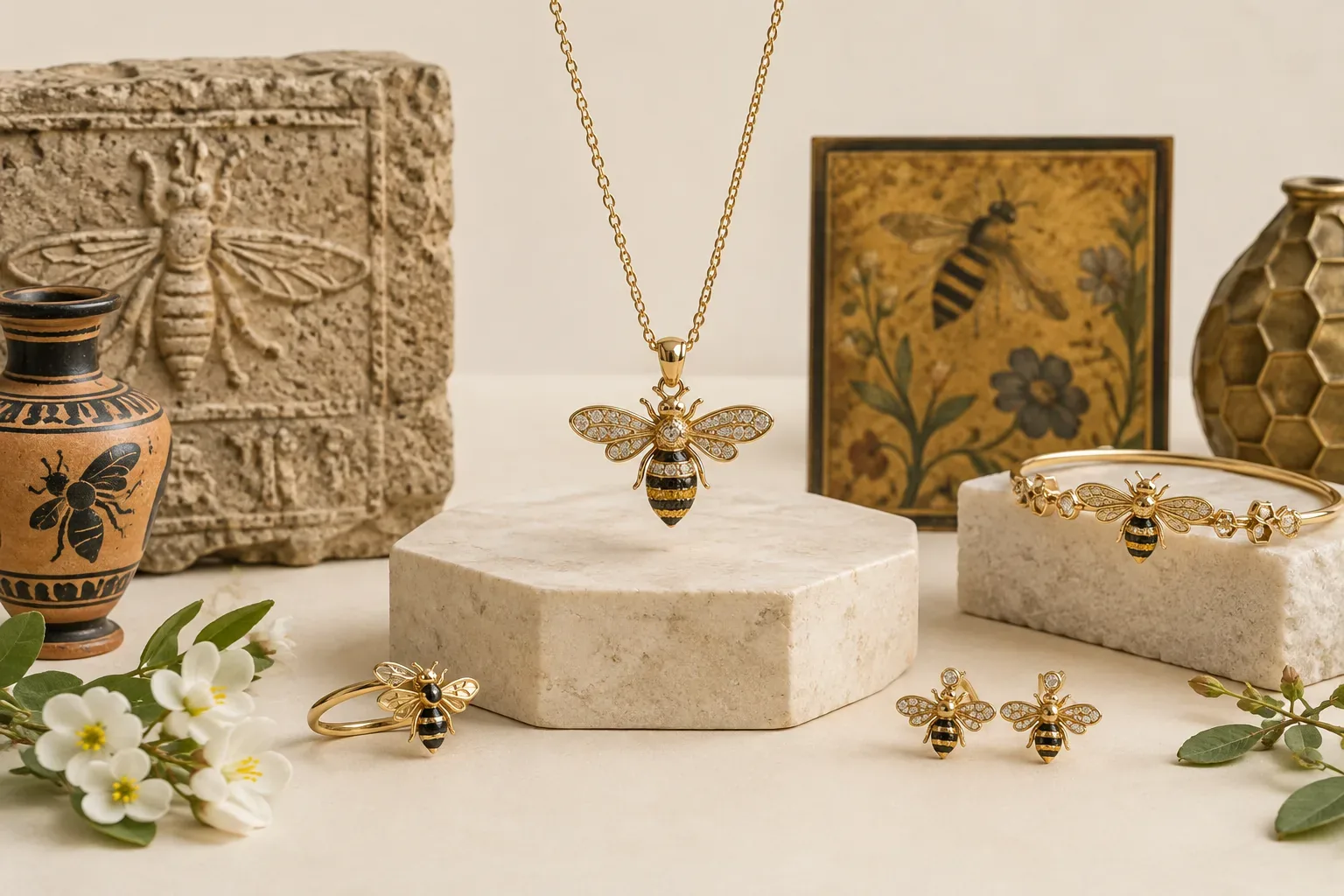
As a motif, bees appear in many forms: realistic insect studies, stylized emblems, or as components within larger scenes (for example, set among flowers). Historically and today, bees have been rendered in precious metals such as gold and silver, formed as brooches, pendants, charms, rings, and occasionally as decorative elements on larger objects.
Gemstones and materials are used to accentuate the bee motif in different ways. Small coloured gemstones and enamel often supply surface colour in historic pieces, while contemporary bee pendants may feature a single centre stone—such as an amethyst, citrine, or a faceted diamond—set within wings or body segments to create focal interest. Where gems are present, consumers should be aware of the distinction between natural gemstones, treated stones, simulants and manufactured alternatives; regulatory guidance on disclosure requires sellers to be clear about treatments and imitations.
Traditions associated with bee jewelry include sentimental gifting and fashion uses. Museum discussions, including the V&A’s coverage of brooches given to bridesmaids, show that brooches and small pins functioned as tokens of relationship and status in documented contexts. In modern practice designers and shoppers reuse that tradition: bee brooches or pendants are often chosen as small, wearable tokens for occasions that call for a symbolic but not overtly religious gift.
Practical guidance for choosing and gifting bee jewelry
Decide whether you want documented historical resonance or contemporary symbolism. If your priority is a piece with a clear historical provenance—an antique brooch, for example—look for reliable documentation from museums, dealers, or established auction records and ask for provenance details. Museum catalogues and exhibition notes offer context but do not guarantee authenticity of any single privately sold object, so seek independent verification for important purchases.
If you prefer a new piece that carries modern meanings such as community, resilience, or environmental concern, choose a design and maker whose stated intent matches the message you want to send. Contemporary designers often describe their inspiration and ethical practices on product pages or in studio statements; this is a direct way to align gift intent and maker intent.
Ask sellers about materials and treatments. The Federal Trade Commission’s consumer guidance on buying gemstones, diamonds, and pearls stresses that sellers should disclose treatments, enhancements, and whether gems are simulants or imitations. For gemstones set into bee motifs, request written confirmation of whether the stone is natural, treated, lab-grown or simulated, and whether precious metals carry hallmarking or fineness marks.
Consider scale, wearability and wearer taste. Bee brooches read differently from delicate bee pendants; a large, detailed brooch tends to be a statement or vintage-style accessory, while a small pendant or charm reads as personal and everyday. Think about the recipient’s wardrobe and their comfort with symbolic jewellery. When in doubt, choose a modest-size pendant in a durable metal such as sterling silver or 14k gold that can be worn daily.
Respect cultural or religious sensitivities. Bees rarely carry overtly religious meanings in most documented museum treatments, but gifting is personal. If the recipient associates a motif with particular beliefs or memories, let that guide your choice.
Care, authentication, and consumer protection
Caring for bee jewellery follows the same practical rules that apply to small, detailed metalwork and set gemstones: avoid chemical exposure, store pieces to prevent abrasion, and have prongs or settings checked by a jeweller if stones are present. For pieces with enamel or delicate filigree, extra care is appropriate because surface treatments can be damaged by knocks or harsh cleaning.
Authentication and disclosure are important for both antique and modern purchases. Ask for written descriptions, invoices and, when relevant, independent condition reports. For gemstones and treatments specifically, rely on seller disclosure and, if necessary, an independent gemological report. The FTC guidance recommends that consumers seek clarity about treatments and imitations before purchase and keep documentation after purchase.
Conclusion
Bee jewelry meaning is not a single, fixed message handed down unchanged through history. Museum documentation shows that the bee motif has been used for decorative and sentimental reasons in different periods, while modern wearers and designers freely add new symbolic layers. Clear selection and gifting decisions start with deciding whether you want historically documented provenance or contemporary symbolic intent, and then seeking transparent information on materials, makers and treatments.
Frequently asked questions
Does a bee motif have a single historical meaning?
No. Historical evidence in museum collections shows that bees and insect motifs were used for a variety of decorative and sentimental reasons in different periods. Museums such as the Victoria and Albert Museum interpret specific pieces in their social contexts, which means meanings can vary by object and era.
Can I rely on a modern designer’s stated symbolism when buying bee jewelry?
Yes. Contemporary designers usually state their inspiration and intended symbolism on product pages or in studio notes; if the designer’s stated meaning matters to you, choose makers who clearly explain their intent and materials.
What should I ask about gemstones in bee jewelry?
Follow the FTC’s consumer guidance: ask whether a gemstone is natural, treated, lab-grown or a simulant, and request written confirmation of any treatments or enhancements before purchase.
Is a bee brooch suitable as a sentimental gift?
Bee brooches and small pins have a documented history as presentation and sentimental gifts in museum materials. Whether they suit a particular recipient depends on their personal taste and how strongly you want the gift to convey a specific message.
How do I care for detailed bee jewellery with enamel or stones?
Avoid harsh chemicals, store pieces to prevent abrasion, clean gently with a soft cloth, and have settings checked periodically by a jeweller; enamel and filigree require especially careful handling.
Sources and further reading
- Bedazzled: A History of Jewellery — Victoria and Albert Museum
- Brooches for bridesmaids — Victoria and Albert Museum
- Buying Gemstones, Diamonds, and Pearls — Federal Trade Commission