Meaning at a glance
Sillimanite can be cut as transparent faceted stones or as fibrous material sometimes called fibrolite; variety names, claims of chatoyancy, identification, durability, and care belong to gem science and retail disclosure, while symbolic meanings are modern, personal, and not universal.
Quick answer
Sillimanite may be faceted or cut as fibrous material sometimes called fibrolite; variety naming, chatoyancy claims, identification, durability, and care should be clearly separated from symbolism.
What sillimanite (and fibrolite) is — a brief gem-technical picture
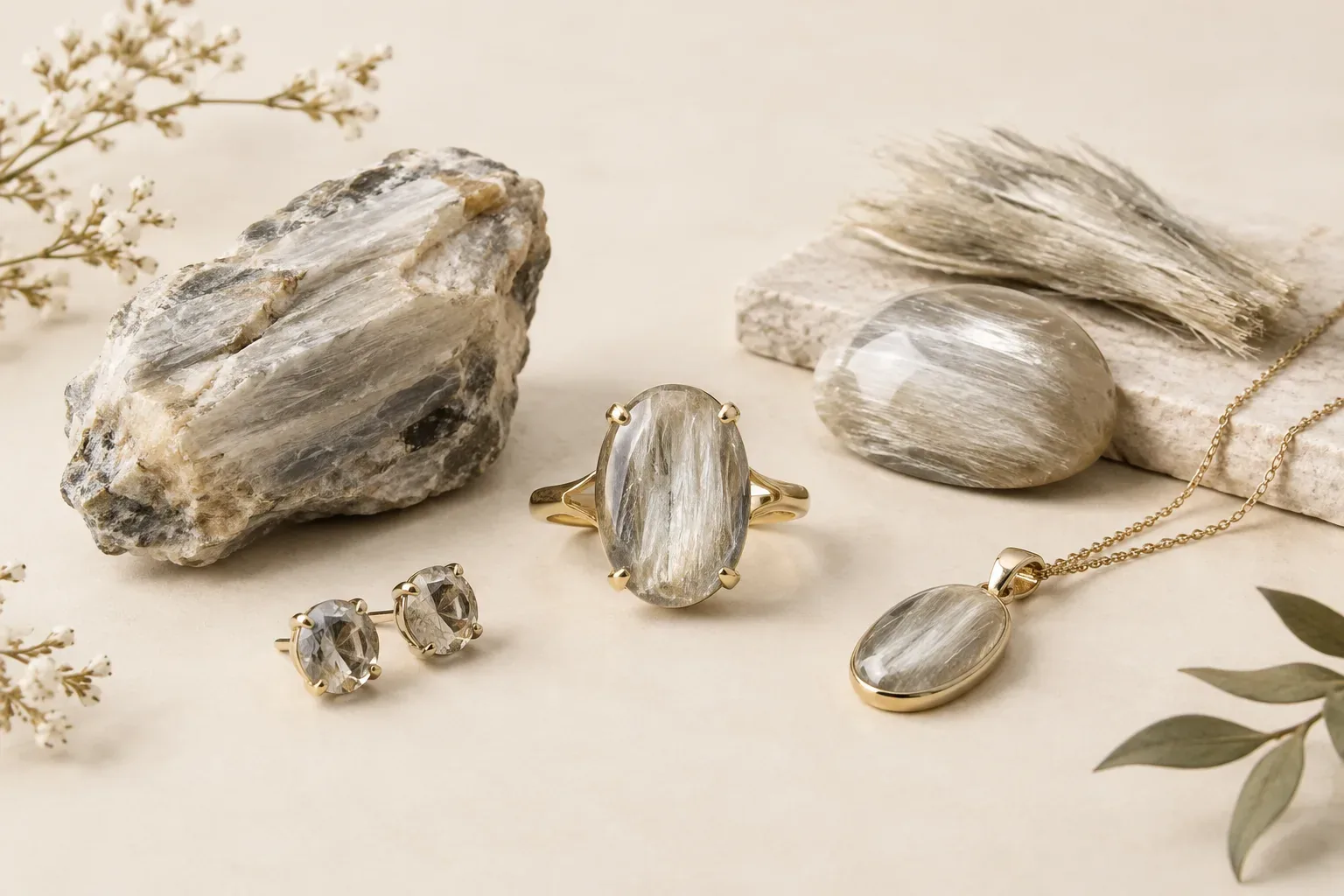
Sillimanite is a naturally occurring mineral used occasionally as a gem material. In gem and mineral discussions it appears both as transparent crystals that can be faceted and as slender fibrous aggregates that are sometimes marketed as fibrolite. This dual appearance—gemmy crystals versus fibrous forms—explains some of the different names and cutting approaches encountered in the market.
When you read or hear claims about sillimanite's occurrence, recovery from rock, and suitability for jewelry, specialist institutions are the most reliable sources. The Gemological Institute of America has reported on the geological contexts and recovery of colored stones, including how different minerals are extracted and prepared for the trade, and the Smithsonian National Museum of Natural History describes how minerals and gems are identified and assessed for rarity and jewelry use. Both emphasize geological and identification facts rather than cultural meanings.
Historical evidence and cultural uses — what the records show
Published institutional resources do not document a long, well-attested history of symbolic use for sillimanite comparable to better-known gems such as sapphire or jade. The Smithsonian's educational materials stress mineral identity, geology, and suitability for jewelry, but do not attribute historic ritual or cultural symbolism to sillimanite in the way they do for some other gemstones.
The mainstream gemological literature likewise focuses on recovery, identification, and gem trade practices rather than on a deep record of traditional cultural meanings for sillimanite. In short, the documented historical record held by these professional and museum sources is primarily geological and gemological rather than mythological or ritualistic.
Documented historical meanings versus modern personal interpretations
Because institutional documentation emphasizes physical properties and occurrence, any historical symbolic meanings for sillimanite are, at best, sparse in those records. That absence of a clear traditional narrative is itself a documented fact: museum and gemological sources record identity and context more than symbolism.
Modern sellers, designers, and owners sometimes attach personal or contemporary symbolic meanings to sillimanite—terms like grounding, clarity, or transformation are examples of contemporary interpretations you might encounter. These modern attributions are personal or commercial interpretations and should not be taken as universal or historically established. Distinguishing documented gem facts from contemporary symbolism helps buyers and gifters set accurate expectations.
How sillimanite appears in jewelry
Sillimanite appears in jewelry in two main ways: as cut transparent crystals suitable for faceting and as fibrous material often fashioned into cabochons or polished beads; the latter is commonly referred to as fibrolite in trade contexts. The cutting style chosen—faceted for transparent material, cabochon for fibrous material—depends on the specimen's optical and structural character.
Variety names and descriptions can vary between dealers and regions, so identical or similar pieces may be offered under different labels. The scientific distinction (transparent, gemmy sillimanite versus fibrous fibrolite) is useful to know when assessing a piece, and when in doubt you can ask for a gemological identification report or written disclosure from the seller.
Identification, disclosure, and buying advice
Buyers should treat sillimanite like any less-common gem: ask for clear, written disclosure about whether the material is natural, treated, or synthetic, and request information about the cutting form (faceted versus fibrous/fibrolite). The Federal Trade Commission's consumer guidance recommends seeking plain-language disclosures about natural, lab-grown, imitation, and treated gemstones and keeping written documentation of any claims made at the time of purchase.
If the seller claims special optical effects such as chatoyancy or a unique variety name, ask for clarification and, if needed, an independent gemological report. The Gemological Institute of America and museum sources underline the value of professional identification for unusual or rare materials, because trade names and marketing descriptions are not always precise or consistent.
Durability and everyday care
Sillimanite's suitability for daily-wear jewelry depends on its specific physical properties and how it has been cut. Because the material can present as either transparent crystals or fibrous aggregates, its toughness and resistance to abrasion or breakage will vary; that variability is why identification and seller guidance are important before committing to a ring or bracelet intended for constant wear.
For general care, seek the seller's cleaning and care instructions and prefer gentle methods—cleaning with mild soap, lukewarm water, and a soft brush is often appropriate for stones in delicate settings. Avoid harsh household chemicals and impacts. The Federal Trade Commission recommends that sellers disclose treatments and that buyers follow professional care advice; where you are unsure, rely on the seller's documentation or ask a qualified jeweler how to clean the piece safely.
Selection and gifting guidance — practical and respectful tips
When choosing or gifting sillimanite, start with the recipient's style and lifestyle. If the person prefers jewelry they wear every day, favor a setting and stone that match that use and confirm the stone's durability with the seller. If the gift is intended as a collectible or occasion-only piece, rarer or more delicate cuts may be appropriate with less risk of wear.
Ask for disclosure and documentation at purchase, including return policies, any gemological reports, and details about treatments or stability. Presenting information transparently respects both the recipient and the gem. If you wish to emphasize meaning, be clear that any symbolic language you use is a modern personal attribution rather than an established historical fact; this honesty is particularly important when the giver frames a stone as having specific cultural or spiritual powers.
Summary
Sillimanite is a mineral used in jewelry either as faceted transparent crystals or as fibrous material often called fibrolite. Authoritative public sources prioritize geological, identification, and trade information over documented cultural symbolism, so buyers should treat symbolic meanings as contemporary personal attributions unless specific cultural evidence is cited. For purchasing and care, insist on clear written disclosure, consider the intended use before choosing cuts and settings, and follow seller or professional guidance for cleaning and handling.
Frequently asked questions
Is sillimanite the same as fibrolite?
Fibrolite is a trade name often used for the fibrous form of sillimanite. The mineral is sillimanite; fibrolite refers to its fibrous habit when that form is marketed in jewelry.
Does sillimanite have a documented historical meaning?
Authoritative museum and gemological resources focus on geology and identification; they do not document a widespread, well-established historical symbolic meaning for sillimanite comparable to some other gems.
Can sillimanite show effects like chatoyancy?
Cutting and the stone's fibrous structure can produce optical effects in some specimens, but buyers should ask for descriptions and, when necessary, independent identification rather than rely solely on marketing language.
How should I clean sillimanite jewelry?
Follow the seller's guidance and, in general, use gentle cleaning such as mild soap, lukewarm water, and a soft brush. Avoid harsh chemicals and impacts; when uncertain, consult a qualified jeweler.
What should I request from a seller when buying sillimanite?
Ask for clear written disclosure about whether the gem is natural, treated, or synthetic, any gemological reports, and the return policy. The FTC recommends keeping written documentation of claims made at purchase.
Is sillimanite suitable for everyday rings?
Suitability depends on the specific specimen's physical properties and cut. Confirm durability with the seller and consider protective settings for stones that may be more fragile or fibrous.
Are names like fibrolite or other variety terms standardized?
Variety names and marketing labels vary in the trade. For clarity, rely on mineral identification and, where needed, a professional gemological report.
Sources and further reading
- Gems Recovered from Sedimentary Rocks — Gemological Institute of America
- Gems and Minerals: Beauties and Building Blocks — Smithsonian National Museum of Natural History
- Buying Gemstones, Diamonds, and Pearls — Federal Trade Commission