Meaning at a glance
Sphene jewelry meaning often centers on the gem’s dramatic fire and uncommon colors, but historically there is little evidence of longstanding cultural symbolism; practical considerations—naming (sphene vs titanite), rarity, relative softness and cleavage, protective settings, and full disclosure of treatments or origin—are the primary factors buyers and gifters should prioritize over unsupported energetic claims.
Historical evidence: what is documented and who says it
When researchers and museums examine the record, sphene appears primarily as a mineralogical and gemological subject rather than a long-standing cultural symbol. The Smithsonian National Museum of Natural History treats titanite within the broader story of gems and minerals, emphasizing identification, geological context, rarity, and considerations for jewelry suitability rather than a tradition of ritual or symbolic use. The Gemological Institute of America (GIA) has published recent work on how colored stones, including those recovered from sedimentary deposits, are found and studied, which informs modern availability and trade naming but does not document ancient spiritual meanings tied to sphene. These professional sources focus on physical and trade facts rather than historic cultural symbolism.
Documented history versus modern personal interpretation
There is very little documented evidence that sphene played a distinct symbolic role in pre-modern or classical cultural systems. Professional bodies and museums present it as a mineral collected and appreciated for optical properties and rarity. Any widespread historical attributions (for example, claims that sphene was used in certain ancient rituals or carried specific powers in named cultures) are not supported by the primary mineralogical and museum literature cited above.
By contrast, modern interpretations—what many people mean by "sphene jewelry meaning" today—are predominantly personal, aesthetic, and contemporary. Buyers and wearers may ascribe qualities such as "fiery creativity," "clarity," or "rare beauty" to the gem, but those are subjective responses to its visual properties rather than historically documented symbolic roles. It is important to keep documented history and these modern personal or metaphysical attributions distinct: museums and gemological bodies record occurrence, properties, and suitability, while personal meaning is individual and cultural in the modern sense.
How sphene appears in jewelry
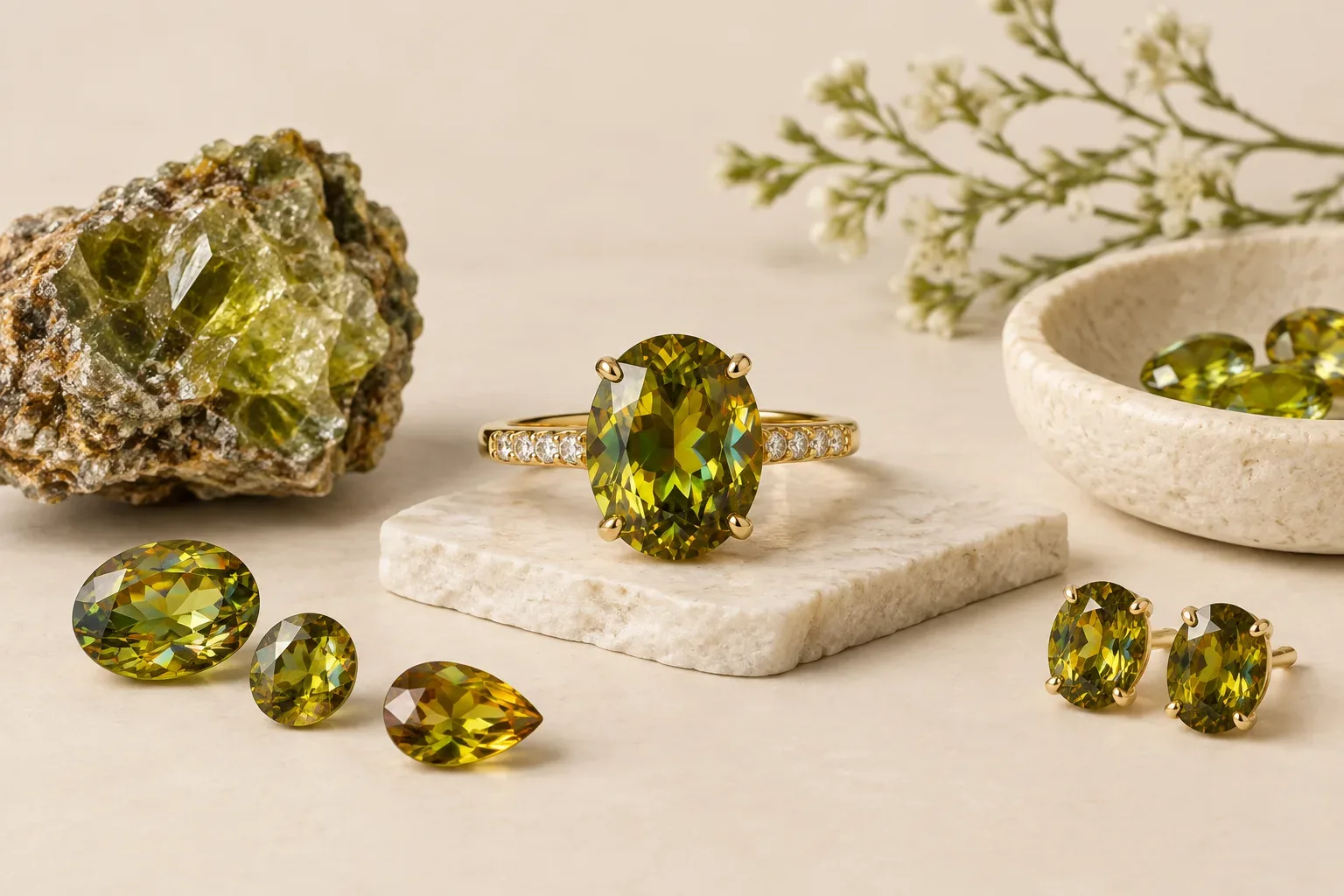
Sphene is most commonly used as a collector’s gem and as a center stone in pieces intended for occasional wear. Jewelry makers prize the stone for its exceptional dispersion—the way it splits white light into flashes of color—and for uncommon green, yellow, brown, and sometimes brownish-red hues. Because the gem is relatively rare in jewelry-size, faceted material and can show dramatic color shifts, it is often cut to emphasize brilliance and fire.
Because professional sources flag considerations about suitability for regular wear, jewelers typically set sphene in protective styles. Sphene stones are frequently secured as pendants, earrings, or brooches where there is less risk of knocks, or in rings designed for occasional rather than daily wear. Settings that protect edges and avoid exposing cleavage planes are common; bezel or halo designs and lower-profile prongs are typical choices when the cutter or setter wants to minimize damage risk while showing off the gem’s optical life.
Buying sphene: what to ask and what matters
When buying sphene, the name used—"sphene" versus the mineral name "titanite"—is a straightforward fact to note. Ask the seller which name they use and why, and expect clear disclosure about origin, treatments, and whether the stone is natural, lab-grown, or an imitation. The U.S. Federal Trade Commission (FTC) provides guidance that requires sellers to disclose treatments, man-made origins, and imitations when relevant; asking for that information is a reasonable and responsible step.
Because gem-quality sphene is comparatively rare, pricing varies widely depending on color, size, cut quality, and clarity. Request information on any known treatments and on return and certification policies. Laboratory reports for larger or expensive pieces can help confirm identity and provide objective details, while reputable sellers will explain the stone’s care needs and recommend settings appropriate to the gem’s durability. Prioritize sellers who are transparent about provenance and who will put disclosure in writing.
Care and wear: keeping sphene safe
Sphene requires careful handling and conservative care choices. Professional mineral and museum resources indicate that certain gems are more vulnerable to abrasion, cleavage, or thermal and chemical stress, and sphene is treated the same way in trade guidance: avoid exposing sphene to harsh mechanical shocks, sudden temperature changes, and aggressive cleaning chemicals. For routine cleaning, gentle methods such as a soft brush with mild soapy water are safest, and ultrasonic or steam cleaning should generally be avoided unless a qualified professional has verified the stone’s stability.
When not worn, store sphene pieces separately from harder gems that could scratch them, and choose protective settings when commissioning new pieces. Consider insuring expensive sphene jewelry and using professional maintenance checks to ensure prongs and mountings remain secure.
Selection and gifting guidance
When selecting sphene as a gift, match the piece to the recipient’s lifestyle and preferences rather than relying on any assumed universal symbolic meaning. If the recipient enjoys everyday wear, choose a piece designed for durability such as a pendant or earrings rather than a ring. If they collect unusual gems, a well-cut, eye-clean sphene with vivid dispersion will likely be appreciated for its rarity and optical drama.
Communicate care requirements to the recipient respectfully and include written information about the stone’s identity, any treatments, and recommended cleaning and wear practices. A receipt, certificate when available, and a reasonable return policy offer practical protections for both buyer and giftee. If you want to highlight meaning, frame it as a contemporary, personal interpretation—for example, celebrating uniqueness or a spark of creativity—rather than asserting historical or universal symbolism.
Closing points
Sphene’s strongest “meaning” in jewelry today is its visual character: pronounced fire and uncommon colors that prompt personal responses. The responsible buyer or giver will focus on the gem’s naming, documented rarity, necessary disclosures, and physical care needs, following consumer-protection advice and museum/gemological guidance rather than claiming unverified historical energies. For more on choosing meaningful jewelry and caring for colored pieces, consult practical buying guides and care resources.
Frequently asked questions
Is sphene the same as titanite?
Yes. Sphene is the trade name commonly used for the mineral titanite; both names refer to the same mineral species, though sellers may prefer one term over the other.
What does sphene symbolize?
There is no widely documented historical symbolism for sphene in professional museum or gemological records; modern symbolic meanings are personal and contemporary, often inspired by the gem’s fire and rarity rather than by a long cultural tradition.
Is sphene durable enough for everyday jewelry?
Sphene is less durable than common everyday gems and is typically set in pieces intended for occasional wear, such as pendants or earrings; protective settings and cautious wear are recommended.
How should I clean sphene jewelry?
Use gentle cleaning with a soft brush and mild soapy water and avoid ultrasonic and steam cleaners unless a qualified professional has confirmed the particular gem is stable under those methods.
Are sphene treatments or imitations common?
Buyers should always ask about treatments, enhancements, and whether a stone is natural, lab-grown, or an imitation; the Federal Trade Commission requires sellers to disclose such information.
Is sphene a good choice for a gift?
Sphene can be an excellent, memorable gift for someone who appreciates rare and visually dramatic gems, provided you choose a piece suited to their lifestyle and include care and disclosure information.
Should I get a certificate for sphene?
For larger or costly sphene stones, a laboratory identification report or certificate is advisable to confirm identity, any treatments, and to document provenance; reputable sellers will provide or arrange this.
Sources and further reading
- Gems Recovered from Sedimentary Rocks — Gemological Institute of America
- Gems and Minerals: Beauties and Building Blocks — Smithsonian National Museum of Natural History
- Buying Gemstones, Diamonds, and Pearls — Federal Trade Commission