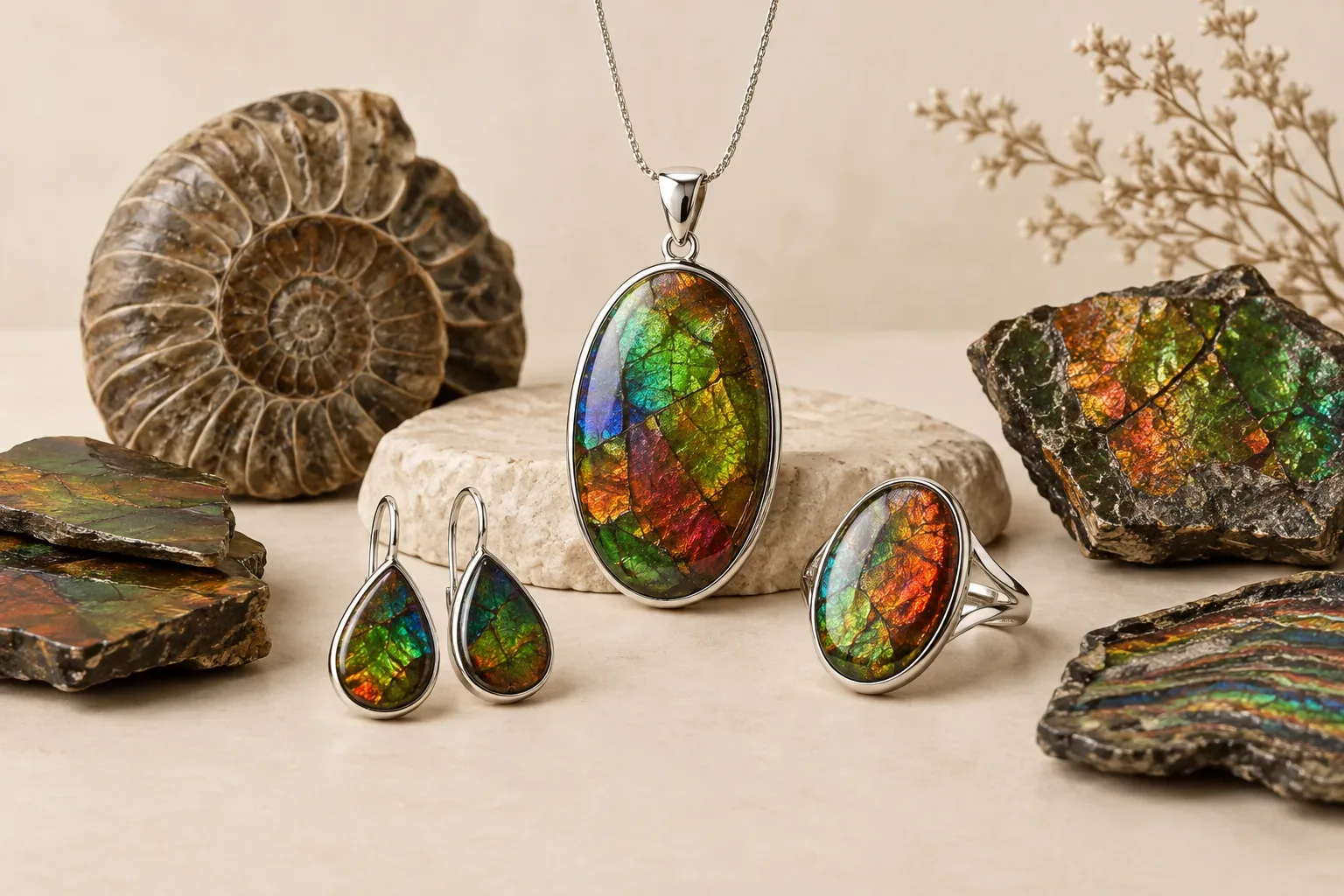
Meaning at a glance
Ammolite is an iridescent organic gem material fashioned from fossil ammonite shell; because ammolite is layered, often assembled, and relatively fragile, sellers must disclose treatments and construction, and buyers should choose settings and care routines that match the stone's characteristics.
Quick answer
Ammolite is an iridescent organic gem material fashioned from fossil ammonite shell. Natural layering, frequent assembly into doublets or triplets, variable durability, and common stabilizing treatments mean buyers should expect clear disclosure before attaching any modern symbolic meaning or assuming suitability for everyday wear.
What ammolite is and how it forms
Ammolite comes from the fossilized shells of ammonites, marine mollusks that lived during the Mesozoic. The iridescent colours are produced by thin aragonite layers preserved in parts of the fossilized shell; these layers diffract light so the surface displays shifting reds, greens, blues, and sometimes violets. The Gemological Institute of America (GIA) discusses these optical and structural properties and treats ammolite as an organic gem material derived from ammonite fossils.
Because the iridescent layer is naturally thin and uneven, small pieces are often assembled with a backing and sometimes a protective cap to produce stable, wearable gems. GIA notes that these assembled stones—commonly called doublets or triplets—are standard in ammolite jewelry to maximize colour and durability. The stone's organic origin and layered structure affect how it must be mounted and cared for in jewelry.
Documented historical evidence (what the records show)
The gemological literature focuses on ammolite's geological origin and its development as a gem material; in the sources approved for this article, the Gemological Institute of America (GIA) documents the material's ammonite origin, its iridescent appearance, the way pieces are assembled for jewelry, and how those factors affect durability and use. Those technical records are the primary documented history available in the cited professional literature.
The sources used here do not provide an extensive record of specific cultural meanings attached to ammolite before it entered the gem and jewelry trade. Where cultural or folkloric claims exist in broader popular writing or oral traditions, those claims fall outside the approved evidence for this piece and should be treated as separate, contemporary attributions unless supported by primary documentation.
Modern interpretations versus documented meanings
Because the approved documentary record emphasizes geological and commercial aspects, any symbolic meanings you encounter for ammolite today are largely modern interpretations or personal attributions rather than documented historical symbolism within the sources cited here. People and retailers may ascribe meanings such as transformation, protection, prosperity, or connection to ancient seas, but these are contemporary associations and not established facts in the gemological literature referenced for this article.
When assigning or discussing meaning, distinguish clearly between what the technical literature records—the material, its formation, and common treatments—and what individuals or cultures may choose to believe or express today. Treat such symbolic claims as personal or cultural expressions rather than universal or historically verified properties of the stone.
How ammolite appears in jewelry
Ammolite is most often used as polished cabochons or inlay pieces that highlight its play-of-color. Because the iridescent layer can be thin, gem cutters and manufacturers commonly stabilize ammolite by assembling it with a backing material and, in some cases, a protective cap to form doublets or triplets. These constructions enhance toughness and allow mounting in everyday jewelry forms such as rings, pendants, earrings, and bracelets.
Jewelry designers often protect ammolite with bezel settings, domed glass caps, or metal rims to reduce the risk of impact and abrasion. GIA describes these assembly and mounting practices and recommends thoughtful protective settings because the raw iridescent surface can be vulnerable to scratches and chemical damage if left exposed.
Buying ammolite: what to ask and what to expect
Because ammolite is commonly assembled or treated to make it wearable, ask sellers for clear, written disclosure about the stone's construction, treatments, and origin. The Federal Trade Commission (FTC) requires truthful disclosure about treatments, imitations, and whether a gem is natural or synthetic; buyers should rely on those consumer-protection expectations when purchasing ammolite.
Practical questions to pose include: Is the ammolite a single solid piece or an assembled doublet/triplet? Has it been stabilized with resins, backed with another material, or capped with protective material? What is the stated geographic origin? Can the seller provide any certification or independent gemological report? Answers to these questions affect value, care needs, and appropriateness for daily wear.
Visual qualities that influence desirability include strong, broad play-of-color, vibrant hues, and uniformity across the finished surface. Because small natural pieces are often assembled, workmanship quality—how well seams are hidden and how well caps or backing materials are adhered—also significantly affects both appearance and durability.
Caring for ammolite jewelry
Ammolite requires gentler care than many hard gemstones. The Gemological Institute of America (GIA) recommends avoiding ultrasonic cleaners and harsh chemicals, and using only mild soap, lukewarm water, and a soft cloth for cleaning. Heavy impacts, abrasive contact, and prolonged exposure to heat or strong sunlight can damage or fade the iridescent layer.
When not being worn, store ammolite jewelry separately from harder gemstones to prevent scratching and keep it away from extreme humidity or temperature changes. Have assembled stones and protective caps inspected periodically by a jeweler experienced with organic and assembled gem materials to ensure backings and adhesives remain secure.
Respectful selection and gifting guidance
If you are gifting ammolite, match the stone's characteristics to the recipient's lifestyle. For someone who prefers delicate or occasional-wear jewelry, an ammolite pendant or earrings with protective settings can be a good choice. For everyday rings or pieces exposed to knocks, choose well-protected settings and confirm the assembly and backing are robust enough for regular wear.
Be transparent about the gem's nature and care needs when giving ammolite as a present. Share any seller disclosures, recommend gentle cleaning practices, and, if the recipient values symbolic meaning, explain whether the meaning you attach is a personal or commercial interpretation rather than a documented historical property. This approach honors both the material's biological origin and the recipient's informed enjoyment.
Final thoughts
Ammolite is a distinctive, colorful organic gem derived from fossil ammonite shells. Its beauty comes from delicate, iridescent aragonite layers, and its use in jewelry depends on careful assembly, protective settings, and informed care. The Gemological Institute of America provides technical background on ammolite's makeup and typical treatments, and the Federal Trade Commission sets expectations for buyer disclosure about treatments and imitations.
Treat ammolite's modern symbolic uses as individual or cultural choices rather than inherent, historically documented properties. With clear disclosures from sellers and suitable protection in the setting, ammolite can be enjoyed as a visually striking and meaningful piece of jewelry for those who appreciate its origin and special care requirements.
Frequently asked questions
What is ammolite made from?
Ammolite is an organic gem material formed from the iridescent aragonite layers of fossil ammonite shells, as described by the Gemological Institute of America.
Is ammolite a natural or assembled stone?
Ammolite material is natural, but because the iridescent layer is often thin, finished ammolite gems are frequently assembled with backings or protective caps (doublets or triplets); buyers should ask sellers for full disclosure.
How durable is ammolite for everyday wear?
Ammolite is more fragile than many traditional gem materials; it should be protected from hard knocks, harsh chemicals, and ultrasonic cleaning, and is best set in protective mountings for frequent wear.
What cleaning method is safe for ammolite jewelry?
Use mild soap, lukewarm water, and a soft cloth for cleaning; avoid ultrasonic cleaners and harsh chemicals, following general care guidance from the Gemological Institute of America.
What should I ask a seller before buying ammolite?
Request written disclosure of treatments and construction (for example, whether the piece is a doublet or triplet), the stone's origin, and any warranties or certification; the Federal Trade Commission requires truthful disclosure about treatments and imitations.
Does ammolite have a historical symbolic meaning?
The professional gemological literature referenced for this article focuses on origin, appearance, and treatments; symbolic meanings commonly promoted today are modern or personal interpretations rather than well-documented historical facts in these sources.
Sources and further reading
- The Ammolite Organic Jewel — Gemological Institute of America
- Buying Gemstones, Diamonds, and Pearls — Federal Trade Commission
- Tips on Caring for Jewelry — Gemological Institute of America