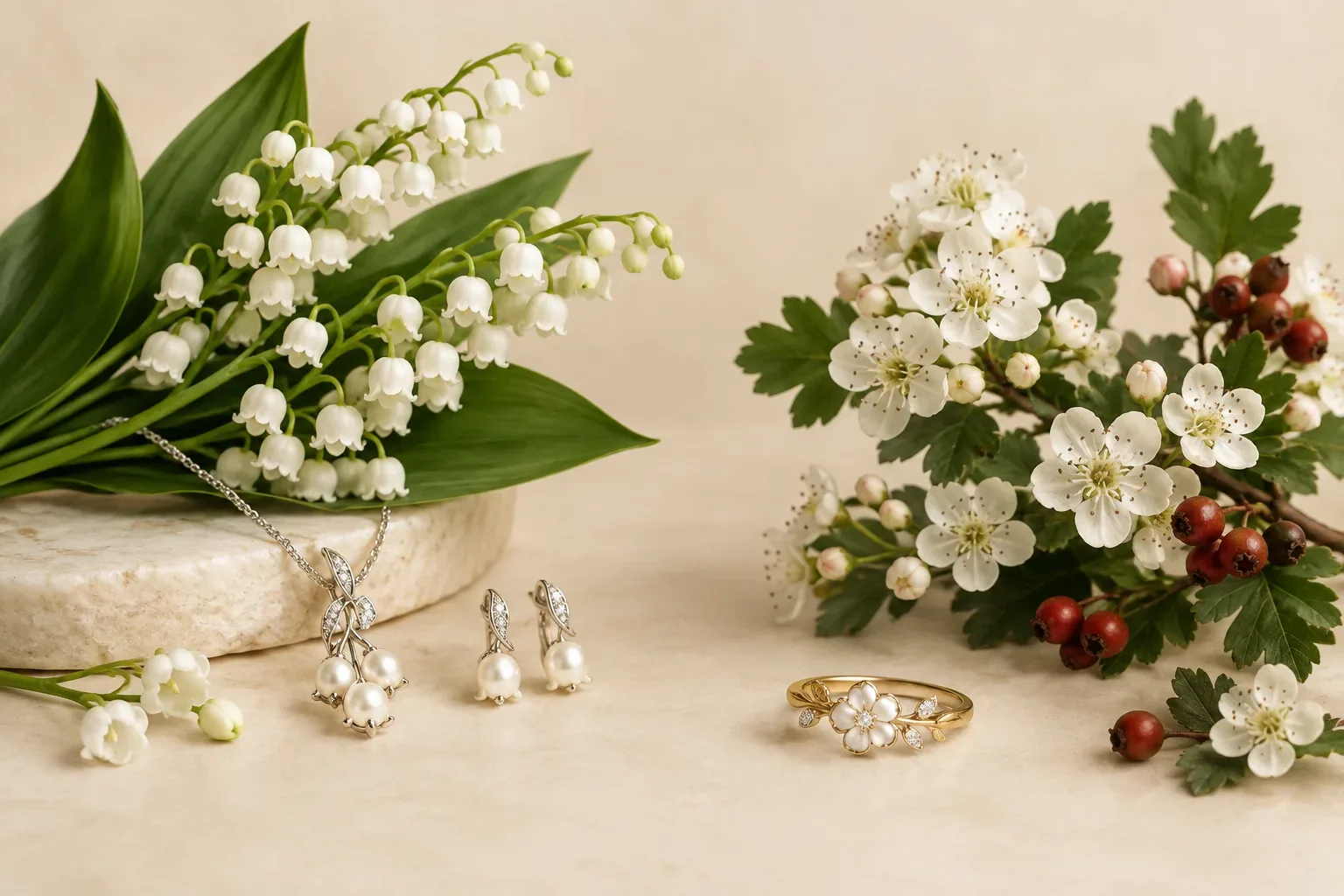
Meaning at a glance
Lily of the valley and hawthorn are treated separately: modern conventions name both as May birth flowers, but documented horticultural facts and historical flower-meaning traditions come from different sources and should not be conflated with personal interpretations applied in contemporary jewelry.
What the historical evidence shows (who said what, and when)
Documented historical evidence about flower meanings and plant use comes from different kinds of sources, and it is important to keep those strands separate. The Library of Congress preserves material on floriography and print culture that shows how printed flower dictionaries and etiquette manuals made and circulated specific associations between flowers and emotions or messages. These sources indicate that the ascribed meanings of flowers changed with fashions in print and social practice rather than being fixed, universal truths.
At the same time, institutions that study plants and people frame flowers within seasonal and cultural histories. The Smithsonian Libraries and Archives examines how seasonal relationships between people and plants have shifted over time, which helps explain why particular plants become associated with months, festivals, or civic calendars in certain places and eras. This perspective shows that assigning a plant to a month is as much a cultural choice as a botanical fact.
Botanical and horticultural context is recorded by professional horticultural bodies. The Royal Horticultural Society documents plant identification, seasonality, and ecological roles, and this information grounds our understanding of when a particular species blooms and how it behaves in gardens and wild landscapes. Combining these three kinds of evidence—print culture, seasonal cultural history, and horticultural fact—lets us say precisely what is documented and what is interpretive when discussing May’s two birth flowers.
Lily of the valley and hawthorn: horticultural context
From a horticultural perspective, the two plants are very different. The Royal Horticultural Society provides the botanical context that distinguishes them: lily of the valley is a low-growing spring-flowering plant with small, nodding bell-shaped flowers, while hawthorn refers to a genus that includes shrubs and small trees that typically flower in spring. The RHS material is useful for understanding seasonality, garden use, and identification rather than assigning symbolic meanings.
Because seasonality is part of how plants became associated with months, the RHS’s notes about when plants bloom help explain why both lily of the valley and hawthorn are associated with May in contemporary conventions: they are spring bloomers in temperate climates. But the presence of a plant in May does not by itself determine its symbolic meanings; that layer comes from cultural and print histories.
Documented historical meanings versus modern personal interpretations
Be careful to distinguish what historical sources actually document from later or personal interpretations. The Library of Congress shows that floral dictionaries and Victorian-era print culture assigned particular messages to many flowers; these assignments were specific to the periods and publications that produced them. Where a 19th-century printed source ascribes ‘‘purity’’ to a flower, that attribution is a historical fact about that source, not an eternal property of the plant.
The Smithsonian’s work on seasonal and cultural history emphasizes that people’s relationships with plants change over time. As a result, modern meanings attached to lily of the valley and hawthorn in a gift or a piece of jewelry may reflect contemporary tastes, romantic trends, or designer intention rather than a single historical meaning. For instance, a jeweller today might market a lily-of-the-valley motif as symbolizing ‘‘returning happiness’’ because that phrase circulates in modern floristry and commercial descriptions, but that is a contemporary interpretation layered on top of earlier, variable meanings recorded in print culture.
In short, documented historical meanings should be cited to the specific print or archival sources that record them, while modern personal or commercial interpretations should be presented as contemporary practices that may draw selectively from the past.
How the motif and traditions appear in jewelry
Floral motifs have long appeared in jewelry, and the two May plants show up for different aesthetic and symbolic reasons. The Library of Congress’s documentation of floriography helps explain how printed meanings were translated into wearable symbols: jewelry makers and patrons used floral imagery to carry messages that would have been legible to people familiar with those conventions.
Designers today use the visual cues of each plant when creating jewelry. Lily-of-the-valley motifs are often small, delicate and white in appearance; contemporary designers mimic this with tiny white diamonds, pearls, white enamel, or small bell-shaped metalwork to evoke the plant’s pendulous blossoms. Hawthorn motifs emphasize foliage and structure; designers may highlight small clustered blossoms, toothed leaves, or thorn-like elements, and use green gemstones or textured metal to suggest foliage. These choices are modern design conventions rather than fixed symbolic rules, but they follow a recognizably botanical logic.
Materials and techniques matter. Enamel and detailed metalwork can render tiny floral shapes; cluster settings and pavé can suggest sprays of flowers; and the use of white or green stones helps communicate the visual character of the plant. Period styles also influence presentation: a sentimental Georgian or Victorian revival piece may intentionally reference the print-culture meanings preserved by the Library of Congress, while contemporary minimalist designs may rely more on botanical silhouette than on explicit symbolism.
Practical, respectful guidance for selecting or giving May birth flower jewelry
When choosing jewelry intended to reference a birth flower, start by distinguishing the intentions behind the gift. If you want to honor a historical floriographic meaning recorded in print culture, identify and cite the source so the recipient understands the reference. If your goal is purely aesthetic—because the recipient likes the look of small white bells or leafy branches—present the piece as a botanical or design-based choice rather than a claim about universal symbolism.
Respect cultural differences and personal preferences. The Library of Congress demonstrates that flower meanings vary by period and community; do not assume a single meaning is appropriate for everyone. Ask or observe the recipient’s tastes and cultural background. Some people appreciate a historically layered symbolic gift, while others prefer something decorative or linked to a personal memory.
Consider practicalities: choose materials that match the wearer’s lifestyle and sensitivities, and check for metal allergies or gemstone durability. If you want the piece to echo the plant’s seasonal character, select stones and metals that communicate the flower’s look—white stones and refined settings for lily of the valley, textured metal and green accents for hawthorn—but present these as design decisions rather than as fixed symbolic laws.
If you are including the living plants rather than only motifs, keep horticultural realities in mind. Use the Royal Horticultural Society’s horticultural guidance when pairing floral arrangements with jewelry gifts—seasonality and plant availability will affect both the look and the ethics of a paired gift. Finally, explain the intention behind the gift when you present it: a short note saying why you chose the motif, which source inspired you, or that you picked the piece for its visual beauty will make the gesture clearer and more respectful.
Frequently asked questions
What are the May birth flowers?
Contemporary practice commonly lists lily of the valley and hawthorn as May birth flowers. This is a modern convention that links plants blooming in spring with the month of May rather than a single, universal symbolic system.
Do lily of the valley and hawthorn have fixed historical meanings?
No. Historical meanings vary by period and by publication. The Library of Congress documents how printed flower dictionaries and social conventions assigned different messages in different eras, so any single ‘‘meaning’’ should be cited to a particular historical source.
How do designers show these flowers in jewelry?
Designers often echo the plants’ visual traits: lily-of-the-valley jewelry tends to emphasize small, white bell-like forms and delicate settings, while hawthorn designs highlight clustered blossoms, leaves, or thorn-like accents and may use green stones. These are modern design conventions rather than fixed symbolic rules.
How should I choose May flower jewelry as a gift?
Consider the recipient’s tastes and cultural background, be explicit about your intention, and choose materials suited to their lifestyle and sensitivities. If you want historical symbolism to be part of the gift, identify the source of the meaning; otherwise present the piece as a botanical or aesthetic choice.
Where can I check when these plants bloom?
For horticultural information such as seasonality and identification, consult professional horticultural resources like the Royal Horticultural Society, which documents plant seasonality and garden usage.
Sources and further reading
- Blooming Flowers: A Seasonal History of Plants and People — Smithsonian Libraries and Archives
- Flowers and Their Meanings — Library of Congress
- Plants of the World — Royal Horticultural Society