Meaning at a glance
Different birthstones respond differently to heat, chemicals, abrasion, steam, ultrasonics, porous materials, and unknown treatments; always confirm the stone, any treatments, and the metal or mounting before choosing a cleaning method.
Why one cleaning method cannot serve every birthstone
Birthstones are not a single material; the list used today includes minerals such as sapphire, ruby, and emerald, organic materials such as pearl and amber, and softer or porous gems such as opal and turquoise. Their physical and chemical properties differ substantially, so a method that is safe for a hard, stable stone can destroy a soft, porous, or treated one. The Gemological Institute of America (GIA) explains that the birthstone list and its gemological context reflect a wide range of materials with differing durability and care needs, making a one-size-fits-all cleaning approach inappropriate.
Common risks include heat and steam that can fracture or change color in heat-sensitive stones; chemical cleaners that can dissolve or dull porous or organic materials; abrasive actions that scratch softer stones; ultrasonic cleaners that can loosen inclusions or cleave stones with internal fractures; and unknown treatments—such as dyeing, resin filling, or oiling—that can be altered or removed by cleaners. The GIA’s guidance on gem treatments emphasizes that treatments affect durability and must be considered when caring for a piece.
Historical evidence and cultural context
The practice of associating specific gems with months and occasions has a long and changing history rather than a single origin, and modern standardized birthstone lists are the result of several historical developments. The Gemological Institute of America documents the evolution of month-to-stone associations and notes that lists have varied across cultures and periods. These documented histories are about which stones were used and named, not about universal symbolic properties.
It is important to keep cultural claims separate: historical records preserved and summarized by professional bodies like the GIA show that Europeans, Americans, and other regions adopted different lists and usages at different times. The evidence compiled by GIA supports the fact of variation and change over time rather than a simple, uniform tradition.
Documented historical meanings versus modern interpretations
Where sources like the GIA record historical associations—such as a stone being linked to a particular calendar month or to a historic list—those are documented facts about usage and nomenclature. Modern personal or commercial interpretations of what a birthstone will ‘‘bring’’ to its wearer, or widely generalized claims about luck or personality, are contemporary, subjective, and cultural rather than universal or evidence-based.
When discussing the care of a birthstone, the practical, documented factors are material composition, hardness, porosity, cleavage, and any known treatments. Those are the aspects that determine how to clean, store, and repair a piece; they are distinct from symbolic meanings, which remain personal and culturally variable.
How birthstones and motifs appear in jewelry
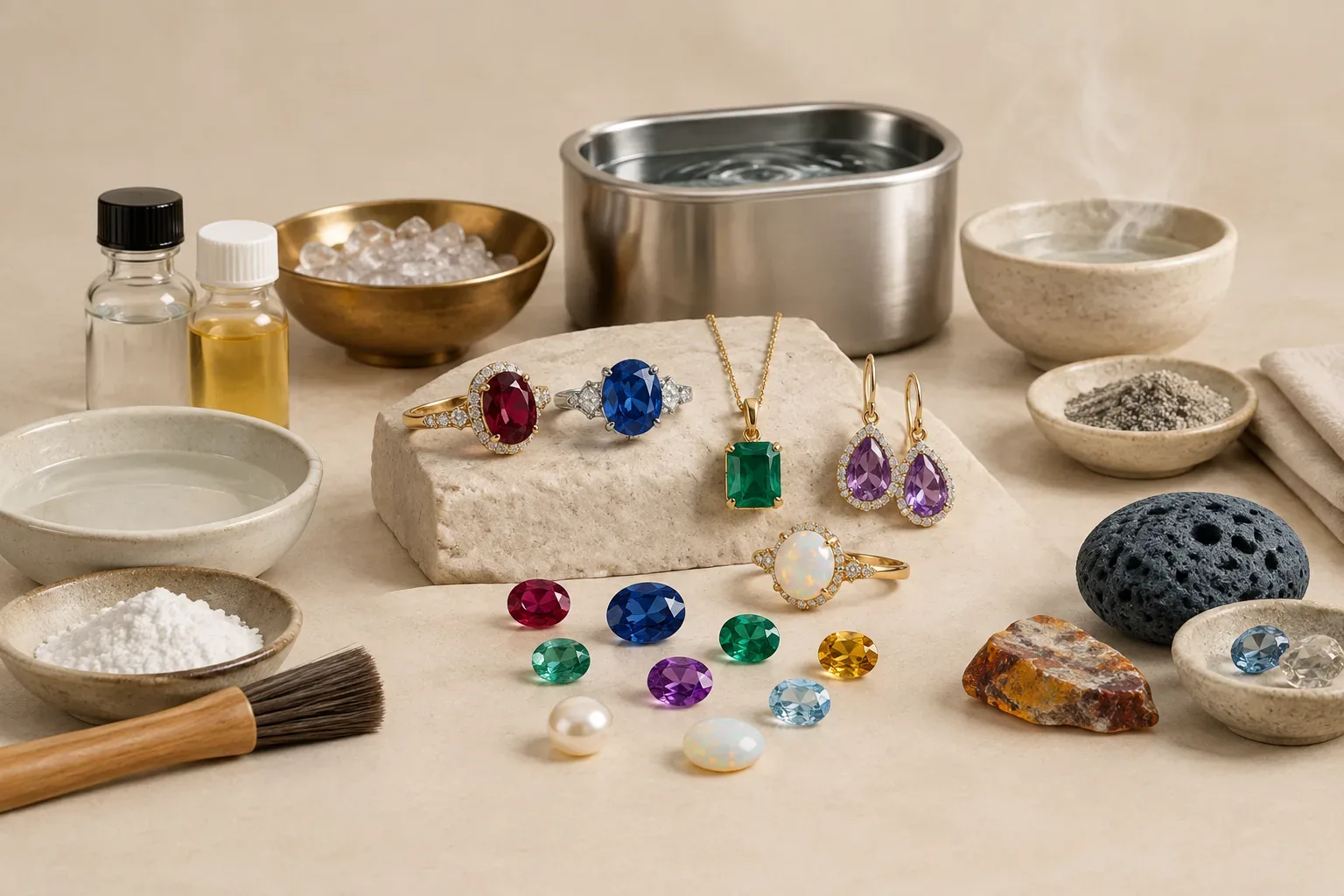
Birthstones appear in many jewelry formats: set stones in rings, pendants, and earrings; cabochons and beads in bracelets; insets and clusters in brooches; and as accent stones in multi-gem designs. Jewelers of America provides buyer guidance that describes the range of formats and settings you will commonly encounter and explains how setting type affects care and durability.
Settings and mountings matter for cleaning. A tightly bezel-set cabochon may tolerate gentle immersion better than a fragile, open-prong antique setting. Organic gem materials such as pearls are typically strung and require different cleaning than faceted stones set in metal. Knowing the construction of the piece informs whether it should be immersed, wiped, steamed, or sent to a professional for cleaning.
Common cleaning mistakes and the specific risks
Heat and steam. High temperatures and steam can cause thermal shock in some gems, cracking or crazing them, and can alter the color of heat-sensitive materials. Porous gems and organic materials like opal, turquoise, and pearl are particularly vulnerable to heat and sudden temperature changes. Avoid steam cleaners and hot-water immersion unless you are certain the gem and any treatment are stable under heat.
Harsh chemicals. Many household cleaners contain acids, alkalis, or solvents that can attack porous stones, organic gems, and certain treatments. For example, cl ear household bleach, acidic cleaners, and acetone can remove dye or fracture-filled substances or damage pearls and amber. Because the Federal Trade Commission requires disclosure of treatments and imitations, always ask the seller whether a stone has been dyed, oiled, resin-filled, stabilized, or is an imitation before exposing it to chemicals.
Ultrasonic cleaners. Ultrasonic machines use high-frequency vibrations to dislodge dirt, but those same vibrations can cause fractures to propagate or loosen inclusions and fill materials. Stones with internal cleavage, inclusions, or treated fracture-fillings—such as some emeralds and lower-quality rubies or sapphires—can be irreparably damaged by ultrasonics. GIA’s guidance on gem treatments highlights that treated stones can react unpredictably to ultrasonic cleaning.
Abrasive scrubbing. Scrubbing with a brush or abrasive pad designed for metal can scratch softer gemstones, alter faceting, and remove polish. Softer birthstones—including pearls, amber, and turquoise—can show wear quickly under abrasive cleaning. Even harder stones can be abraded if cleaned against abrasive grit trapped between the cloth and the stone.
Porous materials. Organic and porous stones (pearls, coral, amber, some jaspers, and turquoise) readily absorb liquids, dyes, and oils. Immersing such pieces in water or solutions can stain or swell them, and solvents can remove natural surface layers. Avoid soaking porous materials; instead, wipe them gently with a soft, barely damp cloth and let them air dry.
Unknown treatments and imitations. Many gemstones are treated or imitated to improve appearance or durability. Treatments such as oiling, resin filling, dyeing, or stabilization can be altered, washed out, or discolored by common cleaning methods. The FTC advises buyers that information about laboratory-grown stones, imitations, and treatments should be disclosed; before cleaning, request that information from the seller or have the piece appraised.
Practical cleaning alternatives and safe practices
When in doubt, choose the gentlest option. For many durable, untreated stones set in secure mountings—such as well-cut sapphires and rubies—warm water, a mild soap, and a soft brush are usually safe if you confirm the piece has no sensitive treatments and the setting is intact. For soft, porous, or treated stones, avoid soaking and instead wipe with a soft, damp cloth. Do not use steam or ultrasonic cleaners on stones with cleavage, heavy inclusions, fractures, or unknown treatments.
Ask the seller or a qualified jeweler. Before attempting any cleaning method on a piece you have not owned long or that lacks written treatment disclosure, ask the seller for written care instructions and treatment disclosure. If you cannot obtain reliable information, take the piece to a professional jeweler for identification and appropriate cleaning. Jewelers of America recommends inspection, especially for resizing or repair, and their repair guidance stresses checking settings and security before cleaning or wearing.
Maintain routine care. Regular inspection of settings and gentle, frequent cleaning are preferable to infrequent deep-cleaning. Removing jewelry before activities that expose pieces to heat, chemicals, or abrasion—such as household cleaning, cooking, sports, or showering—reduces the need for aggressive cleaning later.
Selection and gifting guidance
When selecting or gifting birthstone jewelry, consider the intended wearer’s lifestyle and the gem’s durability. Jewelers of America’s buying guides recommend matching the choice of stone and setting to how the recipient will wear the piece; a daily-wear ring calls for a harder, better-protected stone than a pendant intended for occasional use.
Always request written information on treatments and origin where available. The Federal Trade Commission's guidance on buying gemstones stresses disclosure of treatments, lab-grown origins, and imitations. If you are gifting a piece, include care instructions or a written note about any known treatments so the recipient can clean the jewelry safely.
If the gift is an heirloom or antique, treat it conservatively. Older pieces are more likely to have fragile settings, unknown repairs, or historical treatments; professional appraisal and cleaning are prudent before regular wear.
When to consult a professional
Consult a trained jeweler for stones you cannot identify, for pieces with visible inclusions or fractures, for antique and fragile settings, and for any gem that has been treated. Jewelry repair professionals will inspect settings, tighten prongs, and advise on safe cleaning methods; Jewelers of America’s jewelry repair guidance recommends professional evaluation when structural work or careful cleaning is needed.
A professional can also provide documentation about a gem’s treatments and offer safer cleaning alternatives when appropriate. For valuable or sentimental birthstone pieces, professional cleaning and maintenance can prevent accidental damage caused by home cleaning attempts.
Concluding guidance
Birthstone jewelry care is a materials question first: identify the stone and any treatment, then match the cleaning method to the gem’s properties. Rely on seller disclosures and professional advice when unsure, avoid heat, harsh chemicals, abrasive scrubbing, steam, and ultrasonics for unknown or fragile pieces, and prioritize gentle, regular care over occasional aggressive cleaning. That approach will reduce the most common risks and preserve the piece for long-term wear.
Frequently asked questions
Can I use an ultrasonic cleaner on my birthstone jewelry?
Not automatically. Ultrasonic cleaners can dislodge inclusions, propagate fractures, and remove or damage treatment materials. They are generally unsafe for stones with internal fractures, cleavage, or known fillings—emeralds and some treated gems are common examples. Confirm the gem identity and any treatments first, and when in doubt, consult a professional jeweler.
Is steam cleaning safe for pearls, opal, or turquoise?
No. Steam and sudden temperature changes can crack opal, damage the nacre of pearls, and alter porous materials like turquoise. Avoid steam cleaners for organic or porous birthstones and opt for gentle spot cleaning with a soft cloth instead.
Will mild dish soap and warm water clean all birthstones safely?
Mild soap and warm water can be safe for many durable, untreated stones if the setting is secure, but they are not appropriate for all materials. Porous and organic stones should not be soaked; use a barely damp cloth. Always confirm the stone and treatments first.
How do I find out if a stone has been treated?
Ask the seller for written disclosure; the Federal Trade Commission requires that significant treatments and whether a gem is synthetic or an imitation be disclosed. If the information is not available, have a qualified gemologist or jeweler examine the piece.
When should I seek professional cleaning or repair?
Seek professional help for valuable, sentimental, antique, or structurally compromised pieces, and for any gem you cannot confidently identify. Jewelers with repair expertise can inspect settings, identify treatments, and apply safe cleaning methods.
What should I include when gifting birthstone jewelry to help with care?
Include written information about the stone, any known treatments, and care instructions. If the seller provided treatment disclosure, pass that along. Also consider a note about recommended wear—whether the piece is for daily use or occasional wear—so the recipient can take appropriate precautions.
Sources and further reading
- Birthstones for Each Month — Gemological Institute of America
- Buying Gemstones, Diamonds, and Pearls — Federal Trade Commission
- Jewelry Buying Guides — Jewelers of America
- An Introduction to Gem Treatments — Gemological Institute of America
- Jewelry Repair — Jewelers of America