Meaning at a glance
Metal and maker marks can confirm metal type or who made a piece and sometimes support an age estimate, but they do not, on their own, verify whether a birthstone is natural or treated, its exact identity, or its true market value.
Quick answer
Metal marks, maker marks, and assay marks may help identify the metal, manufacturer, or where a piece was assayed, and they can be useful evidence when describing birthstone jewelry. However, these marks normally do not prove a gemstone’s identity, treatment history, age, or market value by themselves.
What hallmarks and maker marks actually indicate
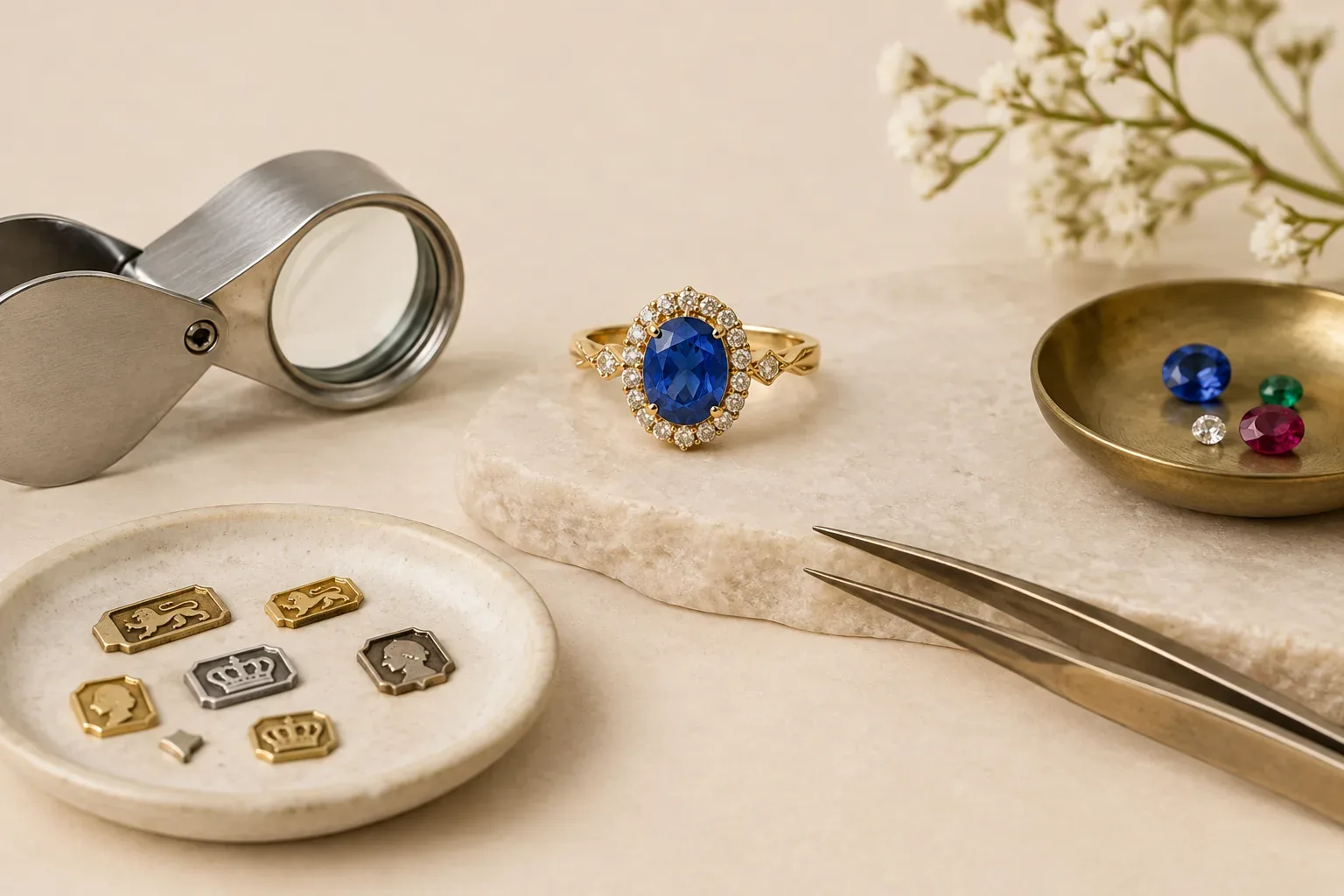
Hallmarks, maker marks, and assay marks are forms of identification stamped into metal components of jewelry. A metal stamp often indicates a declared metal type or fineness. A maker mark names, initials, or a symbol connects a piece to a workshop or business. An assay mark indicates that a recognized authority examined and certified the metal content of an item. Together, these marks document aspects of the metal and the maker, not the gemstone.
Historical evidence and how it’s reported
Trade and professional organizations describe how marks function in the industry. Jewelers of America outlines the role of maker and metal designations in describing and managing jewelry, particularly for repair, appraisals, and resale. The reliable historical record for specific hallmark systems, dates, or national procedures must be consulted in specialist references; professional bodies provide context about how marks are used today in commerce rather than exhaustive national histories.
Documented uses versus modern personal meanings
Documented, commercial uses of hallmarks are narrowly functional: they support identification of metal content, link an item to a maker or assay office, and help consumers and professionals manage care, repair, and appraisals. That functional role is emphasized by industry guidance on buying and appraising jewelry. Modern personal meanings—why someone chooses a ruby for July or a garnet for January, or the special sentiment a piece carries in a family—are separate and subjective. Organizations such as the Gemological Institute of America (GIA) provide a list of birthstones and their gemological contexts, which explains the stones’ identities and properties, while personal or cultural symbolism is a contemporary interpretive layer applied by wearers and gift-givers.
What hallmarks cannot prove about a birthstone
A hallmark on the metal cannot prove the identity of the gemstone set into that metal. The star of a ring might be a natural ruby, a lab-grown ruby, a heat-treated ruby, or an imitation, and the metal stamp does not indicate which. The Federal Trade Commission (FTC) sets expectations for seller disclosure: sellers must not misrepresent whether a stone is natural, lab-grown, treated, or an imitation, and written disclosures are important when material facts differ from ordinary assumptions. Because of this, a hallmark is only one piece of the evidence chain; gemological testing, certificates, and seller disclosures are the tools that demonstrate a stone’s identity and treatment.
How hallmark evidence can support a jewelry description or provenance
When present and genuine, maker marks and assay stamps can help a buyer or appraiser establish the metal type, production origin, or sometimes an approximate manufacturing context. Jewelers of America’s guidance on appraisals and buying jewelry explains that a documented maker, consistent hallmarking, and accompanying paperwork strengthen a description and may help with insurance or resale. That said, these marks are circumstantial when it comes to gemstones: they support provenance and metal verification but should be paired with gemological reports if you need to confirm stone identity or market value.
How birthstone motifs, settings, and traditions appear in jewelry
Birthstones and related motifs appear across formats from simple bezel-set pendants to multi-stone cluster rings. GIA’s birthstone list explains which gemstones are commonly associated with each month and provides context about their gemological properties, which influences how jewelers set and finish those stones. For instance, softer or treated gems may be set where they are less exposed, while harder stones are used in rings and bracelets that receive more wear. Jewelers of America’s buying guides discuss common settings and practical considerations so buyers can choose styles that suit the stone’s durability and the wearer’s lifestyle.
Practical guidance for selecting or gifting birthstone jewelry
If you are choosing birthstone jewelry as a gift or personal purchase, use hallmarks as one of several verification steps rather than proof of the gemstone. Ask the seller for written disclosure about whether the stone is natural, lab-grown, treated, or an imitation. When a higher-value stone is involved, request an independent gemological report from a reputable lab and a written appraisal if you need an insurance value; Jewelers of America describes appraisals as a professional service with a clear purpose and credentials. Check the seller’s return policy and warranty, consider the stone’s durability relative to how the piece will be worn, and confirm the metal stamp matches what the seller advertises.
Steps to verify identity, treatment, age, and value
For gemstone identity and treatment, obtain a gemological lab report or an independent appraisal by a qualified professional. For metal verification, assay marks and metal stamps are informative but can be supported by testing and documentation. If age or vintage status matters to you, work with an appraiser or a specialist who can compare maker marks, construction techniques, and documented maker registries. For market value and insurance, rely on a current appraisal prepared for that purpose; Jewelers of America’s guide to appraisals explains the difference between retail replacement value, market value, and estate valuation.
Short checklist before you buy or gift
Confirm the metal mark and note the maker’s mark if present. Ask the seller explicitly about the stone’s origin and any treatments and request written disclosure. For higher-value stones, get a laboratory report or independent appraisal. Consider the stone’s suitability for everyday wear and whether the setting protects it. Finally, choose a reputable seller with clear return and repair policies; Jewelers of America offers buying guides that cover these practical topics.
Closing thought
Hallmarks are valuable clues in describing and managing birthstone jewelry because they address the metal and maker. To answer questions about a stone itself—whether it is natural, treated, lab-grown, or imitation—you need gemological evidence and seller disclosure. Treat hallmarks as one piece of a complete verification process rather than as stand-alone proof of a gemstone’s identity or value.
Frequently asked questions
Do hallmarks prove a birthstone is natural or untreated?
No. Hallmarks on the metal confirm details about the metal or maker but do not indicate whether a gemstone is natural, lab-grown, treated, or an imitation. The Federal Trade Commission requires sellers not to misrepresent a stone’s origin or treatment; ask for written disclosure or a gemological report to verify.
Can a maker’s mark tell me the age of a piece?
A maker’s mark can be one clue toward dating a piece, but it does not prove an exact age on its own. Dating often requires comparing marks to documented maker registries, construction techniques, and other provenance. For reliable valuation or historical dating, consult an experienced appraiser.
When should I request a gemological report or appraisal?
Request a laboratory gemological report for higher-value stones or when identity and treatment materially affect price. For insurance or resale you may also need an independent appraisal; Jewelers of America recommends appraisals prepared for a specific purpose with clear credentials.
Are hallmarks always accurate and trustworthy?
Hallmarks are useful but can be forged or added to mislead. Use hallmarks alongside seller reputation, documentation, and professional testing rather than relying on them alone.
What should I ask a seller when buying birthstone jewelry?
Ask whether the stone is natural, lab-grown, treated, or an imitation and request written disclosure. Ask for any available gemological reports, the metal type and marks, the seller’s return policy, and whether an independent appraisal is available for insurance.
Can a hallmark indicate the metal’s fineness?
Yes, metal stamps commonly indicate declared fineness or type, which helps identify whether the piece is gold, silver, platinum, or a different alloy. For definitive verification, especially for resale or insurance, have the metal tested or supported by assay documentation.
Sources and further reading
- Birthstones for Each Month — Gemological Institute of America
- Buying Gemstones, Diamonds, and Pearls — Federal Trade Commission
- Jewelry Buying Guides — Jewelers of America
- Guide to Jewelry Appraisals — Jewelers of America
- Jewelry Repair — Jewelers of America