Meaning at a glance
This guide explains how to size and fit bands for comfortable stacking, how mixed gemstones and setting choices affect durability, how exposed prongs and metal selection influence wear, and how to plan future additions and maintenance for birthstone ring stacks.
Historical evidence and cultural notes
The idea of assigning particular gems to months and people has a long documented history but is not a single universal tradition. The Gemological Institute of America (GIA) summarizes how lists linking stones with months evolved over centuries, noting references as far back as the breastplate of Aaron in Hebrew scripture and later lists used in medieval and modern Europe. These historical lists vary in content and purpose depending on culture and period, and modern commercial lists have been standardized in different ways in recent centuries, as described by GIA.
Because the available evidence recorded by organizations such as the GIA comes from varied textual and trade sources, historical attributions—such as protective or medicinal roles for gems—reflect the beliefs of specific cultures or eras rather than universal fact. Where the GIA documents origin points or changes to birthstone lists, those are historical observations; they do not establish an unbroken, globally shared symbolism for any gem.
Documented historical meanings versus modern personal interpretations
Documented historical meanings come from the sources that recorded why particular cultures valued certain gems. For example, older European and Middle Eastern texts sometimes ascribed protective, religious, or health-related properties to gemstones; the GIA describes those historic attributions as part of the record surrounding birthstone lists. These meanings belong to particular contexts and should be presented as such.
Modern interpretations of birthstones are often personal, familial, or commercial. Today many people choose birthstone rings as sentimental markers of birth month, family members, or milestones. Those contemporary meanings are valid for the wearer but are not identical to the documented historical uses and should be distinguished from scholarly or archival claims.
How the motif, gemstone, and tradition appear in stackable jewelry
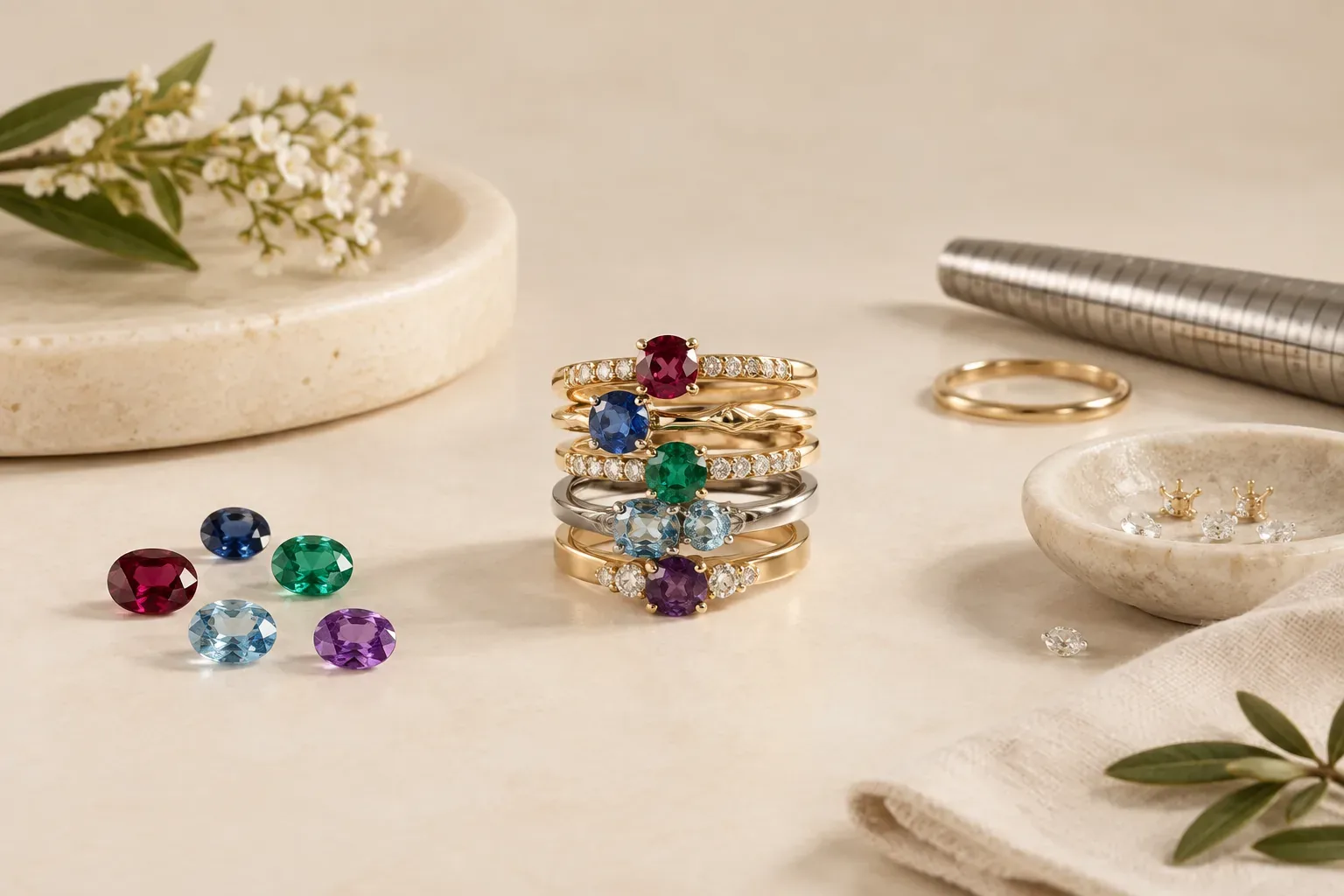
In contemporary jewelry the birthstone tradition appears in many formats: bezel-set single stones, prong-set solitaires, channel-set rows, and flush-set accent stones are common in stackable rings. Jewelers combine different setting styles to control visual rhythm and to protect stones from contact when stacked. According to Jewelers of America, format and setting choices often reflect both aesthetic intent and functional concerns such as ease of repair and wear.
Motifs such as family initials, engraved dates, or small emblematic designs are often paired with birthstones to create layered meaning. Designers may alternate plain metal bands with gemstone rings to reduce abrasion and to create visual contrast, and many commercial birthstone collections are intentionally sized and profiled to stack cleanly without twisting on the finger.
Fit and sizing for stackable birthstone rings
Proper fit is the foundation of a comfortable and durable stack. Rings that are too loose will rotate and expose settings and stones to repeated rubbing; rings that are too tight concentrate stress where bands meet and make future resizing more complex. Jewelers of America recommends discussing intended wear with your jeweler so sizing accounts for multiple rings and the likely finger temperature and swelling patterns of the wearer.
Band width and profile matter. Narrow, rounded bands ride differently from wide, flat bands. When planning a stack, measure the intended finger with all rings in mind: adding three narrow bands may feel bulkier than one wider band. If you expect to add rings later, size slightly larger or choose designs that are easy to resize, but avoid leaving so much slack that rings turn freely and abrade settings.
Durability: mixed stone wear, prong exposure, and metal considerations
Gemstone hardness and toughness vary widely; the Gemological Institute of America’s resources on gemstone durability explain that some gems withstand abrasion and impact far better than others. When mixing stones in a stack, place harder stones—such as sapphires and rubies—where they are most likely to receive direct contact, and protect softer stones such as opal, turquoise, or pearl with bezel settings or recessed designs to reduce chipping and surface damage.
Settings influence vulnerability. Prongs that extend beyond the girdle of a gemstone are visually open to contact when rings are stacked. If two prong-set stones face each other in a stack, repeated rubbing can thin prongs and wear facets. Choosing lower-profile settings, bezel surrounds, or flush-set stones for rings intended to be stacked minimizes exposed prongs and decreases the chance of metal thinning or stone damage over time.
Metal choice affects wear and maintenance. Softer metals such as 14k gold and especially 10k gold will show wear faster than platinum or 18k gold in some contexts. Platinum is resilient to surface wear but can develop a satin patina and may require repolishing. Discuss trade-offs with your jeweler: Jewelers of America advises selecting metals and settings that match the wearer’s lifestyle and intended duration of continuous wear.
Planning your stack: mixing stones, future additions, and aesthetics
Plan the physical order of rings as well as the visual order. If your stack will include both fragile and hard gems, place fragile or softer stones away from direct contact points and adopt protective settings for them. If you anticipate adding rings later, leave a deliberate visual and physical gap by using spacer bands or thin plain bands that can be moved or removed without disturbing stone settings.
Consider profile and symmetry when planning aesthetics. Matching shanks—similar widths and bevels—helps rings sit flush. If pieces are custom-made, ask the jeweler to design bands with complementary shank angles to avoid rocking. Also plan for wear patterns: a high-polish finish will show tiny scratches faster than a satin or brushed finish, so consider finishes that tolerate daily wear if you do not intend frequent refinishing.
Maintenance, inspection, and repair
Regular inspection extends the life of a stack. Jewelers of America recommends periodic professional inspections to check prong security, shank deformation, and stone tightness. GIA’s guidance on gemstone treatments and durability underscores that some treated stones require special handling or monitoring because treatments can affect how a gem responds to heat or chemicals.
Resizing stacked rings is possible but can be more complex. If rings are soldered or have intricate patterns that meet, resizing one band without affecting adjacent rings may require careful repair work. Plan sizing up-front with your jeweler, and when you do need repair, prioritize reputable professionals who will document treatments, origins, and any work done. The Federal Trade Commission (FTC) requires sellers to disclose whether gems are natural, lab-grown, imitations, or treated, so keep purchase documentation for future care and resale considerations.
Practical selection and gifting guidance
When selecting or gifting a stackable birthstone set, be explicit about intended wear. If the recipient leads a hands-on life, prioritize low-profile settings, protective bezels, and durable stones. If the stack is primarily sentimental and worn occasionally, more delicate settings may be acceptable, but the buyer should understand the trade-offs.
Request disclosures about the gems and metals. Follow FTC advice and ask the seller whether stones are natural, treated, lab-grown, or imitations, and request written confirmation. For heirloom or custom pieces, ask the jeweler about resizing and repair policies up front and whether matching shanks can be returned to the workshop for future adjustments. Include a note with a gift that explains the wearer’s birthstone choices and any care recommendations so the recipient can make informed decisions.
Conclusion
Well-planned stackable birthstone rings balance comfort, durability, and meaning. Use sizing decisions, protective settings, metal selection, and maintenance planning to reduce abrasion and secure stones. Distinguish historically documented uses of birthstones—which vary by culture and period and are recorded in sources such as the GIA—from modern, personal meanings, and choose designs that reflect the wearer’s lifestyle and intentions. With attention to fit and care, a birthstone stack can remain beautiful and meaningful for years.
Frequently asked questions
How should I size rings if I plan to stack multiple birthstone bands?
Size to the intended combined feel: try the rings together before purchase if possible, and tell your jeweler you plan a stack so they can recommend a size that accounts for additional bands. If you expect to add bands later, consider a slight increase in size or choose bands that are easy to resize.
Are some birthstones too soft for stacking?
Yes. Softer gems such as opal, pearl, and turquoise are more vulnerable to scratching and chipping. Use protective settings like bezels or recessed mounts and place softer stones away from direct contact with harder stones in a stack.
Will prongs wear down if two prong-set rings are stacked together?
Repeated rubbing can thin prongs over time and increase the risk of stone looseness. To reduce this, choose lower-profile settings, bezel options, or alternate prong-set rings with plain metal bands to minimize contact.
What metals hold up best for everyday stacked rings?
Platinum and higher-karat golds each have trade-offs: platinum is durable and resists loss of metal but will develop a patina and may be heavier; 18k gold is softer than platinum but can be gentler on gemstone settings if appropriately designed. Discuss lifestyle and repair preferences with your jeweler to choose the best metal.
How often should I have a stack inspected?
Have a professional inspection at least once a year for everyday-worn stacks, and sooner if you notice any loosening, snagging, or visible wear. Jewelers of America recommends periodic checks of prong security and shank integrity.
Do I need to know whether a stone is treated or lab-grown when buying a birthstone ring?
Yes. The Federal Trade Commission requires disclosure of natural, lab-grown, treated, and imitation gems. Treatments can affect durability and care, so keep documentation and ask your seller for written confirmation of any treatments.
Can I resize one ring in a tight stack without affecting the others?
Resizing one ring can be done independently in many cases, but when bands are soldered or fitted very closely, careful work is required to avoid altering neighboring rings. Plan sizing with your jeweler and keep records of the stack configuration to assist future repairs.
What finish should I choose if I want low-maintenance stacking?
Satin, brushed, or textured finishes hide small scratches better than high polish and can be a practical choice for daily-worn stacks. If you prefer a high-polish look, plan for occasional professional repolishing to restore the finish.
Sources and further reading
- Birthstones for Each Month — Gemological Institute of America
- Buying Gemstones, Diamonds, and Pearls — Federal Trade Commission
- Jewelry Buying Guides — Jewelers of America
- Gemstone Durability: Design to Display — Gemological Institute of America
- An Introduction to Gem Treatments — Gemological Institute of America
- Jewelry Repair — Jewelers of America