Meaning at a glance
Dumortierite is generally blue to violet and appears both as a standalone gem and as blue inclusions in quartz; documented historical symbolic uses are scarce, modern meanings are largely personal or community-derived, and buyers should focus on accurate identification, treatment disclosure, durability, and appropriate care.
Historical evidence and precisely dated context
Museum and gemological resources emphasize dumortierite primarily as a mineral and a modern gem material rather than as a widely recorded ceremonial stone in ancient cultures. General educational material about gems and minerals from the Smithsonian National Museum of Natural History focuses on mineral identity, geology, and how gem materials are used and classified, but it does not establish a long, traceable tradition of dumortierite being used with specific ritual or symbolic roles in named ancient societies.
Because dumortierite was recognized and described as a mineral in the 19th century, most historically documented uses in jewelry and ornamentation are comparatively recent and linked to the broader modern gem trade rather than to a clearly documented antique cultural practice. That means when you read claims that dumortierite represented a particular idea in an ancient culture, look for precise historical evidence; museum and gem education sources do not record a widely attested ancient symbolic vocabulary for dumortierite.
Documented historical meanings vs modern personal interpretations
Documented historical meanings: available museum and gemological educational sources do not provide substantial evidence that dumortierite carried specific, widely held symbolic meanings in ancient or classical cultures the way, for example, lapis lazuli or garnet sometimes do in certain archaeological contexts. For historical associations, rely on primary archaeological reports and museum catalogs; in the absence of such records, it is accurate to say documented historical symbolism for dumortierite is limited.
Modern interpretations: in contemporary crystal and jewelry communities, dumortierite is commonly associated with attributes such as calmness, mental clarity, and focus, and the blue tone frequently invites associations with communication or the throat area in chakra-related systems. These associations are modern value-attributions and personal or community symbols rather than universally documented historical meanings. Presenting modern interpretations as optional, personal, or community-based helps keep cultural distinctions clear and respectful.
How dumortierite appears in jewelry
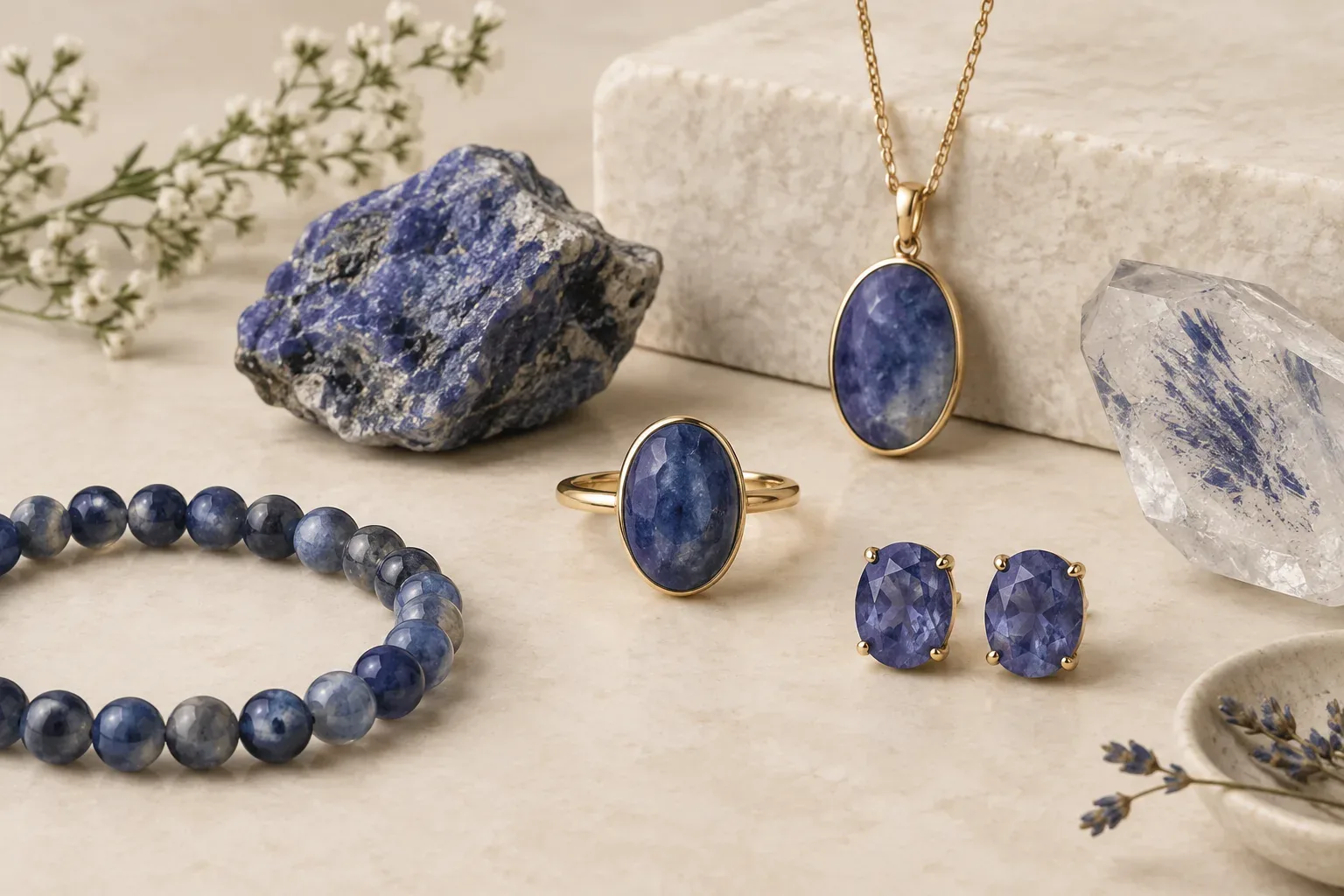
Forms seen in the trade: dumortierite is sold as cut stones (most often cabochons), as polished beads, and as small carved ornaments. It is also commonly encountered as blue or violet needle-like or fibrous inclusions in quartz, which collectors and jewelry makers sometimes use as decorative material. Sellers may describe pieces as “dumortierite,” “dumortierite quartz,” or a combination, so buyers should check the exact description.
Color and texture: dumortierite’s blue to violet hues can be deep and somewhat silky when the fibrous crystal habit is visible. In solid dumortierite specimens, the color and internal texture create a satiny or matte sheen that many designers favor for cabochon cuts. When dumortierite is included in quartz, the host quartz may make the blue color look suspended or clouded, which is a distinct visual effect compared with solid gem material.
Designs and settings: because dumortierite is most often worked as cabochons and beads, it commonly appears in pendants, beaded necklaces, and brooches. Designers may set dumortierite cabochons in silver, gold-plated metals, or mixed-metal settings that complement blue tones. When dumortierite is used in a high-wear ring, protective bezel settings or halo designs that reduce direct impact to the stone’s edge are common choices.
Practical guidance for selection and respectful gifting
Confirm what you’re buying: ask whether the piece is solid dumortierite or dumortierite within quartz, and request treatment and origin disclosure. The Gemological Institute of America (GIA) recommends clear treatment disclosure for any gem material; ask sellers to state whether stones have been dyed, stabilized, heated, or otherwise altered.
Look for transparent sellers: the Federal Trade Commission advises consumers to seek sellers who honestly label natural, treated, lab-grown, and imitation gems. For dumortierite, clear labeling of whether a stone is natural, stabilized, dyed, or a composite (for example, glued into a mount) protects you and the person you’re gifting.
Consider the recipient’s lifestyle: if you are gifting an everyday ring, prioritize pieces that are securely set and, if necessary, protected with a bezel or protective design. For recipients who prefer low-maintenance jewelry, choose settings that keep the stone safe from knocks and abrasive contact.
Respect meaning and context: if you plan to ascribe a symbolic meaning (calm, focus, communication), frame it as a modern or personal attribution rather than as an ancient or universal truth. This keeps gift-giving respectful of cultural nuance and avoids overstating historical claims.
Durability, identification, and care
Durability and testing: dumortierite is a mineral used for jewelry but varies in toughness and how it responds to cutting; buyers should ask the seller or a gemologist about a specific piece’s suitability for sustained wear. For clear guidance on treatments, testing, and disclosure, consult gemological sources such as the GIA, which explains why disclosure matters and how treatments are reported in the trade.
Basic care: treat dumortierite jewelry like other semi-precious colored stones. Avoid hard knocks, extreme temperature shifts, and abrasive cleaners. Clean most dumortierite pieces with a soft brush, mild dish soap, and lukewarm water; dry carefully and store separately from harder gemstones and metals to prevent scratches. Ultrasonic or steam cleaning should be avoided unless a qualified gemologist confirms the specific specimen is safe for those methods.
When in doubt, get a lab report: if you need firm identification, have the stone examined by a reputable gem lab or ask for seller-provided lab documentation. The Smithsonian’s educational materials emphasize accurate mineral identification and context; obtaining authoritative testing avoids confusion between solid dumortierite, dumortierite-in-quartz, dyed material, or other blue stones.
Summary and practical next steps
In short, dumortierite jewelry meaning today is primarily shaped by the stone’s striking blue color and by contemporary personal or community symbolism rather than by well-documented ancient cultural roles. For buyers and gift-givers, focus on clear identification (solid stone versus inclusion), treatment disclosure, appropriate setting for the intended use, and gentle routine care.
If you’re shopping, ask sellers for clear labels and lab reports when needed, choose settings that protect the stone for regular wear, and present modern symbolic meanings as thoughtful personal attributions. For a deeper grounding in gems as materials, the Smithsonian’s gem and mineral resources and the GIA’s guidance on treatments are good starting points, and for consumer protection and truthful labeling consult the Federal Trade Commission’s buying advice.
Frequently asked questions
What is dumortierite?
Dumortierite is a mineral that most often appears in blue to violet tones and is used both as a gem material and as blue inclusions inside quartz; educational museum resources present it primarily as a mineralogical and gem material rather than as a widely recorded ancient ceremonial stone.
Does dumortierite have an ancient symbolic meaning?
There is little documented evidence in museum and gemological educational sources of a specific, widely held ancient symbolic meaning for dumortierite; most symbolic associations you will see are modern or community-based.
How can I tell if a piece is solid dumortierite or dumortierite-in-quartz?
Ask the seller for a clear description and any available lab report; visual differences include the host quartz’s transparency around blue inclusions versus the more uniform satiny texture of solid dumortierite, but authoritative identification may require gemological testing.
Are dumortierite gemstones treated or dyed?
Treatments and dyes can be applied to many colored stones; the Gemological Institute of America recommends full disclosure of any treatment, so ask sellers directly and request documentation when needed.
How should I care for dumortierite jewelry?
Clean gently with mild soap, lukewarm water, and a soft brush; avoid hard impacts and store pieces separately. Avoid ultrasonic and steam cleaners unless a qualified gemologist confirms the specific specimen is safe for those methods.
What should I ask a seller before buying dumortierite jewelry?
Request confirmation whether the stone is solid dumortierite or dumortierite-in-quartz, ask about any treatments or stabilizing processes, request provenance or lab reports if available, and ensure the seller follows consumer disclosure recommendations such as those described by the Federal Trade Commission.
Sources and further reading
- Gems and Minerals: Beauties and Building Blocks — Smithsonian National Museum of Natural History
- An Introduction to Gem Treatments — Gemological Institute of America
- Buying Gemstones, Diamonds, and Pearls — Federal Trade Commission