Meaning at a glance
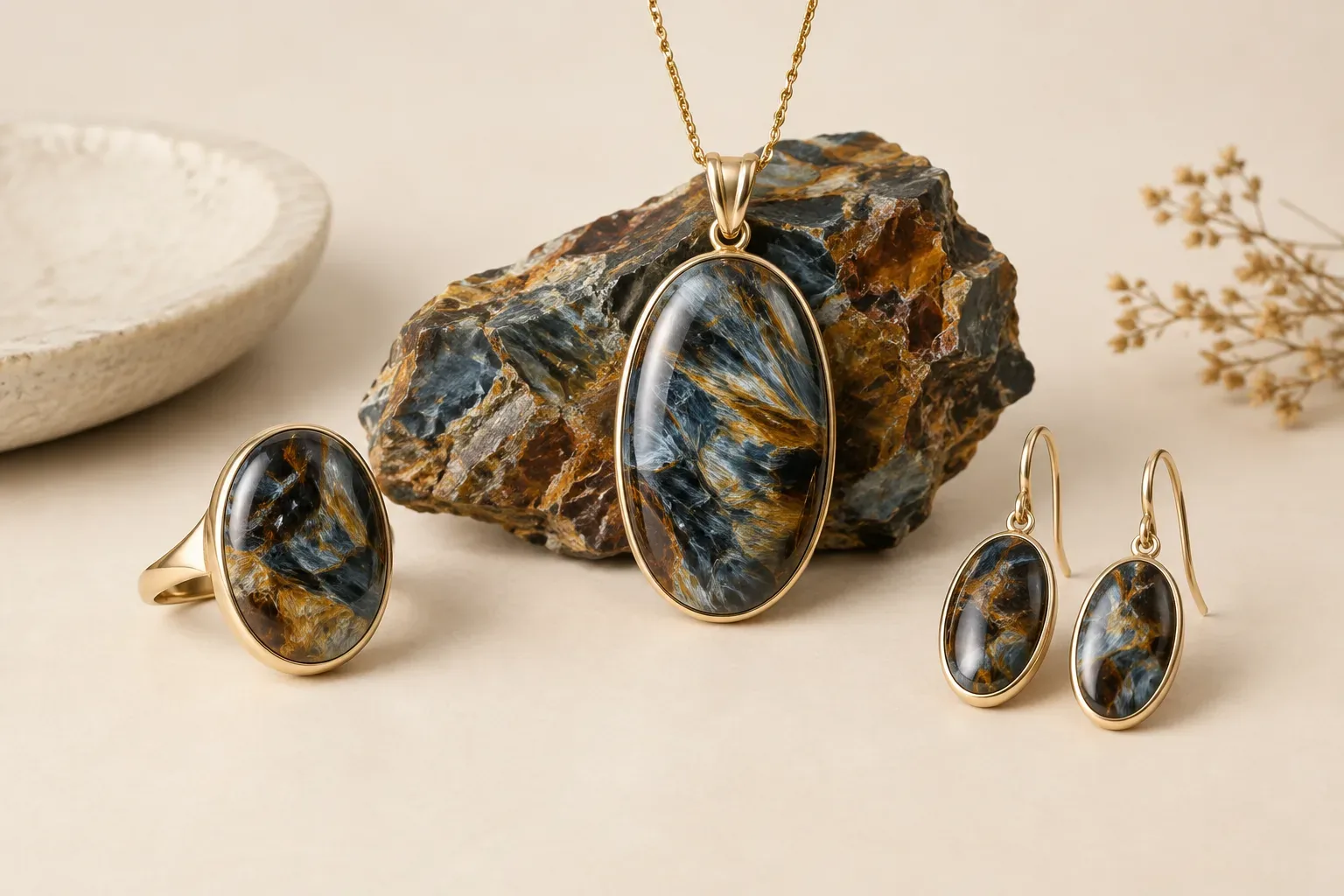
Pietersite is a brecciated, chatoyant quartz material related in appearance and structure to tiger's-eye and hawk's-eye; trade names, optical effect, durability, and care should precede modern change symbolism.
What pietersite is — geology and optical character
Pietersite is described in gem and mineral contexts as a brecciated quartz material with chatoyancy, a moving band of light seen in some gem materials. In plain language, 'brecciated' refers to rock made of angular fragments that have been naturally cemented together, and 'chatoyancy' is the optical phenomenon that produces the cat's-eye or shifting light effect familiar from tiger’s-eye and hawk’s-eye (Smithsonian National Museum of Natural History).
Because pietersite is a type of silica-based material closely related in appearance to other chatoyant quartz varieties, it shares common physical characteristics with those materials, notably good relative toughness for jewelry use compared with softer minerals (Smithsonian National Museum of Natural History). That practical durability influences how jewelers cut, set, and finish pietersite pieces.
Documented history and cultural evidence
Museum and mainstream gem references focus on pietersite as a modern material described by its mineral properties and trade usage rather than an object with a long, documented cultural history. Authoritative mineral and gem resources emphasize identification, classification, and optical effects; they do not record consistent, ancient cultural meanings attached to pietersite in the way that some historically traded gems have documented roles (Smithsonian National Museum of Natural History).
Because the standard reference material used for in-depth gem and mineral study centers on geological and gemological description, claims about historical cultural use that are not backed by such references should be treated as modern attribution rather than established historical fact.
Documented facts versus modern interpretations
Documented facts about pietersite include its brecciated structure and chatoyancy, and that it behaves like other quartz materials in terms of general durability and the need for standard gem-care practices (Smithsonian National Museum of Natural History).
Modern interpretations and symbolic meanings — for example, language about 'change', 'stormy skies', or 'personal transformation' — are contemporary or marketing-driven attributions made by sellers or individual wearers. These personal interpretations are valid as subjective meaning, but they are not equivalent to documented historical uses. When people discuss pietersite’s symbolism today, they are usually describing modern, individual, or community-level associations rather than long-standing cultural traditions.
How pietersite appears in jewelry
Because chatoyancy is most visible when a stone is cut and polished to display the moving light band, pietersite is commonly cut as polished cabochons for rings, pendants, and brooches. Beads and small cabochons are also popular for bracelets and earrings when designers want a strong, directional optical effect.
Settings that protect the edges of a cabochon, such as bezels or secure prongs, are commonly used because pietersite is a silica-based material that, while reasonably durable for everyday wear, benefits from protective settings that reduce the risk of chipping at exposed edges (Smithsonian National Museum of Natural History). Jewelers often orient the cabochon to highlight the chatoyant band, and designers pair pietersite with contrasting metals or accent stones to emphasize its dynamic surface.
Buying guidance grounded in consumer-protection and gemology
Ask for clear disclosure about what you are buying. Professional gemological and consumer-protection bodies emphasize the importance of transparent information about a gem’s identity, treatments, and whether a trade name is being used. The Gemological Institute of America recommends disclosure of treatments and material identity, and the U.S. Federal Trade Commission reminds consumers to request clear information about whether a gem is natural, treated, lab-grown, or an imitation (GIA; FTC).
Because pietersite is often sold under trade names and can be marketed with symbolic language, verify the material description, view the stone in the intended setting, and request any available gem identification or return-policy information before purchase. For pieces intended for daily wear, prioritize protective settings such as bezels and sturdier mounting methods over more exposed decorative settings.
Practical selection and gifting advice
Match the piece to the recipient’s lifestyle. If the intended wearer is very active with regular hand use, choose a setting that protects the stone’s edges and a design that hides impact-prone areas. For someone who prefers statement jewelry, select a cabochon with pronounced chatoyancy and a setting that allows the light band to be seen from multiple angles.
When gifting for symbolic reasons, be explicit about the meaning you associate with the stone and indicate that this is a personal or contemporary interpretation rather than a documented historical one. If you are buying for a collector or someone who values gemological provenance, include any available paperwork, treatment disclosures, or seller notes about the stone’s origin or whether the piece is assembled from smaller fragments, as brecciated materials are literally composed of natural fragments that have been joined.
Care and durability considerations
Treat pietersite as you would other silica-based gem materials. Clean it with warm water, a mild detergent, and a soft brush, and rinse and dry thoroughly. Avoid exposing the stone to strong household chemicals and prolonged extreme heat. Because many jewelers use standard gem-care protocols for pietersite, it is reasonable to follow the same precautions recommended for other quartz materials (Smithsonian National Museum of Natural History).
If a pietersite item has visible fissures, cleavage planes, or a composite structure that concerns you, consult a qualified jeweler before using ultrasonic cleaners or steam cleaners, and ask whether the piece has glue or resin-filled areas. The Gemological Institute of America advises careful disclosure and consideration of treatments prior to using intensive cleaning methods (GIA). In terms of consumer protection, retain receipts and any seller statements about the stone in case you need to rely on return policies or disclosure standards enforced in your jurisdiction (FTC).
Putting meaning into context
If you are drawn to pietersite for symbolic reasons, explain what it means to you when giving it as a gift or choosing it for yourself. Personal meanings can be powerful and appropriate as private or interpersonal signals, but they should be presented honestly as contemporary or individual interpretations rather than universal truths.
For those who want to learn more about other gem meanings or how to choose jewelry with intentional symbolic content, see related resources on gemstone backgrounds and practical gift selection. Consider reading broader material on how to choose meaningful jewelry and on caring for colored and coated pieces to ensure a long-lasting gift (internal links provided).
Frequently asked questions
Is pietersite a natural gemstone or a man-made material?
Pietersite is a natural, brecciated quartz material; when buying, ask the seller to clarify the stone’s origin and whether any enhancements have been applied.
How hard and durable is pietersite for everyday wear?
Pietersite behaves like other quartz materials in terms of general durability; it is suitable for many jewelry types but benefits from protective settings because edges can chip if exposed to hard knocks.
What is chatoyancy and how can I see it in a pietersite piece?
Chatoyancy is an optical effect that produces a moving band of light across a polished surface; it is most visible when pietersite is cut as a cabochon and oriented so the band crosses the face of the stone.
Can pietersite be treated or enhanced?
Treatments and enhancements can apply to many gem materials; the Gemological Institute of America recommends seeking disclosure of any treatments, and the Federal Trade Commission advises consumers to request clear identification and treatment information before purchase.
What is the best way to clean and store pietersite jewelry?
Clean pietersite with warm water, mild soap, and a soft brush, then dry thoroughly; avoid strong chemicals and extreme heat, and store pieces separately to prevent scratches.
If I want symbolism to accompany a pietersite gift, how should I present it?
Explain that any symbolism you attach is a personal or modern interpretation rather than an ancient or universal meaning, and consider including a short note that describes what the stone means to you or the recipient.
Sources and further reading
- Gems and Minerals: Beauties and Building Blocks — Smithsonian National Museum of Natural History
- An Introduction to Gem Treatments — Gemological Institute of America
- Buying Gemstones, Diamonds, and Pearls — Federal Trade Commission