Meaning at a glance
Jet is an organic material formed from fossilized wood and has a well documented link to nineteenth‑century mourning jewelry; modern protective or spiritual interpretations are personal and must be distinguished from historical fashion use and from black‑glass or plastic imitations.
Quick answer
Jet is an organic material formed from fossilized wood and is strongly associated with nineteenth-century mourning jewelry; modern protective meanings must be distinguished from documented fashion history and from black-glass or plastic imitations.
What jet is: geology and material identity
Jet is an organic gem material produced when woody plant matter is subjected to pressure and low oxygen over geologic time, resulting in a dense, carbon-rich material. The Smithsonian National Museum of Natural History places jet in the broader context of gem materials derived from organic and fossilized sources and treats its identity alongside other organic gems and minerals used in jewelry. Understanding jet as fossilized wood helps explain its texture, color, and sensitivity compared with inorganic gem materials.
Historical evidence and where the mourning connection comes from
Historical scholarship and museum collections show that jet became a prominent material for black jewelry in the nineteenth century and is strongly associated with mourning dress in that period. Collections and teaching resources at institutions such as the Smithsonian provide context for how organic and fossilized materials were used in jewelry and why certain dark materials were selected for mourning attire and accessories.
Different cultures and periods used dark materials for different symbolic or practical reasons, so the nineteenth-century European association of jet with mourning should be treated as a historically specific usage rather than a universal or ancient religious symbol. When citing the historical record, note the provenance and museum or archival source for a particular object rather than assuming the same meaning across places and times.
Documented historical meanings versus modern personal interpretations
Documented meaning: museum and historical records identify jet principally as a material chosen for its deep black color and its suitability for mourning jewelry in nineteenth‑century Western fashion. That documented role is a fashion and cultural-historical fact about how jet was used and perceived in specific settings and periods.
Modern personal interpretation: contemporary wearers often ascribe additional meanings to jet—such as protection, grounding, or personal memorial significance. These modern associations are personal or contemporary cultural layers added to an object's history and are not the same as the documented nineteenth‑century function of jet as mourning material. Treat modern spiritual or symbolic meanings as individual or community practices, distinct from the historical evidence.
How the material and its motifs appear in jewelry
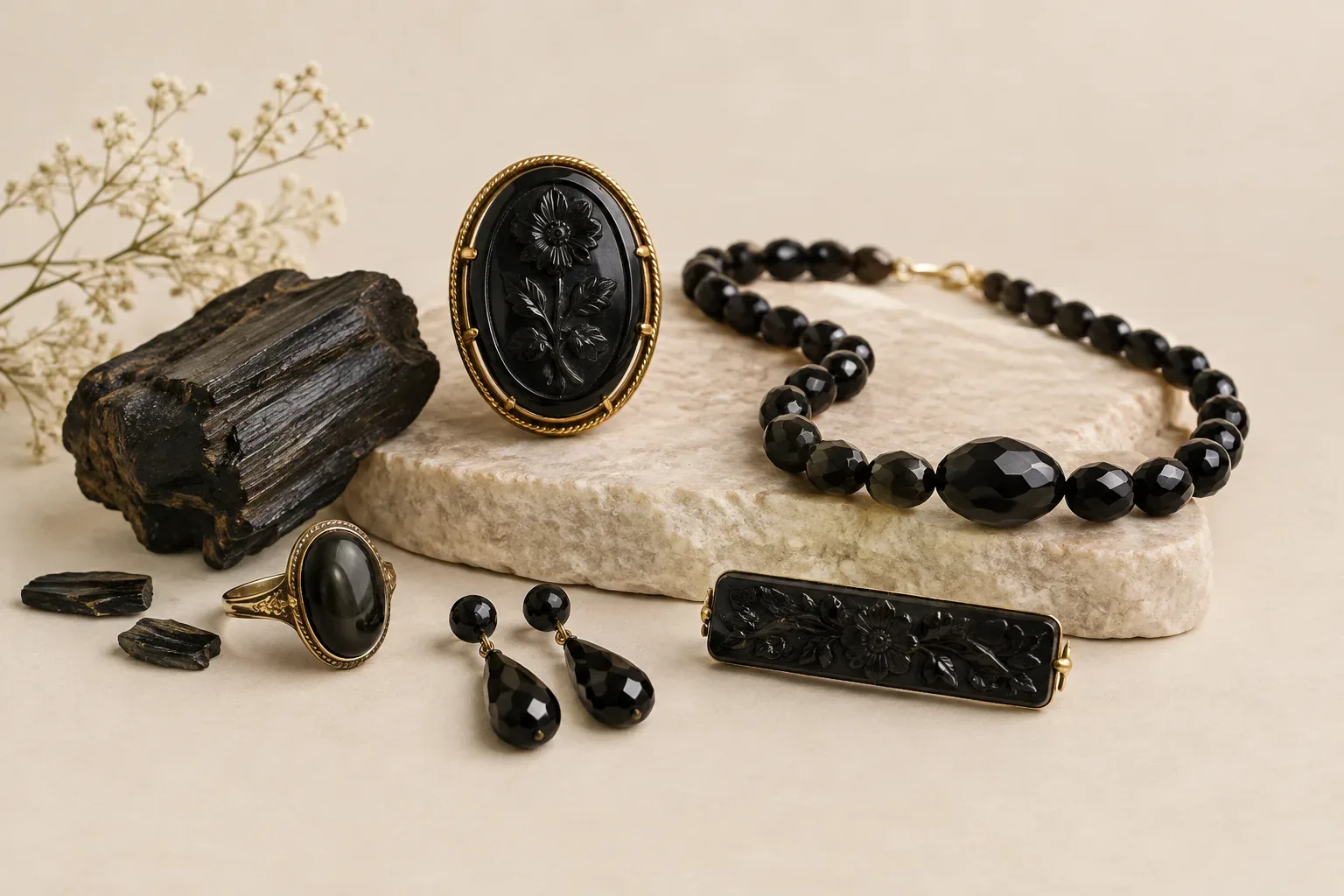
Jet appears in jewelry as polished cabochons, carved reliefs, beads, cameos, and in larger carved objects such as brooches and pendants. Because of its workable density and deep black color, jet was often carved into motifs that complemented mourning dress, including simple geometric forms and symbolic motifs chosen for funerary contexts.
In contemporary jewelry, jet is still used for beads and polished stones and sometimes appears alongside silver or gold as contrast. Designers may reference historical shapes and motifs or use jet purely for its aesthetic contrast with light metals and gems. It is important to distinguish jet from look‑alike materials: black glass, onyx, and many modern plastics are frequently used to imitate the deep black appearance of jet.
Buying and authenticity: what to ask and watch for
Because jet is organic and less common than many gemstones today, buyers should ask sellers clear questions about origin, treatment, and whether the piece is natural jet, a treated material, or an imitation. The U.S. Federal Trade Commission’s guidance on buying gemstones emphasizes the need for clear disclosure when a material is natural, treated, lab-made, or an imitation, so request written confirmation of what you are buying and keep any receipts or certificates.
Look for trustworthy provenance on historical pieces and for transparent material descriptions on contemporary items. If authenticity and value matter to you, buy from established dealers, museums, or reputable auction houses that document material identification. Be aware that age, craftsmanship, and the presence of historical documentation will influence the cultural and monetary value of a piece differently than the material alone.
Caring for jet jewelry
Jet is softer and more porous than most gemstones, so it needs gentle, nonabrasive care. The Gemological Institute of America advises general best practices for jewelry care that apply to organic materials: clean gently with a soft cloth, keep away from harsh chemicals and extreme heat, and store separately to avoid scratches. Avoid ultrasonic cleaners and chemical dips that are commonly used for hard gemstones but can damage organic and treated materials.
Store jet pieces in a stable, dry environment and wrap them in soft cloth to prevent abrasion from harder metals or stones. Because jet is organic, prolonged exposure to oils, perspiration, or strong sunlight can alter the surface appearance over time; wipe pieces after wearing and consider occasional professional conservation work for antique or fragile items.
Respectful selection and gifting guidance
When selecting jet as a gift, consider both its documented historical associations and the recipient’s personal and cultural context. Because jet carries a strong nineteenth‑century mourning association in Western historical records, it can be a meaningful choice for memorial jewelry among people who appreciate that history. However, gifting jet without awareness of that history can unintentionally convey somber or funerary meanings in some contexts.
If you are giving jet as a memorial or commemorative gift, be explicit about your intent and, when appropriate, include a note explaining the historical significance or your personal reason for choosing the piece. If the recipient is likely to prefer a purely decorative or contemporary meaning, discuss their preferences ahead of time or select a design that emphasizes fashion rather than mourning symbolism. When authenticity matters, provide documentation or a receipt and follow FTC recommendations about clear disclosure so the recipient understands whether the material is natural jet or an imitation.
Conclusion
Jet is a distinct material with a clear geological identity as fossilized wood and a well‑documented cultural role in nineteenth‑century mourning jewelry. Contemporary meanings layered onto jet—whether protective, aesthetic, or personal—are valid as individual or community interpretations but should be treated separately from historical documentation. When buying, caring for, or gifting jet jewelry, prioritize clear material disclosure, gentle conservation methods, and sensitivity to cultural and personal associations.
Frequently asked questions
What exactly is jet?
Jet is an organic gem material formed when woody plant matter becomes fossilized under pressure; its dense, black appearance is due to its carbon-rich composition and fossil origin, as explained in museum gem‑and‑mineral resources.
Was jet always used for mourning jewelry?
Historical records show a strong association between jet and nineteenth‑century mourning jewelry in Western dress traditions; this is a documented fashion and cultural usage for that period rather than a universal symbolic meaning.
How can I tell real jet from glass or plastic imitations?
Ask the seller for material disclosure and provenance; the Federal Trade Commission recommends clear identification of natural versus imitation materials. Experienced dealers can identify jet by its weight, feel, and carving characteristics, and laboratory testing can confirm organic fossil origin when needed.
How should I clean and store jet jewelry?
Follow gentle care: wipe with a soft cloth, avoid chemical cleaners, keep away from extreme heat, and store separately to prevent abrasion; the Gemological Institute of America recommends gentle, nonabrasive care for organic gem materials.
Is it appropriate to gift jet as a memorial piece?
Jet can be appropriate for memorial gifts if you and the recipient understand and accept its historical mourning associations; be explicit about your intent and provide documentation on the material when authenticity matters.
Sources and further reading
- Tips on Caring for Jewelry — Gemological Institute of America
- Buying Gemstones, Diamonds, and Pearls — Federal Trade Commission
- Gems and Minerals: Beauties and Building Blocks — Smithsonian National Museum of Natural History