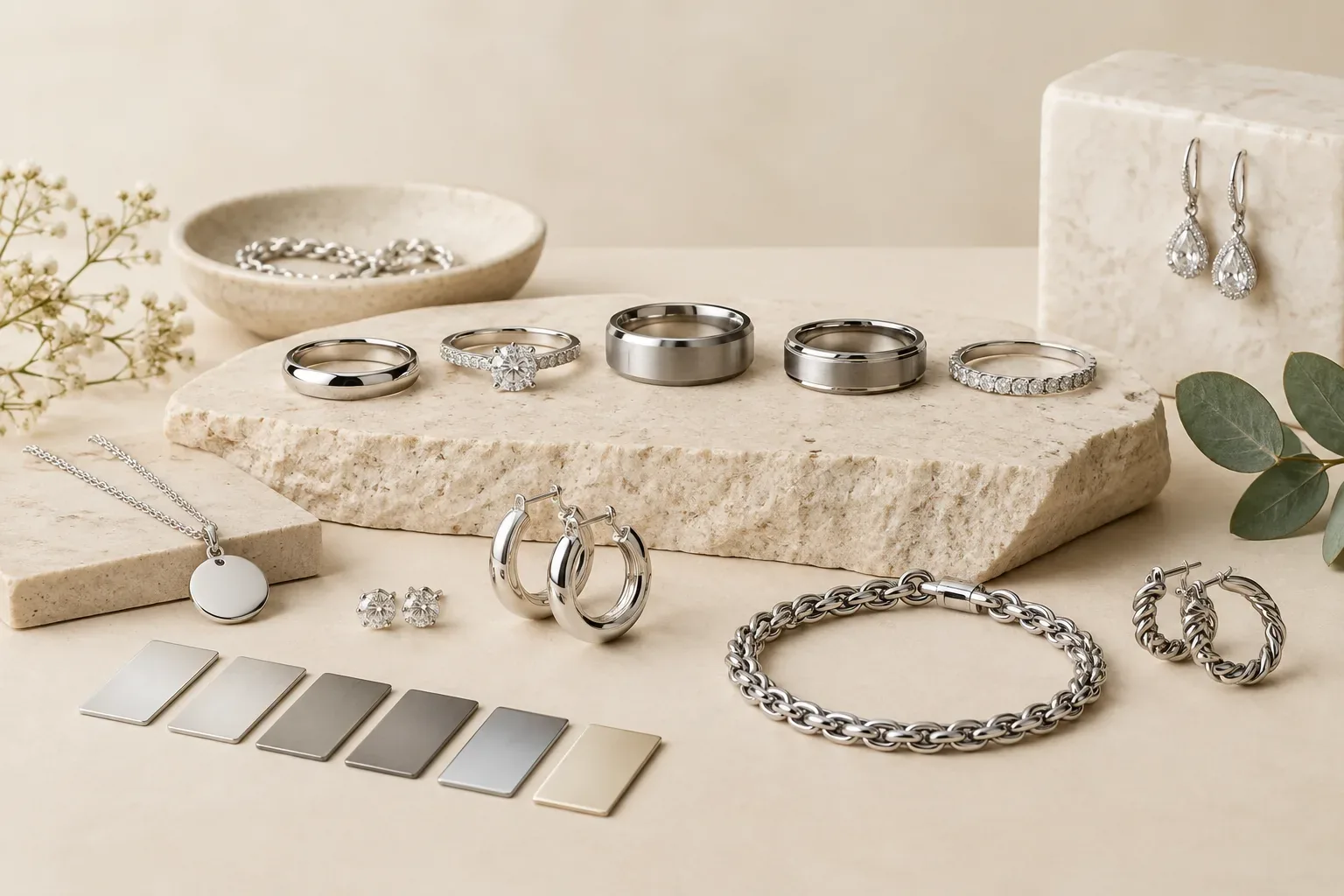
Meaning at a glance
This guide compares sterling silver, white gold, platinum, stainless steel, rhodium plating, and silver-tone base metals, emphasizing clear disclosure about metal content and gemstone treatments and offering care and gifting guidance.
Quick answer (thesis)
Compare sterling silver, white gold, platinum, stainless steel, rhodium plating, and silver‑tone base metals by insisting on full disclosure of metal content and any plating or treatments, choosing the metal that suits the wearer’s lifestyle and sensitivities, and following metal‑appropriate care to preserve appearance and value. For gemstones, rely on professional identification and the same disclosure standards the Federal Trade Commission recommends for treatments, lab‑grown stones, and imitations.
At a glance: what each silver‑color metal is and what to ask
Sterling silver is an alloy of silver (commonly 92.5% silver with copper or other metals) that tarnishes over time and needs occasional polishing. White gold is an alloy of gold mixed with white metals, often plated with rhodium to increase whiteness and scratch resistance. Platinum is a dense, naturally white precious metal that wears differently from gold and rarely needs plating. Stainless steel is an affordable, durable silver‑tone option often used for everyday pieces and is usually hypoallergenic grade when specified. Rhodium plating is a thin layer applied to white gold or silver to improve whiteness and scratch resistance but will wear off and require re‑plating. Silver‑tone base metals include a variety of non‑precious alloys that imitate silver; they vary greatly in durability and may cause skin reactions for some people. When shopping, ask directly about metal content, karat or grade, whether plating is present, and whether gemstones are natural, treated, lab‑grown, or imitation in line with FTC guidance on disclosure.
Historical evidence: where silver‑color metals and motifs appear
Archaeological and gemological studies show that white and silver‑colored metals have been used across many regions, serving both functional and decorative roles; gemological research resources discuss identification of colored stones and metal settings in historical objects. The Gemological Institute of America (GIA) catalogues colored‑stone identification in archaeological and historical contexts and frames how gem materials are documented by origin and treatment in museum and research collections.
In the broad sweep of material culture, silver and white metals appear in jewelry from ancient Mediterranean sites through medieval and early modern collections and into contemporary manufacture. Gemological research that examines museum objects and provenance records typically separates metalwork techniques from later interpretations of symbolism; GIA’s research resources emphasize methods for identifying materials rather than assigning universal symbolic meanings.
Because museum and conservation reporting focus on identification and provenance, the most consistent historical evidence relates to how metals and gems were made and modified, not to single, universal symbolic messages attached to a metal color. For symbolic meanings attached to silver color in particular regions or periods, consult specialized historical scholarship; gemological sources such as GIA provide context for the materials themselves and their treatment in historical objects.
Documented historical meanings versus modern personal interpretations
Documented historical meanings are what contemporary scholarship records as having been attributed to a material within a specific culture and period. Gemological and conservation reports typically document uses (for example, funerary, status, or ceremonial objects) and occasionally quote period texts; these reports do not treat a silver color as universally symbolic. The GIA’s research emphasis is identification and conservation context rather than cultural interpretation.
Modern personal interpretations are subjective, variable, and often reflect contemporary aesthetics: people may choose silver‑color jewelry for a minimal look, to match other metals, for perceived neutrality with skin tone, or because of trendy associations. These modern meanings are valid for personal expression but are not the same as documented historical symbolism. When making claims about historical symbolism, keep the culture and period explicit and avoid universal statements.
How silver color appears in jewelry: motifs, gemstones, and finishing
Silver color in jewelry can come from the base metal itself (sterling silver, platinum, stainless steel), from an alloyed precious metal (white gold), or from a surface finish (rhodium plating or silver‑tone plating). The choice of metal and finish affects how settings hold gemstones and how colors are perceived in photographs and in person. The Gemological Institute of America explains that lighting, color temperature, and diffusion alter the apparent hue and saturation of gemstones, so jewelers and buyers should evaluate gems under consistent lighting conditions.
Motifs that pair with silver color often rely on contrast. Cooler‑colored gemstones such as sapphires, aquamarines, tanzanite, and most diamonds typically read differently against a white metal than they do against yellow gold. The GIA’s guidance on colored gemstone value factors—hue, tone, saturation, and uniformity—applies when choosing gems for white‑metal settings because the metal’s whiteness can emphasize the stone’s hue and make body color and secondary hues more apparent.
Rhodium‑plated white gold uses a bright, reflective finish that initially increases whiteness and reduces the appearance of surface scratches, but rhodium is a thin plating that will wear and can change how a gemstone’s color is perceived as it thins. Sterling silver will darken with tarnish unless maintained; some consumers prefer that patina, while others prefer polished silver or rhodium plating applied over silver for a sustained bright look.
Disclosure, treatment, and gemstone considerations
The Federal Trade Commission (FTC) sets expectations for clear disclosure about gemstones, diamonds, pearls, and treatments. When buying silver‑color jewelry, ask whether gemstones are natural, treated, lab‑grown, or imitation, and insist that the seller disclose any plating and re‑plating history. The FTC’s guidance on buying gemstones recommends that consumers receive straightforward information about origin and treatment so they can compare value and care needs.
Treatments to gems and metals affect care. A rhodium‑plated surface requires re‑plating after wear; certain gemstone treatments change how stones should be cleaned or whether they tolerate ultrasonic cleaning. For color and evaluation questions, consult gemological sources such as the GIA’s research and value‑factor explanations before making a purchasing decision.
Practical selection and gifting guidance
Match the metal to the recipient’s lifestyle and sensitivities. For daily‑wear jewelry like a ring or bracelet, prefer durable metals such as platinum or stainless steel if you expect heavy wear; choose white gold or sterling silver for occasional or fashion pieces and be aware of maintenance needs. Ask about metal grades and whether rhodium plating is present so the recipient won’t be surprised by required maintenance.
Respect cultural and personal meanings. If a specific design has cultural significance, research that symbol’s meaning to the relevant community and, when in doubt, choose neutral motifs or ask someone from that culture before gifting. For birthstones or anniversary gems, ask whether the recipient prefers natural, lab‑grown, or imitation stones; the FTC recommends sellers disclose such distinctions so the buyer can make an informed choice.
Consider allergies and skin reactions. Nickel content in some silver‑tone base metals or lower‑grade alloys can irritate sensitive skin. Stainless steel and platinum are commonly recommended for people with metal sensitivity when a seller specifies hypoallergenic grades. When gifting, include care instructions and any documentation of metal content and gemstone disclosure to help the recipient maintain and verify the piece.
Budget and long‑term value. Platinum and high‑karat white gold typically carry higher intrinsic value than sterling silver or base metal pieces. If long‑term value or heirloom potential matters, choose a well‑documented precious metal and obtain a professional appraisal or gemological report for valuable gemstones.
Care basics
Sterling silver: polish periodically with a soft cloth and use gentle silver cleaners when needed; store pieces in low‑humidity environments or anti‑tarnish pouches. White gold: be aware that rhodium plating may need renewal every few years depending on wear; clean with mild soap and warm water and dry thoroughly. Platinum: cleans well with mild solutions and shows wear as a soft patina that some owners prefer; polishing and professional cleaning restore a bright finish. Stainless steel: generally low maintenance but can be cleaned with mild cleaners; avoid harsh abrasives on plated pieces. Rhodium‑plated items: avoid abrasive cleaners and be prepared for re‑plating over time. Silver‑tone base metals: check for plating; unplated base metals may corrode or discolor and may require replacement sooner.
Final takeaway
Choose silver‑color jewelry by balancing appearance, maintenance, wearer sensitivity, and required disclosure. Insist on transparent information about metal content and gemstone status, follow metal‑appropriate care, and respect cultural meanings when gifting. Use gemological resources for stone evaluation and the FTC’s consumer guidance about disclosure when buying so you know what you are purchasing and how to care for it.
Frequently asked questions
Is white gold the same as sterling silver?
No. White gold is an alloy of gold blended with white metals and often plated with rhodium; sterling silver is an alloy primarily of silver and copper. They differ in value, wear characteristics, and maintenance needs.
Will rhodium plating wear off and is it safe to re‑plate?
Yes, rhodium plating is a thin surface layer that will wear with time and can be professionally re‑plated. Re‑plating is a common maintenance service; ask a jeweler about expected frequency based on how the piece is worn.
How can I tell if a gemstone is natural, treated, or lab‑grown?
Ask the seller for disclosure and any available reports. The Federal Trade Commission recommends clear labeling for natural, treated, lab‑grown, and imitation gemstones. For valuable stones, obtain a gemological report from a recognized laboratory.
Is stainless steel a good choice for everyday silver‑color jewelry?
Yes, stainless steel is durable, affordable, and often resistant to corrosion, making it a practical choice for everyday wear. Verify the grade if you have sensitivity concerns and whether any plating is present.
How should I clean sterling silver and white gold?
Sterling silver responds well to gentle polishing and silver‑specific cleaners for tarnish. White gold cleans with mild soap and water; avoid abrasive cleaners if the piece is rhodium‑plated, and consult a jeweler before ultrasonic cleaning if gemstones are present.
Should I include documentation when gifting precious metal jewelry?
Yes. Including information about metal content, plating, and gemstone disclosure, as well as basic care instructions, helps the recipient maintain and authenticate the piece.
Sources and further reading
- Buying Gemstones, Diamonds, and Pearls — Federal Trade Commission
- Colored Gemstone Value Factors — Gemological Institute of America
- How to Photograph Gems and Jewelry — Gemological Institute of America
- GIA Colored Stone Research — Gemological Institute of America