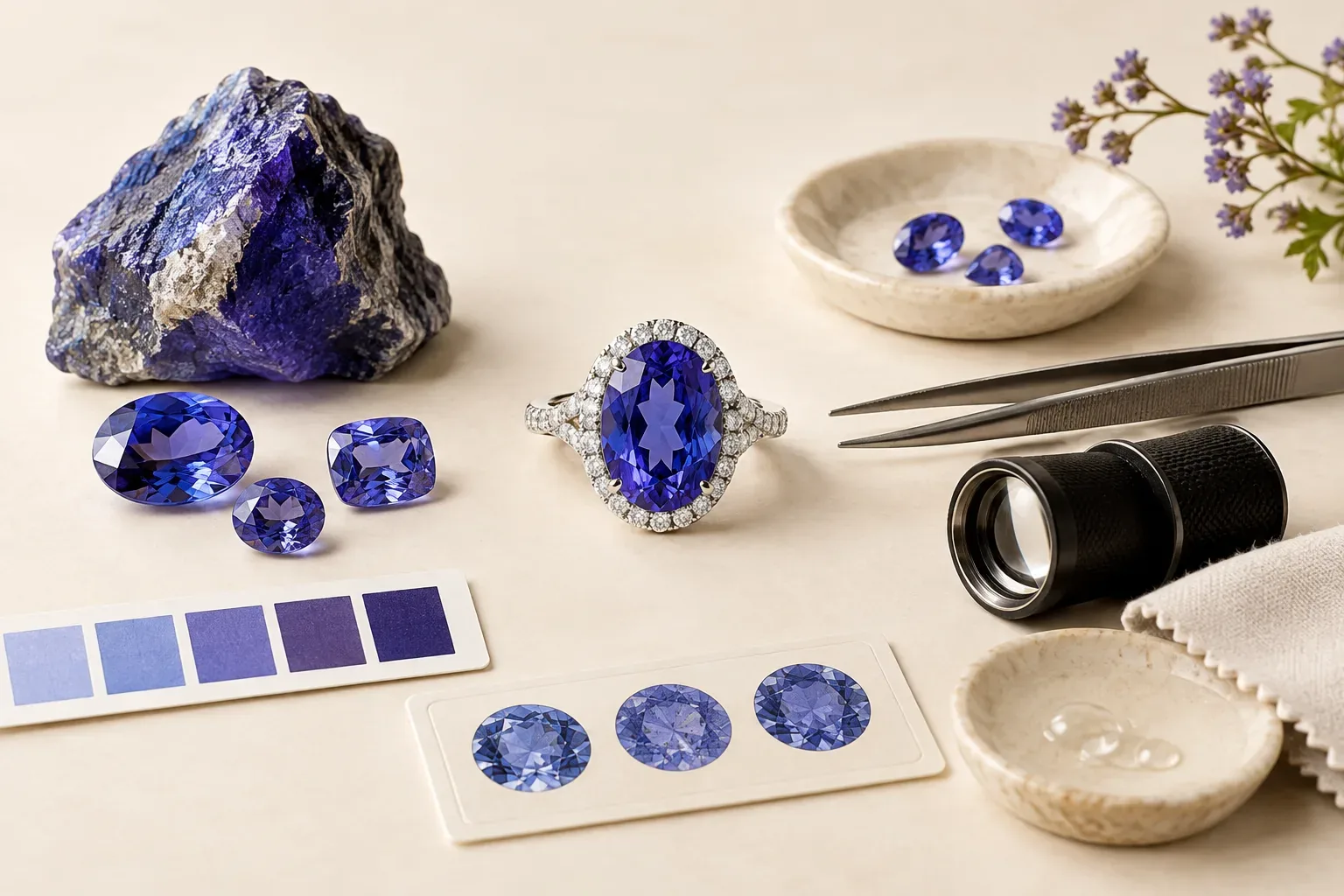
Meaning at a glance
Focus first on the stone’s color and cut, demand written disclosure about treatments and origin, and for meaningful purchases obtain a gemological report; visual judgment can handle color, clarity, and cut while only a qualified jeweler or accredited laboratory can reliably verify treatments, origin, and natural versus synthetic status.
What the historical record shows (and what it does not)
Tanzanite is a modern gem in the sense that most published consumer and trade guidance about its use and handling is contemporary. The approved sources cited for this guide do not document pre-modern cultural meanings or long historical traditions tied to tanzanite. When a gemstone lacks an extended documented history, ancient or cultural symbolism is usually absent from primary reference material; modern meanings are therefore predominantly recent interpretations offered by sellers, designers, or consumers.
Because modern demand and search behavior affect how jewelry is marketed, trade and search analyses show strong contemporary interest in colored gemstones across multiple categories including rings and necklaces (see industry trend summaries by Imaginaire Digital and Professional Jeweller / PRYA Jewellery Search Insights). Those same market sources help explain how tanzanite is used today in jewelry styles and buying patterns rather than supplying historic cultural attributions.
Documented history versus modern personal interpretation
Separate documented history from personal or marketing-driven meanings. Documented history requires primary or scholarly records describing a stone’s role in a culture or ritual. Approved sources for this guide include consumer protection and gemological standards rather than cultural histories, so historic cultural claims about tanzanite should be treated as modern narratives unless supported by independent historical scholarship.
Modern interpretations—what people today say a stone ‘means’—are real and legitimate as personal expression but are not the same as verifiable cultural history. If a buyer values an emotional or symbolic message, treat that as a personal or gift-driven decision rather than a documented cultural fact.
How tanzanite appears in jewelry today
In current jewelry trends, colored gemstones—including tanzanite—appear frequently in engagement rings, statement rings, necklaces, and cluster pieces. Trade and search analyses show rising consumer interest in gemstone rings, birthstone necklaces, and sculptural or Art Deco–inspired settings, which are common ways colored stones are marketed and worn (Professional Jeweller / PRYA Jewellery Search Insights; Imaginaire Digital).
Designers often set tanzanite as a single center stone or in clusters paired with diamonds and other gems to emphasize its color. Because market demand favors distinctive colored stones in rings and necklaces, expect to see tanzanite offered in these categories alongside standard protective settings intended to reduce wear.
Color: primary decision criteria and trade-offs
Color is typically the single most important factor in buying colored gemstones. You should prioritize the hue, tone, and saturation you find most appealing, then balance that preference against price. In practice, deeper, more saturated colors often command higher prices, while paler stones are less expensive but may appear less vibrant in certain settings and lighting.
When assessing color, view stones in neutral, daylight-equivalent light where possible and compare several options side by side. For photographed listings, request additional images or video under natural light. Keep in mind that photos and store lighting can change perceived color, so whenever possible judge color in person or demand reliable, consistent imaging from the seller.
Clarity and cut: visual impact and durability
Clarity affects how clean the stone looks to the eye. Many gemstones include natural inclusions; decide whether you need eye-clean material or are comfortable with visible inclusions that may be part of the stone’s character. Clarity also influences durability: large surface-reaching fractures are a liability in everyday wear.
Cut determines how color and brilliance are presented. A well-proportioned cut will maximize color and hide some inclusions, while a deep or shallow cut can mute color or reduce face-up size. For rings and frequently worn pieces, favor cuts and settings that protect the stone from knocks and abrasion.
Treatments, disclosure, and limits on what you can verify
Treatments and enhancements are common across many gem categories and affect value and care. The Gemological Institute of America emphasizes that treatments, their detectability, and the resulting effects on durability and care are central consumer questions when buying gemstones. Sellers must disclose treatments honestly, and the Federal Trade Commission requires clear distinctions among natural, lab-created, treated, and imitation materials as well as written disclosures where appropriate.
What you can confirm visually is limited. You can compare color, clarity, and cut, and you can look for obvious repairs or damage. You cannot reliably determine whether a stone has been treated, whether it is lab-grown, or exactly where it originated without testing by a qualified jeweler using appropriate instruments or an accredited gemological laboratory report. For any purchase where those factors affect price or long-term care, insist on written disclosure and consider requesting a laboratory report from an accredited lab.
Value trade-offs and negotiation points
Value for any given tanzanite is a function of color preference, clarity, carat weight, and whether the stone has been treated or is lab-created. Buyers commonly trade off color versus size: a smaller stone with richer color often presents more visual appeal than a larger, paler one for the same budget. Clarity also affects price but less than color; an eye-clean, well-cut stone sells at a premium.
When negotiating, base offers on comparable stones with similar color, cut, and clarity and on whether the seller provides transparent documentation such as a written description of any treatments and, for higher-value stones, a lab report. The FTC’s guidance underlines the importance of these disclosures in protecting consumers during negotiation.
Durability, care, and sensible settings
Because treatments and durability vary by gemstone species, get specific cleaning and care instructions from the seller. The Gemological Institute of America warns that treatments and durability characteristics can create distinct care needs and that consumers should not assume every gemstone is safe for the same cleaning methods. If you plan to wear the stone daily, opt for protective settings such as bezel or halo styles that reduce edge exposure.
If the seller cannot provide clear care guidance or confirm whether the stone tolerates ultrasonic or steam cleaning, do not clean the gem with those methods until you have a reliable answer. For routine maintenance, milder cleaning—soap, soft brush, and warm water—is usually safest unless a lab report or qualified jeweler advises otherwise.
Practical selection and gifting guidance
If buying for yourself, prioritize the color and cut you enjoy most and then seek documented disclosure for treatments. If buying as a gift, consider the recipient’s style and how often they will wear the piece; choose a setting that balances display and protection, and include care instructions with the gift.
For larger purchases or when origin and treatment materially affect value, request a current report from an accredited gemological laboratory and a written seller disclosure. The FTC recommends written disclosures to avoid misunderstandings about natural, lab-created, treated, or imitation stones. For smaller, purely personal purchases, clear verbal disclosure and a return policy may suffice, but written records are always preferable.
When to consult a jeweler or lab
Consult a qualified jeweler when you need to evaluate cut quality, set a stone into an engagement ring, or confirm whether a stone’s inclusions are structural concerns. Request a gemological laboratory report when treatment status, natural versus lab-grown origin, or geographic origin will influence price or long-term care. Accredited labs and experienced gemologists have instruments and expertise beyond visual inspection and can detect treatments or synthetic processes that are not visually obvious.
Insist on written disclosure from the seller and, when provided, review any lab report carefully. If a seller refuses to provide basic disclosures or to allow independent testing for a significant purchase, consider walking away.
Closing guidance
Make color and cut your starting points, demand transparent disclosure about treatments and origin, and use accredited labs or experienced jewelers for verification when value or care depend on those facts. Market trends show strong consumer interest in colored gemstone settings for rings and necklaces, so choose a style that suits the recipient’s wear habits and ask sellers for clear care instructions (Professional Jeweller / PRYA Jewellery Search Insights; Imaginaire Digital). Follow GIA and FTC guidance on disclosure and testing to protect your purchase.
Frequently asked questions
How important is color when buying tanzanite?
Color is usually the most important factor for colored gemstones. Buyers should prioritize the hue and saturation they prefer, view stones in neutral daylight-equivalent lighting, and compare options side by side because deeper, more saturated colors generally command higher prices.
Can I tell if a tanzanite has been treated just by looking at it?
No. Visual inspection can reveal color, clarity, and obvious damage, but it cannot reliably detect most treatments or confirm natural versus lab-created origin. For those questions, request written disclosure and a report from an accredited gemological laboratory.
What documentation should I ask for when buying a higher-value tanzanite?
Ask for written disclosure about any treatments and, for higher-value purchases, a current report from an accredited gemological laboratory. The FTC emphasizes clear written distinctions among natural, lab-created, treated, and imitation materials.
How should I care for a tanzanite jewelry piece?
Obtain care instructions from the seller before cleaning. Because durability and treatment status affect safe cleaning methods, avoid ultrasonic or steam cleaning unless the seller or a lab confirms these methods are safe. When in doubt, use warm soapy water and a soft brush and choose protective settings for frequently worn pieces.
Is a deeper color always better for value?
Deeper color is often priced at a premium, but personal preference and setting choice matter. A smaller, deeply saturated stone may offer more visual appeal than a larger, paler stone at the same budget. Balance color, size, clarity, and cut to match your priorities.
When should I get an independent appraisal or lab report?
Obtain an independent lab report for purchases where treatment, origin, or natural versus lab-grown status materially affect price or care. For engagement rings or high-value pieces, a lab report and a written seller disclosure are prudent safeguards.
Sources and further reading
- Imaginaire Digital — Imaginaire Digital
- Professional Jeweller / PRYA Jewellery Search Insights — Professional Jeweller / PRYA Jewellery Search Insights
- Gemological Institute of America — Gemological Institute of America
- Federal Trade Commission — Federal Trade Commission