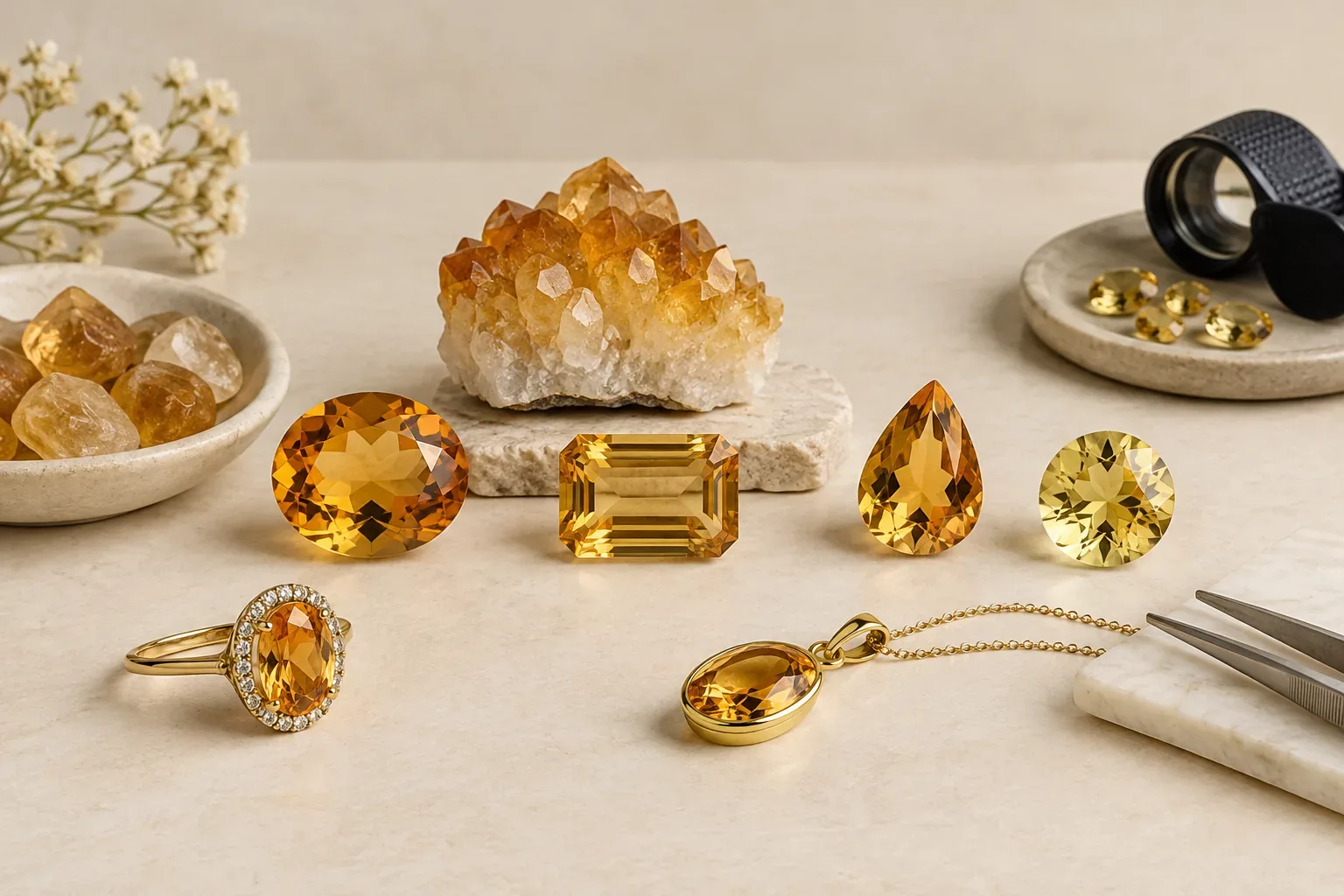
Meaning at a glance
This guide defines natural, lab-created, treated and imitation citrine; gives decision criteria and practical trade-offs; explains what a shopper can verify without a jeweler or gemological laboratory; and offers safe care and gifting guidance.
Quick answer
Answer the distinct search intent behind 'Citrine authenticity guide' with evidence-led definitions, decision criteria, practical trade-offs, safe care guidance, and clear limits on what a shopper can verify without a qualified jeweler or gemological laboratory.
In short: ask the seller for written disclosure and, for higher-value pieces, a current gemological report; expect clear labeling for lab-grown or imitation materials; be prepared that only a qualified jeweler or gem lab can conclusively separate natural from treated or laboratory-grown material in many cases; and choose by balancing aesthetics, budget, certification and return policy.
What 'authenticity' means for citrine
In buyer terms, four categories matter: natural, lab-created (synthetic), treated (natural stone altered to change or improve color), and imitation (glass or other non-gem materials). The Federal Trade Commission advises consumers that sellers must make clear distinctions among these categories and provide written disclosures, because they affect value and care.
The Gemological Institute of America (GIA) explains that treatments and laboratory processes exist for many gemstones, and that detectability and durability vary by treatment and material. That means a seller’s disclosure, a jeweler’s inspection and—when value justifies it—a report from a recognized gemological laboratory are the standard tools for establishing what you own.
Historical evidence and cultural record
The sources available for this article do not supply primary historical documentation tying citrine to specific ancient cultures or precise historical periods. Neither the referenced market reports nor the general treatment and consumer-protection guidance list museum provenance or period-attributed uses for citrine.
Because the approved references emphasize disclosure, treatment and market context rather than historical provenance, this guide does not assert any particular culture’s historic use of citrine. If you need verified historical provenance for a specific antique piece, request documented provenance from the seller and seek examination by a museum curator or a qualified gemological laboratory that can test age-related indicators and provide a provenance report.
Documented historical meanings versus modern personal interpretations
With the reference set used here, there is no documented historical meaning for citrine that can be cited from the available sources. When shopping or collecting, treat historical-meaning claims as seller statements that should be supported by independent provenance, especially for antiques.
Modern personal interpretations—what wearers today commonly associate with citrine—are social and aesthetic, not universal facts. Many people today choose citrine for its warm yellow-to-golden tones and for personal associations like optimism or abundance. Those are contemporary symbolic uses and vary by individual and culture; they are not documented historical facts in the cited sources.
How citrine appears in jewelry
Citrine is used across many jewelry styles, from everyday studs and pendant stones to statement rings and clusters. Market research cited by Professional Jeweller and PRYA Jewellery Search Insights highlights growth in gemstone rings and birthstone necklaces; that context helps explain why citrine frequently appears in modern sculptural pieces and fashion jewelry.
Retail pieces range from small accent stones in mixed gems to larger center stones set in gold or silver. A buyer should evaluate cut, color saturation and setting quality the same way they would for any colored gemstone: are the facets even, is the color distributed consistently, and is the mounting durable for intended wear?
Decision criteria: what to ask, inspect, and insist on
Ask the seller for three things: a written description that clearly states whether the piece is natural, lab-created, treated or an imitation; an itemized treatments disclosure if the stone is treated; and the seller’s return policy and any warranty. The Federal Trade Commission emphasizes written disclosure as a consumer protection.
For medium- to high-value purchases, request a current gemological report from a recognized laboratory. The GIA and other labs can identify treatments, synthetics and imitations and often provide commentary on detectability and durability. Note, however, that not every routine retail purchase will come with a lab report; in those cases rely on clear seller disclosure and return protections.
Practical trade-offs when choosing natural, lab-created, treated, or imitation citrine
Natural citrine with no treatments typically commands higher prices and can be of interest to collectors who prioritize geological origin. Lab-created citrine can offer larger, cleaner stones and consistent color at lower cost, and may appeal to buyers who value appearance or sustainability over natural origin.
Treated natural stones often deliver desirable color and a lower price than untreated natural stones; disclosure matters because treatments can affect long-term value and care. Imitations, such as glass or other non-gem substances, are sometimes appropriate for costume jewelry but should be sold and labeled clearly as imitations. Balance your priorities—appearance, budget, provenance and long-term care—when deciding which category best meets your needs.
Safe care guidance
The Gemological Institute of America notes that treatments and the intrinsic durability of a gemstone influence care and cleaning methods. Because treatment types vary, follow the seller’s or lab report’s care recommendations and avoid generalizations.
As a practical rule, avoid harsh chemicals, prolonged exposure to extreme heat or light, and aggressive ultrasonic or steam cleaning unless a qualified jeweler confirms these methods are safe for a specific stone and treatment. Store gemstone jewelry separately to prevent scratches and have settings checked periodically if you plan regular wear.
Limits on what you can verify without a qualified jeweler or gem lab
You can visually check color uniformity, visible damage, and the quality of the mounting, and you can confirm whether the seller provides written disclosure and a return policy. You can also ask about previous certification and request to see any existing lab report.
However, the Federal Trade Commission and the Gemological Institute of America make clear that conclusive distinctions among natural, lab-grown, and certain treatments often require gemological testing. Only a qualified jeweler using specialist instruments or a gemological laboratory can reliably detect many treatments and separate natural from synthetic materials in ambiguous cases.
When to get a gemological report or professional opinion
Obtain a gemological report for purchases where the stone’s value or rarity justifies the cost of testing, or when provenance is important for an heirloom or resale. A lab report provides an independent statement about origin, treatments and detectability that written seller disclosure alone cannot match.
For routine fashion purchases with clear, inexpensive disclosure and a good return policy, lab reports are often unnecessary. For higher-end pieces, for antiques where provenance is claimed, or where disclosure is absent or ambiguous, a lab report or independent appraiser becomes essential.
Frequently asked questions
How can I tell if citrine is natural or lab-created?
A visual inspection alone cannot reliably distinguish natural from lab-created citrine in many cases. Follow the FTC’s advice to request clear written disclosure and, for valuable stones, obtain a recent gemological report. Only a qualified jeweler or a gemological laboratory can make definitive determinations using specialized testing.
Do sellers have to disclose treatments or lab-grown origin?
Yes. The Federal Trade Commission requires clear distinctions and written disclosure for natural, lab-created, treated and imitation materials. If the seller will not clearly disclose treatment or origin, treat that as a red flag and consider walking away or requesting a lab report.
Is a gemological report always necessary?
Not always. For low-cost fashion jewelry with transparent labeling and a fair return policy, a lab report may be unnecessary. For higher-value purchases, antiques with claimed provenance, or when the seller’s disclosure is incomplete, a lab report is strongly recommended.
Can treatments affect care or durability?
Yes. The Gemological Institute of America notes that treatments and intrinsic durability influence cleaning and care methods. Always follow the care instructions on a lab report or from a qualified jeweler, and avoid aggressive cleaning methods unless they are confirmed safe for that exact stone and treatment.
What should I inspect in person before buying?
Check for even color, visible inclusions or damage, the quality of the mounting, and whether the seller provides written disclosure and a return policy. For higher-value purchases, ask to see a current lab report and confirm the seller’s warranty and returns.
Can phone apps or home tests prove authenticity?
No single phone app or simple home test can conclusively prove whether a citrine is natural, lab-grown, treated, or an imitation. Use such tools only as informal references and rely on disclosure, professional inspection, or a lab report for conclusive results.
Is lab-created citrine unethical or less desirable?
Ethics and desirability are personal priorities. Lab-created stones can be more affordable and consistent in color and clarity, and some buyers prefer them for sustainability reasons. What matters ethically is honest disclosure; the FTC requires sellers to label lab-created stones clearly.
Sources and further reading
- Imaginaire Digital — Imaginaire Digital
- Professional Jeweller / PRYA Jewellery Search Insights — Professional Jeweller / PRYA Jewellery Search Insights
- Gemological Institute of America — Gemological Institute of America
- Federal Trade Commission — Federal Trade Commission