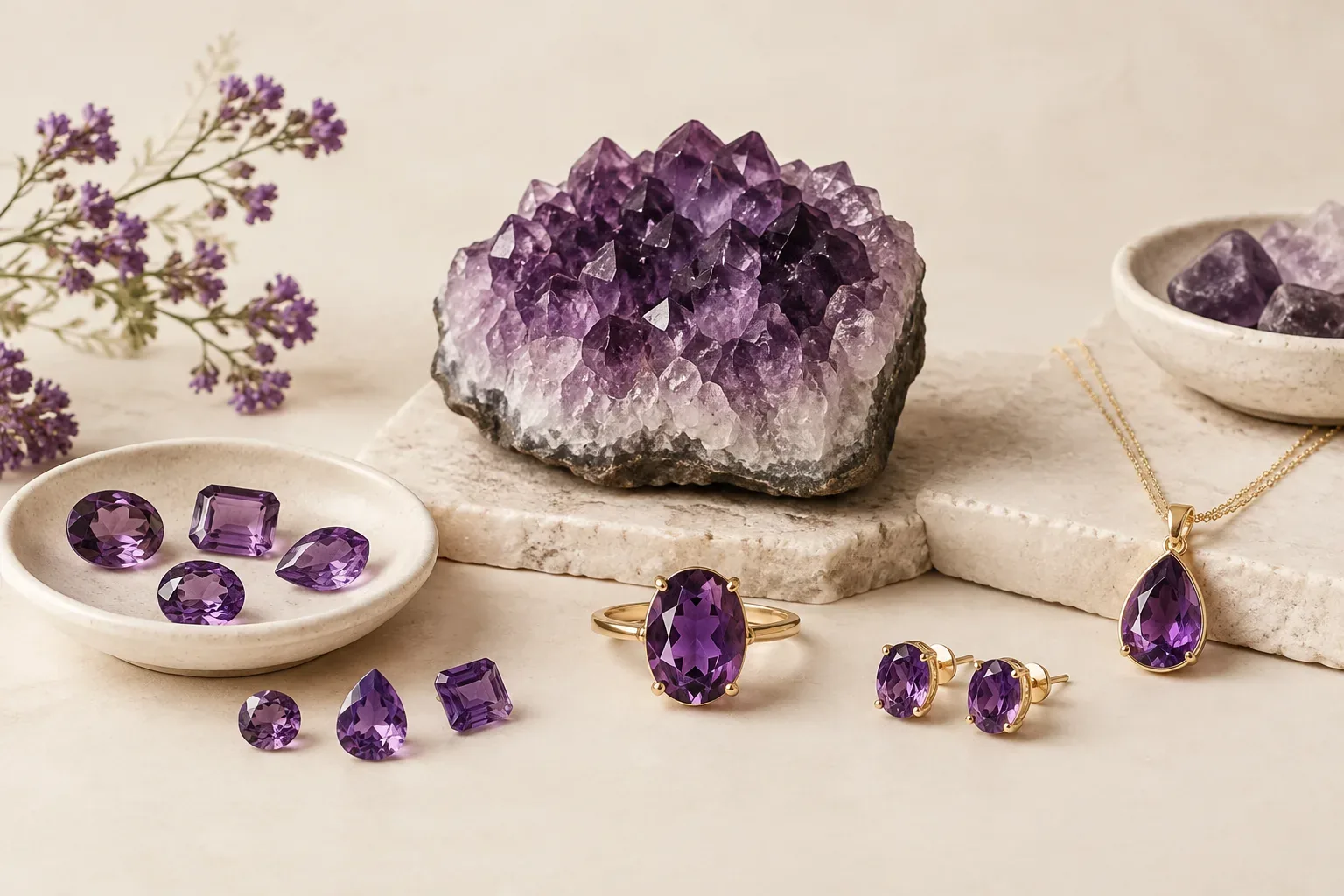
Meaning at a glance
Prioritise color saturation, eye-clean clarity, and a cut that flatters the stone while insisting on clear seller disclosure about treatments and origin; for high-value purchases ask for a gemological report because many important properties cannot be verified by sight alone.
How to use this guide
This article focuses on practical selection criteria—color, clarity, and cut—plus the value trade-offs buyers face and the limits of what can be checked without specialist equipment. It draws on authoritative consumer and gemological guidance about treatments and disclosure and on recent jewelry-market trend reporting to clarify how amethyst is commonly sold today. Specific historical claims about amethyst’s meanings or use in particular cultures are not asserted here unless supported by specialist historical sources; this guide separates documented, verifiable facts you should check as a buyer from folklore and modern personal interpretation.
Color: the single biggest value driver
Color is the most important factor for amethyst value. Buyers typically prefer a medium- to deep-purple tone with even saturation and minimal brown or gray modifiers. Stones with a balanced purple that shows both red and blue flashes in different light often read as richer and more desirable. In large sizes, evenly distributed color matters because uneven zones or visible brownish tones reduce perceived value.
When evaluating color in a retail setting, view the stone under neutral daylight or a daylight-balanced lamp if possible, and compare several stones side by side. Photographs can be misleading because camera white balance and post-processing change hue and saturation; use photos only as an initial filter and try to inspect the stone in person before buying.
Clarity: what to expect and what affects price
Most commercial amethyst is eye-clean—meaning no inclusions visible to the unaided eye—but some stones contain natural inclusions that can affect transparency and brilliance. In amethyst, tiny needle-like or crystalline inclusions are common and usually do not lower value materially unless they interrupt the color or create a visible cloud.
If a stone shows fractures, clouds, or large crystals that reduce sparkle or colour saturation, price will be lower. For pieces intended for everyday rings, choose stones that are robustly transparent and free of surface-reaching fractures, because repair and re-cutting small amethyst gems can reduce size dramatically.
Cut and shape: maximizing color and durability
The cut does two jobs: it balances color distribution and creates optical performance. Deep cuts can increase apparent color saturation but reduce face-up size; shallow cuts may appear larger but can wash out color. Popular cuts for amethyst include oval, cushion, round, emerald, and fancy or fantasy cuts that emphasize color over brilliance.
For practical wear, the setting matters. Cabochons and smooth bead cuts are common for large, darker amethysts used in pendants and beads. For rings and earrings, a well-proportioned faceted cut that concentrates color toward the table without creating windowing (areas that look washed out) is usually the best choice.
Treatments, disclosure, and what to verify
Gemstone treatments and disclosure are critical concerns for any buyer. Authoritative gemological guidance makes clear that treatments, their detectability, and the effect on value vary by material, and sellers must disclose significant treatments. The Gemological Institute of America explains the fundamental consumer questions about treatments, detectability, durability and special care, while government consumer guidance requires clear distinctions among natural, lab-created, treated and imitation materials and written seller disclosures.
For amethyst specifically, some treatments can alter color; a seller should state whether a stone is natural, heat-treated, lab-grown, or an imitation. While some simple checks—consistency of color, visible inclusions, and typical optical behavior—are possible in-store, only a qualified gemological laboratory can reliably determine certain treatments and confirm geographic origin. For high-value stones, request a report from a recognized lab or an independent gemologist.
Value: size, color, origin, and market context
Amethyst pricing depends primarily on color and size. Strongly saturated, evenly colored stones command premium prices per carat, and very large fine-color stones can rise sharply in price. Origin can influence value in the trade when it’s verifiably documented, but origin claims should be backed by a lab report for any premium to be meaningful.
Current retail interest in colored gemstones and birthstone jewelry influences buyer options and availability. Recent market reporting shows ongoing demand for gemstone rings and birthstone necklaces, which keeps amethyst supplied as an affordable violet option. For mainstream retail purchases, expect a wide price range depending on quality and designer or brand premium.
Historical evidence and cultural uses: what this guide can and cannot claim
This guide does not present new primary historical research about which specific ancient cultures used amethyst in which ways, because the set of sources approved for this article does not include specialist historical or archaeological references. When shopping, treat historical or symbolic claims you read on retail pages or social media as modern interpretations unless the seller cites verifiable primary historical research or museum provenance.
If historical use or provenance matters to you—for example, if you are buying a named antique piece or a documented museum provenance—ask the seller for the documentary evidence (museum accession records, auction catalog references, or scholarly citations). Authenticate antique or historically important pieces with independent experts rather than relying on commercial descriptions alone.
Documented meanings versus modern personal interpretations
Many sources and sellers present symbolic meanings for amethyst; these are often modern or folkloric attributions. Separate matters that are documented in scholarly or primary historical sources from modern or personal interpretations. If a claim of historical symbolism is important to a purchase or gift, ask the seller to cite the scholarly source or provenance supporting that claim.
For everyday gifting, personal meaning and aesthetic preference are usually more important than scholarly verification. Clarify with the recipient whether the stone’s appearance, color or any attributed symbolism is the priority, and be explicit about return or exchange policies if the meaning or look turns out not to match expectations.
How amethyst appears in contemporary jewelry
Amethyst appears across jewelry categories: solitaire rings, halo rings, pendants, bead necklaces, carved pieces, and cluster designs. Current market reporting highlights continued interest in birthstone necklaces, sculptural and Art Deco-inspired designs, and gemstone rings, which are channels where amethyst is frequently used.
Designers often pair amethyst with white metals like silver, white gold or platinum to enhance perceived violet tones, or with warm metals to emphasize red undertones. Large amethyst beads and cabochons are common in statement necklaces and pendants, while faceted amethysts are typical in rings and earrings where brilliance and color saturation are priorities.
Practical selection and gifting guidance
Decide first how the piece will be worn. For everyday rings, prioritize eye-clean stones with durable settings and secure prongs. For pendants and occasional-wear rings, you can select larger stones with stronger color even if they have minor inclusions. When buying as a gift, document the recipient’s size and style preferences, and choose a merchant with a fair return policy.
Always request written disclosure about whether the stone is natural, lab-grown, treated or an imitation, and keep the sales receipt. For any purchase above a modest retail price, ask for a gemological report from an accredited lab or an independent appraisal. If provenance or antique status is claimed, ask for documentation and verify with an expert.
Care and durability: safe handling
Amethyst is a durable gemstone for most jewelry, but it benefits from reasonable care. Avoid extended exposure to intense heat or prolonged sunlight, which can alter color in some gemstones, and protect amethyst from hard knocks or abrasives. Clean amethyst with mild soap and water and a soft brush; let it dry on a soft cloth.
For treated or fragile pieces ask the seller or a qualified jeweler about specific cleaning instructions. For high-value items, consider professional cleaning and inspection of settings periodically to ensure prongs and mounts remain secure.
Limits on what a shopper can verify
A buyer can verify color, apparent clarity, cut quality, and surface condition in person or via high-quality photos. However, only a qualified gemologist or recognized gemological laboratory can reliably determine whether a stone is natural or lab-grown, whether it has been treated and to what extent, or its geographic origin. For significant purchases, require a lab report or independent appraisal to confirm those properties.
Final checklist before you buy
Prior to purchase, inspect the stone in appropriate light, compare alternatives, ask for written disclosure on treatment and origin, verify the seller’s return policy and guarantees, and obtain a gemological report for higher-value stones. These steps reduce the most common buyer risks and help you balance color, clarity and size against your budget and intended use.
Frequently asked questions
How do I spot a good-color amethyst?
Look for a medium- to deep-purple that appears evenly saturated with minimal brown or gray tones. Compare stones in neutral daylight or a daylight-balanced lamp and avoid stones that look washed out or overly brown in multiple lighting conditions.
Can I tell if an amethyst has been treated?
Not reliably by sight alone. Some simple treatments can be subtle or indistinguishable to the unaided eye. For reliable detection of treatments or to confirm whether a stone is natural or lab-grown, obtain testing from a qualified gemological laboratory or an independent gemologist.
Do I need a gemological report for an amethyst purchase?
For modest purchases it's not always necessary, but for higher-value stones, unusual sizes, or when origin or treatment affects price, a report from an accredited laboratory is strongly recommended to verify claims and protect your purchase.
Is amethyst suitable for everyday wear?
Amethyst is durable for most jewelry but benefits from reasonable care. Choose eye-clean stones with secure settings for rings intended for daily wear, and avoid exposing the stone to harsh chemicals, sharp impacts, or prolonged intense heat.
What disclosures should a seller provide?
Ask for written disclosure on whether the stone is natural, lab-grown, treated, or an imitation, and request any available lab report or independent appraisal for high-value items. U.S. consumer guidance requires clear distinctions and disclosure for treated and lab-created gems.
How should I clean amethyst jewelry at home?
Use mild soap, warm water and a soft brush, then dry on a soft cloth. Avoid ultrasonic cleaners or strong chemicals unless a qualified jeweler confirms they are safe for that specific piece.
Sources and further reading
- Imaginaire Digital — Imaginaire Digital
- Professional Jeweller / PRYA Jewellery Search Insights — Professional Jeweller / PRYA Jewellery Search Insights
- Gemological Institute of America — Gemological Institute of America
- Federal Trade Commission — Federal Trade Commission