Meaning at a glance
This morganite authenticity guide defines natural, lab-created, treated, and imitation stones using evidence-led criteria, explains what shoppers can check themselves, lists practical trade-offs and safe care advice, and makes clear which authenticity questions require a qualified jeweler or gemological laboratory to resolve.
Quick answer
If you need a short, direct answer: use this guide to decide whether you want a natural, lab-created, treated, or imitation morganite by weighing budget, disclosure, durability and resale priorities; check seller documentation and visible signs for a first screen; and expect definitive answers about origin and some treatments only from a qualified jeweler or an accredited gemological laboratory. This article follows consumer and gem-treatment guidance from the Federal Trade Commission and the Gemological Institute of America and places modern demand patterns in the context of current jewellery trends reported by industry publishers.
What the key terms mean (evidence-led definitions)
The Federal Trade Commission draws a practical distinction between natural, lab-created (also called synthetic or laboratory-grown), treated, and imitation materials and requires sellers to disclose these differences in writing. A natural gemstone is one formed in nature; a lab-created stone is grown under controlled laboratory conditions to mimic natural material; a treated gem has had its appearance or durability altered by human intervention; and an imitation is a different material made to look like the original stone. The Gemological Institute of America explains that treatments, their detectability, and their effects on durability and care are important consumer questions, and that disclosure and testing protocols differ by treatment type.
Historical evidence and modern usage
Our approved sources do not provide an extended cultural history for morganite, so documented historical meanings in older cultures cannot be asserted here from primary evidence. Instead, the available industry reporting focuses on contemporary demand. Professional Jeweller and Imaginaire Digital identify growth in gemstone jewellery and specific consumer interests—such as engagement rings, necklaces, and gemstone rings—across 2026 UK market observations and keyword research. These publications document morganite's role within current trends rather than ancient symbolism, so any linkage to particular historical cultures or eras should be treated as outside the scope of the evidence we cite.
Documented meanings versus personal interpretations
Because the approved trade and consumer sources used for this guide emphasize market behavior, documented historical meanings for morganite are scarce in this evidence set. Modern personal interpretations—such as viewing pink or peach gemstones as symbols of love, compassion, or calm—are contemporary meanings individuals assign when giving or wearing gemstones. Those personal interpretations are legitimate for gift-giving and emotional value but should be distinguished from documented cultural meanings: the former are individual and modern, while the latter would require historical sources not included in our references.
How morganite appears in jewellery today
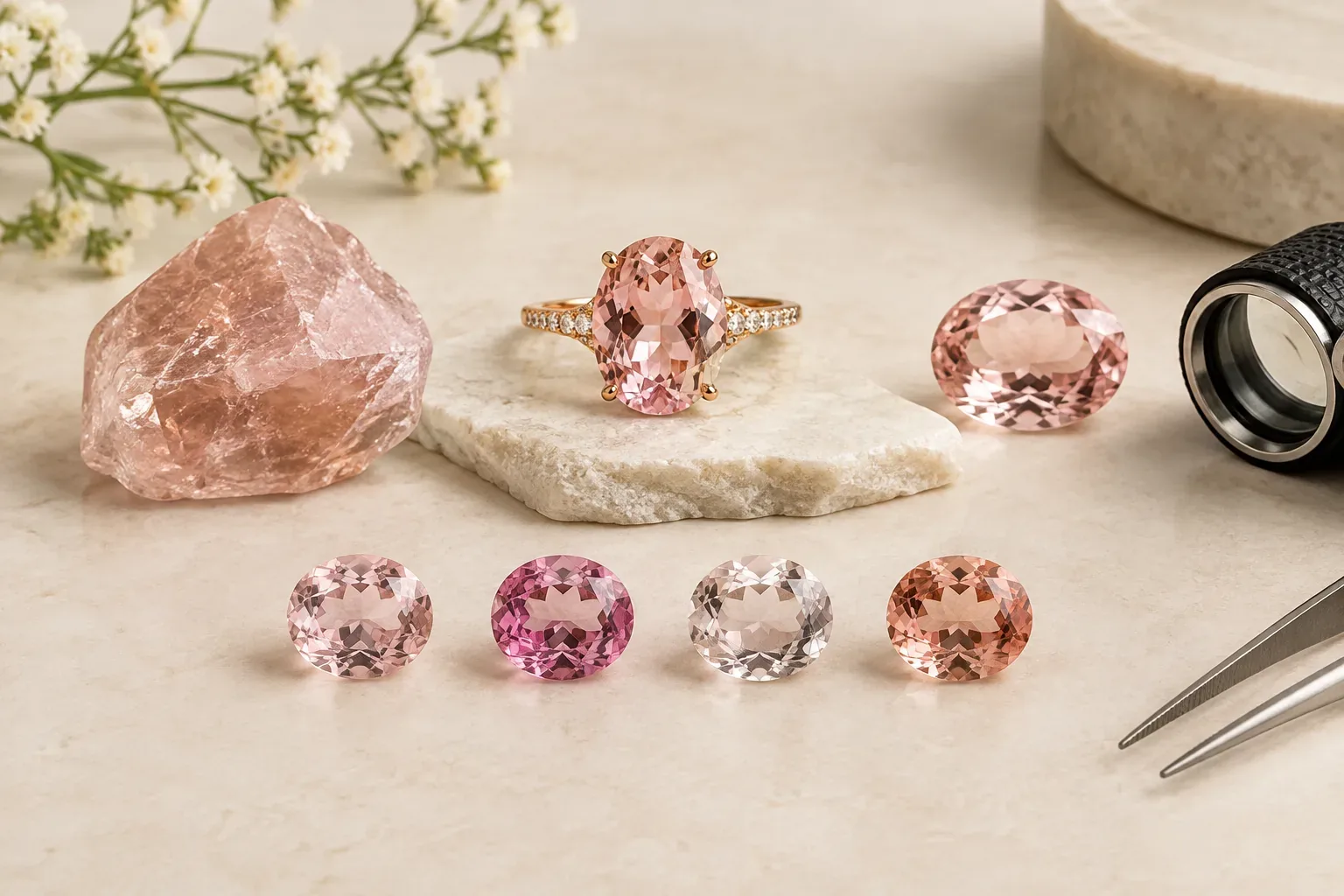
Recent jewellery trend reporting shows strong consumer interest in gemstone engagement rings, necklaces, and sculptural or statement pieces. Professional Jeweller and Imaginaire Digital identify engagement rings, birthstone and gemstone necklaces, and cluster or sculptural jewellery as growing categories in 2026 searches and market activity. In practice, morganite commonly appears set as center stones in rings, as accent or pendant stones in necklaces, and in earrings and bracelets when used as part of multi-stone combinations. Retailers often pair warm pink or peach stones with warm metal settings to accent the colour, though exact style choices vary by designer and market.
Practical authenticity checks you can do before purchase
Before you commit to a purchase, perform a practical pre-check: ask the seller for written disclosure of whether the stone is natural, lab-created, or treated and request any available laboratory certificates. Compare the price to market expectations—if a piece is priced far below comparable stones from reputable sellers, that can be a red flag. Inspect the stone for unusually perfect clarity or colour that looks too uniform, which can suggest lab creation or certain treatments. Verify the seller’s return policy, warranty, and whether a reputable third-party certificate (from an accredited gem lab) is offered or included.
What only a qualified jeweller or gem lab can reliably verify
Some questions cannot be resolved with certainty by sight or consumer-grade tools. Accredited gemological laboratories and qualified gemologists are required to reliably determine natural origin versus laboratory growth for many gemstones and to identify many treatments. The Gemological Institute of America notes that detectability and effects on durability vary by treatment; the FTC likewise emphasizes the importance of accurate disclosure. If you need a definitive determination about origin, whether a stone is natural versus lab-created, or whether a treatment (especially those that are subtle or stable) has been applied, plan to obtain an independent laboratory report from an accredited lab.
Common trade-offs: natural, lab-created, treated, and imitation
Choosing among natural, lab-created, treated, and imitation stones involves trade-offs. Natural stones typically command higher prices and may have different resale characteristics, while lab-created stones often offer a lower price per carat and identical optical characteristics for buyers prioritizing appearance and budget. Treated stones can offer improved colour or clarity at a lower cost than comparable untreated material, but treatments may require special care and should be disclosed. Imitations provide the look at a lower price but are a different material and have different durability and value implications. The FTC’s guidance emphasizes transparent disclosure so consumers can weigh these trade-offs.
Care and maintenance — safe, general guidance
The Gemological Institute of America recommends treating gemstones and treated gems with appropriate care based on the specific material and any known treatments, because some treatments affect durability and cleaning options. As a general rule, avoid harsh chemicals and strong blows, store gemstone jewellery separately to prevent scratching, and follow the seller’s or certifying lab’s cleaning recommendations. If a stone is reported to be treated, ask what the treatment entails and whether ultrasonic, steam, or other cleaning methods should be avoided. When in doubt, gently wash with mild soap and water and dry with a soft cloth, and consult a jeweller for professional cleaning.
Selection and gifting guidance — practical and respectful
When selecting or gifting morganite, first decide which factors are most important to the recipient: natural origin, sustainability, price, resale value, or aesthetic perfection. Ask sellers for clear written disclosure and any lab certificates, and choose reputable retailers with transparent return policies. For sentimental gifts, emphasize the personal meaning you attach to the stone rather than relying on unverifiable historical claims. If ethical sourcing is important, ask the seller about provenance and supply-chain practices and consider lab-created alternatives when environmental or sourcing concerns are paramount. Finally, include care instructions with the gift so the recipient understands any restrictions tied to treatments or cleaning.
Summary: clear limits, clear choices
This morganite authenticity guide gives you a framework: understand the FTC distinctions, rely on seller disclosure and third-party certificates for serious purchases, and recognize that definitive origin or treatment determinations often require an accredited lab or qualified gemologist. Use visible checks and documentation to screen purchases, weigh the practical trade-offs between natural, lab-created, treated and imitation stones, and follow GIA-style care guidance for cleaning and long-term preservation. Ultimately, balance emotional value with documented facts and insist on written disclosure so your purchase matches your priorities.
Frequently asked questions
How can I tell if a morganite is natural or lab-created?
Ask the seller for written disclosure and any available accredited laboratory certificate. Visible signs like unusually uniform colour and perfect clarity can indicate lab creation but are not definitive. Only a qualified gemologist or an accredited gemological laboratory can reliably differentiate natural from lab-grown material in many cases.
Are treatments common and will they be disclosed?
Treatments that materially change a gemstone’s appearance or durability should be disclosed under FTC guidance. The Gemological Institute of America explains that detectability and care implications vary by treatment, so request details about any treatment and whether it affects cleaning or long-term stability.
Can I test morganite at home?
You can perform basic visual checks, compare price and seller reputation, and look for written certificates, but home tests cannot reliably determine origin or many treatments. For conclusive results, use an accredited gemological laboratory or qualified gemologist.
What should I look for on a lab report?
A reputable lab report should identify whether the stone is natural or lab-created, note any treatments, describe the stone’s appearance and measurements, and provide a unique report number. If in doubt, verify the lab’s accreditation and contact them directly to confirm the report.
Is lab-created morganite a good choice for an engagement ring?
Lab-created stones offer the same visual appeal at a typically lower price and with consistent colour/clarity, making them a reasonable choice for budget-conscious buyers. Consider the recipient’s values about natural origin and resale when choosing between natural and lab-created stones.
How should I care for a morganite piece?
Follow the seller’s and any laboratory guidance, avoid harsh chemicals and strong impacts, store jewellery separately to prevent scratching, and use gentle soap and water for routine cleaning. If the stone has documented treatments, confirm whether ultrasonic or steam cleaning is safe.
Will morganite hold its value?
Resale value varies by market demand, rarity, and whether a stone is natural, untreated, or certified. Natural, untreated stones often retain higher resale value, while lab-created or heavily treated stones typically have lower resale expectations. Market trends reported by industry publishers show growing interest in gemstone rings, but resale depends on many factors.
What if a seller refuses to provide disclosure or a certificate?
Refusal to provide clear written disclosure or a certificate is a red flag. The FTC emphasizes transparent disclosure practices. Consider walking away, requesting a written return policy, or seeking a seller who uses independent lab reporting.
Sources and further reading
- Imaginaire Digital — Imaginaire Digital
- Professional Jeweller / PRYA Jewellery Search Insights — Professional Jeweller / PRYA Jewellery Search Insights
- Gemological Institute of America — Gemological Institute of America
- Federal Trade Commission — Federal Trade Commission