Meaning at a glance
Morganite’s durability for daily wear depends on three different qualities—hardness (scratch resistance), toughness (resistance to breakage), and stability (resistance to heat, chemicals and treatments). Shoppers should weigh those properties against design choices, the wearer’s lifestyle, and seller disclosures; where a numeric hardness or the presence and type of treatment matter, request written disclosure or a lab report from a qualified gemological laboratory.
Durability defined: hardness, toughness and stability
When shoppers ask about durability, they usually mean three separate properties. Hardness describes a gemstone’s resistance to surface scratching. Toughness describes how resistant a gemstone is to fracture or chipping when struck or dropped. Stability covers how a gem reacts to heat, light, humidity, household chemicals and common cleaning methods. Each property affects everyday performance in different ways and must be weighed together; a stone can be hard but brittle, or tough but easily scratched.
Because numerical hardness values and laboratory testing results are specific, verifiable facts, they require authoritative measurement. The Gemological Institute of America explains that treatments, disclosure, detectability and special care produce distinct consumer questions, and it is the appropriate authority for laboratory testing and treatment detection. If a numeric hardness value or confirmation of treatment is essential to your purchase decision, ask for a written statement or report from a qualified gemological laboratory or a professional jeweler who can provide verifiable documentation.
What the documented sources tell us
The sources available for this guide highlight two practical points relevant to durability and shopping. First, the Gemological Institute of America emphasizes that treatments and special-care needs should be disclosed and that some durability questions can only be resolved by laboratory testing. Second, the Federal Trade Commission makes clear that consumers need written seller disclosures distinguishing natural, lab-created, treated and imitation materials. Those two points set the consumer standard: ask for disclosure, and insist on documentation when a treatment or durability concern could affect wear or value.
Market trend reporting also provides context for how morganite is commonly used. Recent search and trend analyses in the jewelry trade show strong demand for gemstone rings, engagement rings and necklaces, and a growth in sculptural and gemstone-focused designs. That consumer interest helps explain why shoppers frequently see morganite set in ring, pendant and earring designs where its color is a major selling point. However, the presence of a trend does not change the need to match the stone’s durability profile with the intended use.
Historical evidence and cultural use
None of the approved sources in this brief provide documentation of ancient cultural uses or longstanding symbolic meanings for this specific gem. Where a particular culture, period or historical claim is being asserted, a buyer should ask the seller to cite the documentary source. In practice, much of what is written about morganite’s symbolism today is modern attribution rather than a documented historical tradition.
Because modern design and consumer trends have driven the recent popularity of colored gemstones in engagement and fashion jewelry, contemporary meanings commonly attached to morganite are best understood as personal or marketing-driven rather than as verified cultural history. If historical provenance or an antique origin matters to you, ask for provenance documentation and an independent appraisal.
Documented history versus modern interpretation
Separate what is documented from what is interpretative. The documented matters for durability and value: whether the stone is natural or lab-created, whether it has been heat-treated, fracture-filled or otherwise altered, and whether those treatments affect care and stability. The Gemological Institute of America and the Federal Trade Commission both underline the importance of disclosure and documentation for these factual questions.
By contrast, symbolic or emotional meanings are typically modern and subjective. Contemporary jewelry writers and retailers often present morganite as associated with affection and calm, but such associations are personal interpretations and marketing narratives rather than historical certainties. Treat symbolic meanings as optional context rather than evidence of material performance.
How morganite commonly appears in jewelry
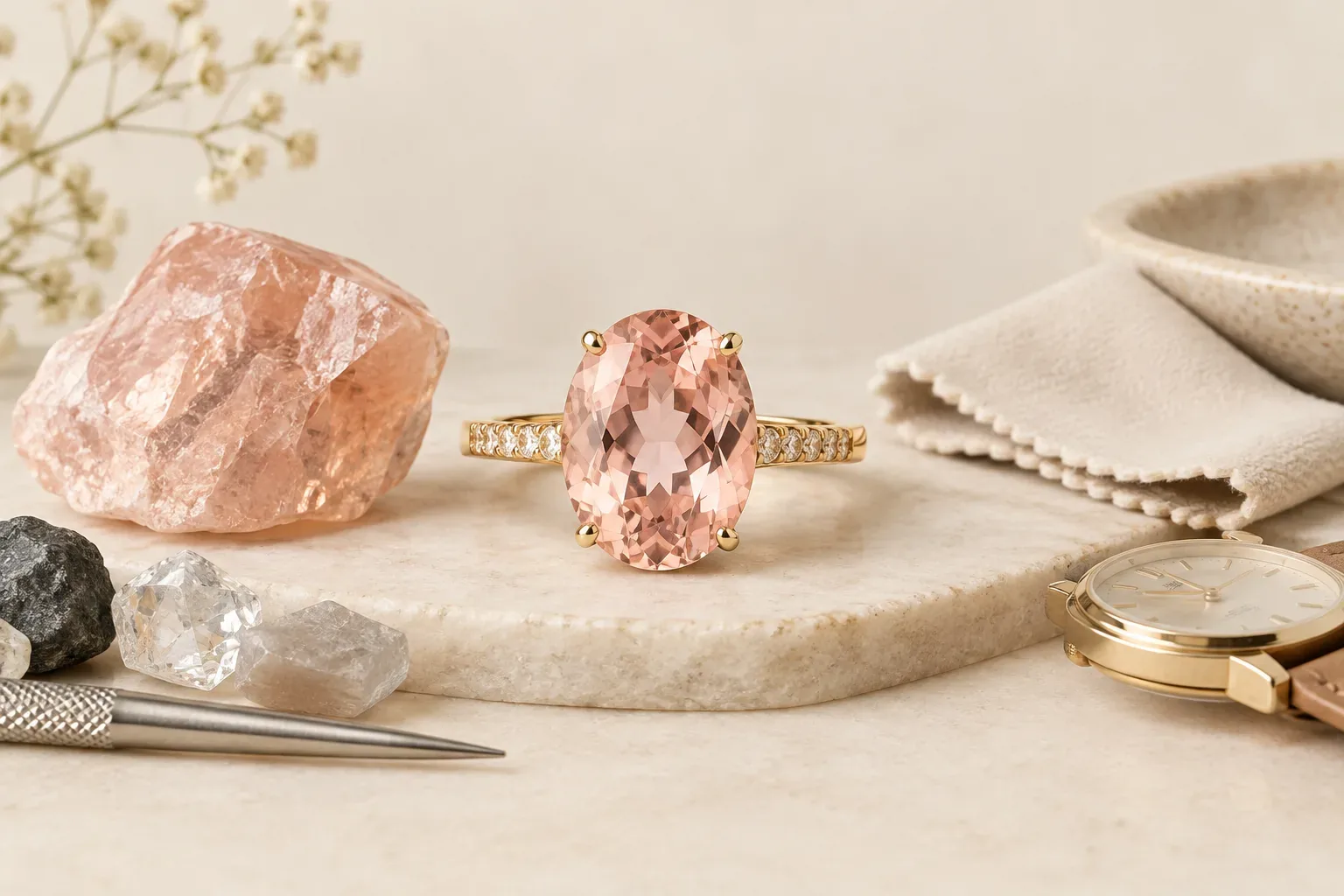
Market research shows a clear appetite for gemstone rings and sculptural gemstone jewelry, which is where you most often see morganite. Designers often highlight the stone’s color by placing it in solitaire settings, halo frames, cluster arrangements or paired with accent diamonds. These design choices affect durability: a bezel or halo can shield the girdle and lower the risk of edge chips, while exposed prong-set styles showcase more surface but leave edges more vulnerable.
Earrings and pendants place different demands on durability. Earrings are less exposed to knocks if worn on careful days but can still suffer from accidental impact during activities. Pendants often receive less abrasion but can be dragged against clothing. Understanding how the piece will be worn helps determine the ideal setting and metal work that will protect the stone.
Selection and gifting guidance
Start by asking practical lifestyle questions: will the wearer use the piece as a daily ring or an occasional pendant? Do they have an active job or a hobby that exposes jewelry to knocks, chemicals or heavy wear? The combination of the intended use and the stone’s treatment status should guide your choice. For active daily wear, choose settings that protect edges and surface area and consider mounting designs that keep the stone close to the hand rather than high-profile settings that catch on objects.
Always request written disclosure from the seller about whether the stone is natural, lab-created, or treated, and what type of treatment was applied. The Federal Trade Commission requires clear distinctions between these states, and the Gemological Institute of America highlights the consumer importance of knowing about treatments and their effect on durability. If you need greater certainty about treatment or value, ask for a recent laboratory report or an independent appraisal before you buy and secure a return right in writing in case the lab report contradicts the seller’s claim.
Care and maintenance recommendations
Because treatments and stability can vary, the safest general approach is conservative care. Avoid exposing a newly purchased stone to harsh chemicals such as chlorine or household bleaches, and be cautious about high-heat exposure. Clean jewelry gently using warm water, mild soap and a soft brush unless the seller confirms that more aggressive cleaning is safe for that particular stone and setting. The Gemological Institute of America notes that some treatments or fillings make stones vulnerable to steam or ultrasonic cleaners, so confirm before using those methods.
Insist on care instructions in writing from the retailer and have high-use pieces inspected by a qualified jeweler periodically to check for loose settings, chips or other damage. For high-value items or pieces intended for near-daily wear, consider insuring the piece and keeping recent appraisals and documentation together in case of loss or damage.
What only a jeweler or gemological laboratory can verify
There are limits to what you can verify visually at retail. A qualified jeweler or gemological laboratory can detect and identify treatments, confirm whether a stone is natural or lab-grown, and provide precise measurements and a durability assessment that includes internal features not visible to the naked eye. The Gemological Institute of America is the standard reference for such testing and for advice about how treatments affect detectability and care.
If treatment status, origin or exact durability ratings matter to you, obtain a written laboratory report or an independent appraisal before finalizing a purchase. That report protects you against misrepresentation and gives you actionable information about suitable settings, cleaners to avoid, and the advisability of daily wear.
Final decision checklist
Match the intended use to setting design and protection. Ask for written disclosures about natural versus lab-created status and any treatments. Request or require a recent laboratory report when treatment, origin, or precise durability matter to value or daily wear. Choose protective settings for active wearers and secure insurance and periodic inspections for any high-value or frequently worn piece. These steps will reduce the practical risks associated with daily wear while letting you enjoy the stone’s appearance.
Frequently asked questions
Is morganite durable enough for an engagement ring?
Morganite can be suitable for engagement rings if the buyer matches setting design and care to the stone’s durability profile. Select protective settings such as bezels or low-profile halos for active wearers, request written disclosure about treatments, and obtain a laboratory report or independent appraisal if treatment status or long-term wearability is a deciding factor.
How do I know if a morganite has been treated?
Ask the seller for a written disclosure and, if needed, a recent gemological laboratory report. The Gemological Institute of America emphasizes that treatments and their detectability are specialized matters best confirmed by testing in a qualified laboratory.
Can I clean morganite with an ultrasonic cleaner?
Do not use ultrasonic or steam cleaners unless the seller or a laboratory report explicitly confirms those methods are safe for that specific stone and treatment. Some treatments make stones vulnerable to ultrasonic or steam cleaning, so confirm in writing before using aggressive methods.
What setting is best to protect a morganite?
Protective settings such as bezels or halo frames typically reduce the risk of edge chipping and surface abrasion. Low-profile mounts reduce catching and impact. The best choice depends on the wearer’s lifestyle and whether the piece will be daily jewelry.
What documentation should I request when buying morganite?
Request written seller disclosure about whether the stone is natural, lab-grown or treated. If treatment, origin, or value matters, ask for a recent report from a qualified gemological laboratory or an independent appraisal and secure a written return policy in case the report contradicts the seller’s claim.
How often should jewelry with morganite be inspected?
Have high-use pieces inspected periodically by a qualified jeweler to check prongs, settings and any signs of damage. For pieces worn daily, a check once or twice a year is reasonable; adjust frequency for activity level and risk exposure.
Sources and further reading
- Imaginaire Digital — Imaginaire Digital
- Professional Jeweller / PRYA Jewellery Search Insights — Professional Jeweller / PRYA Jewellery Search Insights
- Gemological Institute of America — Gemological Institute of America
- Federal Trade Commission — Federal Trade Commission