Meaning at a glance
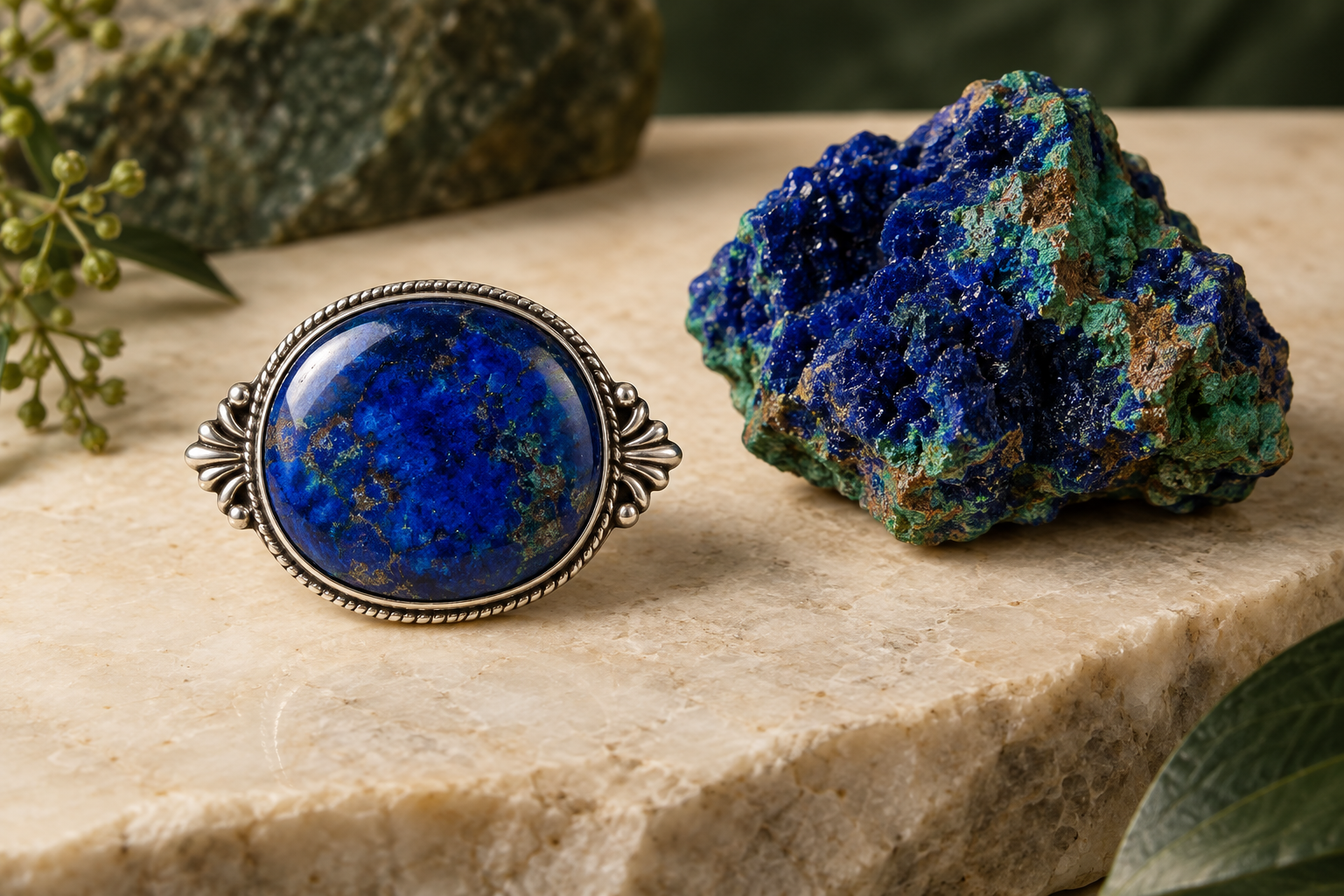
Azurite is a deep-blue copper carbonate often associated with malachite; softness and sensitivity limit everyday jewelry use, while intuition meanings are modern interpretations.
What azurite is (mineralogy and color)
Azurite is a copper carbonate mineral prized for its saturated blue color. Museum mineral collections characterize azurite by its distinctive deep-blue tones and its chemical association with copper, a relationship that often produces azurite alongside the green copper carbonate malachite. The Smithsonian National Museum of Natural History describes azurite in terms of its identity, color, and composition, which helps explain why the stone has been noticed and used historically as a source of vivid blue color.
Documented historical evidence and how it is identified
Documented evidence about azurite in the museum and mineralogical record is strongest for its physical identity and its use as a colored mineral. Curatorial and mineral collections, including those at the Smithsonian National Museum of Natural History, record azurite as a deep-blue copper carbonate and often note its occurrence with malachite. Museums and mineral specialists use those identifications to trace how the material appears in artifacts, pigments, and ornament over time.
When discussing specific cultures or periods, museum records typically treat azurite as a material rather than ascribing a single, uniform symbolic meaning across different societies. The Smithsonian's mineral documentation supports statements about composition and color and helps place azurite in archaeological or historical contexts when curators and researchers link specimens to artifacts or artistic uses. Where precise cultural practices or beliefs are claimed, look for direct archaeological or historical citations rather than general assertions; the mineralogical record itself primarily records physical properties and occurrences.
Documented historical meanings versus modern interpretations
The historical record preserved in museums and mineralogical references emphasizes azurite as a source of blue pigment and an ornamental mineral, but it does not support a single, universal symbolic meaning applied by all cultures. Documented meanings in the historical record tend to be specific to artifacts or contexts—for example, a pigment ground from azurite used in a particular artwork—but such usages do not automatically translate into a universal symbolic meaning.
By contrast, many of the symbolic associations most commonly seen in jewelry marketing and contemporary metaphysical writing—such as links to intuition, inner sight, or psychic clarity—are modern interpretations. These contemporary meanings arise from recent spiritual and New Age traditions rather than from a clear, continuous historical record documented by institutions like the Smithsonian. Treat modern symbolism as personal or contemporary cultural expression rather than as a historically universal attribute of the stone.
How azurite appears in jewelry
In jewelry, azurite most often appears as polished cabochons, small beads, inlays, or as part of combined cabochon pieces with malachite. Because azurite and malachite commonly form together in the same deposits, pieces that show both blue and green banding or patches are common. Jewelers and lapidaries sometimes mount thin slices or stabilized fragments to highlight the contrast between azurite’s blue and malachite’s green.
Because the mineral is relatively soft and can fracture or alter to malachite, jewelers commonly use protective settings and backing materials. Azurite may be set into pendants, earrings, or brooches where the risk of abrasion is lower than in rings or bracelets. In some commercial pieces, azurite is stabilized or treated to improve durability and appearance; disclosure of such treatments is an important part of transparent buying practices.
Wearability, care, and stability
Azurite is not as hard or chemically stable as many traditional gem materials, and that physical softness and chemical sensitivity are the main reasons it is less suitable for heavy daily-wear jewelry. Exposure to heat, strong sunlight, household chemicals, or acids can alter azurite’s color and surface, and mechanical abrasion can scratch or dull the stone. For these reasons, azurite pieces are best worn with care rather than as items for rigorous everyday use.
Cleaning azurite requires gentle, dry methods or very mild cleaning with a soft cloth. Avoid steam cleaning, ultrasonic cleaners, or solutions that contain acids or strong detergents. Where a piece has been stabilized, consult the seller about appropriate cleaning methods, and follow any care instructions they provide. The Gemological Institute of America emphasizes the importance of treatment disclosure and buyer awareness, so ask whether a stone has been stabilized or treated and request written information when appropriate.
Selecting azurite jewelry respectfully and practically
When selecting azurite jewelry, prioritize protective settings and the intended use. Pendants, earrings, and display brooches will generally be safer choices than rings or bracelets for someone who wants to keep a vivid azurite specimen in wearable form. Look for cabochons or slices that are thick enough to resist easy breakage and for settings that shelter edges from knocks.
Ask sellers whether the material has been stabilized, backed, or treated, and request independent or documented disclosure where possible. The Gemological Institute of America’s guidance on gem treatment and disclosure is a helpful standard: reputable dealers should disclose common treatments and provide care recommendations. If you are buying azurite as a meaningful gift, be explicit about whether you are giving a historically documented piece, a contemporary symbolic gift, or a personal token. Avoid claiming a universal cultural meaning for the stone; instead, explain the particular context or intention you attach to the gift.
Gifting, provenance, and cultural sensitivity
If a seller or artisan describes azurite as having a particular cultural or sacred significance, ask for provenance and supporting information. Some communities and craftspeople may have specific, localized uses or traditions connected to minerals, and respectful gifting means acknowledging those origins rather than appropriating or generalizing them. When a piece is framed as part of another culture’s ritual or sacred practice, seek clear information about consent, provenance, and whether the sale respects that community’s customs.
For personal gifts, talk about the qualities you intend to honor—color, rarity, or a personal meaning—rather than asserting a universal ancient symbolism. A clear, honest note that explains why you chose the piece can make an azurite gift meaningful without overstating historical claims.
Summary and final considerations
Azurite’s vivid blue and its natural association with malachite make it visually distinctive in jewelry. Museum mineral records, including those at the Smithsonian National Museum of Natural History, document the stone’s identity and color, while gemological authorities such as the Gemological Institute of America provide guidance about treatments and buyer disclosure. Because azurite is physically soft and chemically sensitive, choose protective settings, confirm any treatments, and adopt cautious cleaning and storage practices.
If you are attracted to azurite for symbolic reasons, remember that many of the spiritual or intuition-related meanings common in contemporary jewelry marketing are modern interpretations rather than long-documented historical meanings. Present azurite as a beautiful, historically interesting mineral with contemporary personal meanings chosen by wearers, and treat any cultural attributions with care and respect.
Frequently asked questions
Is azurite good for everyday jewelry like rings?
Azurite is generally not ideal for everyday rings because it is relatively soft and can be scratched or chemically altered; protective settings, occasional wear, and choosing pendants or earrings are better options.
How should I clean azurite jewelry?
Clean azurite gently with a soft, dry cloth or a barely damp cloth if needed; avoid steam, ultrasonic cleaners, or harsh chemicals. If the piece has been stabilized, follow the seller’s care recommendations.
Do azurite pieces receive treatments I should know about?
Some azurite used in jewelry is stabilized or backed to improve durability; reputable sellers should disclose treatments and any stabilization, consistent with guidance from the Gemological Institute of America.
Are the spiritual meanings for azurite historically documented?
Many common spiritual associations, such as links to intuition or psychic sight, are modern interpretations rather than meanings consistently documented in historical museum records; documented sources emphasize the stone’s color and material properties.
How can I gift azurite respectfully?
When gifting azurite, choose an appropriate setting for the recipient’s lifestyle, ask about treatments and provenance, and explain the personal or contemporary meaning you attach to the piece rather than asserting a universal cultural symbolism.
Sources and further reading
- Azurite — Smithsonian National Museum of Natural History
- Gem Treatment — Gemological Institute of America