Meaning at a glance
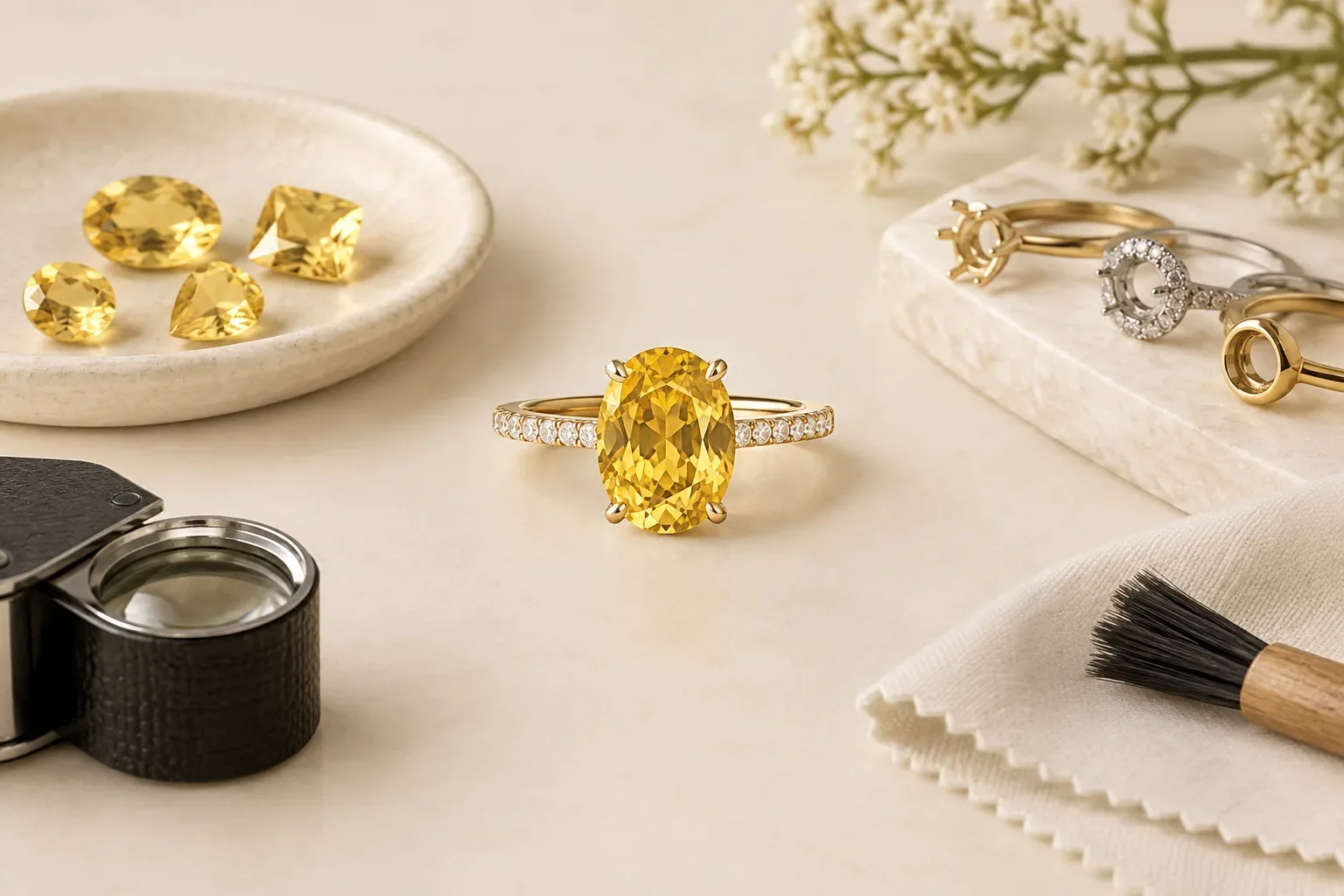
Yellow sapphire can make a beautiful and durable engagement ring choice when you evaluate color, cutting, treatments, setting protection, and certification; this guide explains decision criteria, trade-offs, safe care, and what requires a qualified jeweler or gemological laboratory to verify.
Direct answer — what this guide delivers
Short answer: Yellow sapphire can be a very suitable engagement-ring gemstone, but suitability depends on specific trade-offs—color intensity and hue, any treatments used, the cut and setting that protect the stone during everyday wear, and proper care. This guide follows the stated thesis by giving clear decision criteria, practical trade-offs, safe care guidance, and explicit limits on what consumers can verify without a qualified jeweler or gemological laboratory.
What shopping intent does this guide address?
People searching for a ‘yellow sapphire engagement ring guide’ usually want four things: evidence-based information about whether the stone is appropriate for an engagement ring, settings and design options that suit the stone, how to maintain it, and what can or should be independently verified. This article organizes those needs into practical steps and clear limits so you can make an informed purchase.
Historical evidence and cultural context — what the approved sources show
The specific approved sources for this article do not provide primary historical or ethnographic accounts that trace yellow sapphire symbolism across particular ancient cultures. Professional trend reporting and search analyses, however, show how modern preferences shape gemstone choices. Imaginaire Digital’s 2026 UK search estimates and Professional Jeweller’s trends reporting both indicate strong consumer interest in gemstone engagement rings and in stylistic revivals such as Art Deco and sculptural jewelry, which can influence how yellow sapphires are used in contemporary designs.
Because the approved evidence set does not include primary historical sources for symbolic meanings tied to particular cultures or periods, this guide separates modern trend evidence from historical claims: the sources used here document present-day demand patterns and retail concerns rather than traditional cultural beliefs about yellow sapphires.
Documented information versus modern personal interpretation
Documented information in the approved evidence focuses on consumer issues: search demand and design trends (Imaginaire Digital and Professional Jeweller) and questions about treatments, disclosure, detectability, durability, and special care for gemstones (Gemological Institute of America). The Federal Trade Commission provides guidance around required seller disclosures and the consumer’s right to clear information about natural, lab-created, treated, or imitation gems.
Modern symbolic or personal meanings—for example, assigning a yellow sapphire to represent happiness, prosperity, or personal birthstone associations—are personal or marketing-driven interpretations and are not established by the evidence supplied here. Those meanings can be meaningful to individuals, but they should not be presented as universal or historically documented unless you consult specialized historical or cultural sources beyond the scope of this guide.
How yellow sapphire appears in jewelry today
Contemporary jewelry uses of yellow sapphires follow the same practical and stylistic patterns as other colored gemstones: they appear as center stones in solitaires, three-stone rings, halo rings, and cluster settings, and are often paired with contrasting metals and accent stones. Trend reporting from Professional Jeweller notes growth in gemstone rings and sculptural designs, which means yellow sapphires often appear in bolder, playfully shaped mountings as well as in classic silhouettes.
Design choices for yellow sapphire engagement rings typically balance visibility of the stone’s color with protection. Settings that expose a stone to impact, abrasion, or frequent contact will increase the importance of selecting a durable cut and a protective mounting. Many shoppers combine a colored center stone with diamond or white metal accents to enhance contrast and perceived brilliance.
Decision criteria and practical trade-offs when choosing a yellow sapphire engagement ring
Color is the primary aesthetic criterion for yellow sapphires: intensity, saturation, and tone determine how vibrant the stone will appear in person. A deeply saturated yellow reads differently in photos and under different lighting than a pale yellow, so inspect stones in natural light when possible. Trade-offs include choosing a more saturated stone that may carry a higher price versus a paler stone that appears more subtle and potentially easier to pair with different jewelry.
Durability and setting protection are practical criteria. Gemstone durability varies, and certain treatments can improve appearance but may require different care. The Gemological Institute of America emphasizes that treatments, disclosure, detectability, and durability are distinct consumer questions for gemstones, so consider how a stone will stand up to daily wear and whether the chosen setting offers protective elements such as raised bezels or prongs that shield the girdle and pavilion.
Price and provenance are further trade-offs. Natural, untreated material that displays strong color will usually command a premium. Lab-created stones or clarity-enhancing treatments can reduce price but require accurate disclosure. The Federal Trade Commission makes clear that consumers need clear distinctions among natural, lab-created, treated, and imitation materials and written seller disclosures before purchase.
Settings and design choices that work with yellow sapphire
Solitaire settings showcase the color and cut of the yellow sapphire, but may leave the stone more exposed to knocks or abrasion. Halo settings use small accent stones around the center, which can increase perceived size and brightness while still leaving the center stone exposed at the table and shoulders. Bezel and partial-bezel settings offer more protection because metal encircles portions of the stone, which is useful for active wearers or those who work with their hands.
Three-stone and cluster settings allow designers to balance color and brilliance by pairing the yellow sapphire with white or colored accents. Choosing a setting should consider lifestyle: if the wearer intends to wear the ring continuously, prioritize protective settings and robust metal choices. If the ring is for occasional or ceremonial wear, purely aesthetic priorities may take precedence.
What shoppers can verify without a lab and what requires a jeweler or gem lab
Without specialized equipment, a shopper can verify several important attributes: visual color and cut (by inspecting the stone in varied, natural light); general surface condition (visible chips, scratches, or abrasions); and written seller disclosures about whether the stone is natural, lab-created, treated, or an imitation. The Federal Trade Commission requires clear disclosure, so ask for this information in writing and check invoices and product pages carefully.
What cannot be reliably verified without a qualified jeweler or a gemological laboratory includes whether a stone has been heat-treated or otherwise enhanced, whether a purported natural stone is actually lab-grown, and precise origin claims. The Gemological Institute of America notes that treatments and detectability are technical matters; a qualified gemologist or accredited gem lab can perform tests and provide a report that identifies treatments and origin indicators.
Care, cleaning, and longevity
Safe care starts with learning whether the stone has been treated, since some treatments affect cleaning recommendations and long-term stability. The Gemological Institute of America recommends that consumers ask about treatments and follow specialist guidance for cleaning. In general, gentle cleaning with a soft brush and mild detergent followed by thorough rinsing and drying is appropriate for many colored gemstones, but avoid harsh chemicals and high-heat steam cleaning if the stone’s treatment history is unknown.
Routine inspection is also important: check prongs and settings regularly to ensure the stone is secure, and have a jeweler tighten mountings or repair damage as needed. Store engagement rings separately from other jewelry to reduce scratching and abrasion. When in doubt about a cleaning method or repair, consult a professional jeweler.
Practical and respectful selection and gifting guidance
When selecting or gifting a yellow sapphire engagement ring, begin by understanding the recipient’s style preferences: do they prefer classic, understated pieces or bolder, modern statements? Consider lifestyle: someone who uses their hands a lot will benefit from a more protected setting. Ask for clear written disclosure about whether the stone is natural, lab-created, or treated, and request an independent appraisal or certificate if the budget allows.
Respectful gifting also includes transparent communication about long-term care. If gifting a ring as a surprise, include a note with the seller’s written disclosures and care instructions. If the recipient prefers a say in the final design or color, consider gifting a commitment token or a flexible credit toward a custom selection so they can choose a piece that suits their taste and lifestyle.
Final checklist and next steps
Before you buy, confirm these items in writing: the seller’s disclosure of natural vs. lab-created material, any treatments applied, return policy and warranty, and whether an independent gemological report is available or recommended. Use in-person inspection or high-quality photography and video in natural light to assess color and condition when shopping online. If you need authoritative verification of treatments or origin, arrange for testing by an accredited gemological laboratory.
Yellow sapphire engagement rings can be beautiful, symbolic, and long-lasting with appropriate selection, protective settings, and routine care. Follow the decision criteria and verification limits outlined above, ask for clear written disclosures as required by the Federal Trade Commission, and consult a qualified jeweler or gem lab for any technical questions that exceed what can be visually inspected at the point of sale.
Frequently asked questions
Is a yellow sapphire durable enough for an engagement ring?
Durability depends on the stone’s material properties and the setting. The Gemological Institute of America highlights that durability and appropriate care are central consumer questions for gemstones. Choose protective settings and ask the seller about any treatments that could affect long-term wear.
How can I tell if a yellow sapphire has been treated or is lab-created?
Visual inspection and seller disclosure can show obvious signs, but identifying heat treatments, diffusion, or lab-grown origin often requires testing by a qualified gemologist or an accredited gemological laboratory. The Gemological Institute of America notes detectability of treatments is a technical matter, and the Federal Trade Commission requires sellers to disclose material differences in writing.
What should I ask the seller before buying a yellow sapphire engagement ring?
Request written disclosure about whether the stone is natural, lab-created, treated, or an imitation; ask about any available certificates or laboratory reports; confirm the return policy and warranty; and request clear photos or in-person inspection under natural light before purchase, in line with FTC guidance on consumer disclosure.
Can I clean my yellow sapphire ring at home?
Gentle cleaning with a soft brush, mild detergent, and thorough rinsing is usually appropriate, but avoid harsh chemicals and unknown high-heat steam cleaning if you do not know the stone’s treatment history. The Gemological Institute of America recommends confirming treatment details and following specialist cleaning advice when treatments are present.
Are lab-created yellow sapphires a good option for engagement rings?
Lab-created stones can offer more affordable and visually consistent color options, but they must be clearly disclosed as lab-created. The Federal Trade Commission requires clear distinction between natural and lab-created materials. Consider the recipient’s preferences for natural versus lab-created gems and whether a lab report is desired.
Do I need a gemological report for a yellow sapphire engagement ring?
If the stone is expensive, claimed to be untreated, or marketed with specific origin claims, an independent gemological report from an accredited laboratory is a prudent step. The Gemological Institute of America makes clear that treatment detection and origin claims can require laboratory testing.
Sources and further reading
- Imaginaire Digital — Imaginaire Digital
- Professional Jeweller / PRYA Jewellery Search Insights — Professional Jeweller / PRYA Jewellery Search Insights
- Gemological Institute of America — Gemological Institute of America
- Federal Trade Commission — Federal Trade Commission