Meaning at a glance
This guide explains what a diamond inclusions report records, how to weigh clarity evidence against price and durability, how to care for diamonds with inclusions, and the clear limits on what only a qualified jeweler or gemological laboratory can verify.
What a diamond inclusions report actually records
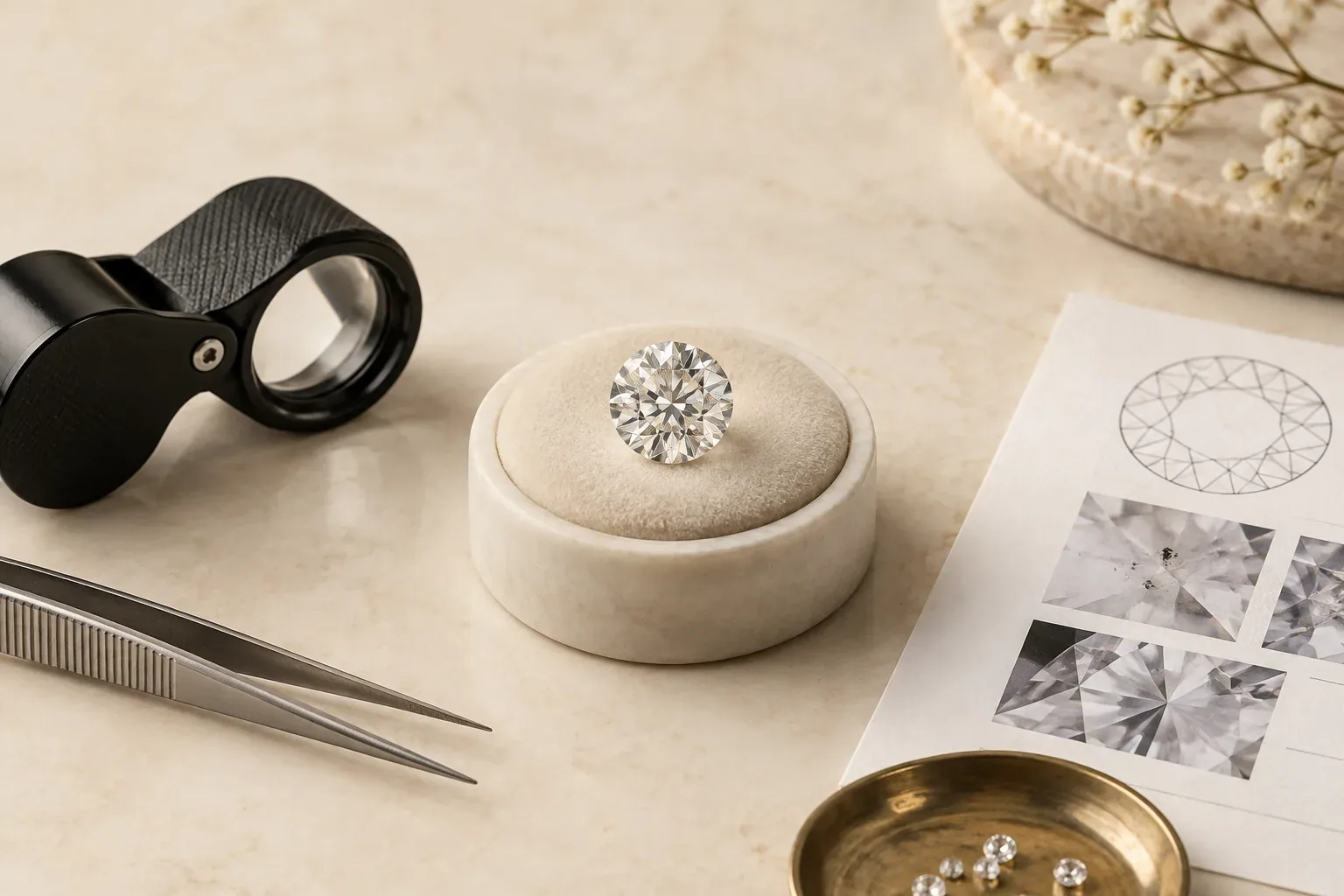
A diamond inclusions report is a laboratory or qualified-assayer document that records observed internal features (inclusions) and external features (blemishes), gives a clarity grade or descriptive statements about visibility, and often includes a plotted diagram showing the type, size and position of notable features. The report will typically note any treatments or clarity enhancements that were identified and may comment on detectability. The GIA explains that treatments, their detectability, and required disclosure are central consumer questions in the modern gem trade.
Key definitions and decision criteria
When you read an inclusions report, the most important elements to compare are the type of features reported, their size and location on the plotted diagram, and any accompanying clarity grade or comments about visibility. Features near the table (the large top facet) or directly under the table are more likely to affect face-up appearance than similar features near the pavilion, while internal fractures that reach the surface can affect durability. Size, contrast and quantity of inclusions together determine visibility: a single highly contrasting crystal near the centre can be more noticeable than many white pinpoint inclusions spread around the stone.
Decisions about purchase should balance three practical criteria: appearance (how the stone looks to the naked eye at normal viewing distance), durability (whether inclusions create weak points where breakage is more likely under impact or during setting), and budget. Shoppers who prioritize sparkle and a clean look for an engagement ring may accept a higher clarity grade and price. Those prioritizing size or other attributes may accept more visible inclusions if the trade-off is a larger or better-cut stone.
Practical trade-offs: clarity versus price, size and setting
Clarity has a well-understood price impact in the market: cleaner stones typically command higher prices. That is a practical trade-off: moving down one or two clarity grade steps can substantially reduce cost while changing face-up appearance very little if inclusions are not located in visible areas. The GIA’s frameworks for grading and for noting treatments help buyers and sellers make these trade-offs transparent by showing what was seen and whether a clarity enhancement was used.
Setting choices can mitigate visible inclusions. A bezel or halo setting can hide a dark inclusion near the girdle or table edge. Conversely, open prong settings and solitaire styles expose the diamond and make inclusions easier to see. Consider how the recipient wears jewelry and what kinds of settings they prefer when weighing trade-offs between clarity and other priorities.
Safe care guidance for diamonds with inclusions
Inclusions that reach or approach the surface can be weak points that are more susceptible to damage from blows, sudden temperature change, or improper handling during repair. The GIA calls out detectability and durability as central concerns for treated or otherwise modified gems, and that practical care differs when clarity enhancements or other treatments are present. For day-to-day care, avoid hard knocks and abrupt temperature shock, have settings checked regularly by a professional jeweler, and use gentle cleaning methods recommended for diamonds rather than aggressive steam or chemical treatments when the report notes internal fractures or clarity enhancements.
If the report indicates a clarity enhancement such as fracture filling or other treatment, follow the laboratory’s and seller’s care and durability notes and ask the seller to supply written care recommendations. The FTC’s consumer guidance emphasizes that consumers should receive clear written disclosures about treatments so they can assess durability and care requirements.
What a buyer can—and cannot—verify without a lab
A shopper can reasonably verify several things from an inclusions report and associated images: the presence, plotted location and type of described inclusions; the clarity grade assigned; and whether a laboratory or qualified seller has marked the stone as treated or untreated. For many consumers, a high-resolution image or loupe view in person combined with a report helps determine face-up visibility for practical wear.
However, there are clear limits. You cannot reliably verify the stone’s internal origin, whether subtle treatments have been fully removed or concealed, or whether advanced treatments are present without specialized instruments and expertise. The FTC requires clear seller disclosures for treated, lab-created, and imitation stones, and laboratories have the instruments and protocols to detect many treatments and to confirm natural versus lab-grown origin. If you need absolute certainty about treatment status or origin, an independent report from a recognized gemological laboratory is the appropriate next step.
Historical evidence and recorded practice
Modern, systematic diamond reporting and lab-based testing are products of the 20th century expansion of gemological science and lab services. The Gemological Institute of America documents that testing for treatments, disclosure standards and detectability have been a sustained area of focus as laboratories developed methods and standards to protect consumers and trade participants.
Consumer-protection frameworks that require seller disclosure of treatments and material origin are relatively recent legal and regulatory developments. The Federal Trade Commission’s guidance about buying gemstones, diamonds and pearls stresses that consumers must receive clear, written disclosures distinguishing natural, lab-created, treated and imitation materials, and that those disclosures support trust in the market.
Documented historical meanings versus modern personal interpretations
There is no universally documented symbolic meaning attached to a diamond’s internal inclusions recorded by the major gemological institutions. Scientific reports and consumer-protection guidance focus on objective description, detectability and disclosure rather than symbolism. The GIA and the FTC provide the documented frameworks you should rely on when making purchasing decisions because they emphasize observable facts and legal disclosure.
Modern personal interpretations, however, are common and legitimate at an individual level: some wearers call small, visible inclusions a stone’s ‘fingerprint’ or ‘character’ and value those traits as sentimental features. Those subjective interpretations are separate from the factual content of a laboratory report and should not be confused with documented gemological evidence.
How inclusions and reports appear in jewelry and sales
In retail practice, inclusion descriptions and diagrams are usually supplied alongside grading reports or product pages. Listings for diamonds commonly include a plotted diagram, clarity grade, measurements and images. In-store, trained staff or independent appraisers can show the stone under magnification and compare the view to the plotted features on the report so you can understand whether a listed inclusion is likely to be visible in normal wear.
Jewelry design also adapts to inclusions. Rings with a central diamond that has a noticeable inclusion near the edge may be offered in settings designed to mask that area. Designers and setters choose prong placement, bezel walls and halo details to reduce visibility and protect fragile areas. Sellers frequently note such design decisions in product descriptions when inclusions could otherwise affect appearance or durability.
Practical selection and gifting guidance
When selecting or gifting a diamond, start by asking for a complete inclusions report from a reputable lab and for clear images or a magnified view. Confirm whether the report discloses any treatments and whether the stone is natural or lab-grown; the FTC requires that sellers provide these distinctions in writing. Use the report’s plotted diagram to see whether any inclusions lie beneath the table or are centered in the face-up view, and decide if a setting can conceal or protect those features.
Match choices to the recipient’s priorities. If the recipient prefers a clean, bright face-up appearance and wears jewelry daily, prioritize a higher clarity grade and robust setting. If the recipient favors larger stones or unique character, you can accept greater inclusion visibility, but choose settings that protect vulnerable points and request explicit care recommendations. When in doubt, ask for an independent laboratory report or seek the opinion of a qualified, independent appraiser before purchase.
Final checklist before purchase
Before finalizing a purchase, verify the report’s issuing laboratory and the specific items it records: the plotted diagram, clarity grade, any noted treatments, and the stone’s identification (natural versus lab-grown if relevant). Ask the seller for images or a loupe view and reconcile what you see with the plot. Confirm written disclosure about treatments and any special care instructions, and remember that only an accredited laboratory or a qualified gemologist can reliably detect subtle treatments or confirm origin if that matters to you.
Frequently asked questions
What is a diamond inclusions report?
A diamond inclusions report is a document from a lab or qualified assayer that records observed internal and external features, provides a plotted diagram showing location and type of notable features, and notes any detected treatments or clarity enhancements.
Can I rely on product photos instead of a report?
Photos and magnified images are useful, but they do not replace a formal report from a recognized laboratory. The FTC requires clear written disclosures about treatments and origin; a lab report provides standardized, objective information that helps you compare stones.
Do inclusions affect a diamond’s durability?
Some inclusions, especially fractures that reach the surface, can create weak points that affect durability. Reports that identify surface-reaching fractures or clarity enhancements should prompt you to ask about care and setting protection and to avoid aggressive cleaning or rough wear.
Will a jeweler detect all treatments informally?
Not always. Some treatments require specialized instruments and lab protocols to detect reliably. If treatment status matters to you, the FTC and the GIA guidance indicate that an independent laboratory report is the appropriate way to confirm whether a treatment is present.
What should I ask for when buying an engagement ring?
Ask for the complete inclusions report, images or an in-person loupe view, written disclosure about treatments and whether the stone is natural or lab-grown, and any care recommendations. If you need definitive answers about treatment or origin, request an independent lab report from an accredited gemological laboratory.
Sources and further reading
- Imaginaire Digital — Imaginaire Digital
- Gemological Institute of America — Gemological Institute of America
- Federal Trade Commission — Federal Trade Commission