Meaning at a glance
This guide answers what a girdle is, how common thickness grades compare, what each grade changes in appearance, durability, and cost, the practical trade-offs buyers face, safe care advice, and what only a qualified jeweler or gemological laboratory can reliably verify.
What the girdle is and how thickness is graded
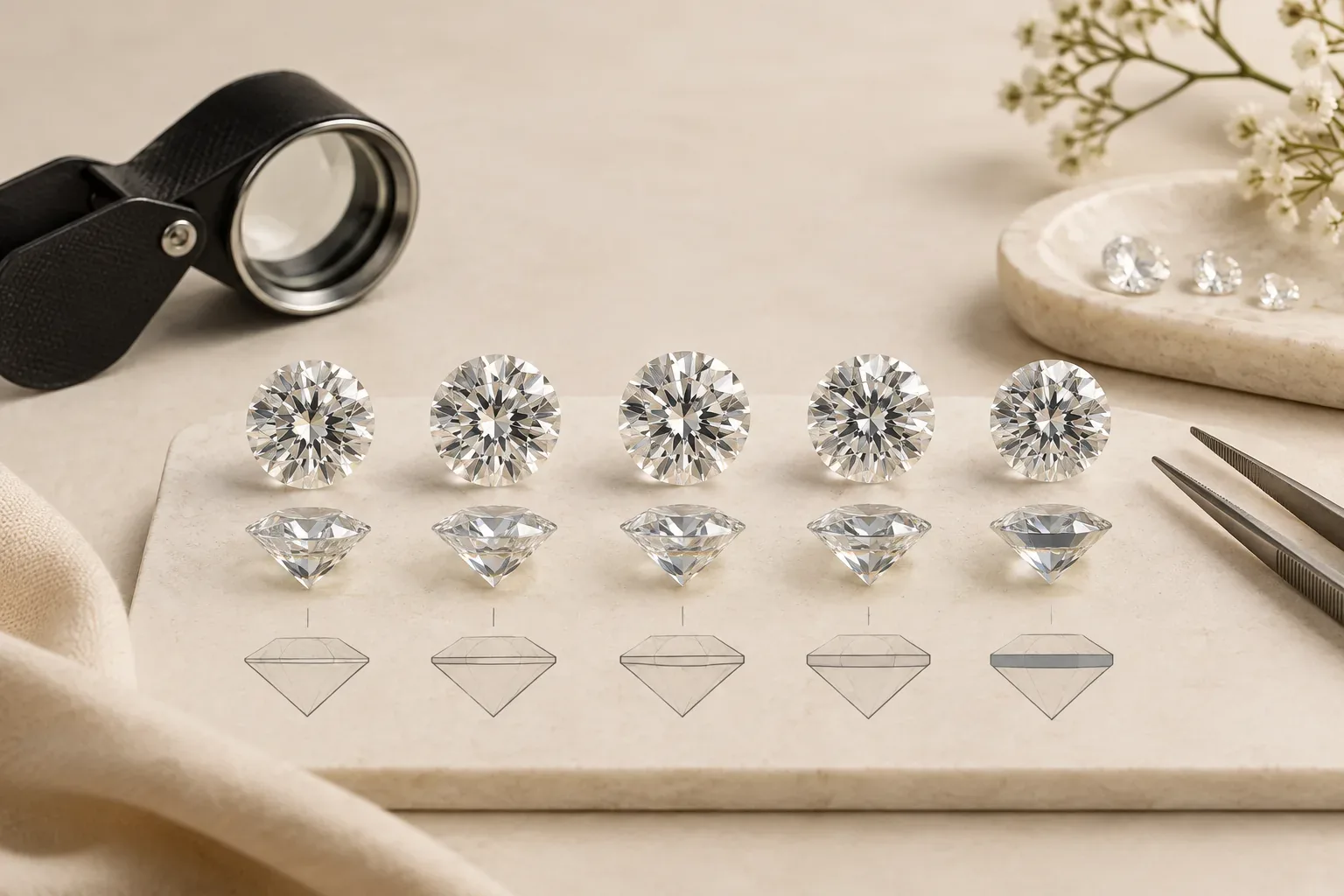
The girdle is the narrow band around a diamond where the crown and pavilion meet; laboratories and trade guides describe thickness by grades such as 'very thin', 'thin', 'medium', 'slightly thick', 'thick', and 'very thick'. Thickness is typically judged by visual observation, measurement instruments, and comparison to standard ranges on a grading report. Because the girdle can be faceted, polished, or bruted, appearance and measurements vary by cutting style and manufacturing choices.
How girdle thickness changes appearance
Girdle thickness affects the diamond's face-up appearance primarily through its influence on profile depth and relative spread. A thinner girdle reduces the amount of material around the circumference, which can slightly increase the visible table and make the diamond look marginally larger for the same carat weight. Conversely, a thick or very thick girdle stores more weight in non-visible areas, which can reduce apparent diameter and make the stone look smaller than its carat weight suggests.
Thickness also affects perceived brightness and scintillation indirectly. A wider girdle can make the diamond’s pavilion deeper in relation to the table, and extreme proportions may change light return. In ordinary consumer viewing conditions these changes are often subtle; cut quality and proportions usually have a larger effect on brilliance than modest variations in girdle thickness.
How girdle thickness changes price and value
Price is influenced in two primary ways: first, the visible size for a given carat weight and second, perceived durability and market preference. A very thin girdle that yields more apparent spread for the same carat weight can make a diamond feel like better value to a particular buyer, but that apparent saving can be offset by higher premiums for very well-cut stones. A thick girdle adds weight that contributes to the carat price, but because some of that weight is not face-up, buyers often discount a very thick girdle when comparing spread-to-price ratios.
Beyond those trade-offs, market demand matters. Recent UK market estimates show strong consumer demand for engagement rings and classic diamond styles, which affects what buyers are willing to pay for specific cut and proportion characteristics even if the girdle is not the headline attribute (Imaginaire Digital).
Documented historical evidence and cultural context
There is no authoritative record in the specialized consumer and gemological sources reviewed that assigns distinct cultural or symbolic meanings to girdle thickness. Modern gemological references treat the girdle as a technical characteristic tied to durability, cutting practice, and measurement rather than as a motif with cultural symbolism. This means that across recorded trade literature and contemporary consumer guidance, girdle thickness is documented and discussed in technical or practical terms rather than as a symbol associated with a particular culture or historical period.
Because the primary professional literature on consumer protection and gemology focuses on material disclosure, treatments, durability, and grading standards, consumers should understand the girdle as a practical design and durability attribute rather than a cultural motif. The Gemological Institute of America emphasizes treatments, detectability, and durability concerns for gemstones, which frames girdle thickness as part of the technical considerations that affect durability and care rather than as a symbolic element (Gemological Institute of America). The Federal Trade Commission similarly directs consumers to expect clear distinctions and written disclosures about how gems are presented and sold, reinforcing that girdle statements are part of factual disclosure rather than cultural interpretation (Federal Trade Commission).
Documented history versus modern personal interpretation
Documented history treats girdle thickness as a technical matter: a description on a grading report that helps assess durability, cutting decisions, and weight distribution. Modern personal interpretations — for example, choosing a very thin girdle because it 'looks bigger' or preferring a thicker girdle for perceived toughness — are valid personal preferences but are not documented cultural meanings. Distinguish what the grading report documents from what a buyer feels or believes about appearance or symbolism.
When discussing symbolic meaning in general jewelry practice, sellers and buyers often project personal values onto cut details. Such modern interpretations are subjective and vary by individual and culture; they should be presented as personal choice rather than historical fact.
How girdle thickness appears in jewelry and settings
In practical design terms, the girdle interacts directly with how a diamond is set. Thin girdles require careful setting to avoid pressure points from prongs, bezels, or collets. A slightly thick to thick girdle gives a jeweler more material to work with when setting prongs and can be safer when a ring is to be worn daily. Extremely thin edges may need protective settings such as bezel or halo designs to reduce the risk of chipping, while very thick girdles may need low-profile settings or custom cups so the stone sits comfortably and presents a pleasing table-to-edge relationship.
Jewelry designers also account for the girdle when choosing the mounting to minimize the appearance of extra depth from very thick girdles or to protect very thin ones. The choice of setting can therefore mitigate many of the trade-offs between appearance and durability.
Practical selection and gifting guidance
Start by deciding the primary priority: face-up appearance, long-term durability for daily wear, or the best price per carat. If a ring is intended for everyday wear, prioritize a medium to slightly thick girdle and a reputable setting that protects the edge. If the goal is maximum apparent size for a special occasion piece that will be worn less often, a thinner girdle may be acceptable provided you accept the increased care and potential for edge damage.
Always ask the seller for a clear grading report and written disclosures. The Federal Trade Commission advises consumers to insist on transparent distinctions among natural, lab-created, treated, and imitation materials and to request written confirmation (Federal Trade Commission). The Gemological Institute of America warns that certain durability and treatment issues create distinct consumer questions, which reinforces the practical value of professional assessment for choice and gifting (Gemological Institute of America).
When gifting, consider the recipient’s lifestyle. An active wearer or someone who works with their hands benefits from a sturdier girdle and a protective setting. For someone who values face-up size and has careful habits, a thinner girdle can be acceptable. Communicate with the recipient or choose a return policy that allows a professional inspection post-purchase.
Safe care guidance
Care depends more on the setting and everyday use than on girdle alone, but thin girdles deserve special attention. Avoid hard knocks and impacts and prefer protective settings for thin-edged stones. Regular inspection by a qualified jeweler helps catch loose prongs or edge wear before it becomes a problem. For any stone, follow general gemstone care guidance and ask the seller about recommended cleaning and storage; the Gemological Institute of America provides consumer guidance on treatments, detectability, and durability that apply to safe care (Gemological Institute of America).
What you can and cannot verify without experts
You can visually compare apparent diameter and request the girdle grade shown on a grading report without specialist equipment. You can also ask for photos or videos from multiple angles and request the grading laboratory report that lists measurements and proportion notes.
What you cannot reliably verify without a qualified jeweler or a gemological laboratory includes the precise microscopic condition of the girdle (hairline chips, internal cracks near the edge), any undisclosed treatments affecting durability, and the complete internal characteristics that relate to potential fracture risk. The Federal Trade Commission advises consumers to seek written disclosures and clear distinctions in sales of gemstones and diamonds; for many technical verifications, accredited laboratory reports and a trained inspection are necessary (Federal Trade Commission).
Final note on trade-offs and decision-making
Girdle thickness is a clear example of a trade-off among apparent size, durability, and price. A decision that is right for one buyer is not automatically right for another. Use grading reports, insist on written disclosures, consider the wearer’s habits, and if in doubt, seek a professional appraisal or lab grading. Market demand trends indicate that classic diamond styles remain popular, so prioritize cut quality and proportion within your budget while treating girdle thickness as one technical factor among several that determine overall satisfaction (Imaginaire Digital).
Frequently asked questions
Does a thicker girdle make a diamond more durable?
A moderately thicker girdle generally improves edge durability and gives setters more material to hold, but beyond a point 'very thick' adds excess weight without proportionate benefit. Durability also depends on internal clarity and setting; only a qualified jeweler can assess fracture risk accurately.
Will a very thin girdle make a diamond look bigger?
Yes, a very thin girdle can increase apparent spread for the same carat weight, making the diamond look slightly larger face-up, but very thin girdles increase the risk of chipping and often require protective settings.
Can I trust the girdle grade listed by a seller?
You should request an independent or laboratory grading report and written disclosures. Regulatory guidance encourages clear written seller disclosures; for technical verification and to detect treatments or internal weaknesses you may need an accredited lab report or a qualified jeweler's inspection (Federal Trade Commission; Gemological Institute of America).
How should I choose girdle thickness when buying an engagement ring?
Match the girdle to the recipient's lifestyle: choose medium to slightly thick for daily wear and durability; consider thin for occasional wear when prioritizing apparent size. Always balance setting type, certificate details, and professional inspection in your decision.
Can girdle thickness affect resale value?
Yes, both very thin and very thick girdles can influence resale value. Very thin girdles may be discounted by buyers concerned about durability, while very thick girdles can be seen as hiding weight and reducing face-up spread, also affecting market value. Market preferences vary, so documented reports and condition at resale are important.
Sources and further reading
- Imaginaire Digital — Imaginaire Digital
- Gemological Institute of America — Gemological Institute of America
- Federal Trade Commission — Federal Trade Commission