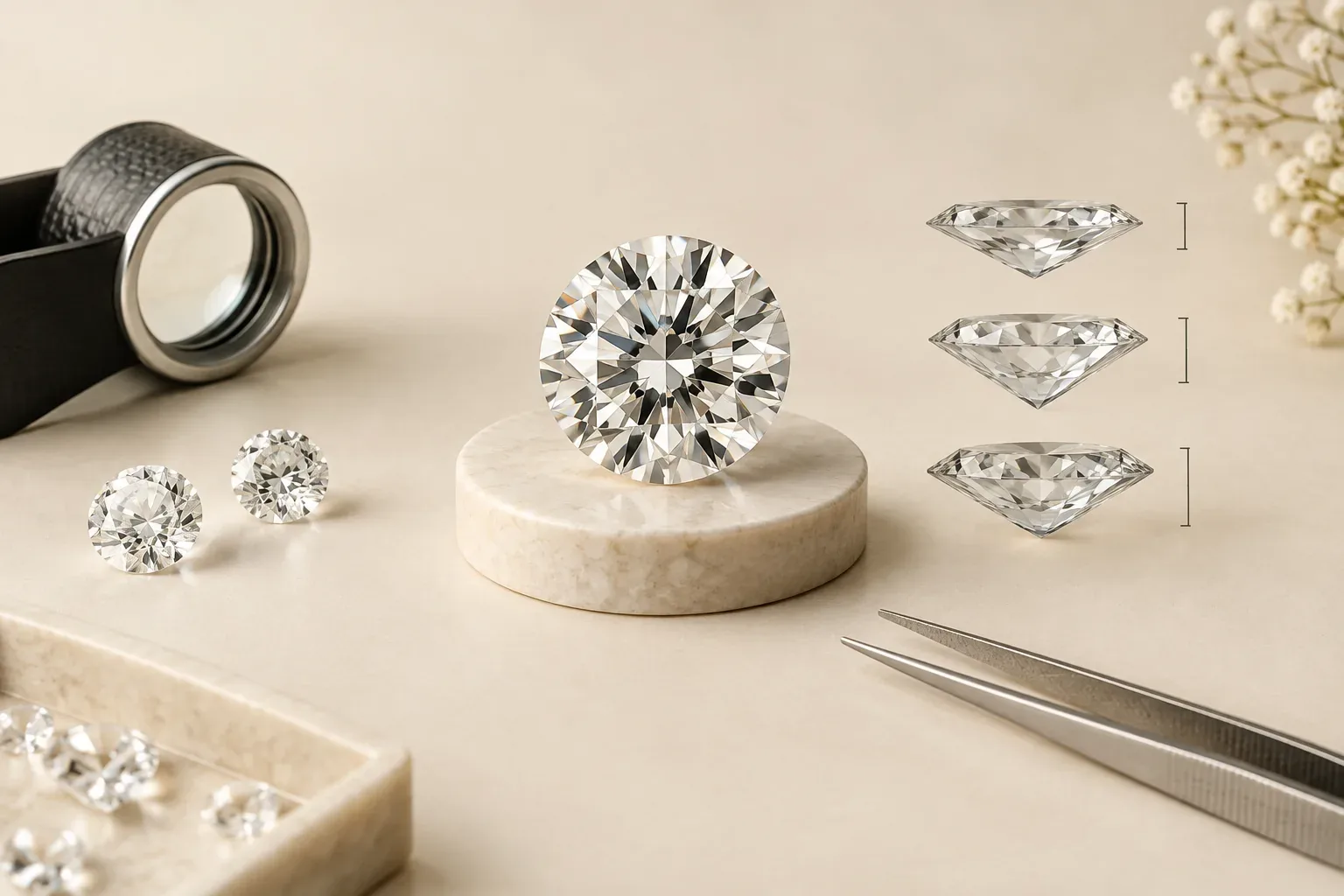
Meaning at a glance
Girdle thickness is one of several physical characteristics that affects a diamond’s durability, visible proportions, and how much of the stone’s weight is consumed by the edges rather than the table and pavilion. This guide defines the concept, explains the practical trade‑offs between a thinner and a thicker girdle, sets out what a buyer can reasonably verify without a gemological laboratory, lists the questions to ask a seller or jeweler, and offers safe care and gifting guidance so you can make a confident purchase.
What the girdle is and why thickness matters
The girdle is the narrow perimeter of a faceted diamond where the crown (upper portion) meets the pavilion (lower portion). Girdle thickness is a physical property that affects three buyer concerns: aesthetics, durability, and how much of the diamond’s carat weight is concentrated in the edges rather than in the face‑up size.
A buyer-focused approach looks at how the girdle interacts with the intended setting and lifestyle. Very thin edges may be vulnerable to chipping if the ring is worn frequently without protective settings. Conversely, excessively thick girdles can add visible bulk or reduce the perceived face‑up diameter of the diamond for a given carat weight, which can affect perceived value even though the weight is still present.
Historical evidence and cultural notes (precise and limited)
There is no substantial historical literature that assigns cultural or symbolic meanings specifically to a diamond’s girdle thickness. Gemological standards and buyer guidance about cut proportions, durability and care are modern, technical concerns developed alongside laboratory gemology rather than earlier cultural symbolism.
Contemporary consumer‑facing guidance about disclosure, durability and treatments comes from modern institutions and regulators. The Gemological Institute of America (GIA) discusses how treatments, durability and special care create consumer questions about gemstones, and regulators such as the U.S. Federal Trade Commission (FTC) emphasize clear written seller disclosures about a gemstone’s origin or treatments. Market data from trade analysts such as Imaginaire Digital show modern demand trends for engagement rings and popular diamond styles, which is the current commercial context for buyers considering girdle choices.
Documented historical meanings versus modern personal interpretation
Documented historical meanings for girdle thickness do not appear in the modern gemological or regulatory literature. The technical attributes of a diamond—cut, clarity, color, carat and physical characteristics like the girdle—are evaluated for their physical and market effects rather than for inherited symbolic meaning.
That said, individuals and cultures can and do attach personal meaning to any aspect of jewelry. Modern personal interpretations—such as seeing a thin girdle as a sign of precision cutting, or a thick girdle as proof of solidity—are subjective. Treat these as personal or stylistic preferences rather than historically documented symbolism.
How girdle thickness appears in jewelry
Girdle thickness affects how a diamond sits and looks in a setting. A thin girdle can allow the stone to sit lower and closer to the mounting, which some designs prefer for profile or safety reasons. A thicker girdle raises the stone slightly and can influence the visible profile when viewed from the side.
Settings that protect the girdle—such as bezel or semi‑bezel mountings—reduce the practical importance of small differences in thickness. Prong settings that leave the girdle exposed make girdle toughness more relevant because the edge may be subject to knocks, especially in active lifestyles.
Decision criteria and practical trade‑offs
When weighing girdle thickness, consider three buyer priorities: visible appearance (face‑up size and proportions), durability for intended wear, and value efficiency (how much of the carat weight sits where you can see it). Balance these priorities against setting style and budget.
If endurance is a priority—for a frequently worn engagement ring, for example—favor settings that protect the girdle and avoid extremely thin edges that a jeweler identifies as susceptible to chipping. If maximizing face‑up appearance per carat is the priority, be aware that adding weight in a thick girdle can reduce the visible diameter even as it increases measured carat weight.
Keep in mind that trade‑offs are personal. A buyer who prioritizes maximum brilliance and central table size may accept a slightly thicker girdle; a buyer prioritizing minimalist profile may accept a thinner girdle but select a protective setting.
What you can and cannot verify without a qualified jeweler or laboratory
You can visually inspect a mounted diamond to check whether the girdle looks unusually thin, thick or irregular, and you can ask the seller for detailed photos and measurements. A reputable seller should disclose treatments, origin and any relevant material facts in writing, in line with FTC guidance on gemstone disclosure.
You cannot confidently assess microscopic durability risks, internal cutting proportions, or definitive origin and treatment status without either a qualified independent jeweler’s loupe examination or a gemological laboratory report. For definitive verification of structural or treated characteristics, rely on a qualified laboratory or gemological expert rather than unaided visual inspection.
Questions to ask before you buy
Ask the seller whether the diamond has an independent written report, and whether that report includes a girdle description or measurements. Request high‑resolution images and — if buying a mounted stone — a side profile photo showing how the girdle sits in the setting.
Ask about protective aspects of the proposed setting, the seller’s return/exchange policy if a girdle‑related durability issue appears, and whether the stone has any treatments or has been recut. Confirm that the seller follows required disclosures for origin and treatments in your jurisdiction, as the FTC recommends clear written disclosure for such attributes.
Safe care guidance
Treat the girdle like any vulnerable edge on a piece of jewelry. Avoid hard knocks and heavy manual work while wearing a ring with exposed girdle edges. Choose protective settings or service plans if the wearer’s lifestyle is active.
Follow general guidance for gemstone care: store rings separately to avoid knocks, remove jewelry for strenuous tasks, and have the mounting periodically inspected by a qualified jeweler to ensure prongs and settings protect the girdle effectively. For any questions about durability or treatments that might affect care, consult a gemological expert, referencing guidance such as the Gemological Institute of America provides on treatment disclosure and special care.
Practical selection and gifting guidance
If you are buying an engagement ring as a gift and cannot consult the wearer about daily habits, prioritize protective settings and avoid stones with edges a jeweler flags as excessively thin. Ask the seller for an independent inspection and a clear return window so the wearer can have the stone examined by their own jeweler.
For buyers focused on maximizing visual size per carat, discuss with your jeweler how girdle thickness interacts with cut proportions and setting choice. A responsible seller will provide written facts about the stone and allow an independent assessment before finalizing the purchase.
Final checklist for the buyer
Before you buy, obtain clear photos including side views, ask whether an independent report exists, confirm written disclosure of treatments or origin, and consult a qualified jeweler for durability assessment when in doubt. Use the seller’s return policy to allow for independent verification if you cannot inspect the stone in person.
Remember that girdle thickness is a technical trait with practical consequences; it is not a universal symbol. Make decisions based on documented condition, intended use, and independent verification rather than on anecdote or aesthetics alone.
Frequently asked questions
Does girdle thickness affect a diamond’s value?
Girdle thickness can influence perceived value because it affects face‑up appearance and the relationship between carat weight and visible size. Thicker girdles add weight that may not increase the visible diameter, while extremely thin girdles may raise durability concerns. Value trade‑offs depend on priorities such as maximum visible size versus durability and are best assessed alongside other cut proportions.
Can I check girdle thickness myself before buying online?
You can request high‑resolution photos and side profiles and look for visible signs of an unusually thin or thick girdle. However, microscopic vulnerabilities and precise measurements require a qualified jeweler’s examination or a gemological laboratory report for reliable verification.
Will a gemological laboratory report list girdle characteristics?
A reputable independent laboratory report typically includes descriptive details about a diamond’s physical characteristics. For definitive verification of girdle description, origin, or treatments, rely on a qualified laboratory or gemological expert and obtain written documentation when possible.
Should I avoid thin girdles entirely?
Not necessarily. Thin girdles can be acceptable in protected settings and may allow for a lower profile. If the intended wearer is active or the setting leaves the girdle exposed, seek a professional assessment and consider protective settings such as bezels or secure prongs.
Does girdle thickness tell me if a diamond has been treated or is lab‑grown?
Girdle thickness alone does not determine whether a stone is treated or lab‑grown. Treatment and origin are separate attributes that sellers should disclose and that laboratories can test. Rely on written disclosure and independent lab reports to confirm these facts.
How should I care for a ring with an exposed girdle?
Avoid wearing the ring during heavy manual work or sports, remove it for tasks that risk knocks, have the mounting inspected regularly, and choose protective settings if longevity is a priority. Consult a qualified jeweler for specific maintenance recommendations.
Sources and further reading
- Imaginaire Digital — Imaginaire Digital
- Gemological Institute of America — Gemological Institute of America
- Federal Trade Commission — Federal Trade Commission