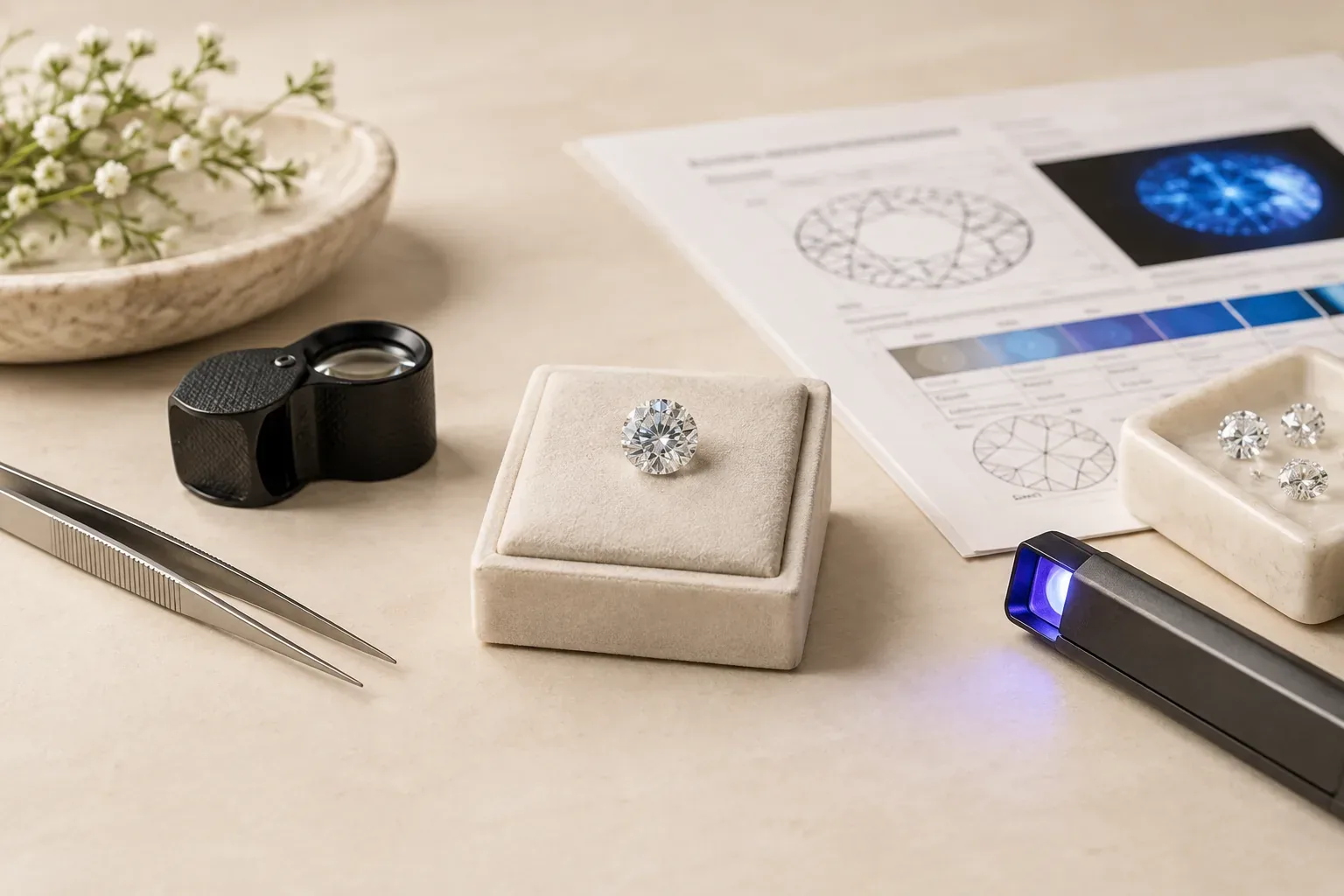
Meaning at a glance
A diamond fluorescence report guide explains the laboratory notation for a diamond's fluorescence (the presence and graded strength a lab records), how to interpret that notation when choosing or gifting a stone, what trade-offs to weigh, straightforward care guidance, and what can only be confirmed by a gemological laboratory or qualified jeweler.
What laboratories and sellers mean by 'fluorescence' on a report
On most gemological reports, fluorescence is a reported physical property: laboratories record whether a diamond emits visible light when exposed to ultraviolet sources and assign a grade for strength. The lab report entry is a descriptor to help buyers and professionals assess appearance and disclosure, not a statement of cultural meaning.
The Gemological Institute of America (GIA) includes treatments, detectability and disclosure among its core topics for consumers and trade professionals, and laboratory reports are part of that evidence chain. Rely on the issuing laboratory’s legend and grading scale to understand the exact terms and gradations on any particular report.
Historical evidence and regulatory context
Historical discussions about gemstone treatments, detectability and the need for disclosure appear in the modern regulatory and gemological record rather than in folklore. The Gemological Institute of America documents the technical and disclosure issues that arise when gemstones have observable properties or treatments, and shows how laboratory testing became central to separating natural, treated, and lab-created materials.
The Federal Trade Commission (FTC) helps set the consumer-protection context: its guidance emphasizes clear, written seller disclosures about whether a gemstone is natural, lab-created, treated, or an imitation. That regulatory history matters because fluorescence reporting is one of the objective attributes that sellers and labs can disclose to meet those standards.
Market studies tracking what shoppers search for and buy show how important engagement rings and related diamond jewelry remain in demand. Imaginaire Digital’s 2026 UK search estimates, for example, identify engagement rings, diamond studs and other diamond jewelry as high-interest items, which helps explain why buyers increasingly want precise, lab-backed information on attributes such as fluorescence before purchase.
Documented historical meanings versus modern interpretations
The technical literature and consumer-protection guidance cited above treat fluorescence as a physical, testable property rather than a traditional cultural symbol. In other words, the authoritative sources used here approach fluorescence as measurable evidence, not as a historically documented symbolic meaning.
By contrast, modern buyers sometimes attach personal or stylistic interpretations to fluorescence. Some shoppers describe preference for a particular look in certain lighting conditions, while others value a flawless laboratory grade more highly. Those are personal interpretations and market preferences, not documented historic symbolism in the regulatory or gemological sources referenced here.
How fluorescence appears in jewelry and why it matters to buyers
A fluorescence entry on a lab report can be relevant to appearance under specific lighting. Because diamonds are widely used in engagement rings, studs, necklaces and bracelets—categories identified as high-demand in market data—understanding a report entry helps you predict how a stone might look in daylight, incandescent light, or under UV-rich sources.
For sellers and buyers of engagement rings and other highly visible diamond pieces, fluorescence is one of several attributes buyers check alongside color, clarity, cut and certification. If appearance under certain light sources matters to you or the recipient, the fluorescence notation on a lab report provides an objective starting point for in-person evaluation.
How to read a typical fluorescence report entry
Laboratories usually place fluorescence in a designated field on the report. Read the issuing laboratory’s legend: most labs define a set of categories (for example, None, Faint, Medium, Strong, Very Strong) and may indicate a color of fluorescence if applicable; always check the specific lab’s wording so you understand what their terms mean on that certificate.
When you read a report, note three things: the presence or absence of fluorescence, the graded strength or category the lab assigns, and any accompanying description (such as a color or an explanatory note). Keep the full gemological certificate with the stone and compare like-for-like: different laboratories use different grading language and some sellers will attach their own notes to a report.
Decision criteria and practical trade-offs
Deciding whether fluorescence matters for you or a gift recipient comes down to a few trade-offs: appearance, price, resale considerations, and personal preference. Some buyers are indifferent and place more weight on cut or certification; others prefer to avoid diamonds with strong fluorescence because of perceived changes in appearance under certain lights. Market demand for specific styles—especially engagement rings—means that price adjustments and buyer preferences differ by region and time.
Regulatory guidance from the FTC requires sellers to make clear disclosures about material and treatment status. Use that disclosure requirement to request the lab report and any supporting statements from the seller before making a commitment. If a seller is reluctant to provide a certificate or to allow in-person viewing under multiple lighting conditions, treat that as a red flag.
Care considerations and durability
The authoritative gemological literature treats fluorescence separately from durability and routine care. The Gemological Institute of America highlights that treatments, detectability and durability raise distinct consumer questions; for most diamonds, fluorescence is a stable optical property and is not by itself a treatment that changes how you clean or wear the piece.
If a diamond has undergone other treatments or is a synthetically produced stone, those conditions can have specific care or disclosure implications. The FTC recommends clarity in seller disclosure so you can follow any special care instructions tied to treatments or to lab-created materials.
What you can verify yourself — and what requires a professional
You can verify some practical things on your own before purchase: ask to see the lab report, view the stone in person under daylight and indoor lighting, and request close-up photographs or video if remote. For many shoppers, these steps are sufficient to make a buying decision when combined with an honest seller.
You cannot reliably grade fluorescence strength, identify treatments, or authenticate a certificate without the proper equipment and training. The Gemological Institute of America and the FTC both emphasize detectability and the role of laboratory testing. If you need definitive answers about whether a diamond is natural, treated, or lab-grown, or you require a verified fluorescence grade, obtain an independent laboratory report (for example, from a recognized gemological laboratory) or have a qualified jeweler demonstrate and document their findings.
Practical, respectful selection and gifting guidance
When shopping or selecting a gift, start by asking for the issuing laboratory report and read the lab’s legend for fluorescence terminology. If the recipient cares about technical detail, present the report with the ring or piece so they can review the evidence themselves.
View any candidate stones in person when possible and under multiple light sources. If you cannot view in person, request high-quality images and a copy of the certificate before purchase and consider a return or independent verification policy. For engagement rings and other emotionally significant gifts—categories that show high consumer interest—match the technical evidence to the recipient’s stylistic preferences rather than assuming universal meaning. Finally, if the seller is evasive about disclosure or refuses independent verification, walk away; the FTC’s guidance favors transparent written disclosures for consumer protection.
Summary: using a fluorescence report sensibly
Treat the fluorescence entry on a diamond report as an objective, lab-originated data point. Use it alongside the full gemological certificate, clear seller disclosures, and in-person evaluation. Rely on recognized laboratories for authoritative grading when you need definitive answers, and use the FTC’s consumer-disclosure framework as your baseline for what sellers should provide in writing. In short: read the legend, ask to see the report, evaluate the stone in multiple lights when appearance matters, and defer to qualified gemological testing for any technical verification you cannot make yourself.
Frequently asked questions
What does 'fluorescence' mean on a diamond report?
On a diamond report, fluorescence is a laboratory observation that records whether a diamond emits visible light when exposed to ultraviolet sources and often includes a graded strength. Check the issuing lab’s legend to understand their specific terminology.
Does fluorescence affect a diamond’s value?
Fluorescence can affect perceived appearance and therefore market preferences, but its impact on value varies by buyer, market and the stone’s other qualities; use the lab report and clear seller disclosures to understand any price adjustments.
Can I judge fluorescence in-store or do I need a lab?
You can observe a stone under different lighting conditions in person to get a practical sense of appearance, but reliable grading of fluorescence strength, authentication, and detection of treatments usually requires a recognized gemological laboratory or a qualified jeweler with appropriate instruments.
Is fluorescence permanent or does it change over time?
Fluorescence is a stable optical property of a diamond; however, if a diamond has been treated or is lab-created, confirm any specific care instructions and disclosure from the seller as recommended by gemological guidance.
What should I request from a seller before buying?
Ask for a copy of the issuing laboratory report, clear written disclosure of whether the diamond is natural, lab-created or treated, and permission to view the stone under multiple lighting conditions; if the seller will not provide these, consider that a warning sign.
If I need definitive answers, where should I go?
Obtain an independent laboratory report from a recognized gemological laboratory or a written assessment from a qualified jeweler; the Gemological Institute of America and consumer-protection guidance highlight the role of lab testing and transparent disclosure for definitive verification.
Sources and further reading
- Imaginaire Digital — Imaginaire Digital
- Gemological Institute of America — Gemological Institute of America
- Federal Trade Commission — Federal Trade Commission