Meaning at a glance
This guide defines the consumer questions behind “diamond carat weight care guide,” explains how carat affects durability and setting choices, gives practical cleaning and repair precautions, outlines decision trade-offs, and clarifies what a shopper must verify with a qualified jeweler or gemological laboratory.
What the documented evidence supports about diamonds and care
The sources approved for this article emphasize three practical areas: consumer demand, gem treatment and durability questions, and legal requirements for disclosure. Imaginaire Digital's 2026 UK search analysis shows strong consumer interest in engagement rings, diamond studs, tennis bracelets and popular engagement shapes such as oval proposals, which explains why shoppers ask about size and wearability when choosing carat weights. The Gemological Institute of America (GIA) frames many consumer questions around treatments, detectability and special care, and the Federal Trade Commission (FTC) highlights the legal need for clear written disclosures about whether a stone is natural, lab-created, treated, or imitation. These sources provide the evidentiary backbone for practical care, disclosure and verification guidance in this article.
Historical evidence, and why cultural symbolism is separate from care
The approved evidence set for this guide does not include primary historical or anthropological sources about cultural symbolism, so this article avoids broad historical claims about what diamonds meant in specific cultures. Instead, the documented history relevant to care centers on the development of gem grading, treatment detection and modern consumer protections. For example, GIA's research and reporting describe how treatments and laboratory techniques have evolved and how detectability affects consumer questions about care and disclosure. The FTC's materials document how regulatory expectations for seller disclosure have been applied in recent consumer guidance. Because the sources do not provide discrete cultural narratives, readers should treat historical symbolism of diamonds as a separate topic that requires dedicated historical references.
Documented historical uses versus modern personal interpretations
Documented evidence in the approved sources focuses on technical and market history: how treatments, detection methods and consumer disclosures developed over the 20th and 21st centuries. Modern personal interpretations—such as what a particular carat size 'means' emotionally or socially—are contemporary and subjective. They arise from marketing, cultural trends and individual preference rather than from the technical, treatment and disclosure concerns discussed by GIA and the FTC. Keep these two categories separate: documented history informs what a buyer should verify and expect in terms of durability and documentation, while modern interpretations guide gifting choices and personal meaning.
How carat weight appears in jewelry and affects design
Carat weight is a measure of a diamond's mass and is one of the traits that jewelers consider when designing settings. Consumer demand data summarized by Imaginaire Digital shows that engagement rings, studs, tennis bracelets and other classic diamond formats remain popular, and carat weight affects which settings are practical. Larger single-stone (solitaire) diamonds are often set in stronger prong or bezel settings to protect the girdle and pavilion, while smaller diamonds are common in pavé, halo and channel settings where many stones create visual impact without a single large carat weight. Tennis bracelets and diamond studs are designed to balance security with comfort; larger carat totals need proportionally secure settings and reinforced mounting to withstand daily wear. In all cases, setting choice influences how easily a diamond can be cleaned, inspected, and repaired.
Durability concerns by carat weight
A diamond's hardness does not make it invulnerable. The GIA explains that questions about treatments, detectability and durability arise because certain mechanical stresses, cleavages, inclusions or post-processing treatments can affect a stone's behavior under impact. Larger diamonds may present larger exposed facets and edges that are more likely to chip from a hard blow than a smaller, more protected stone. Likewise, settings that leave the girdle or pavilion exposed increase the risk of impact damage regardless of carat weight. Buyers should be realistic: carat influences visibility and setting choice, and practical durability depends on cut, clarity (types of inclusions), and mounting as much as on size.
Cleaning: safest everyday methods and important cautions
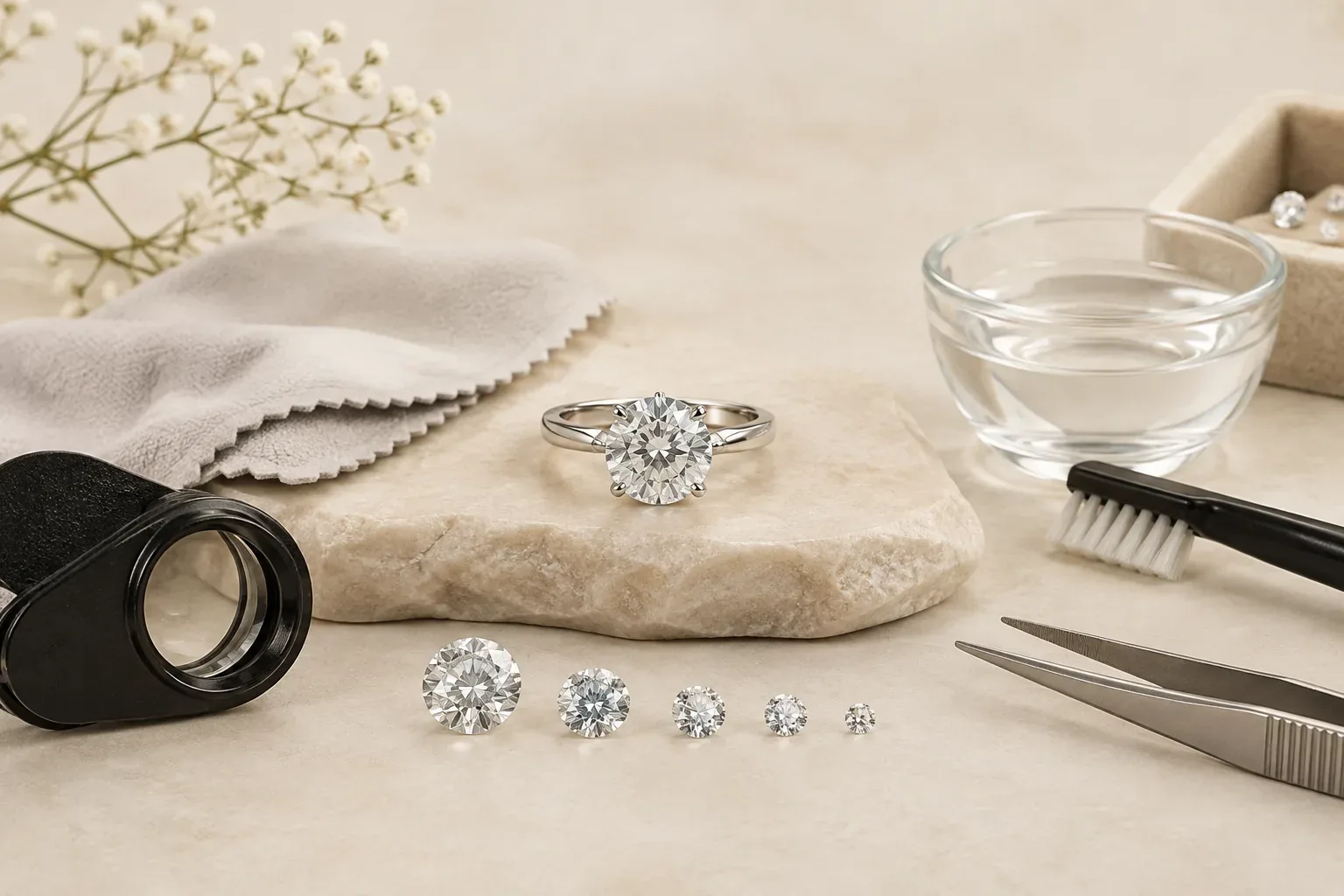
For routine cleaning, use warm (not hot) water, a mild dish soap, and a soft-bristled brush to remove oils and debris, then rinse and dry with a lint-free cloth. These gentle methods remove most surface grime without risk to the stone or most modern settings. The GIA warns that certain treatments and enhancements change how a stone should be handled, and some treatments may be affected by harsh chemicals or thermal shocks. If you know a diamond has been treated or mounted with delicate components, consult the treating jeweler or submit the piece to a professional for cleaning. Avoid household bleach, abrasive cleaners, and any strong acids. Ultrasonic and steam cleaners are effective for many diamonds but can loosen stones or worsen existing fractures in some settings; have a jeweler inspect prongs and verify the stone's condition before using mechanical cleaners.
Repair precautions and when to consult a professional
Never attempt significant repairs yourself. Resizing rings, re-tipping prongs, tightening settings, re-polishing facets or re-setting a large carat stone require professional tools and experience. A jeweler will check for hairline fractures, weak prongs, and mounting stress before doing work. For large carat diamonds, insist on using a qualified bench jeweler and keep the original paperwork and grading report with the piece during repairs. If a stone chips or appears damaged, stop wearing the piece and seek professional assessment; further impact or amateur attempts to 'smooth' a chip can remove material and lower value. For insured items, your insurance policy may require professional repairs and documentation to support future claims.
Decision criteria and practical trade-offs when choosing carat weight
Selecting a carat weight involves trade-offs among appearance, budget, wearability and long-term care. A larger carat weight increases visual impact but often requires stronger settings and greater care to minimize accidental damage. Buyers must weigh cut quality, which strongly affects perceived size and brilliance, against pure weight. The FTC emphasizes that sellers must disclose whether a stone is natural, lab-grown, treated or imitation; these attributes influence price, expected durability and care. If you are buying for daily wear, prioritize secure settings and ask about recommended maintenance intervals. If you are buying as an investment or heirloom, obtain a current lab grading report and understand that only a gemological laboratory can reliably verify treatments and origin.
What you can and cannot verify without a qualified jeweler or gem laboratory
You can visually inspect a diamond for obvious damage, loose settings and surface dirt, and you can read and retain any written grading reports or seller disclosures. However, you cannot reliably verify carat weight accuracy beyond basic scale confirmation without standardized equipment and comparison to a lab report. You cannot determine whether a diamond is natural or lab-grown, or whether it has undergone certain treatments, with unaided visual inspection; the FTC requires clear written disclosures, and GIA notes that many treatments require laboratory testing to detect. For authoritative verification of carat, origin, treatment history, and precise grading, retain the grading report from an accredited laboratory or seek testing from a qualified gemological laboratory.
Selection and gifting guidance that respects both practicality and meaning
When gifting a diamond, think beyond headline carat numbers. Ask the seller for up-to-date written disclosures and a laboratory report if applicable, verify the setting is appropriate for the recipient’s lifestyle, and choose a size that balances visual impact with comfort and security. If the recipient prefers to wear jewelry daily, select secure settings and a carat weight that is practical for their activities. If the diamond is intended as a keepsake, prioritize certified grading and professional documentation. Recognize that personal meaning is subjective: many buyers place greater emotional value on design, provenance and the story behind the gift than on carat alone. Where possible, involve the recipient or their close confidant to ensure the choice is both meaningful and practical.
Final notes and recommended actions
Keep original paperwork, obtain regular professional inspections for prongs and mountings, and insure high-value pieces. For large carat diamonds or any stone with documented treatments, retain lab reports and seek professional advice before cleaning with ultrasonic or steam methods. Rely on written disclosure from sellers as required by the FTC, and when in doubt about a stone’s origin or treatment, request verification from an accredited gemological laboratory. These steps protect both the physical integrity of the piece and the buyer’s financial and sentimental investment.
Frequently asked questions
How should I clean a diamond at home?
For routine cleaning, use warm water, a mild dish soap and a soft-bristled brush to remove oils and debris, then rinse and dry with a lint-free cloth. Avoid harsh chemicals, abrasive cleaners and hot water. Have a professional inspect the setting before using an ultrasonic or steam cleaner.
Does a higher carat weight make a diamond more fragile?
Higher carat weight does not change diamond hardness, but larger diamonds often have more exposed facets and edges that can chip from hard impacts. Durability depends on cut, clarity (inclusions), and how securely the stone is mounted.
Can I verify a diamond’s carat and origin at home?
You can visually check for obvious damage and keep any paperwork, but only a qualified jeweler or gemological laboratory can reliably verify carat accuracy, origin (natural vs lab-grown) and many treatments. Request written disclosures and a lab report from sellers.
Are lab-grown diamonds less durable than natural diamonds?
Durability depends on the diamond's structure rather than origin; lab-grown diamonds have physical properties similar to natural diamonds. However, some treatments or manufacturing processes can affect care recommendations, so check written disclosures and consult a gemologist if unsure.
What should I ask the seller when buying a large carat diamond as a gift?
Ask for a current laboratory grading report, written disclosure about whether the diamond is natural, lab-grown or treated, documentation of any repairs or resizing, recommended maintenance intervals, and whether the setting is suitable for daily wear.
Should I insure a high-carat diamond?
Yes. For high-value pieces, obtain an independent appraisal and insure the item. Many insurance policies require professional repairs and documentation for claims, so keep service records and grading reports.
Sources and further reading
- Imaginaire Digital — Imaginaire Digital
- Gemological Institute of America — Gemological Institute of America
- Federal Trade Commission — Federal Trade Commission