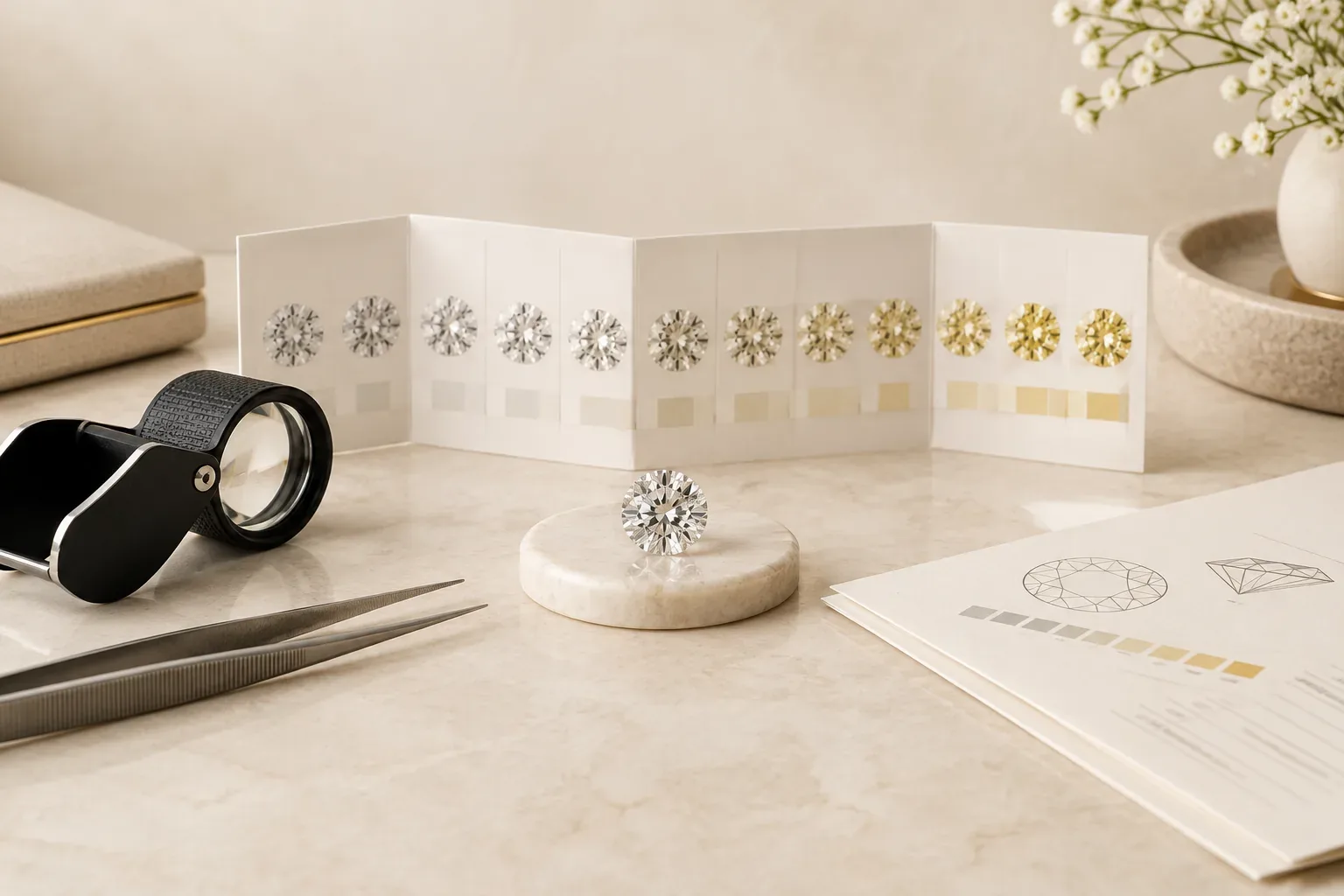
Meaning at a glance
A diamond color grade report guide should explain the lab-assigned color grade and related observations, show the decision criteria (appearance, price, setting choices), list practical trade-offs, summarize safe care and treatment issues, and clearly state what only a qualified jeweler or gemological laboratory can verify. Use lab reports and written seller disclosures as the basis for purchase decisions and consult a qualified lab for definitive answers about origin, treatments, or discrepancies.
Quick answer
A diamond color grade report guide explains the laboratory-assigned color grade and companion observations (for example, fluorescence or noted treatments), gives evidence-based decision criteria—appearance, budget, and setting trade-offs—describes safe care, and sets clear limits on what you can verify without a qualified jeweler or a gemological laboratory. Rely on written lab reports and seller disclosures; for treatment detection, origin statements, or disagreements about grading you will need a qualified laboratory or independent gemologist.
What a diamond color grade report is — and what it includes
A color grade report is a gemological document issued by a laboratory or qualified gemologist that records an assessed body color and related observations for a diamond. Typical entries that affect how you evaluate a stone include the reported color grade, any notes about fluorescence, remarks about treatments or enhancements, and the laboratory’s identity and logo. Consumers should treat the written report and the issuing laboratory’s reputation as the primary evidence when comparing stones.
The Gemological Institute of America (GIA) and other lab authorities publish guidance that differentiates untreated, treated, natural, and laboratory-grown stones and explains detectability and disclosure obligations. The Federal Trade Commission (FTC) stresses that written seller disclosures are required for material distinctions between natural, lab-grown, treated, and imitation gems, so an on-paper report or sales contract is essential for buyer protection.
Historical evidence and what the approved sources document
The documentary evidence in the approved sources centers on the modern, institutional era of gemology rather than on long-standing cultural symbolism. The Gemological Institute of America documents laboratory practices, detection of treatments, and standards used by present-day gemological laboratories. The Federal Trade Commission provides evidence-based rules for consumer protection and disclosure in the modern marketplace. Market research such as Imaginaire Digital documents recent consumer demand patterns (for example, interest in engagement rings and studs) rather than pre-modern cultural beliefs.
If you are looking for cultural or period-specific meanings of diamonds (for example, how a particular society regarded diamond color centuries ago), those subjects lie outside the scope of the three approved sources used here. The practical, evidence-led material you can rely on for buying, grading, and care is therefore principally modern: laboratory reports, treatment/disclosure guidance, and contemporary market behavior.
Documented laboratory findings versus modern personal interpretation
Documented laboratory findings are objective observations recorded on reports: the issued color grade, whether fluorescence is observed, any detectable treatments, and the lab responsible for the assessment. Those items are evidence a consumer can rely on—especially when the issuing laboratory is a recognized facility and the findings are in writing.
Modern personal interpretation is how buyers and givers assign meaning. For example, a buyer may prefer a near-colorless stone because they associate it with classic elegance; another may choose a warmer-tinted stone because they like the warmer look when set in yellow gold. Such personal or cultural meanings are valid but are not documented by gemological laboratories and are separate from the technical evidence recorded on a report.
How diamond color appears in jewelry and how reports link to visual results
The recorded color grade is one factor among several that determine how a diamond looks in a finished piece. Cut quality controls light performance and can mask or accentuate body color. Metal choice and setting style also influence perception; yellow or rose gold tends to warm the appearance of a diamond, which can make lower color grades appear more appealing, while white metals like platinum or white gold emphasize cooler, whiter-looking stones.
Fluorescence, listed on many reports, can affect appearance under particular lighting; for some diamonds, strong fluorescence may cause a slight milky appearance in certain conditions, while in others it can make a warmer stone appear whiter under daylight. A full appraisal or in-person viewing—ideally alongside the lab report—helps you reconcile the report’s technical grade with how the stone looks in a specific setting.
Decision criteria and practical trade-offs
When using a diamond color grade report as a decision tool, prioritize the evidence that affects value and durability: the written color grade itself, any lab notes on treatments, and the identity of the issuing laboratory. Balance desired appearance against budget: higher grades generally command higher prices, but the visible difference between adjacent grades can be subtle, especially once the diamond is mounted.
Consider the interaction of color grade, cut, and metal. A well-cut diamond with a modest color grade may appear more visually attractive than a poorly cut diamond with a higher grade. Choosing warmer metal can allow savings on color grade without reducing visual appeal. Also weigh seller disclosure and the ability to return or obtain an independent evaluation if you dispute a report.
What a consumer can and cannot verify without a laboratory
You can verify some practical items without lab equipment: that a seller provides a written report, that the report displays the laboratory name and specific observations, and that the seller includes written disclosure about whether the diamond is natural, lab-grown, treated, or imitation. The FTC makes clear that written seller disclosures are a central consumer protection and should not be omitted.
You cannot definitively verify treatment history, origin, or resolve grading disputes without a qualified gemologist or recognized laboratory. Detection of certain treatments can require specialized instruments and expertise, and some treatments or lab-grown origins are not reliably identifiable by unaided inspection. If the report or seller’s claim is critical to your purchase, plan to rely on an independent laboratory or qualified jeweler for confirmation.
Safe care, treatments, and disclosure responsibilities
The Gemological Institute of America provides guidance that treatments, their disclosure, detectability, and durability create distinct consumer questions. Some enhancements or treatments can affect how a diamond should be cleaned or serviced; for example, certain filling or coating treatments can be damaged by ultrasonic cleaners or harsh chemicals. Always ask the seller or lab report whether the diamond has been treated and follow care instructions tailored to any treatments listed.
The FTC requires clear distinctions among natural, lab-created, treated, cultured, and imitation materials and stresses written seller disclosures. If a seller does not supply a clear, written statement about treatment or origin, treat that as a red flag and seek independent verification before completing a purchase.
Practical selection and gifting guidance
For gifting: obtain the written report before finalizing a purchase, or buy from a retailer that provides a clear return policy and independent grading. Consider the recipient’s style: if they wear warmer metals, a slightly lower color grade can be indistinguishable once mounted; if they prefer a very white, icy look, prioritize higher color grades and a reputable laboratory report.
For selection: compare diamonds side by side, ideally with identical cut proportions, and review the accompanying reports. Confirm that the issuing laboratory is named on the paperwork and that the seller’s disclosures align with the report. If a report is absent or vague about treatments, request independent laboratory grading or choose a stone with clear documentation. Remember that market data shows sustained demand for classic categories like engagement rings and studs, so prioritize documented evidence to ensure long-term value and buyer protection.
When to involve a qualified jeweler or gemological laboratory
If you have any material dispute about a report, suspect undisclosed treatments, or need a definitive statement about origin (natural versus lab-grown), consult a qualified independent gemologist or a recognized laboratory. Written, third-party lab reports are the standard evidence used in the industry to resolve disagreements and to support insurance and resale.
Use lab reports together with seller disclosures as your core evidence. If a purchase is significant in value, budget for an independent verification fee—this is the only reliable way to confirm treatment status or to settle conflicting grading claims.
Closing recommendations
Treat a diamond color grade report as one critical piece of evidence among several: the issuing laboratory, the report’s specific observations, visual appearance in its intended setting, and clear seller disclosures. Follow care guidance provided for any treatments noted on the report and, when in doubt, seek an independent laboratory opinion. That combination of documented evidence and professional verification gives you the most reliable basis for purchase or gifting decisions.
Frequently asked questions
What information should appear on a reliable diamond color grade report?
A reliable report should include the issuing laboratory’s name, the assigned color grade and any relevant observations (for example, fluorescence or noted treatments), and clear statements about whether the stone is natural, lab-grown, or treated. Written seller disclosures should match the report; the FTC emphasizes that these distinctions must be clearly disclosed.
Can I verify a diamond’s treatment or origin at home?
No. Some treatments and the distinction between natural and lab-grown diamonds require specialized equipment and expertise to detect. The Gemological Institute of America explains that detectability and treatment disclosure are complex issues; for definitive answers you need a qualified gemologist or recognized laboratory.
How should I use the color grade when choosing between two diamonds?
Use the color grade alongside cut quality, setting metal, and the issuing laboratory’s reputation. A well-cut diamond with a slightly lower color grade can appear more attractive than a poorly cut higher-grade stone. Compare stones mounted in the metal you plan to use to see the true visual difference.
What if the seller won’t provide a written report or disclosure?
Treat the absence of a written report or clear disclosure as a red flag. The FTC requires clear written distinctions among natural, lab-grown, treated, and imitation gems; lack of documentation increases the risk and complicates post-sale resolution.
Should I get an independent laboratory report for an important purchase?
For purchases of material value, plan to obtain or verify an independent laboratory report. Third-party lab grading or an independent gemologist’s assessment is the only reliable way to resolve disputes about grading, treatment detection, or origin.
Sources and further reading
- Imaginaire Digital — Imaginaire Digital
- Gemological Institute of America — Gemological Institute of America
- Federal Trade Commission — Federal Trade Commission