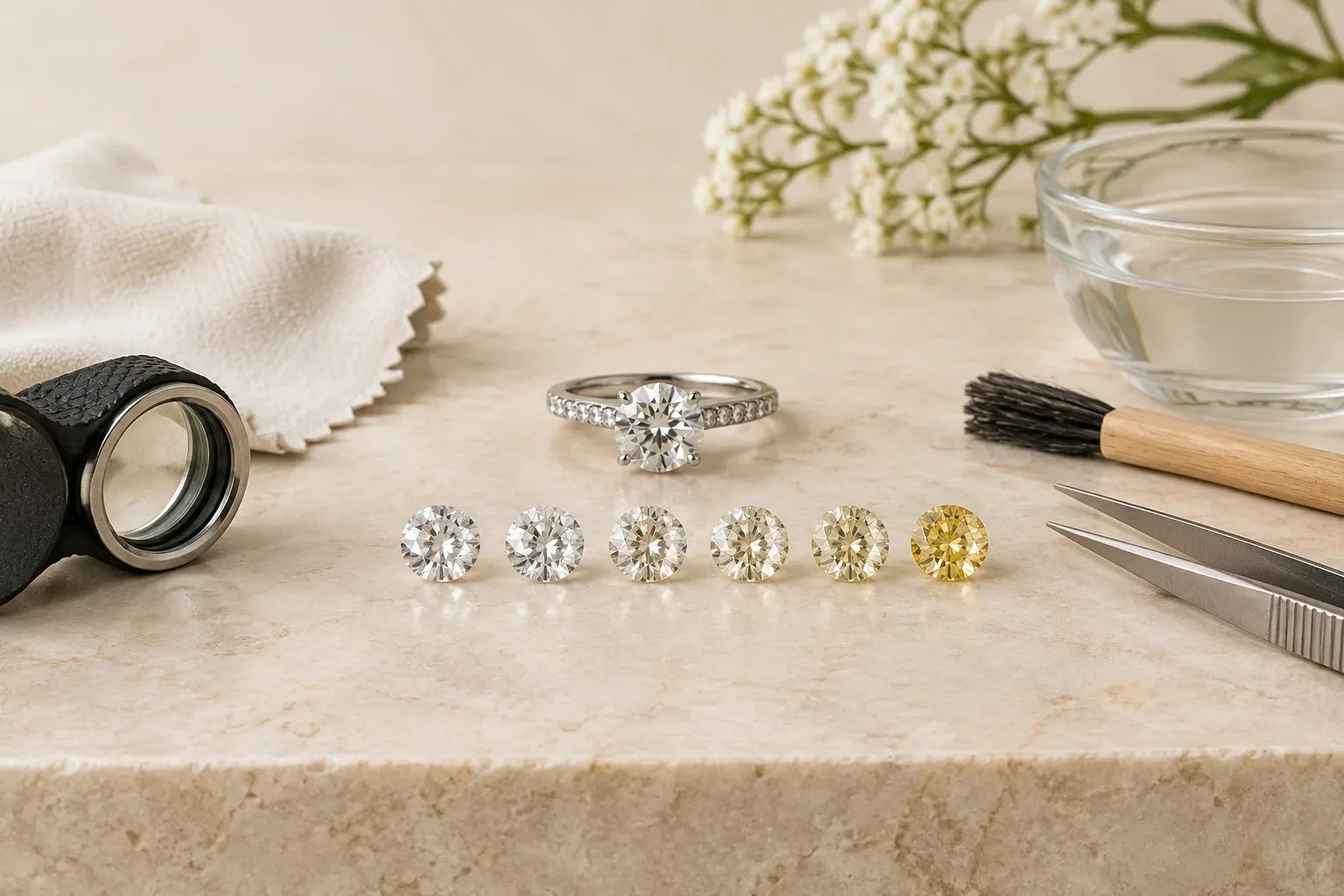
Meaning at a glance
Diamond color grade affects appearance and some care decisions but does not change basic diamond hardness; treatments and setting choices can change durability and cleaning precautions, so get written disclosure, a laboratory or qualified jeweler's evaluation, and match cleaning and repair methods to any disclosed treatments or sensitive settings.
Quick answer
Diamond color grade care guidance starts with three facts: color grade primarily describes a diamond's tint and therefore its visual appearance rather than its intrinsic hardness; treatments or enhancements can change both appearance and special-care needs; and only a qualified jeweler or gemological laboratory can verify grades and disclose many treatments. Follow seller-provided written disclosures, get a certificate for high-value stones, use gentle cleaning that matches any disclosed treatments, and ask your jeweler about repair heat or ultrasonic restrictions before work begins.
What 'color grade' means and how to decide what matters to you
In trade usage, color grade is a way to describe a diamond’s body color and how noticeable that tint is to the unaided eye. For most shoppers the practical choices are trade-offs among appearance, budget, and setting style. A warmer metal or certain mounting styles reduce the visibility of slight body color, while higher color grades increase the perception of 'colorless' appearance under standard viewing conditions.
Deciding which grade matters most is a personal and economic decision. Consider the size of the stone, the type of setting, whether you value a totally colorless look vs the increased cost of higher grades, and whether you want a faintly tinted or a fancy-color diamond, which is an entirely different category. This guide focuses on care implications rather than prescribing a single 'best' grade.
Documented historical and institutional evidence (what is documented and by whom)
Modern color grading and the consumer questions that flow from it are part of 20th and 21st century gemological practice rather than an ancient cultural trait; institutions that set and explain grading, treatment, and disclosure practices are the authorities for today’s shoppers. The Gemological Institute of America (GIA) documents the role of treatments, disclosure, detectability, durability, and special care as distinct consumer issues in gemology, and those points should guide how you care for a diamond.
From the consumer-protection side, the U.S. Federal Trade Commission (FTC) has published guidance that emphasizes clear distinctions among natural, lab-created, treated, and imitation materials and recommends written seller disclosures. For marketplace demand and context—what people most often search for or buy—industry observers such as Imaginaire Digital report continued high consumer interest in engagement rings and certain diamond styles, which can affect availability and typical price and therefore buyer decisions.
Separating documented history from modern personal interpretation
Documented history relevant to this topic is primarily institutional and regulatory: how modern gemological laboratories grade diamonds, how treatments are disclosed, and how vendors describe different material origins and enhancements. These are the documented facts that influence care and verification.
Modern personal interpretations about color grade—for example, symbolic meaning attached to a slightly warm stone or a preference for a faintly tinted look—are cultural and individual choices rather than matters of gemological record. Those personal meanings are valid for the wearer but are not verifiable by grade reports or consumer-protection rules, which focus on material origin, treatment, and accurate description.
How color grade appears in jewelry and why it matters for care
Color grade affects perceived whiteness or warmth when a diamond is set. In white metal settings, lower color grades may look more noticeable than when the same diamond is set in yellow or rose gold, which can mask faint body color. Fancy-colored diamonds (pink, yellow, blue, etc.) are graded and valued differently and usually require separate consideration for certification and care.
From a care perspective, color grade itself does not make a diamond markedly more or less hard—diamonds remain a very hard material—but treatments intended to alter color or clarity can affect stability, durability, and recommended cleaning or repair techniques. That is why institutional guidance treats 'treated' and 'untreated' diamonds differently when advising consumers on care.
Durability considerations and repair precautions
Most diamonds resist scratching and abrasion very well due to their hardness, but durability in everyday wear depends on the whole piece: mounting strength, prong condition, and whether the stone has fractures, fillings, or treatment-induced weaknesses. The Gemological Institute of America explicitly highlights that treatments and detectability can affect a stone’s durability and how it should be serviced; disclose and document any known treatment before repair work begins.
When having jewelry repaired, do not assume every jeweler will follow the same procedures for heat, soldering, or ultrasonic cleaning. Some enhancements, such as fracture filling or certain diffusion treatments, can be affected or removed by heat and chemicals. Before any repair that involves heat or aggressive cleaning, insist on written confirmation of whether the stone has been treated and which procedures the jeweler proposes. If you lack written disclosure, seek a qualified jeweler or a laboratory report first.
Cleaning guidance tuned to color grade and treatment status
For natural, untreated diamonds set in routine engagement or fashion jewelry, gentle cleaning with warm water, mild dish soap, and a soft brush is safe for most settings and will restore brilliance without risk. If you prefer machine cleaning, confirm with your jeweler that the setting and any appended stones tolerate ultrasonic or steam cleaners, because settings with delicate antique mounts or fragile side stones may be at risk.
If the diamond has any disclosed treatments—ask for and keep the disclosure—follow the specialist guidance for that treatment. The GIA highlights that treatments, detectability and special care produce distinct consumer questions; when a seller discloses a treatment, ask how it affects allowable cleaning methods and what small stresses to avoid. If you cannot get clear information, err on the side of gentler cleaning and consult a qualified jeweler.
Repair precautions and the role of the qualified jeweler or lab
Before any repair that involves heat, soldering, ultrasonic cleaning, or steam cleaning, disclose to your jeweler any known treatments so they can choose safe techniques. If disclosure is unavailable or the stone is of significant value, consider obtaining a laboratory report or at least an independent inspection that notes treatments, integrity of inclusions, and mounting condition.
A qualified jeweler can advise whether prongs should be tightened, whether retipping is safe, and whether a stone with internal fractures or treatments requires more conservative work. Because some alterations are irreversible and can affect value, do not authorize irreversible procedures without written confirmation of the stone’s origin and treatment status.
Selection and gifting guidance—practical and respectful advice
When selecting or gifting a diamond, ask for written disclosures and, for higher-value purchases, an independent laboratory certificate. The FTC emphasizes that consumers need clear distinctions among natural, lab-created, treated, and imitation materials and written seller disclosures. A certificate from a reputable lab adds verifiability for color, clarity, and treatment status.
Match the grade and setting to the recipient’s taste and lifestyle. If the recipient prefers warm metal or a more vintage look, you can choose a slightly lower color grade and allocate budget to cut quality or carat size instead. For active wearers, prioritize secure settings and robust prongs over small differences in color grade. For truly special purchases, include an insurance appraisal and keep all documentation with the gift.
What shoppers can and cannot verify without a professional
At home you can verify visual appearance, overall brilliance, and that the stone is firmly set, but you cannot reliably verify exact color grade, detect many treatments, or distinguish between certain lab-grown and natural diamonds without specialized equipment. The Gemological Institute of America and the Federal Trade Commission both make it clear that detectability, disclosure, and origin require professional testing or certified documentation.
Therefore, if the color grade, material origin, or absence of treatment materially affects your purchase decision, insist on a current, readable certificate from a recognized laboratory or an independent jeweler’s report before completing the sale.
Final practical checklist
Obtain written disclosure and a laboratory or qualified jeweler’s certificate for important purchases. Use gentle cleaning methods for most modern settings, and when in doubt about a stone’s treatment status prefer conservative cleaning and seek professional advice. Before any repair, provide the jeweler with any documentation you have and require confirmation in writing that the proposed repair is safe for the stone’s treatment and setting. Finally, match the grade, setting, and metal to the wearer’s taste and lifestyle rather than choosing by grade alone.
Frequently asked questions
Does color grade affect a diamond’s durability?
Color grade describes tint and not intrinsic hardness. Durability is more directly affected by treatments, fractures, and the condition of the mounting. If a stone has been treated, that treatment can influence repair and care procedures.
Can I clean my diamond at home safely?
Yes, for most untreated diamonds a mild soap, warm water, and a soft brush are safe for regular cleaning. If the diamond or mounting has disclosed treatments or fragile side stones, consult the seller or a qualified jeweler first.
Is it safe to use ultrasonic cleaners on diamonds?
Ultrasonic cleaners may be safe for many diamonds but can dislodge loose settings or affect treated stones. Get written confirmation about a stone’s treatment status and ask your jeweler whether ultrasonic cleaning is appropriate for that specific piece.
How can I verify a diamond’s color grade or treatments?
Only a qualified gemological laboratory or an experienced independent grader can reliably verify color grade and many treatments. For important purchases, request a current laboratory certificate and written seller disclosures before buying.
Should I be concerned about repairs if a diamond is treated?
Yes. Some treatments can be altered or removed by heat, chemicals, or mechanical work. Disclose any known treatments to the jeweler and require a repair plan that respects the stone’s treatment status.
Can a lower color grade be a good value?
Absolutely. Lower color grades can offer larger size or better cut for the same budget, and metal choice or setting style can reduce visible tint. Balance appearance, cut, carat and budget according to the wearer’s preferences.
What questions should I ask a seller before buying?
Ask for written disclosure of origin (natural or lab-grown), any treatments, and a current laboratory or independent grading report if the stone’s grade matters to you. Also ask about recommended cleaning and any repair restrictions related to treatment.
Sources and further reading
- Imaginaire Digital — Imaginaire Digital
- Gemological Institute of America — Gemological Institute of America
- Federal Trade Commission — Federal Trade Commission