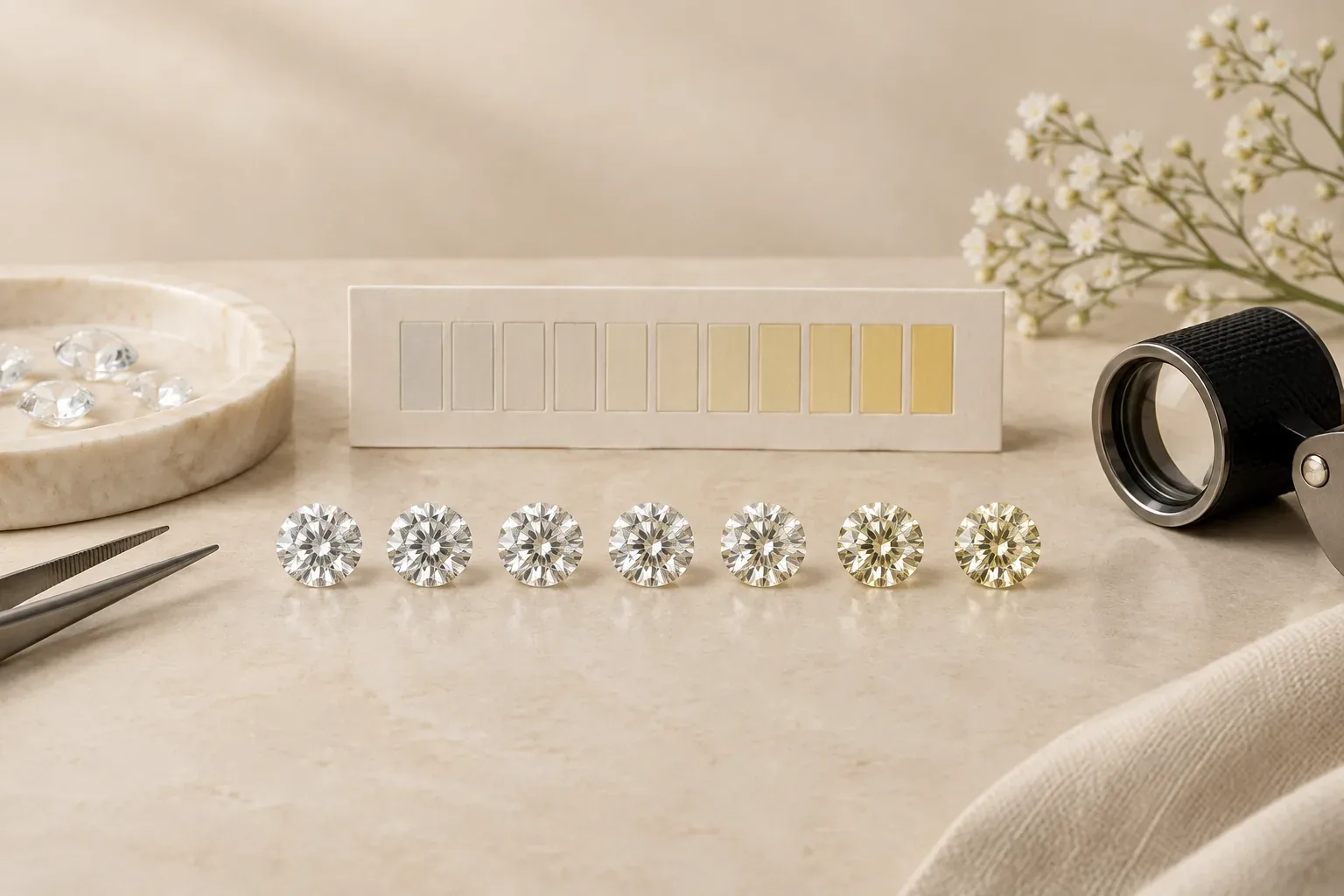
Meaning at a glance
Diamond color grades describe how much body color appears in a diamond; choosing a grade is a trade-off between visible whiteness, budget, cut, and setting, and some facts—like exact grading and treatments—require a gemological laboratory or qualified jeweler to verify.
What diamond color grades mean (a practical definition)
“Color grade” describes the amount of body color present in a diamond when viewed face‑up under controlled conditions. Jewelers and laboratories use standardized grading systems to place stones into categories so shoppers and traders can compare like with like. In everyday terms, higher grades are described as colorless or near‑colorless and show less yellow or brown tint, while lower grades are described as faint, very light or light and show a more obvious tint.
For a shopper, the important points are the visual effect in the ring (how the stone appears to the eye), the price difference between grades, and whether any treatments or non‑natural origins affect value or care. For verification of an exact letter grade, laboratory report, or whether a diamond has been treated or created in a lab, a gemological laboratory or qualified independent jeweler is required.
How color grade changes appearance
Color interacts with other properties — especially cut, size and setting — to determine how a diamond looks in real life. A very well‑cut stone can mask a small amount of body color because its brilliance and fire distract the eye. Conversely, a shallow or deep cut can accentuate color. Lighting matters: warm, incandescent light makes yellow or brown tint more obvious than bright daylight.
For smaller diamonds, or in clustered settings such as halos or pavé, lower color grades often read whiter because surrounding metal and accents reduce the contrast that makes tint visible. In solitaire settings and for larger stones, the letter grade becomes more important because the stone is the visual focus and tint is easier to see.
What changes price: decision criteria and practical trade‑offs
Price differences between color grades are affected by supply and demand, total carat weight, and whether the stone is natural or lab‑created. Generally, stones with less perceived body color command higher prices, but the premium varies by size: as carat weight increases, the price gap between adjacent color grades usually widens because larger stones make color more visible and are rarer at top grades.
A practical buyer decision weighs three factors: how important visual whiteness is to the recipient, how much budget can be allocated to color versus other qualities (cut, carat, clarity), and the intended setting. Many buyers reallocate budget from color into a superior cut because a well‑cut diamond often appears brighter and more lively than a higher‑grade but poorly cut stone.
Limits on what a shopper can verify without a lab or qualified jeweler
Shoppers can compare stones side‑by‑side under consistent lighting to get a subjective sense of which looks whiter, but exact letter grades, confirmation of treatments, and origin (natural vs lab‑grown) are laboratory determinations. The Gemological Institute of America (GIA) and similar labs test for treatments, disclose detectability limits, and emphasize that such findings are technical and require equipment and training.
Federal guidance requires sellers to disclose material differences between types of gemstones (natural vs lab‑grown, treated vs untreated) and to put disclosures in writing. If a seller cannot provide a current laboratory report or an independent jeweler’s assessment for material claims, treat the seller’s grading claims as unverified and factor that into your buying decision.
Treatments, lab‑created diamonds, and disclosure
Some diamonds undergo treatments to change or improve color. The Gemological Institute of America explains that treatments, detectability and durability raise specific consumer questions because treatments can affect value and care. The Federal Trade Commission requires clear written disclosures so buyers know whether a stone is natural, lab‑created, treated, or an imitation.
If avoiding treatments or preferring natural stones is important to you, ask for a current laboratory report that states the diamond’s status and any treatments. For lab‑created diamonds, ask whether the seller shows the same grading standards and whether the laboratory report clearly identifies the origin. Sellers should provide these disclosures in writing.
Historical evidence and how cultural meanings differ
Documented historical evidence about the symbolic meanings of diamonds is varied and culture‑specific. Over time, different societies attached different symbolic meanings to diamonds related to wealth, status, endurance or marital commitment. Modern consumers often assign personal meanings to diamonds that differ from historical uses, and those personal symbolic meanings are not universal.
In the contemporary market, demand patterns and product interest shift by region and trend. For example, a recent analysis of UK search behavior and market interest by Imaginaire Digital highlights strong modern demand for engagement rings and specific styles such as oval engagement rings and tennis bracelets, showing how current tastes influence what buyers look for when comparing color grades rather than reflecting fixed historical meanings.
How diamond color appears in different jewelry motifs and traditions
A diamond’s perceived color changes with design motif. In a solitaire engagement ring set in yellow gold, a faint tint can blend with the warm metal and be less obvious; conversely, in a white gold or platinum setting, even a faint tint may contrast more strongly and look less 'white.' Clustered styles and halo settings often allow buyers to choose lower color grades without sacrificing a bright overall look because smaller stones and surrounding metal influence the visual impression.
Traditions and styles matter. Classic solitaire engagement rings tend to place more emphasis on higher color grades because the diamond is the central visual element. Contemporary tastes that favor colored metals, mixed gemstones, or vintage styles can change those priorities, making a lower color grade perfectly acceptable or even attractive depending on the design.
Practical selection and gifting guidance
Decide whether visual whiteness or other qualities (cut, size, unique color like fancy yellow) are the top priority for the recipient. If the recipient values sparkle and brilliance over absolute whiteness, prioritize a high‑quality cut and consider a near‑colorless grade paired with a flattering setting. If whiteness is paramount and budget allows, choose a higher color grade and a reputable laboratory report.
Ask the seller for standardized comparisons: the same cut, similar carat weight and similar clarity but different color grades. Compare stones in the same lighting and settings you expect to wear the piece in. Request written disclosures about whether the diamond is natural, lab‑created, or treated, and obtain a current laboratory report for any material claims. If the piece is a surprise, consult close family or friends to learn the recipient’s metal and style preferences, or choose a versatile design such as a halo or three‑stone ring that allows more flexibility with color grade.
Care guidance relevant to color and treatments
Routine cleaning keeps diamonds looking their brightest; accumulated oils and dirt can make even a high‑grade diamond appear dull and can mask or mimic body color. Use gentle cleaning methods recommended by reputable gemological sources and avoid harsh chemicals unless you have clear guidance for treated stones.
Because treatments can affect durability and care, rely on laboratory and seller disclosures to learn whether special care is necessary. The Gemological Institute of America highlights that treatment type, detectability and durability are important considerations for consumer care and resale value, so keep any documentation that accompanies the stone.
Quick decision checklist
Compare stones with the same cut, carat and clarity where possible before deciding on color grade. Ask for a current laboratory report or a qualified jeweler’s independent assessment if the seller makes grade, origin or treatment claims. Think about the setting and lifestyle: warmer metal tones and clustered settings can conceal lower color grades, while solitaires and white metal settings make color more visible. Keep documentation for future resale or servicing, and follow recommended cleaning and care instructions.
Frequently asked questions
Can I tell a diamond’s exact color grade with my eyes?
You can judge whether one diamond looks whiter than another in side‑by‑side comparison under consistent lighting, but exact letter grades are laboratory determinations and require trained graders and controlled viewing conditions.
Will the setting hide a lower color grade?
Yes, settings influence perceived color: warm metals like yellow gold can mask faint tint, and halos or clusters tend to make a center stone read whiter; white metal settings make tint more noticeable, particularly in solitaire designs.
Are lab‑created diamonds graded the same way as natural diamonds?
Laboratories grade color for lab‑created diamonds using comparable systems, but disclosure of origin is essential. The Federal Trade Commission requires sellers to state clearly whether a diamond is natural or lab‑created and to provide written disclosures.
Do treatments to improve color affect care or value?
Treatments can affect durability, detectability and value. The Gemological Institute of America notes that treatment type and durability raise distinct consumer questions; always request written disclosure and a laboratory report that describes any treatment.
How should I verify a seller’s claims about color, treatment or origin?
Ask for a current independent laboratory report or an assessment from a qualified jeweler. If a seller cannot provide documentation, treat grading or origin claims as unverified and factor that uncertainty into your purchase decision, per consumer guidance.
Sources and further reading
- Imaginaire Digital — Imaginaire Digital
- Gemological Institute of America — Gemological Institute of America
- Federal Trade Commission — Federal Trade Commission