Meaning at a glance
Channel setting engagement ring styling centers on balancing the channel band width and stone scale to a wearer’s finger proportions while considering durability, stacking, and care; shoppers should verify material and treatment disclosures with sellers and rely on qualified jewelers or gemological labs for gemstone identification.
What a channel setting is and why proportion matters
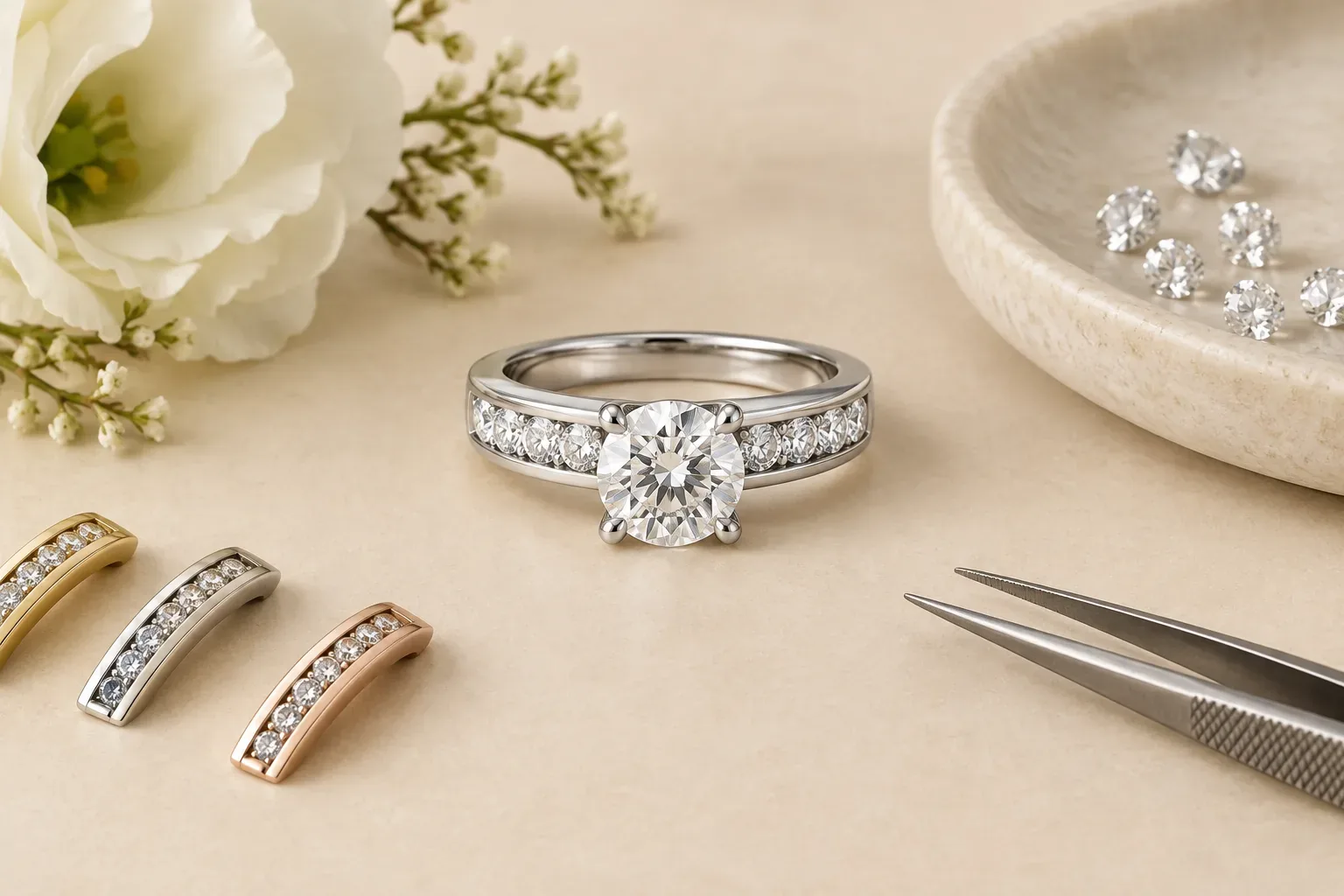
A channel setting secures a row of gemstones between two continuous metal walls so the stones sit flush with the band surface. Proportion matters because the setting is read visually as a strip across the finger: too narrow and the stones can look crowded or delicate; too wide and the ring can dominate the hand or catch on clothing. Styling a channel-set engagement ring therefore combines technical choices (stone size, channel depth, metal thickness) with visual choices (face width, profile height and how it pairs with other rings).
Historical evidence and documented sources
Among the approved sources provided for this article, there is no primary historical account that traces the channel setting to a particular ancient culture or precise historical period. Contemporary industry publications and professional bodies emphasize current consumer trends and care considerations rather than antique provenance. For context on present-day demand and styling trends, industry research in 2026 highlights fluid forms, modern stacking and versatility as key directions in engagement and fine jewelry, which informs how channel settings are being styled today (Jewelers Mutual; Imaginaire Digital).
Documented historical meanings versus modern personal interpretations
Because the approved sources do not offer documented symbolic meanings for the channel setting from specific cultures or periods, any symbolic interpretation of a channel-set engagement ring is a modern, personal or designer-led choice rather than a well-documented historical meaning. Contemporary wearers often interpret channel-set rings as clean, modern and secure designs that emphasize continuity and understated sparkle; these are personal or cultural readings shaped by recent style trends rather than universal, historically recorded meanings. When gifting, treat symbolic claims about a setting type as personal or market-driven rather than as a historically verified message.
How the channel motif and choices appear in jewelry
In practice, the channel motif appears as a horizontal band of stones set into a metal groove that runs around all or part of the shank. Designers vary the motif by changing stone size, stone shape (round, princess, baguette) and whether the channel runs fully around the ring (eternity) or only at the top (half-eternity or shoulder channel). Proportion decisions include face width (the visible width of the band across the finger), channel depth (how deeply the stones sit), and the profile (flat, slightly domed or knife-edge). These construction choices affect how much of the finger is visually covered and how the ring stacks with a wedding band or other rings.
Practical guidelines for finger coverage and proportion
Begin by assessing finger width and hand proportions in daylight. For a slender finger, aim for a face width that is visibly narrower than the finger’s widest portion so the ring reads as delicate rather than heavy. For an average female hand, a 3–4 mm face width is often balanced; for larger hands or a bolder look, 5 mm and up can be appropriate. Consider the stone size within the channel: smaller melee diamonds produce a continuous glittering effect in narrower channels, while larger melee or small single stones require more channel width and depth.
Also account for profile height. A low-profile channel sits closer to the finger and is less likely to catch; it works well for active lifestyles. A higher-profile channel gives more presence but can interfere with a snug wedding band. If stacking is likely, measure the combined height of the engagement ring and the wedding band to ensure comfort and a harmonious silhouette.
Trade-offs to weigh
Durability versus sparkle: Channel settings protect stone girdles and edges better than exposed prongs, which makes them a good choice for active wearers, but they also reduce the amount of light that reaches the stones from the sides. This can make channel-set stones appear less brilliant than fully exposed stones of the same grade.
Resizability: Channels that run fully around the shank (eternity styles) are difficult or impossible to resize without disturbing the stones. Half‑channel designs or shoulder channels are more accommodating of future resizing.
Stone size and types: Very large stones do not suit classic narrow channels; most channel settings use melee or small to medium stones. Hardness and treatment of the chosen gemstone matter for long-term wear—softer stones or certain treated stones need extra care, as explained by the Gemological Institute of America on treatments, detectability and durability.
Care, verification and what requires a professional
Routine care includes gentle cleaning to remove oils and soap build-up that can dull channel-set stones, periodic inspection of the channel walls for wear and professional tightening if stones become loose, and avoiding harsh knocks that can deform the metal. For guidance on how treatments affect durability and detectability, consult gemological resources such as the Gemological Institute of America; treated gems and their care needs vary and detection often requires equipment and expertise.
Consumers should expect clear written disclosures about whether gemstones are natural, lab-created, treated or imitations; the Federal Trade Commission notes that sellers must provide accurate distinctions and disclosures. What a shopper cannot reliably verify at home includes precise treatment status, origin claims and laboratory grading. These require a qualified jeweler’s tools or a gemological laboratory report. For durability concerns, craftsmanship evaluations and long-term repairability, consult a reputable jeweler and align expectations with professional advice.
Selection and respectful gifting guidance
Match the ring to the recipient’s daily life and tastes. If the recipient is active or uses hands heavily, prioritize a low-profile channel and hard, untreated stones or well-disclosed treated stones that the wearer is willing to care for. If the recipient likes stacking, choose a channel face width and profile that pairs cleanly with likely wedding bands, and bring any prospective band to the jeweler when ordering to confirm fit.
Ask the seller for written disclosures about metal type and gemstone treatments, request a sizing recommendation and a written warranty or inspection schedule, and consider purchasing a separate lab report for higher-value center or channel stones. Gift respectfully by framing the design choice as a response to the recipient’s style and lifestyle rather than as an assertion of universal symbolism.
Quick styling checklist before purchase
Confirm the visual proportion on the actual finger or a well-scaled mockup, not only on a model hand. Verify whether the channel is full or partial, ask about future resizing options, check whether stones are natural or treated and request any available laboratory documentation. Confirm cleaning and inspection recommendations, and choose a metal and finish that complements the wearer’s other daily jewelry for cohesive styling.
Closing summary
Styling a channel-setting engagement ring is a practical exercise in proportion, lifestyle fit and verification. Use face width and stone scale to match the wearer’s finger, balance low profile for durability with enough channel depth for secure stones, and insist on clear disclosures and professional verification for treatments and grading. Contemporary trends favor versatility and stacking, so incorporate those preferences into selection and gifting decisions.
Frequently asked questions
How wide should a channel-set engagement ring be for my finger?
There is no single rule, but as a practical guideline choose a narrower face (around 2–3 mm) for slender fingers, a medium face (3–5 mm) for average proportions, and 5 mm or wider only for a deliberate, bold look. Confirm by trying a mocked-up size on the actual finger and consider how the ring stacks with other bands.
Can channel-set rings be resized?
Partial channel settings (shoulder or half channels) are usually resizable with the jeweler removing or adjusting a section of plain shank. Full eternity channel rings are difficult or impossible to resize without disturbing the stones. Always ask the jeweler about resizing options before purchase and request a sizing recommendation.
Are channel settings good for active lifestyles?
Channel settings protect stone edges better than exposed prongs and can be a good choice for active wearers, especially when set low to the finger. However, channel edges can still deform from hard impacts, and stones may loosen over time, so periodic inspection and professional maintenance are recommended.
How can I verify diamond authenticity or treatments in a channel set?
Ask the seller for written disclosures and any available laboratory reports. For higher‑value stones or treatment claims, a gemological laboratory report or inspection by a qualified jeweler is necessary—these tests cannot reliably be completed at home. The FTC requires clear seller disclosures; GIA guidance explains how treatments affect care and detectability.
How do I style a channel-set engagement ring with a wedding band?
Match profiles and heights: a low-profile wedding band or a complementary channel or plain metal band works best. Test the combined stack before finalizing purchase to ensure comfort and a cohesive look. If you plan a contoured or notched wedding band, bring both rings to the jeweler so they can adjust fit and proportion.
Sources and further reading
- Imaginaire Digital — Imaginaire Digital
- Jewelers Mutual — Jewelers Mutual
- Gemological Institute of America — Gemological Institute of America
- Federal Trade Commission — Federal Trade Commission